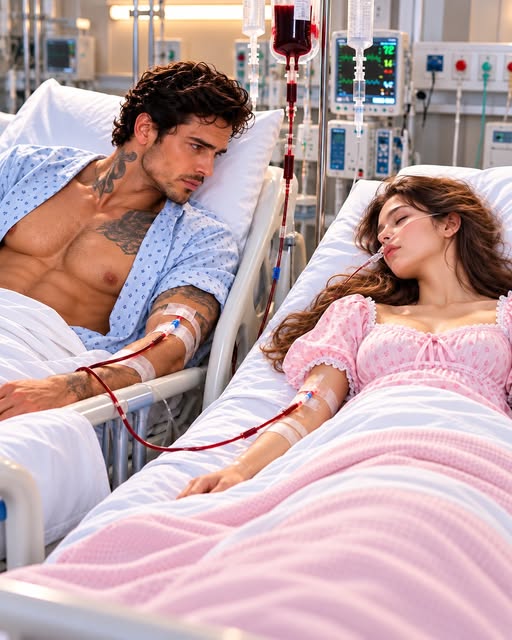
The first letter arrived on a Tuesday.
Luca Mancini was sitting on a narrow bed in a federal detention facility when an officer delivered a small stack of mail.
Most of it came from attorneys.
Some concerned the ongoing investigations into his former businesses.
Others dealt with assets being examined, restitution claims, and the complicated process of separating legitimate employees from the organization that had once dominated his life.
But one envelope was different.
It was pale pink.
His name was written across the front in careful handwriting.
And beside the address was a tiny drawing of a crescent moon.
Luca stared at it for almost a minute.
Then he opened it.
Dear Luca,
Rosa says writing letters is good for people who have too many things they don't know how to say out loud.
I think she's talking about me.
I'm doing better. Physical therapy is still annoying, and the doctors keep telling me not to rush things. My history teacher sent me three weeks of assignments, which seems like a personal attack.
Mom has been visiting a lot.
I'm still getting used to calling her Mom.
Sometimes I'm mad at her. Sometimes I want to hug her. Sometimes I don't want to talk to anybody.
She says that's okay.
I hope she's right.
I wanted to tell you something. I remember seeing you in the hospital before I was fully awake. I couldn't understand what was happening, but I remember feeling like somebody was watching over me.
Rosa told me you stayed for days.
Thank you for that.
I'm not ready to call you Dad yet. I hope you understand.
But I wanted you to know I'm glad you helped save my life.
Love, Elena.
Luca read the letter three times.
Then he folded it carefully and placed it beside his pillow.
For years, he had kept cash, keys, and phones within reach while he slept.
Now his most valuable possession was a letter from a seventeen-year-old girl who wasn't certain what to call him.
And he wouldn't have traded it for anything.
The months that followed were the hardest of Luca Mancini's life.
He pleaded guilty to financial offenses arising from his own conduct and accepted a negotiated sentence that the court imposed after considering the evidence, his cooperation, and the harm associated with his actions.
He did not receive immunity simply because he had helped expose Bellandi.
He did not walk away from his past because he had fallen in love with the idea of becoming a better man.
He served a prison sentence.
He surrendered substantial assets.
He paid restitution as ordered.
And he was required to confront the consequences of decisions he once considered ordinary business.
At sentencing, he had listened while the prosecutor described the damage caused by his organization.
Fear.
Financial harm.
The misuse of legitimate businesses.
People pressured into silence.
Luca did not interrupt.
When the judge gave him an opportunity to speak, he stood and looked toward the gallery.
Sofia was sitting beside Rosa.
Elena had chosen not to attend.
He understood.
"My whole life," Luca said, "I told myself that protecting the people closest to me justified almost anything."
He paused.
"I used that belief to excuse things that hurt other people. I let myself think power was the same as responsibility."
The courtroom remained silent.
"I can't change what I did. I can't make the people affected by those choices forget them. But I can stop denying what happened."
He looked toward Sofia.
"And I can try to become someone who never makes those choices again."
He sat down.
There was no applause.
No dramatic declaration.
No sudden forgiveness.
Only the difficult beginning of accountability.
And for Luca, that was enough.
While Luca served his sentence, Sofia began learning how to become Elena's mother.
It was much harder than she had imagined.
She had spent seventeen years dreaming of ordinary moments.
Cooking breakfast.
Helping with homework.
Shopping for winter coats.
Listening to Elena complain about school.
But when those moments finally became possible, they were filled with awkward silences and old grief.
One evening, Elena came home from physical therapy frustrated and exhausted.
Sofia had prepared dinner.
Chicken soup.
Fresh bread.
A salad Elena had once mentioned liking.
The kitchen smelled warm and comforting.
But Elena barely looked at the table.
"I'm not hungry."
Sofia hesitated.
"You should eat something."
"I said I'm not hungry."
"I know, sweetheart, but—"
"Please stop calling me that."
The words came out sharper than Elena intended.
Sofia went still.
Elena looked away.
"Sorry."
Sofia shook her head.
"It's all right."
"No, it's not."
Elena dropped her schoolbag onto a chair.
"You keep trying to do everything. Make dinner. Fold my clothes. Ask about my homework. It's like you're trying to fit seventeen years into one afternoon."
Sofia felt tears sting her eyes.
"Maybe I am."
Elena looked at her.
The anger in her face softened.
"Why?"
Sofia leaned against the counter.
"Because I don't know how to stop feeling guilty."
Elena's eyes filled with tears.
"I don't need you to feel guilty every time you look at me."
Sofia nodded slowly.
"I know."
"I need you to be here."
The words seemed to surprise both of them.
Elena wiped her eyes.
"Not perfect. Not making up for every birthday. Just here."
Sofia began to cry.
"I can do that."
Elena stepped closer.
For several seconds, she hesitated.
Then she wrapped her arms around Sofia.
It was their first real embrace since the hospital.
Sofia held her gently.
Not too tightly.
Not as though she were afraid Elena would disappear.
Just enough to let her know she wasn't going anywhere.
From the doorway, Rosa watched with tears in her eyes.
For seventeen years, she had carried the burden of raising a child whose mother was alive but unable to return.
She loved Elena as fiercely as any mother could.
And now, seeing Sofia embrace her daughter, Rosa understood something she had been afraid to believe.
Love wasn't something they needed to divide.
There was room for both of them.
Six months after the accident, Elena made another important decision.
She wanted to know whether Luca was her biological father.
Not because Sofia insisted.
Not because Luca had asked.
And not because anyone believed a test would solve the pain of the past.
She wanted to know because it was part of her own story.
Rosa helped her contact Nadia Reyes, who explained the process and ensured Elena understood what the test could establish.
With everyone's consent, samples were collected through appropriate arrangements.
Then they waited.
Sofia was nervous.
Luca tried not to sound nervous during their next telephone conversation.
Elena pretended she wasn't nervous at all.
But when the results finally arrived, she sat beside Rosa and stared at the unopened envelope for nearly ten minutes.
"Do you want me to open it?" Rosa asked.
Elena shook her head.
"No."
She took a breath.
Then opened it herself.
Her eyes moved across the page.
Once.
Twice.
She covered her mouth.
Rosa leaned closer.
"Elena?"
The girl looked up.
Tears filled her eyes.
"It's him."
Rosa began crying.
Elena laughed once through her tears.
"It's really him."
The report established Luca Mancini's biological paternity to the standard of the testing laboratory.
The man who had donated blood for a dying stranger was her father.
The man who had spent seventeen years mourning Sofia was the father of the daughter he never knew existed.
And the man who had terrified half of Chicago now had someone who could make him cry with a single word.
Elena told Luca in person.
She traveled with Rosa and Sofia to visit him after the necessary arrangements had been made.
He entered the visitation room looking older than she remembered.
His dark curls were shorter.
His face was thinner.
The expensive clothing and intimidating presence that once defined him had been replaced by an ordinary prison uniform.
But his eyes were the same.
He smiled when he saw her.
"Hey, Elena."
She smiled back.
"Hey."
Sofia sat nearby, allowing the two of them to speak.
Elena placed a folded piece of paper on the table.
Luca looked at it.
"What's that?"
"Something I thought you should see."
He unfolded it.
Then stopped breathing.
His eyes moved across the results.
He read them again.
Slowly, he lowered the paper.
"Elena…"
She nodded.
"You're my dad."
Luca covered his mouth with one hand.
For several seconds, he couldn't speak.
Elena watched him.
"Are you okay?"
He laughed.
Then cried.
Then laughed again.
"I'm sorry."
She smiled through her own tears.
"You're kind of terrible at this."
He nodded.
"I know."
He looked at the test results once more.
"Seventeen years."
Elena swallowed.
"Yeah."
He raised his eyes.
"I would have wanted to know you."
"I know."
"I would have wanted to be there."
Her expression softened.
"I know that, too."
Luca took a careful breath.
"I'm so sorry I wasn't."
Elena looked at the paper between them.
Then she said something that would stay with him for the rest of his life.
"You can't be there for the years that already happened."
He nodded.
"But maybe you can be there for the ones we still have."
Luca began crying again.
This time, he didn't try to hide it.
Elena reached across the table and placed her hand over his.
"Dad?"
The word was barely a whisper.
But it changed everything.
Luca closed his eyes.
He had been called many names.
Boss.
Sir.
Mancini.
The Devil of Chicago.
None of them had ever meant as much as that single word.
He looked at Elena.
"Yes, sweetheart?"
She smiled.
"Don't make me regret saying that."
He laughed through his tears.
"I'll spend the rest of my life trying not to."
Outside prison, the investigation into Vittorio Bellandi continued.
Daniel Cross testified.
Sofia provided evidence about the original financial scheme.
Former foundation employees described the pressure they faced to approve suspicious payments.
Records established how money intended for charitable programs had been diverted through fraudulent transactions.
After lengthy proceedings, Bellandi was convicted of multiple financial crimes and obstruction-related offenses.
He received a substantial prison sentence.
His public image as a generous philanthropist collapsed under the weight of documented wrongdoing.
Several associates also faced convictions or negotiated pleas.
The foundation underwent major restructuring.
Independent administrators took control of its lawful charitable operations.
Auditors worked to recover assets and distribute restitution where appropriate.
Families who had once been denied assistance began receiving long-overdue help through properly supervised programs.
It did not erase the harm.
Some people would carry the consequences for years.
But the system Bellandi had built to protect himself was finally dismantled.
Sofia no longer lived under an assumed identity.
She returned to using her real name.
She stopped looking over her shoulder whenever a dark car passed.
She began teaching music and literacy classes at a community center.
And slowly, she learned to live without fear.
For the first time in seventeen years, she could walk through Chicago without pretending she was someone else.
Elena graduated from high school the following spring.
Her recovery had taken patience.
There had been weeks of physical therapy, difficult school days, headaches, and moments when she feared she would never feel entirely like herself again.
But she had returned to her classes with the help of her teachers and friends.
She completed her coursework.
And she applied to study music.
On graduation day, Rosa sat in the front row.
Sofia sat beside her.
Enzo Caruso, now recovering from his injuries and no longer involved in the old organization, arrived carrying an enormous bouquet of flowers.
Marco Vitali sat near the aisle, wearing a plain gray suit.
He had left private security work associated with the Mancini organization and was rebuilding his life through lawful employment.
Luca couldn't attend in person.
But Elena had arranged for him to receive a photograph and a recording of the ceremony through the facility's approved communication channels.
When her name was called, she crossed the stage with a bright smile.
She accepted her diploma.
Then looked toward the audience.
Rosa was crying.
Sofia was crying.
Even Enzo looked suspiciously emotional.
Elena laughed.
For the first time, she had an entire family cheering for her.
Not a perfect family.
Not a conventional one.
But hers.
That night, she wrote Luca another letter.
Dear Dad,
I graduated.
Yes, you can brag.
But please don't tell people your daughter is a genius. I got a B in chemistry, and I refuse to let you turn it into a family legend.
Mom cried during the whole ceremony.
Rosa cried even more.
Enzo bought flowers so big I could barely see over them.
I wish you could have been there.
But I know why you weren't.
I'm proud that you're doing what you said you'd do.
And when you get home, I expect you to show up for every boring family event.
Especially the ones where you have to sit in uncomfortable chairs for three hours.
Love, Elena.
Luca kept that letter beside the first one.
Over time, his collection grew.
Photographs.
Postcards.
School updates.
Descriptions of music recitals.
Little drawings of crescent moons.
Evidence of a life unfolding beyond the walls around him.
He read them whenever the nights felt too long.
And they reminded him that the future was no longer something he had to control.
It was something he had to earn the right to share.
Almost two years after Luca first met Elena in the hospital, he was released after completing the custodial portion of his sentence.
His legal obligations were not over.
He still faced supervision, financial restrictions, and ongoing responsibilities connected to restitution.
He was no longer a wealthy criminal boss.
Much of his former fortune was gone.
Several of his businesses had been sold, restructured, or placed under independent management.
His old office no longer belonged to him.
The private security convoys were gone.
The men who once greeted him with nervous respect had scattered into different lives.
But when Luca walked through the doors of the correctional facility, none of those losses mattered.
Because three people were waiting.
Rosa stood beside a modest gray car.
Sofia waited near the passenger door.
And Elena stood between them wearing a soft pink sweater.
Her chestnut hair moved gently in the spring breeze.
She had grown older.
More confident.
The fragile patient in the hospital bed was gone.
In her place stood a young woman who had survived more than anyone her age should have experienced.
Luca stopped.
For a moment, he couldn't move.
Then Elena smiled.
"Are you going to stand there all day, Dad?"
He laughed.
A real laugh.
The kind he had almost forgotten.
"Depends. Are you going to charge me for making you wait?"
"Absolutely."
He walked toward her.
She met him halfway.
And wrapped her arms around him.
Luca held his daughter.
For a long time, neither spoke.
He could feel her breathing against his chest.
Could smell the faint lavender scent of her hair.
Could feel the warmth of a person he had almost lost before ever knowing she existed.
He closed his eyes.
There had been a time when he thought an empire was proof that he had won.
Now he understood that the greatest victory of his life was being allowed to come home.
When Elena finally pulled back, she was crying.
"So," she said, wiping her eyes, "how does freedom feel?"
Luca looked at her.
"Different than I expected."
"Good different?"
He nodded.
"Very good."
She took his hand.
"Come on. Mom made dinner."
Sofia stood beside the car.
She looked nervous.
Luca approached slowly.
For a moment, they stared at one another.
They were no longer the reckless young couple who had fallen in love in a bookstore.
They carried seventeen years of grief.
Missed opportunities.
Bad decisions.
Regret.
And the complicated hope of beginning again.
"Hello, Luca," Sofia said.
He smiled.
"Hello, Sofia."
She studied his face.
"You look different."
"Less expensive?"
She laughed.
"That, too."
He looked down.
"I know we can't go back."
Sofia nodded.
"No."
"I don't expect us to pretend nothing happened."
"I know."
He took a breath.
"But if you're willing, I'd like to know you again."
Sofia's eyes filled with tears.
"As who?"
He smiled gently.
"As the man who finally understands why ordinary can be beautiful."
She laughed through her tears.
Then stepped closer.
He didn't reach for her immediately.
He waited.
Sofia rested her hands against his chest.
For seventeen years, she had remembered him as the young man who kissed her beneath summer rain.
The man she feared had betrayed her.
Then the man she discovered had also been deceived.
Now, standing before her, was someone new.
A man who had been forced to examine his life without the protection of power.
A man who had chosen truth even when it cost him freedom.
A man who was still imperfect.
But trying.
She smiled.
"I think I'd like that."
Then she kissed him.
It wasn't a desperate kiss.
It wasn't an attempt to recover seventeen years in a single moment.
It was gentle.
Patient.
Full of possibility.
Elena watched from beside the car.
Then groaned dramatically.
"Okay, this is already embarrassing."
Rosa laughed.
Sofia pulled away, blushing.
Luca turned toward his daughter.
"What?"
"Seriously? I waited almost two years for this family reunion, and you're making it weird in the parking lot."
Luca burst out laughing.
It was the happiest sound any of them had heard in years.
Six months later, Luca stood in the kitchen of a small house on Chicago's North Side.
The house was modest.
Three bedrooms.
A narrow backyard.
A porch that needed repainting.
No marble floors.
No gated driveway.
No armed guards.
Just a house filled with sunlight and the smell of fresh coffee.
Sofia had insisted on buying secondhand furniture where possible.
Elena had filled the living room with books.
Rosa visited so often that they eventually gave her a permanent room.
Enzo stopped by on weekends to help repair things that Luca had absolutely no idea how to fix.
Marco occasionally joined them for dinner.
Sometimes they argued.
Sometimes they laughed.
Sometimes the past arrived unexpectedly and made ordinary conversations difficult.
But they kept talking.
They were learning to become a family through a thousand small choices.
And Luca discovered something he had never expected.
He loved the ordinary things.
Waiting in grocery-store lines.
Burning pancakes.
Fixing a squeaky door.
Listening to Elena complain about her college assignments.
Helping Sofia carry boxes into the community center.
Sitting on the porch while Rosa told stories about Elena's childhood.
Every story reminded him of something he had missed.
But he no longer allowed regret to steal the moments happening in front of him.
One Saturday morning, Elena found him in the garage struggling with an old upright piano.
Enzo had helped him purchase and transport it from a secondhand shop.
Luca was carefully polishing the wood.
Elena leaned against the doorway.
"What are you doing?"
"Trying to fix this."
She looked at the piano.
"Why?"
Luca smiled.
"Your mother used to play one just like it."
Elena stepped closer.
"Really?"
He nodded.
"When we were young, she'd play whenever she was nervous."
Elena ran her fingers along the keys.
A few were badly out of tune.
She laughed.
"This thing sounds terrible."
"I noticed."
"You know fixing a piano is complicated, right?"
"Apparently more complicated than running a shipping company."
She raised an eyebrow.
"An actual legal shipping company?"
Luca gave her a look.
Elena laughed.
"I'm kidding."
Then her expression softened.
"Why did you buy it?"
Luca looked at the instrument.
"Because I wanted something in this house that reminded us of the past without making us afraid of it."
Elena stood quietly.
Then she sat at the bench.
She pressed a few keys.
A gentle melody filled the garage.
Luca froze.
It was the same melody Sofia had played in his apartment seventeen years earlier.
He hadn't heard it in almost two decades.
"Where did you learn that?" he whispered.
Elena looked up.
"Mom taught me."
Luca sat beside her.
For several seconds, he couldn't speak.
Then he smiled through tears.
"Of course she did."
Elena leaned her head against his shoulder.
And continued playing.
On the anniversary of the night they first met in the hospital, the family returned to the same medical center.
Not because anyone was injured.
Not because danger had found them again.
But because Elena wanted to thank the people who had saved her life.
Rebecca was still working there.
When she saw Luca walk through the doorway wearing an ordinary dark sweater and carrying a box of pastries, she stared.
"Mr. Mancini?"
He smiled.
"Hello, Rebecca."
She looked at Elena.
Then at Sofia.
Then back at Luca.
"Oh, my goodness."
Elena stepped forward.
"I'm Elena Vasquez."
Rebecca covered her mouth.
"The girl from that night?"
Elena nodded.
"Yes, ma'am."
Rebecca's eyes filled with tears.
"Look at you."
Elena laughed.
"Much better than last time."
Rebecca hugged her after Elena reached out.
The physician who had supervised her emergency care stopped by when his schedule allowed.
Several nurses greeted the family.
Luca thanked them individually.
He didn't offer expensive gifts.
He didn't make dramatic speeches.
He simply told them that their work had given him something he would spend the rest of his life being grateful for.
When Rebecca looked at him, she smiled knowingly.
"You look different, Mr. Mancini."
Luca laughed.
"Everyone keeps telling me that."
"Maybe it's because you're smiling."
He glanced toward Elena.
She was laughing with Sofia near the window.
"Maybe."
Rebecca followed his gaze.
"You know, I remember that night. You looked terrified."
"I was."
"More terrified than most fathers I've seen."
Luca looked at her.
Then smiled.
"I didn't know I was her father yet."
Rebecca's eyes widened.
"What?"
He nodded toward Elena.
"Turns out she was mine all along."
Rebecca looked at the young woman.
Then back at Luca.
Her expression softened.
"Well," she said, "I suppose some families find each other in very unusual ways."
Luca smiled.
"Apparently."
That evening, the family walked along a quiet Chicago street beneath strings of warm lights.
The air was cold, but the sky was clear.
Elena walked between her parents, holding a paper bag from the bookstore they had visited earlier.
Rosa had gone home after dinner.
Enzo and Marco had promised to visit the following weekend.
For once, there was nowhere urgent to be.
No enemy to confront.
No mystery to solve.
Just a family walking together.
They stopped outside the little bookstore where Luca and Sofia had met years earlier.
The shop had changed owners.
The windows had been repainted.
But the bell above the door still made the same cheerful sound when someone entered.
Sofia looked at Luca.
"Do you remember?"
He smiled.
"You insulted my watch."
"I insulted your taste in literature."
"You said rich men didn't understand heartbreak."
Sofia laughed.
"I wasn't completely wrong."
Luca shook his head.
"No. You weren't."
Elena looked between them.
"Wait. Is this the bookstore?"
Sofia nodded.
"The very one."
Elena grinned.
"That's disgustingly romantic."
Luca raised an eyebrow.
"Disgustingly?"
"Absolutely."
She stepped inside.
A few minutes later, she emerged carrying a book.
The same poetry collection.
Luca stared at it.
"You found another copy?"
Elena smiled.
"Apparently some things are meant to come back."
She handed it to Sofia.
On the first page, Elena had written something in careful handwriting.
Sofia read it aloud.
To Mom and Dad.
You lost seventeen years because of someone else's lies.
But you gave me a lifetime of truth to look forward to.
Thank you for finding your way home.
Love, Elena.
Sofia pressed the book against her chest.
Luca turned away, blinking rapidly.
Elena laughed softly.
"Dad, are you crying again?"
He looked at her.
"Apparently it's becoming a habit."
She stepped closer.
He wrapped an arm around her shoulders.
Sofia joined them.
For a few moments, they stood beneath the warm lights of the bookstore, holding one another as snowflakes began drifting through the Chicago night.
Luca remembered the hospital.
The alarm.
The blood collection bag.
The pale girl in the pink gown.
The scar beneath her left eye.
Marco's terrifying warning.
He remembered believing he was saving a stranger.
He hadn't known the girl would lead him back to Sofia.
He hadn't known her existence would expose seventeen years of betrayal.
He hadn't known saving her life would force him to confront the life he had built.
But looking at Elena now, he finally understood something.
That night hadn't been the moment a powerful man saved a helpless girl.
It had been the moment a frightened father, who didn't yet know he was a father, was given the chance to become someone better.
Luca looked at Sofia.
Then at Elena.
He smiled.
"Come on. Let's go home."
Elena took his hand.
Sofia took the other.
And together, they walked through the falling snow.
Not toward an empire.
Not toward wealth.
Not toward the fear and violence that had once defined his name.
But toward a small house with a porch that needed painting, a piano that still needed tuning, and a kitchen where Rosa would probably insist they weren't eating enough.
Toward ordinary mornings.
Family dinners.
Birthdays.
Arguments.
Laughter.
Love.
Everything Luca Mancini had once considered too simple to matter.
Everything he now understood was priceless.
Seventeen years earlier, Sofia Bennett had asked him to choose between being feared and being loved.
For most of his life, he had chosen fear.
But on a snowy Chicago night, a dying girl had entered his world and changed everything.
He had given her his blood.
And in return, she had given him something he never thought he would have.
A daughter.
A second chance with the woman he loved.
And a reason to live as a man worthy of both.
For the first time in his life, Luca Mancini wasn't afraid of losing his power.
He had already found something greater.
He had found his family.
And this time, he was going to spend every day making sure they knew he loved them.
THE END.