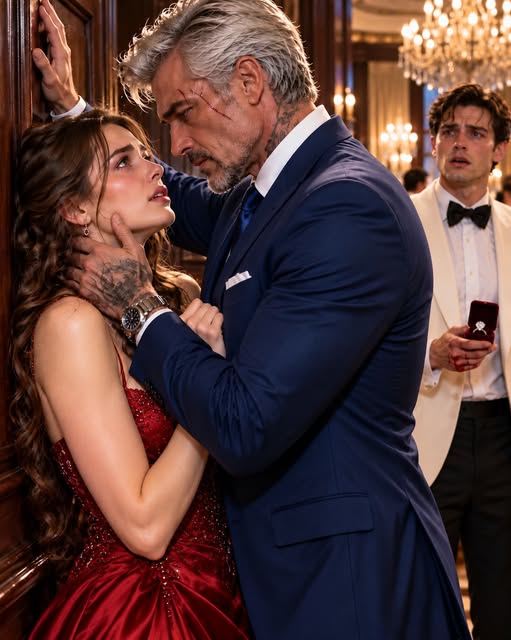
By sunrise, half of New York seemed to know that I had rejected Evan Marlowe.
By breakfast, thousands of strangers believed I had been having an affair with his father.
By noon, I was beginning to lose everything I'd worked for.
The first phone call came from the director of the historic preservation nonprofit that had hired my architectural firm for a major renovation project.
His name was Thomas Hargrove, and until that morning, he'd been one of my strongest supporters.
“Claire,” he began uncomfortably, “we need to talk about your involvement with the Marlowe Foundation.”
I already knew what was coming.
“The photograph isn't what people think.”
“I understand there may be more to the story.”
“Then why are you calling?”
He sighed.
“Our board is concerned about public perception.”
I closed my eyes.
“My private relationship has nothing to do with the quality of my work.”
“Ordinarily, I'd agree.”
“But?”
“But the project is partially funded by Marlowe Holdings.”
There it was.
The invisible chain connecting everything.
My career.
My relationship.
The man I'd hurt.
And the man I loved.
“Are you terminating my contract?” I asked.
“Not officially. We're suspending the next stage until the situation settles.”
“How long?”
“I can't say.”
I stared at the plans covering my kitchen table.
For seven years, I'd worked toward building an independent architectural practice. I'd saved money, borrowed carefully, and spent countless weekends visiting decaying historical buildings that most investors considered worthless.
Now my future could be destroyed by one photograph.
When the call ended, I sat in silence.
Then someone knocked on my apartment door.
Three hard knocks.
“Claire? Open up. It's Naomi.”
I nearly cried with relief.
Naomi Carter had been my best friend since college.
She was thirty-one, outspoken, practical, and completely unimpressed by wealthy men.
She also worked as the operations director of my small architecture firm, which meant she understood exactly how much trouble we were in.
When I opened the door, she looked me up and down.
“Please tell me you changed out of that dress.”
I glanced at the wrinkled red gown hanging over a dining chair.
“Eventually.”
“Good. Because I was prepared to burn it.”
Despite everything, I almost smiled.
Naomi stepped inside carrying two coffees and a paper bag filled with breakfast sandwiches.
“Eat.”
“I'm not hungry.”
“That's unfortunate, because your body disagrees.”
She put the food on the table and studied me.
Her expression softened.
“How bad?”
I tried to answer.
Instead, I started crying.
Naomi wrapped her arms around me.
For several minutes, she said nothing.
Then she guided me onto the couch.
“Okay,” she said. “We're going to separate the things you've done from the things people are accusing you of doing.”
I wiped my eyes.
“What does that mean?”
“It means rejecting Evan in public was terrible timing. Keeping your feelings secret was unfair. But that doesn't mean you deserve threats, blackmail, or strangers trying to destroy your career.”
I nodded.
“And being attracted to Vincent doesn't prove you had an affair.”
“We didn't.”
“Then say that.”
“I already told Evan.”
“I'm not talking about Evan. I'm talking about you.”
I frowned.
Naomi leaned forward.
“Claire, you keep speaking like you're guilty of every terrible thing anyone could imagine. You're responsible for hurting Evan. You're not responsible for whatever story some creep decided to invent.”
I stared at my coffee.
“Vincent admitted he had feelings for me.”
Naomi's expression changed.
“Oh.”
“Yeah.”
“Did he ever tell you before last night?”
“No.”
“Did he pursue you?”
“No.”
“Did he ever ask you to leave Evan?”
“Never.”
She exhaled.
“Then all three of you have a painful emotional problem. But someone else is turning it into something much uglier.”
I showed her the anonymous messages.
Her face hardened immediately.
“Have you saved everything?”
“Yes.”
“Good.”
She took out her phone.
“Because this isn't gossip anymore.”
“What are you doing?”
“Calling a lawyer.”
Two hours later, I received a call from an unfamiliar number.
“Miss Bennett? This is Mara Ellison. I represent Vincent Marlowe.”
My stomach tightened.
“Did he ask you to contact me?”
“Yes. But before we discuss anything, I want you to understand that you are under no obligation to speak to me.”
I hesitated.
“Why are you calling?”
“Mr. Marlowe received copies of the photographs this morning. He's concerned someone may be threatening you.”
I looked toward Naomi.
“She should have her own lawyer,” Naomi mouthed.
I nodded.
“I've already arranged independent legal advice.”
“Good,” Mara replied immediately. “That's exactly what I'd recommend.”
The answer surprised me.
She continued, “I'm calling to ask whether you'd be willing to preserve any messages you've received. We suspect the images were obtained through unauthorized access to the estate.”
“You mean someone broke in?”
“Possibly. But we're also examining whether someone with legitimate access abused it.”
I remembered the photograph taken through the study door.
The angle.
The timing.
The fact that someone had heard my confession.
“Whoever took those pictures was standing right outside the room.”
“We believe so.”
“Then they would have heard Evan too.”
Mara paused.
“That's possible.”
My stomach sank.
“Does he know?”
“Mr. Marlowe has asked that his son be informed of any threats concerning him.”
I swallowed.
“Vincent didn't ask you to make this disappear?”
“No, Miss Bennett.”
“Because he could probably threaten whoever did it.”
There was a brief silence.
Then Mara said, “Mr. Marlowe is aware that his reputation creates assumptions. He's instructed us to handle this through lawful channels.”
I looked down at my hands.
The distinction mattered.
Not because it made Vincent innocent of everything in his past.
But because it suggested he understood that protecting people and controlling them weren't the same thing.
“Tell him I'll cooperate,” I said.
“And Miss Bennett?”
“Yes?”
“If anyone asks you to exchange money or favors for silence, contact your lawyer and the authorities before responding.”
After the call, Naomi watched me carefully.
“Still think this is just about three people falling in love with the wrong people?”
“No,” I whispered.
I didn't.
But I couldn't yet understand why anyone would invest so much effort in destroying us.
That afternoon, Evan Marlowe sat alone in a hotel suite overlooking Central Park.
I didn't know it then.
I learned the details later, after he was finally able to tell me what happened.
He hadn't gone home after leaving the study.
Instead, he'd driven to the hotel where his mother used to take him for birthday lunches when he was a child.
He ordered coffee he didn't drink.
He placed her engagement ring on the table.
Then he stared at it for hours.
Grace Marlowe had died when Evan was nineteen.
He was old enough to understand death.
But too young, he'd once told me, to understand how completely it could change a home.
Before her illness, the Marlowe estate had been filled with music.
Grace played the piano badly but enthusiastically.
She decorated for every holiday.
She kept handwritten recipes in a kitchen that already employed three professional cooks.
And she had a way of making Vincent laugh that nobody else seemed capable of reproducing.
After she died, the house became quieter.
Vincent worked longer hours.
Evan learned to smile more brightly.
Neither knew how to tell the other that he was lonely.
For years, Evan believed his father had buried himself in business because he was incapable of loving anyone else.
Now that belief had been shattered.
His phone rang shortly after three.
His father's name appeared.
He rejected the call.
A minute later, a message arrived.
I'm not calling to defend myself. Someone is threatening Claire and may have recorded us. Please be careful. — Dad
Evan read it twice.
Then he put down the phone.
He didn't answer.
But he saved the message.
That small decision would matter later.
By evening, reporters were gathered outside my apartment building.
A black SUV idled across the street.
I watched from behind the curtains while a woman holding a microphone spoke toward a camera.
“Sources close to the Marlowe family suggest the scandal may involve a secret relationship between the influential patriarch and his son's former girlfriend—”
I closed the curtain.
My stomach twisted.
Naomi stood behind me with her arms folded.
“Don't go outside.”
“I have a meeting tomorrow.”
“We'll move it online.”
“They'll just follow me eventually.”
“Then we'll deal with that when it happens.”
I turned.
“I'm tired of everyone deciding what I can and can't do.”
Naomi raised her eyebrows.
“Then make a decision.”
“What decision?”
“Stop hiding.”
I stared at her.
“You want me to talk to reporters?”
“No. I want you to decide what you're willing to say, and say it once, on your own terms.”
I sat down at my desk.
For the next hour, I wrote and rewrote a statement.
The first version was defensive.
The second sounded like an apology for having feelings.
The third blamed the publicity and avoided taking responsibility for Evan's humiliation.
I deleted them all.
Finally, I wrote something simple.
I acknowledged that I'd declined a marriage proposal at a private celebration that had become public.
I apologized for the pain my timing caused Evan.
I stated clearly that Vincent and I had not been involved in a romantic or physical affair.
And I asked people to stop spreading photographs taken without permission inside a private residence.
I didn't claim to be perfect.
I didn't accuse Evan of anything.
I didn't announce my feelings for Vincent to the world.
That truth belonged first to the three people whose lives it had changed.
Naomi read the statement.
“That's better.”
“Will people believe it?”
“Some will. Some won't.”
“Then what's the point?”
“The point,” she said, “is that you shouldn't let someone else become the only narrator of your life.”
I posted it at seven twenty-three.
Within minutes, the comments began.
Some were kind.
Many were cruel.
But for the first time since the party, I felt like I'd made a decision instead of simply reacting to everyone else's.
Then Vincent called.
I watched his name illuminate my phone.
Naomi glanced at the screen.
“You don't have to answer.”
“I know.”
But I did.
“Vincent?”
“Are you safe?”
His voice was low and controlled.
“Yes.”
“Has anyone approached your apartment?”
“Reporters.”
“Anyone threatening?”
“Not in person.”
He exhaled.
“Good.”
Silence stretched between us.
I could picture him in his study, standing behind that enormous desk, his silver hair slightly disordered as it always was after a difficult day.
The image hurt.
“How's Evan?” I asked.
Vincent didn't answer immediately.
“I don't know.”
My chest tightened.
“He won't speak to you?”
“No.”
“I'm sorry.”
“Don't apologize for something you can't fix tonight.”
I looked toward the window.
“I posted a statement.”
“I saw it.”
“Are you angry?”
“No.”
“Even though it mentions you?”
“You told the truth.”
I pressed my forehead against the cool glass.
“That's becoming a very expensive habit.”
Vincent was silent.
Then he said, “Claire, I need to ask you something.”
“Okay.”
“Have you ever heard of Harbor Point Development?”
I frowned.
“The waterfront acquisition?”
“Yes.”
“Only professionally. Our firm reviewed an early preservation assessment last year. I refused to approve the demolition recommendations.”
“Why?”
“Because the buildings weren't structurally unsalvageable. The developer wanted them removed because restoration would cost more.”
Vincent inhaled slowly.
“Who contacted you?”
“A man named Adrian Pike.”
The silence changed.
I could almost feel it.
“Vincent?”
“Did you sign anything?”
“A preliminary confidentiality agreement. Nothing else.”
“Did you give them permission to use your architectural seal?”
“No.”
“Are you certain?”
“Of course I'm certain.”
His voice sharpened.
“Claire, listen carefully. Don't send anyone original documents. Preserve every copy of your Harbor Point correspondence.”
My heart began pounding.
“What does this have to do with the photographs?”
“I don't know yet.”
“Vincent.”
“I'll tell you when I have something reliable.”
“No. That's exactly what I'm tired of.”
He fell quiet.
I took a breath.
“You can't make decisions about information that affects me and then tell me it's for my protection.”
A long pause followed.
Then he said, “You're right.”
I hadn't expected that.
“I'm reviewing an acquisition my business partner has been pushing for months,” he continued. “He's demanding that I approve it before the end of the week. Your name appears on an environmental and architectural clearance document.”
I stared at the wall.
“That isn't possible.”
“That's why I called.”
“Who's your partner?”
“Adrian Pike.”
The room seemed to tilt.
The man who wanted my preservation assessment altered.
The man whose project I'd rejected.
And a senior executive at Marlowe Holdings.
I swallowed.
“Vincent, I think we have a much bigger problem.”
The next morning, Naomi and I opened every Harbor Point file in our archive.
We searched emails, project folders, saved contracts, and old meeting notes.
I found my original assessment.
Forty-six pages.
Detailed photographs.
Structural analysis.
A recommendation that the waterfront buildings be preserved rather than demolished.
Then Naomi found a second document in the municipal planning database.
It was dated three months after my original report.
The title read:
FINAL ARCHITECTURAL CLEARANCE — HARBOR POINT REDEVELOPMENT
At the bottom was my name.
And beneath it, a digital reproduction of my professional seal.
I opened the document.
My stomach dropped.
The report recommended immediate demolition.
It described the buildings as unsafe beyond reasonable rehabilitation.
It stated that I had personally inspected several structural elements I'd never even been permitted to access.
And it carried what appeared to be my signature.
“No,” I whispered.
Naomi leaned closer.
“What?”
“That's not my report.”
She read the final page.
Then looked at me.
“Claire, did someone forge this?”
I nodded.
My mouth was dry.
“Yes.”
Naomi immediately began downloading copies and recording where we'd found them.
“If this was submitted officially, your license could be at risk,” she said.
I stared at my own signature.
Someone had taken the work I loved, twisted it, and used my professional identity to justify destroying buildings I'd fought to protect.
Suddenly, the photographs seemed less like ordinary gossip.
They looked like leverage.
If my reputation collapsed publicly, any allegation I made about Harbor Point might be dismissed as the desperate retaliation of a disgraced woman.
And if Vincent was forced to choose between defending me and protecting his own son from further humiliation, Adrian Pike could be confident that he'd hesitate.
I reached for my phone.
But before I could call Vincent, another anonymous message arrived.
This one contained no photograph.
Only a sentence.
Tell Marlowe to sign the Harbor Point approval by Friday, or his son hears the rest of the recording.
I felt my blood go cold.
The rest of the recording.
Not another photograph.
A recording.
Of what?
The confession?
Evan confronting Vincent?
Vincent admitting that his feelings for me weren't entirely innocent?
I read the message again.
Then I realized something even worse.
Whoever had recorded the study confrontation knew Evan had been listening.
They had watched his heart break.
And they were willing to use that pain as a bargaining chip.
I called Vincent immediately.
He answered before the second ring.
“Claire?”
“They're blackmailing you.”
His voice became dangerously quiet.
“What happened?”
I read him the message.
When I finished, there was a long silence.
“Send a copy to Mara and your own attorney,” he said.
“Vincent, don't you dare tell me to stay out of this.”
“I wasn't going to.”
“Someone forged my professional seal. Someone recorded your son being devastated. And now they're trying to force you to sign a business deal.”
“I understand.”
“No, you need to understand that this isn't only about you.”
He was quiet.
Then he said, “I know.”
I heard footsteps in the background.
A door closing.
When Vincent spoke again, his voice sounded different.
“Claire, twenty years ago, I made a decision I believed would keep my family safe.”
I stopped breathing.
“What decision?”
“I allowed certain men to remain close to my business because removing them would have created a war I didn't want my son to inherit.”
“Adrian Pike?”
“He was part of it.”
“Part of what?”
Vincent inhaled slowly.
“The old Marlowe organization.”
I closed my eyes.
The criminal rumors.
The whispered warnings.
The men who feared him.
For the first time, Vincent wasn't denying that his empire had a darker history.
He was acknowledging it.
“Have you been involved in something illegal?” I asked.
His answer came after a long pause.
“In my younger years, yes.”
I gripped the edge of my desk.
“And now?”
“I've spent years trying to dismantle what my father built without putting innocent people in danger.”
“Does Evan know?”
“Not everything.”
The words made me feel sick.
Another secret.
Another truth being postponed because someone powerful believed silence would protect the people he loved.
“Vincent,” I whispered, “you need to tell him.”
“I know.”
“Now.”
He didn't respond.
Then I heard another voice in the background.
A man's voice.
Distant, but unmistakably angry.
“Sir, there's something you need to see.”
Vincent spoke away from the phone.
“What?”
The reply was too faint for me to understand.
Then Vincent returned.
“Claire, I have to go.”
“What happened?”
His voice was suddenly cold.
“Adrian Pike just submitted the Harbor Point agreement using my son's authorization.”
I straightened.
“What?”
“Evan's signature is on it.”
“But Evan doesn't know about any of this.”
“That,” Vincent said, “is exactly what I'm about to find out.”
The call ended.
I stood motionless in my office.
Because the scandal hadn't simply hurt Evan.
It had made him vulnerable.
And somewhere inside Vincent Marlowe's empire, a man had decided that a broken family was the perfect opportunity to steal its future.