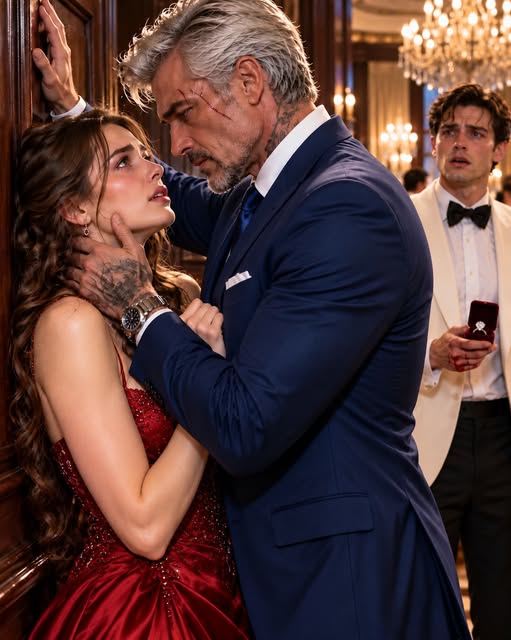
Four months after the night I rejected Evan Marlowe, I walked into a hearing room carrying a folder that contained almost every important document of my professional life.
My architectural license was under review.
Not because anyone had proved I'd done something wrong.
Because my name and seal had appeared on a fraudulent demolition report, and the state licensing board needed to determine whether I had authorized it.
Naomi sat beside me.
She reached across the table and squeezed my hand.
“You're ready.”
I nodded.
I wasn't sure I believed her.
But I was no longer the frightened woman who had hidden in Vincent's study after a disastrous proposal.
I had spent four months learning that fear could follow you into a room without making your decisions for you.
The hearing began at nine.
For nearly three hours, I answered questions about Harbor Point.
I explained why I'd refused to approve demolition.
I presented my original assessment, complete with dated photographs and signed correspondence.
I showed the board how the fraudulent report contradicted my documented findings.
And I provided the independent digital-forensics analysis showing that the disputed document had been altered and submitted without my authorization.
When the hearing officer asked whether my personal relationship with the Marlowe family had influenced my architectural opinion, I looked directly at her.
“No.”
“Were you involved in a romantic relationship with a company executive?”
“I was in a relationship with Evan Marlowe during the original assessment period. But no Marlowe family member instructed me to alter my professional conclusions.”
“Did Vincent Marlowe influence your findings?”
“No.”
“Did your feelings toward him influence your work?”
I took a breath.
“No. My assessment was based on the physical condition of the buildings and the applicable preservation standards.”
She studied me.
“Miss Bennett, are you comfortable having your work independently reviewed?”
“Yes.”
The answer came without hesitation.
For years, I'd wanted someone to look beyond my age, my appearance, and my connections and judge me by the quality of my work.
Now I had the opportunity.
And I wasn't going to waste it.
The board ultimately found insufficient grounds for disciplinary action against me.
The fraudulent report had not been authorized by my firm.
My original conclusions were supported by the evidence.
And the available records indicated deliberate misuse of my professional credentials.
When the decision was announced, I didn't cheer.
I didn't jump to my feet.
I simply lowered my head and cried.
Naomi hugged me so tightly that I could barely breathe.
“You did it.”
I shook my head.
“We did.”
She laughed.
“Fine. We did.”
Outside the building, a reporter recognized me.
“Miss Bennett! Has Vincent Marlowe helped you keep your license?”
I stopped walking.
Naomi looked ready to drag me away.
But I turned toward the reporter.
“My license wasn't saved by Vincent Marlowe,” I said. “It was protected by evidence and an independent review.”
“Are you denying a relationship with him?”
“I'm discussing my professional work.”
“Do you regret rejecting Evan Marlowe?”
I swallowed.
“I regret hurting him publicly and failing to be honest sooner. I don't regret refusing a marriage I knew would be wrong.”
The reporter tried another question.
“Are you and Vincent romantically involved now?”
“No.”
It was the truth.
And somehow, saying it aloud still hurt.
Vincent and I hadn't seen each other privately in nearly three months.
We occasionally exchanged brief messages concerning the investigation.
Sometimes he asked whether I was safe.
Sometimes I asked whether Evan was doing well.
But there were no late-night confessions.
No secret dinners.
No promises about the future.
Vincent had told me that nothing romantic could begin while his son was still struggling and while his own business could affect my livelihood.
I'd agreed.
At first, the distance was almost unbearable.
I missed the way he listened before answering.
I missed the rare moments when his guarded expression softened.
I missed hearing him say my name in that low, careful voice.
But as weeks passed, something changed.
I began to understand how much of my life I'd organized around other people's expectations.
First Evan's.
Then my fear of Vincent's influence.
Then the public's judgment.
For the first time in years, I asked myself what I wanted when neither Marlowe man was standing in front of me.
The answer surprised me.
I wanted my business to survive.
I wanted my work to matter.
I wanted to build beautiful spaces that people could use without needing a millionaire to invite them inside.
And I wanted to become a woman who could tell the truth before it turned into a disaster.
Those desires existed independently of love.
Understanding that was the beginning of rebuilding myself.
Adrian Pike's arrest occurred eleven days after my hearing.
The news broke early on a Monday morning.
He was charged with offenses connected to the alleged extortion scheme and fraudulent business documentation. Prosecutors also announced that additional financial investigations remained active.
Daniel Rusk's cooperation had helped investigators reconstruct the surveillance operation at the engagement party.
Financial records linked Adrian-controlled entities to the unauthorized recording.
Communications recovered during the investigation supported the allegation that Adrian had intended to use the footage to pressure Vincent into approving Harbor Point.
But the legal process was far from finished.
Adrian denied wrongdoing through his attorneys.
His lawyers promised to challenge the evidence.
And investigators continued examining financial arrangements involving Marlowe Holdings.
Vincent wasn't celebrating.
He understood better than anyone that Adrian's downfall wouldn't automatically erase the years when they'd worked together.
Several long-standing business arrangements now faced scrutiny.
Some investors withdrew.
A planned acquisition collapsed.
The company's market value fell sharply.
Journalists who'd once described Vincent as untouchable began questioning whether his empire could survive.
Then came the announcement nobody expected.
Vincent Marlowe would step down as chief executive and surrender day-to-day control to an independent board during the restructuring process.
He would also cooperate with the review of historical business practices.
When I read the announcement, I felt something difficult to describe.
Sadness.
Fear.
And a quiet kind of respect.
Vincent had spent most of his life believing power meant never letting anyone else decide what happened next.
Now he was voluntarily entering a process he couldn't fully control.
Not because it guaranteed forgiveness.
Because continuing to hide was finally costing him more than facing the truth.
Evan called me that evening.
“Have you seen the announcement?”
“Yes.”
“What do you think?”
I considered my answer.
“I think it must have been very difficult for him.”
Evan was quiet.
“He looked relieved after signing the papers.”
I blinked.
“Relieved?”
“That's what surprised me.”
Evan exhaled.
“He spent decades building that company. I thought stepping away would destroy him.”
“Maybe carrying it was destroying him.”
A long silence followed.
Then Evan said, “That's almost exactly what he told me.”
I smiled faintly.
“How are you?”
“Better.”
“Really?”
“Not every day.”
“I understand.”
He laughed softly.
“I don't think anyone gets through something like this and suddenly becomes fine.”
“No.”
“But I'm sleeping again. I've started running. I hired a therapist.”
My throat tightened.
“I'm glad.”
“And I'm leaving Marlowe Holdings.”
I sat upright.
“Evan.”
“I'm not doing it out of anger.”
“Then why?”
“Because I've spent years trying to prove I can run my father's company. I never stopped to ask whether I wanted to.”
I looked toward my office window.
“What will you do?”
“Something smaller. Real-estate development, but focused on affordable housing and adaptive reuse. Projects where the numbers aren't measured only in profit.”
“That sounds like you.”
“I think so.”
He paused.
“Dad offered to invest.”
My stomach tightened.
“What did you say?”
“I told him no.”
“And?”
“He said he understood.”
I smiled.
“That sounds like progress.”
“It felt strange.”
“Strange how?”
“Like he was finally letting me become someone other than his heir.”
For a moment, neither spoke.
Then Evan asked, “Have you seen him?”
“No.”
“Not at all?”
“Not privately.”
“Why?”
I took a breath.
“Because we agreed there needed to be time.”
Evan was quiet.
“Was that your decision or his?”
“Both.”
He exhaled slowly.
“Good.”
The word contained no enthusiasm.
But it wasn't hostile, either.
It was simply honest.
And after everything we'd endured, honesty had become precious.
Two weeks later, I visited Harbor Point for the first time since the investigation began.
The waterfront buildings stood beneath a pale spring sky.
Weathered brick walls rose above old loading docks.
Broken windows reflected the gray water.
Weeds pushed through cracks in the pavement.
To some developers, the site was an expensive problem waiting to be demolished.
To me, it was history worth preserving.
The city had suspended the disputed demolition permissions.
A new nonprofit redevelopment partnership was considering restoring the largest warehouse into a community arts center, public library, and vocational training space.
Naomi and I had submitted a preliminary design.
We weren't guaranteed the commission.
And I wasn't willing to accept it as a favor from the Marlowe family.
The selection process would be independent.
I stood inside the enormous warehouse, imagining warm lighting, bookshelves, workshops, and children studying beneath restored timber beams.
A voice behind me said, “You can already see it, can't you?”
I turned.
Vincent stood near the entrance.
For a moment, I forgot how to breathe.
He wore a charcoal coat over a dark suit, his silver hair catching the light through the broken windows.
Without the constant security presence and commanding business entourage, he looked different.
Still imposing.
Still unmistakably Vincent Marlowe.
But less like a man who expected the world to move around him.
More like a man finally learning to stand still.
“Vincent.”
“Claire.”
Neither of us moved.
He gestured toward the warehouse.
“I came to meet the redevelopment committee. I didn't know you'd be here today.”
“I have permission to survey the interior.”
“I know.”
I raised an eyebrow.
His mouth curved slightly.
“Not because I investigated your schedule. Because your firm is on the list of invited design teams.”
Despite myself, I smiled.
“Good distinction.”
“I've been learning to make them.”
We stood several feet apart.
For a while, we discussed the building.
The roof.
The structural supports.
The possibility of retaining the original brickwork.
It was almost like our earliest conversations.
Except now every ordinary word carried the memory of everything we'd survived.
Finally, Vincent said, “I heard about your license review.”
“I passed.”
“I know.”
“You could say congratulations.”
A rare smile appeared.
“Congratulations, Claire.”
I laughed quietly.
“Thank you.”
He studied me.
“You look happier.”
I considered that.
“I think I am.”
His expression softened.
“Good.”
I hesitated.
“And you?”
Vincent looked around the empty warehouse.
“I'm not sure I've been happy in a very long time.”
My heart tightened.
“But?”
“But I can breathe.”
I nodded.
He moved toward one of the tall windows.
“Grace used to tell me I was afraid of ordinary life.”
I watched him.
“She said I knew how to negotiate with enemies, but I didn't know what to do on a quiet Sunday afternoon.”
I smiled sadly.
“She sounds wise.”
“She was.”
Vincent looked at me.
“And she was usually right.”
A silence settled.
Then I asked the question I'd been avoiding.
“Are you going to be okay?”
He didn't answer immediately.
“The investigations will take time. There may be legal consequences for things I did years ago. I'm cooperating, but I can't promise how everything will end.”
“I understand.”
“I've set aside funds for restitution where it's appropriate, and I've asked independent counsel to examine what responsibilities remain.”
“That sounds difficult.”
“It is.”
He looked toward the water.
“But pretending the past didn't exist was harder.”
I felt my chest ache.
For months, I'd loved a man whose strength seemed almost indestructible.
Now I was standing beside a man who was learning that real strength sometimes looked like admitting he'd been wrong.
We walked toward the building's exit.
Outside, the wind carried the smell of the river.
Vincent stopped before the steps.
“Claire.”
I turned.
“Yes?”
“I owe you an apology.”
I shook my head.
“You don't have to—”
“I do.”
He waited until I looked at him.
“When you told me how you felt, I was so focused on what it would mean for Evan that I barely considered what it had cost you to say it.”
I swallowed.
“You were right to think about him.”
“Yes. But I shouldn't have made you feel that your feelings were something shameful simply because they were complicated.”
Tears filled my eyes.
“I made mistakes too.”
“I know.”
“I hurt your son.”
“Yes.”
“I can't erase that.”
“No.”
He stepped closer, leaving a respectful distance between us.
“But you have taken responsibility,” he said. “And you've spent months refusing to let someone else pay for your choices.”
I looked down.
“I'm trying.”
“I know.”
For a long moment, we stood in the wind.
Then Vincent spoke again.
“I still have feelings for you.”
My heart stopped.
I looked up.
He held my gaze.
“I won't pretend otherwise.”
“Vincent—”
“But I don't want an answer from you today.”
I blinked.
“Why not?”
“Because I don't want you to confuse gratitude, relief, or the intensity of what we've been through with a decision about your future.”
I felt tears spill down my cheeks.
“You think I haven't spent months thinking about it?”
“I know you have.”
“Then why won't you let me tell you?”
His expression softened.
“Because I need to finish becoming a man who can offer you something other than complications and consequences.”
I stared at him.
“And what if I don't need you to be perfect?”
A sad smile touched his mouth.
“Then you're already more generous than I deserve.”
I shook my head.
“No. I don't want perfection. I want honesty.”
He nodded.
“And that's what I'm offering.”
The wind lifted a strand of hair across my face.
For a moment, I thought he might reach out and brush it away.
He didn't.
Instead, he said, “Whatever happens, Claire, make sure the life you build is yours.”
I whispered, “I'm trying.”
“I can see that.”
Then he stepped back.
And walked away.
I watched until he disappeared around the corner.
I didn't chase him.
Not because I didn't love him.
But because, for the first time, I understood that loving someone didn't mean abandoning the life I was building for myself.
Summer came slowly that year.
The investigation continued.
Adrian's attorneys challenged the evidence, but the prosecution proceeded.
Independent reviews uncovered serious compliance failures and improper financial arrangements within parts of the former Marlowe organization.
Vincent provided records and testimony concerning his past involvement.
The process was uncomfortable, public, and expensive.
It also exposed the extent to which he had allowed old criminal relationships to remain embedded in legitimate businesses.
He did not emerge with a spotless reputation.
Nor did he try to.
He publicly accepted responsibility for having allowed dangerous arrangements to continue too long.
The restructured company began severing those relationships under outside supervision.
Some assets were sold.
Others were placed under independent management.
And Vincent became less visible in the business pages.
For the first time in decades, newspapers stopped describing him as a man who controlled everything.
I wondered whether he found that frightening.
Sometimes, late at night, I wanted to call him.
Instead, I worked.
Naomi and I won two smaller restoration contracts.
We hired another architect.
We moved into a slightly larger office with windows that actually opened.
My name slowly disappeared from scandal headlines and began appearing in articles about historic preservation.
The transformation wasn't immediate.
Some clients still refused to work with me.
Some strangers still recognized me as the woman from the proposal video.
But I learned that rebuilding a reputation wasn't about convincing everyone.
It was about continuing to do work I could stand behind.
In September, the Harbor Point nonprofit announced the winning design team.
Bennett Preservation Studio.
My firm.
I stared at the acceptance letter for nearly five minutes before I believed it.
The selection committee's written evaluation praised our structural approach, accessibility plans, and commitment to retaining the site's historic character.
The committee also confirmed that the award had been made through an independently supervised process.
No Marlowe favor.
No hidden promise.
No debt I would someday be asked to repay.
I had earned it.
Naomi screamed when I told her.
We celebrated with takeout pizza in the office, sitting on the floor among rolled-up drawings and cardboard boxes.
At midnight, after everyone had gone home, I opened my phone.
There was a message from Evan.
Congratulations on Harbor Point. Mom would've loved a place like that.
I smiled through tears.
Thank you, Evan. That means a lot.
He replied a few minutes later.
Dad asked me whether he should congratulate you. I told him he could figure out how to send a normal message without starting an international incident.
I laughed aloud.
Then another message appeared.
From Vincent.
Congratulations, Claire. You earned this.
Six words.
No declarations.
No promises.
But I read them several times before replying.
Thank you. I hope you're doing well.
His response arrived shortly afterward.
Better than I was. One day at a time.
I placed the phone beside me.
Then I looked around my office.
The drawings.
The contracts.
The carefully built future.
And I realized I was no longer waiting for Vincent Marlowe to give my life meaning.
My life already had meaning.
If love returned, I wanted it to become part of that life.
Not the thing that swallowed everything else.
Three weeks later, Evan invited his father to walk with him through the garden behind the Marlowe estate.
It was the first invitation Vincent had received from his son in months.
The garden had been Grace's favorite place.
She'd planted roses along the stone path and insisted that the groundskeepers leave one small corner slightly wild because she liked watching butterflies settle among the flowers.
Evan stood beside the old fountain.
Vincent approached slowly.
“You wanted to see me?”
“Yes.”
For a moment, neither man spoke.
Then Evan reached into his pocket.
He removed the small red ring box.
Vincent's expression changed.
“Evan.”
His son opened it.
Grace's diamond glittered in the fading light.
“I've been carrying this around for months,” Evan said.
Vincent remained silent.
“At first, I thought keeping it close would make what happened hurt less.”
He looked down.
“It didn't.”
Vincent swallowed.
“I'm sorry.”
“I know.”
Evan closed the box.
“I thought about putting it in a safe and never looking at it again.”
“That's your choice.”
“But then I remembered Mom telling me something when I was a kid.”
Vincent looked at him.
“She said you can't make someone love you by loving them harder.”
Vincent's eyes filled.
Evan smiled sadly.
“I didn't understand what she meant back then.”
“And now?”
“Now I think she was trying to teach me that love isn't something you win.”
The older man lowered his gaze.
Evan took a breath.
“I loved Claire. I probably always will in some way. But I can't build a marriage with someone who doesn't want the same future.”
“No.”
“And you can't spend the rest of your life treating me like a child because you're afraid I'll be hurt.”
Vincent looked up.
“I know.”
Evan studied him.
“Do you?”
“Yes.”
“Then stop asking me to tell you what you're allowed to feel.”
Vincent went still.
His son continued.
“I'm not okay with everything. I'm not ready to watch you and Claire act like none of this happened.”
“I would never ask that.”
“But I don't want our relationship to be built around pretending.”
Vincent nodded.
“Neither do I.”
Evan looked at the ring.
“I need time.”
“You can have as much as you need.”
“And I need you to understand that if I choose to have you in my life, it has to be because I want you there. Not because you're Vincent Marlowe.”
For a moment, Vincent couldn't speak.
Then he whispered, “That's all I've ever really wanted.”
Evan shook his head gently.
“No, Dad. You wanted to keep me safe. Sometimes you forgot to let me live.”
Vincent's face crumpled.
A tear slipped down his cheek.
Evan stared.
He couldn't remember the last time he'd seen his father cry.
Then, slowly, he stepped forward.
Vincent didn't reach for him.
He waited.
And Evan put his arms around his father.
The embrace was awkward at first.
Two men who had spent years hiding their pain behind pride.
Then Vincent held his son tightly.
Neither said anything.
They didn't need to.
From the garden window, an old framed photograph of Grace looked out toward the roses she'd planted.
And for the first time in months, something in the Marlowe family began to heal.
But healing, I would discover, wasn't the same thing as returning to the past.
Sometimes it meant finally having the courage to choose a completely different future.