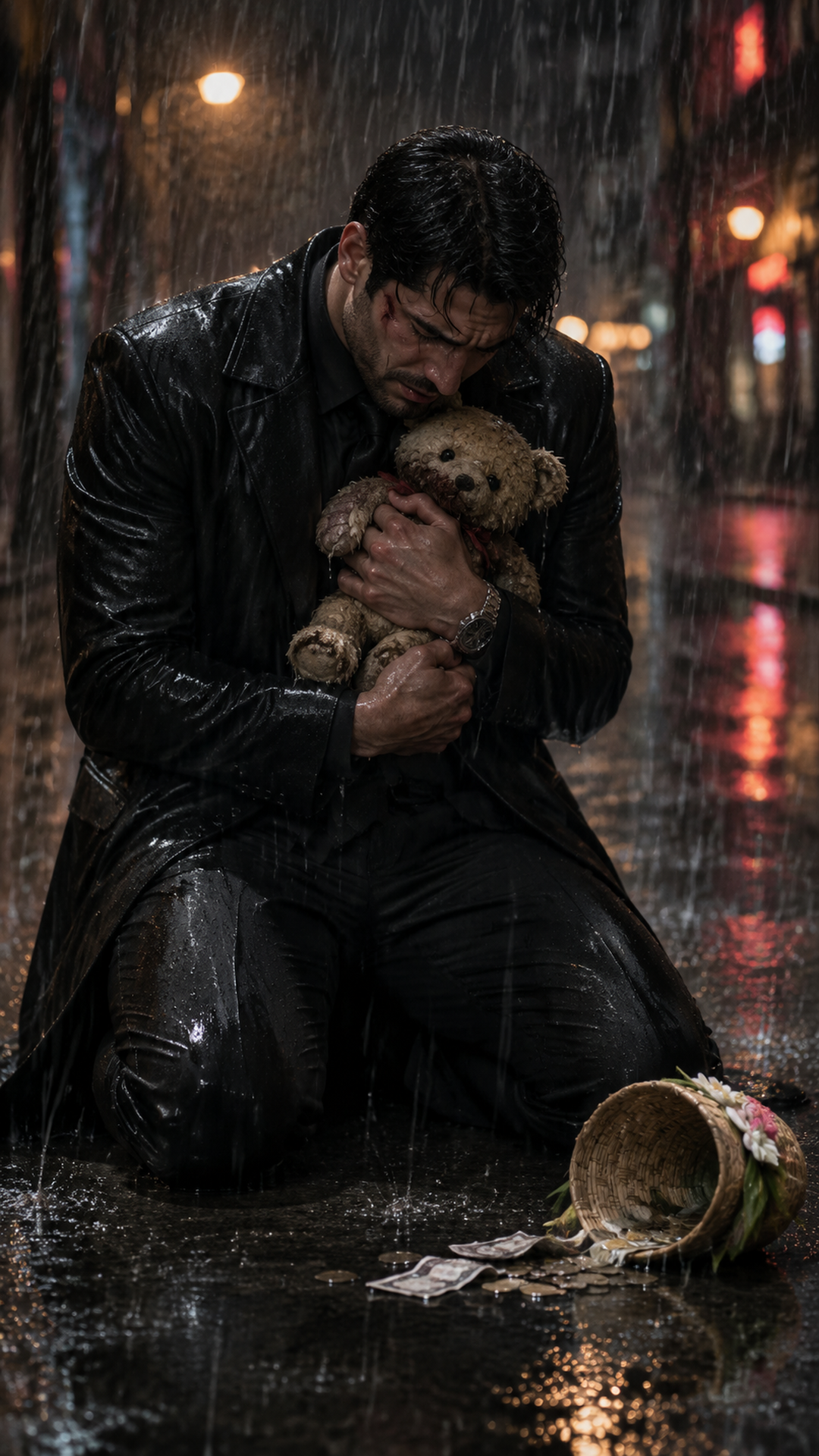
The name of his dead father had changed the air in the study.
Kave did not ask Silas to repeat it. He did not need to. The words had already settled somewhere beneath his ribs, in the place where the old guilt lived.
He stepped out of the study, crossed the silent hall, and walked through the front doors of the estate.
The rain had weakened to a fine mist. His driver opened the rear door, but Kave stopped beside the car.
“Take me to Pier Nine.”
Silas came down the hospital steps behind him.
“That property has been closed for years.”
“Then it should be quiet.”
“Your father's records are not all there.”
“Whatever remains is enough to begin.”
Silas studied him before getting into the car.
The old shipping office stood beyond the river warehouses, behind a chain-link fence and a gate that had not been painted in a decade. Darius Voss had used the building as a private records depot long before Kave inherited the organization. Its official purpose had been customs storage. Its real purpose had been to keep secrets away from people who knew how to ask questions.
A security light flickered above the entrance.
Kave stepped through the gate.
“Open it.”
Silas entered a code into the keypad. The lock clicked.
Inside, the air smelled of paper, oil, and damp concrete. Metal shelves rose from the floor to the ceiling. Every shelf carried a number. Every box had a date. Darius had never trusted digital records for matters he considered important.
Kave ran his fingers along the labels.
“Which section covered the flood?”
Silas pointed to the far wall.
“Family security. October, twenty-six years ago.”
“Then why are we standing here?”
They crossed the room.
The first cabinet contained routine reports: vehicle registrations, guard rotations, and payments to private contractors. Kave opened drawers one by one. He found the names of men who had been dead for years and companies that had never existed outside his father's ledgers.
Then he found a narrow black folder with a red line drawn across its spine.
There was no title.
Only a date.
October 14.
Kave opened it.
The first page was a copy of a police incident report. The second was a handwritten account from a driver. The third was a transfer authorization with a child's initials.
K.V.
Kave's hand stopped.
“Read it,” he said.
Silas did not move.
“Read it.”
Silas took the page.
“Temporary relocation of minor male, estimated age six. Transfer from East River emergency shelter to St. Agnes Youth Home. New identity to be assigned by receiving authority.”
“Who authorized it?”
Silas stared at the signature.
“Darius.”
“Who carried it out?”
Silas did not answer.
Kave turned the page over.
There was a second signature at the bottom.
S. Rook.
He placed the paper on the cabinet.
“Yours.”
Silas looked at the signature.
“Yes.”
Kave felt the room narrow around him.
“You signed the transfer.”
“I did.”
“You knew the child was Kavi.”
“I knew the child was your brother.”
“And you never told me.”
Silas's jaw tightened.
“Your father gave a direct order.”
“My father has been dead for years.”
“I know.”
“Then why did the order survive longer than he did?”
Silas looked toward the shelves.
“Because I was afraid of what would happen if you found him.”
Kave took a slow breath.
“You are going to tell me what happened. Every detail. Not the version you prepared for my father. The truth.”
Silas looked at the file.
“The flood had created chaos. Men connected to Victor Hale were moving through the district. Your father believed they had been watching the family for weeks.”
“Why would Victor Hale want a six-year-old?”
“To control the person who would inherit the organization.”
Kave stared at him.
“Me.”
Silas nodded.
“Your father believed that if Kavi remained beside you, Hale would use him as leverage. He believed the safest place for the boy was somewhere nobody could connect him to the Voss family.”
“So he arranged for two men to take him.”
“He arranged for him to be moved away from the street.”
“Do not dress it up.”
Silas fell silent.
Kave picked up the transfer form again.
“Did my father know the men would take him in a van?”
“Yes.”
“Did he know Kavi would be injured?”
“No. He expected the transfer to happen before the water rose.”
“But the water rose.”
“Yes.”
“And I was left standing in the street.”
Silas lowered his eyes.
Kave turned away.
He could see the scene without closing his eyes: the water climbing over the curb, Kavi's small fingers, the headlights, the van door sliding shut. He had spent years blaming himself for losing his grip. Now he understood that the men had been sent there by his own father.
“Was the kidnapping real?” Kave asked.
Silas answered carefully.
“The men were instructed to take him. They were not instructed to hurt him.”
“That is not an answer.”
“No,” Silas said. “It isn't.”
Kave pushed the folder away.
“Find the original order.”
“This is the original copy.”
“Then find the original.”
Silas looked toward a locked cabinet at the back of the room.
“Your father kept certain records separate.”
“Open it.”
“The key was never entrusted to me.”
Kave took a small brass key from his pocket. It had been attached to a ring of old estate keys he had inherited after Darius's death.
He tried the lock.
It turned.
Inside lay a narrow wooden box, a dictation recorder, and several sealed envelopes. The top envelope bore his father's handwriting.
For Kave, if the matter of the younger boy is ever reopened.
Kave looked at Silas.
“You knew this existed?”
“I knew there was a sealed record.”
“You knew it was addressed to me?”
“No.”
Kave opened the envelope.
The pages inside were not a letter of apology. They were instructions, written in Darius's precise, narrow hand.
The first page ordered the family registry to remove Kavi's name from the active household file. The second directed the estate accountant to maintain a private allowance for a child under the name Kieran Bell. The third instructed Silas to ensure that no member of the Voss family contacted the child.
Kave read the final paragraph twice.
*The elder boy must never learn that his brother survived. He will search until grief hardens into discipline. If he knows the younger one is alive, he will abandon the position prepared for him. The family cannot be governed by a man who will choose one child over the whole house.*
Kave lowered the page.
His father had not simply hidden Kavi from danger.
He had hidden him to shape Kave.
The grief had been part of the plan.
“Did he say this to you?” Kave asked.
Silas looked sick.
“He said the family needed an heir who could not be distracted.”
“And you accepted that?”
“I was twenty-four. I believed your father knew what was necessary.”
“You were old enough to know what a child needed.”
Silas did not defend himself.
Kave placed the pages on the table.
“Was Kavi ever meant to come home?”
Silas hesitated.
“There was a condition.”
“What condition?”
“Your father said he would reconsider the arrangement when the organization was secure and when you had taken control.”
Kave laughed once, without humor.
“So he planned to return my brother as a reward for becoming him.”
Silas looked down.
Kave pressed the recorder's switch.
A faint crackle filled the room. Then Darius's voice emerged, older and rougher than Kave remembered.
“If this recording is being played, then the matter has returned to the family. I will not pretend the decision was gentle. It was not. But a weakness exposed is a weakness exploited. Kave was always too attached to the boy. He would have given away every advantage to keep him safe.”
The recording clicked.
Darius continued.
“I chose the family. I chose the future. If the boy lived, he was to be kept far from the Voss name. If Kave asked, the answer was that the child had been lost in the flood. The elder son would learn to survive without him.”
Kave stopped the recording.
His hand shook.
“Turn it off.”
The machine went silent.
Silas stood perfectly still.
Kave looked at him.
“You heard this before?”
“Not this recording.”
“But you knew the order.”
“Yes.”
“You knew he was alive.”
Silas nodded.
“And you watched me search.”
“Yes.”
Kave moved so quickly that Silas took a step back.
“Why?”
“Because I believed I was keeping him safe.”
“From whom?”
“From the men who wanted to use him.”
“And from his brother?”
Silas did not answer.
Kave turned back to the file. Beneath the orders was a ledger with quarterly entries. Each payment had a date, an amount, and a coded destination. The last entry was made years after Darius died.
Kave tapped it.
“This continued after my father was gone.”
Silas stared at the ledger.
“Yes.”
“Who maintained it?”
“I did.”
“You kept paying someone to watch my brother.”
“I kept the arrangement alive.”
“You kept the lie alive.”
Silas's face tightened.
“I believed I was preventing a second disappearance.”
Kave leaned over the ledger.
The most recent line carried a different code: E.B. — EASTERN MEDICAL — STATUS CONFIRMED.
Kave pointed to it.
“Who is E.B.?”
Silas's silence answered before he did.
“Evan Bell,” he said at last.
Kave's eyes lifted.
“That's Kavi.”
“Yes.”
The room seemed to tilt.
Kave read the date. Three months earlier.
“He was alive three months ago.”
“Yes.”
“You had his location.”
“I knew where he had worked.”
“Where?”
Silas shook his head.
“I cannot give you an address from memory. The information was kept outside this archive.”
“Then retrieve it.”
“Some of the people who handled the arrangement are gone.”
“Find the ones who remain.”
Silas looked at him.
“There is something else in the file.”
He turned to the last page and pointed to a line written in red ink.
MARA ELLIS — BEAR TRANSFER CONFIRMED. KEEP SUBJECT UNDER OBSERVATION.
Kave read the name.
“Mara.”
Silas nodded.
“Your brother gave her the bear.”
“And my father knew.”
“He knew the bear had passed into her possession. He considered it a possible link to the boy's former identity.”
Kave's face hardened.
“Did anyone approach her?”
Silas hesitated.
“I have no record of that.”
“That's not good enough.”
“I can search the old surveillance records.”
“You will.”
Silas reached for the folder.
Kave put his hand over it.
“No. I keep this.”
Silas withdrew his hand.
***
The old office telephone still worked.
Kave found the number for the retired estate accountant in a directory clipped inside the cabinet door. He dialed it himself.
The man answered on the fourth ring.
“Hello?”
“This is Kave Voss.”
There was a long silence.
“Mr. Voss. I wasn't expecting to hear from you.”
“I need you to check a series of payments made after the flood.”
“I retired years ago.”
“You kept the ledgers.”
“I kept copies of the accounts I was legally required to retain.”
“Then you can help me.”
The accountant exhaled.
“What are you looking for?”
“Payments connected to a child placed at St. Agnes. Later payments connected to Eastern Medical.”
Another silence followed.
“I remember the account.”
“Tell me what it was.”
“Your father called it a protective trust. I was instructed to release money quarterly through an intermediary. The recipient's name changed twice.”
“From what to what?”
“I don't have the papers in front of me.”
“Get them.”
“Mr. Voss, I signed a confidentiality agreement.”
“My father is dead. The agreement is not a shield for what he did.”
The accountant's voice became smaller.
“I was told the money was for a child who had no family.”
“He had a family.”
“I understand that now.”
“Did you know who the child was?”
“No. Not at first. Later, the name Kieran Bell appeared in the disbursement notes.”
Kave closed his eyes.
“What kept you from telling me?”
“I was never told you were searching for him. I was told the matter had been settled.”
“By whom?”
“Silas Rook renewed the instructions after your father died.”
Kave looked across the room.
Silas had heard every word.
“Send me the records,” Kave said.
“I'll need an hour.”
“You have thirty minutes.”
The call ended.
Silas looked at him.
“You shouldn't have involved him.”
“I should have involved everyone who helped keep my brother hidden.”
The accountant sent the documents twenty-three minutes later. The final page showed a transfer to Eastern Medical three months earlier, followed by a handwritten note:
Subject requested family contact. Maintain observation. No direct approach.
Kave read it aloud.
Then he looked at Silas.
“You knew he was trying to reach me.”
Silas said nothing.
***
Kave gathered the documents, the recorder, and the ledger. His father had left him a map of the lie, but not the location of the person at its center.
He turned toward the door.
“From this moment, every record connected to Kavi belongs to me. No one destroys a page, moves a file, or contacts a witness without my permission.”
Silas nodded.
“And you will tell me everything you remember about the boy's life after St. Agnes.”
Silas's face changed.
Kave noticed.
“You know more than the transfer.”
Silas looked toward the locked cabinet.
“I know enough to make you hate me.”
Kave stopped.
“Try me.”
Silas drew a breath.
“Not here.”
“Why?”
“Because someone else kept records. Someone your father could not reach.”
“Who?”
Silas looked at the name on the page.
“Mara Ellis may not be the only person who kept proof.”
Kave's grip tightened around the folder.
“Then we find that person.”
Silas nodded.
But as Kave reached the door, the lieutenant added one last sentence.
“Your father didn't only order me to hide Kavi. He ordered me to watch the people who remembered him.”
Kave turned.
“And did you?”
Silas's answer came too late.
“Yes.”