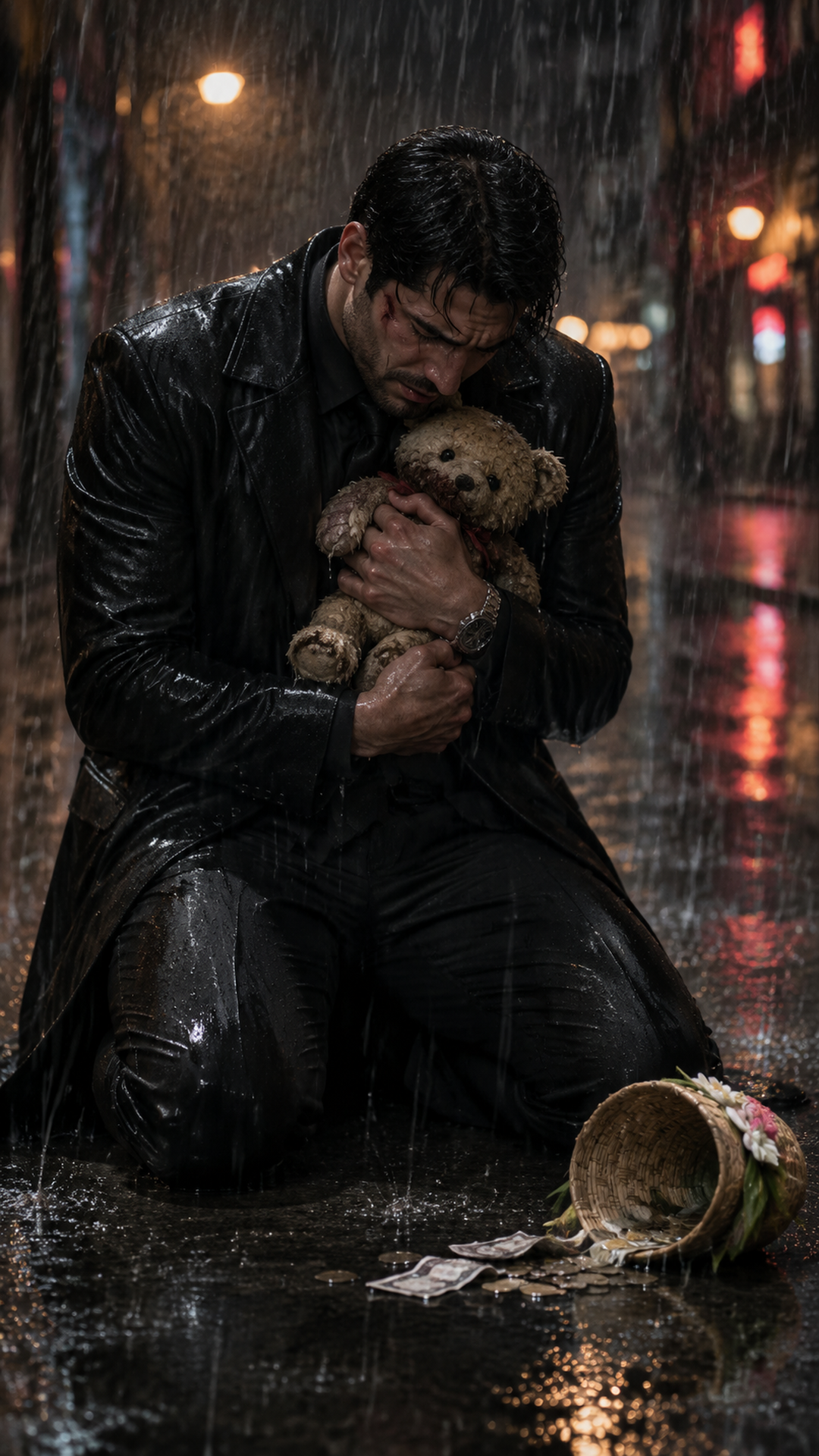
The medical center was quiet when Kave arrived.
Too quiet.
The front doors were open.
A chair lay overturned in the reception area, and a broken flowerpot covered the floor with soil.
Kave stepped inside.
“Evan!”
No answer.
He moved down the corridor.
A nurse appeared from behind a half-open door.
“Can I help you?”
“I'm looking for a man named Evan Bell.”
The nurse studied him.
“Are you family?”
Kave hesitated.
Then he answered.
“Yes.”
The nurse pointed toward the rear entrance.
“He left with a paramedic about twenty minutes ago. They said they were going somewhere safe.”
“Which paramedic?”
“His name was Daniel.”
Kave turned.
Daniel had already disappeared.
He called his number.
No answer.
Then his phone vibrated.
A message appeared.
HE IS SAFE. COME ALONE TO THE OLD RIVER STATION.
Kave stared at the screen.
The river.
The place where everything had begun.
He looked at his men.
“Stay here.”
“Sir—”
“That's an order.”
He walked out alone.
***
The old river station had been abandoned for years.
It stood behind a row of warehouses, its windows dark and its doors covered in rust.
Kave entered.
A man stood near the far wall.
He wore a paramedic jacket.
His dark hair was slightly longer than Kave remembered from the photograph.
A small scar crossed his left eyebrow.
He was thirty-two years old.
And he had his mother's eyes.
The man turned.
Kave stopped.
For several seconds, neither spoke.
Then the stranger said quietly:
“Are you Kave?”
Kave's throat tightened.
“Yes.”
The man looked at him.
“Your name is Kave Voss?”
“Yes.”
The stranger took a step forward.
“I've been looking for you.”
Kave couldn't move.
The man reached into his jacket and removed a small photograph.
It showed two boys standing in front of a red door.
Kave recognized it.
Their childhood home.
Their mother had taken the photograph.
The younger boy had been holding the teddy bear.
Kave's eyes filled.
“Kavi?”
The man nodded.
“My name is Kieran Bell now. But I think I was Kavi first.”
Kave covered his mouth.
He had imagined this moment thousands of times.
He had imagined running toward his brother.
He had imagined shouting.
He had imagined asking why he had never come home.
Instead, he stood frozen.
Kavi looked at him.
“You got old.”
Kave let out a broken laugh.
“So did you.”
Kavi smiled faintly.
Then his expression changed.
“Why didn't you come?”
The question struck harder than anything Kave had ever experienced.
Kave looked down.
“I searched.”
“For how long?”
“Twenty-six years.”
Kavi shook his head.
“Then why did everyone tell me you were dead?”
Kave closed his eyes.
“Because our father wanted you hidden. Because men we trusted lied. Because I was a child and didn't know where to look.”
Kavi stared at him.
“You were looking?”
“Every day.”
Kavi's expression crumpled.
“I used to count the windows at St. Agnes.”
Kave looked up.
“Why?”
“Because I remembered counting them with you.”
Kave felt tears run down his face.
“I used to count the stairs in our house.”
Kavi nodded.
“I remember.”
They stood in silence.
Then Kavi took another step forward.
“Do you still have the red car?”
Kave laughed through his tears.
“No. I lost it.”
Kavi shook his head.
“You always lost my toys.”
Kave looked at him.
Then, finally, he moved.
He crossed the room and wrapped his arms around his brother.
Kavi stood rigid for a second.
Then he held on.
Neither man spoke.
Twenty-six years of unanswered questions collapsed into one embrace.
Kave pressed his face against his brother's shoulder.
“I'm sorry.”
Kavi closed his eyes.
“I know.”
“I'm so sorry.”
“I know.”
“I should have held on.”
Kavi shook his head.
“You were ten.”
Kave pulled back.
“I promised to protect you.”
“You were a child, too.”
Kave looked at him.
Kavi placed a hand on his shoulder.
“Don't spend another twenty-six years punishing yourself.”
***
They sat on an old wooden bench.
Kavi explained what had happened after the flood.
He remembered being carried through the rain.
He remembered a van.
He remembered waking in a clinic with a bandage around his head.
He had no identification.
Nobody knew where his family was.
He had repeatedly asked for a boy named Kave.
Eventually, he was moved into foster care.
He became Kieran Bell.
For years, he believed his family had died.
“I remembered more when I was seventeen,” he explained. “The red door. The silver gate. Your face.”
Kave listened.
“I started looking for records. But everything had been changed.”
“What about the letters?”
Kavi looked confused.
“What letters?”
“The ones you sent.”
“I sent three.”
Kave went still.
“To whom?”
“The Voss estate. I found an old address in a newspaper.”
Kave looked at him.
“None of them reached me.”
Kavi lowered his eyes.
“I thought you didn't want me.”
Kave shook his head.
“No.”
“I thought maybe you had forgotten.”
Kave looked at him.
“I never forgot.”
Kavi nodded slowly.
“Then why did it take so long?”
Kave couldn't answer.
Because the truth was ugly.
He had been searching.
But he had also become obsessed with power.
He had allowed men to control his life.
He had built an empire while his brother waited.
“I don't have an excuse,” Kave said.
Kavi looked at him.
“Good.”
Kave blinked.
“Good?”
“Because I don't need an excuse. I need the truth.”
Kave nodded.
“Then I'll give you all of it.”
***
They returned to the hospital together.
Mara was waiting.
When she saw Kavi, she stood so quickly that she nearly dropped the cup in her hand.
“Kieran?”
Kavi smiled.
“Hello, Mara.”
She covered her mouth.
Then she crossed the room and hugged him.
“You came back.”
“I said I would.”
“You disappeared.”
“I know.”
Mara stepped back.
“Phoebe has your bear.”
Kavi's expression softened.
“Benny?”
Mara nodded.
Kavi laughed.
“You named him that?”
“I thought it suited him.”
Kavi looked at Kave.
“He gave me that bear when I was little. I used to sleep with it.”
Kave smiled sadly.
“I remember.”
Mara looked between the brothers.
“I kept it because I thought one day you might return.”
Kavi looked at her.
“You did.”
Then he glanced toward the bedroom.
“Where is Phoebe?”
Mara smiled.
“She'll be home from school soon.”
Kavi nodded.
“I'd like to meet her properly.”
***
Phoebe arrived that afternoon.
She entered the apartment carrying her school bag.
“Mommy!”
Mara hugged her.
Then Phoebe noticed the unfamiliar man sitting beside Kave.
She stopped.
“Who is that?”
Kave crouched.
“Phoebe, this is someone very important.”
Kavi smiled.
“Hello, Phoebe.”
The little girl looked at him carefully.
Then she looked at the teddy bear in her arms.
“Do you know Benny?”
Kavi laughed.
“I know him very well.”
Phoebe approached.
“Did he belong to you?”
“Yes.”
“Did you lose him?”
Kavi glanced at Kave.
Then he smiled.
“No. I gave him to someone who needed him.”
Phoebe thought about that.
“Mommy says giving things away is nice.”
“Your mommy is right.”
Phoebe looked at Kave.
“Is he Uncle Kieran?”
Kave nodded.
“Yes.”
She considered him for a moment.
Then she held out the teddy bear.
“Can you fix his ear? It's getting loose.”
Kavi took the bear carefully.
“I can.”
Phoebe smiled.
“Thank you.”
Kave watched them.
For years, he had believed the bear was a symbol of everything he had lost.
Now it was sitting between his brother and a little girl who had unknowingly brought them together.
***
Later that evening, Kave received a call from his lawyer.
Silas had been detained.
Several documents had been recovered from his office.
The evidence included records of payments made to officials, false foster-care reports, and correspondence with Darius Voss.
Kave looked at the papers.
The truth was complete now.
His father had ordered Kavi's removal.
Silas had maintained the deception.
And the organization had been built around the silence.
Kave looked toward the apartment.
Mara was reading to Phoebe.
Kavi was repairing the teddy bear.
For the first time, he understood what he had to do.
He called his lawyer.
“Prepare everything.”
“Everything, sir?”
“All the accounts. All the records. Every company connected to my organization.”
There was a pause.
“Are you sure?”
“Yes.”
“What are you planning to do?”
“End it.”
***
Kavi found Kave on the narrow roof terrace above Mara's apartment.
The city spread below them, washed clean by the storm. Streetlights shimmered on the wet road, and the distant traffic sounded softer above the rooftops.
“You disappeared,” Kavi said.
“I needed air.”
“You've been standing here long enough for the rain to dry on your jacket.”
Kave looked down at his hands.
“I keep thinking about what you did with your life.”
“I became a paramedic.”
“I know.”
“You sound surprised.”
“I am.”
Kavi leaned against the railing.
“After St. Agnes, I couldn't stand the idea of watching someone suffer while everyone waited for a person with more authority to decide what to do.”
Kave listened.
“So I trained,” Kavi continued. “At first I thought it was because I wanted to be useful. Later I realized I wanted to be the person who arrived before a family gave up.”
Kave looked toward the ambulance entrance.
“I spent my life making people wait for me to decide what happened to them.”
“Then stop doing that.”
“I am going to close the organization.”
Kavi did not react immediately.
“Do you mean the businesses, or the people?”
“The businesses built on threats. The accounts that hide what we did. The operations that keep men afraid.”
“And the people who worked for you?”
“They'll have a choice. They can leave. They can cooperate with investigators. They can face what they did.”
Kavi nodded.
“That's a beginning.”
Kave looked at him.
“I don't want you anywhere near it.”
“I wasn't planning to join your empire.”
“I mean it.”
“So do I.”
Kave turned away.
“I have spent years thinking that if I could find you, I could repair everything.”
“You can't.”
The answer was gentle, but firm.
Kave looked back.
Kavi continued, “You can't give me back the years. You can't undo the flood. You can't make the people who lied suddenly tell the truth. But you can decide what happens next.”
“I know.”
“Then don't turn your guilt into another prison. I don't want you to spend the rest of your life trying to pay me back.”
Kave swallowed.
“What do you want?”
“I want you to be my brother. Not my guard. Not my employer. Not the man who thinks he has to buy every lost year back.”
Kave's eyes filled.
“I can try.”
“That's all I can ask.”
Kavi's phone vibrated.
He checked the message and frowned.
“My station has been asked to send another paramedic to the river district. The rain has started again, and the low road is already filling.”
“Do you need to go?”
“I should.”
Kave stepped aside.
Kavi paused at the door.
“You know what I learned doing this work?”
“What?”
“Sometimes the person who saves someone is not the strongest person in the room. It's the one who stays calm long enough to help.”
Kave nodded.
“Go.”
Kavi left.
Kave remained on the terrace until the ambulance doors closed.
Then he took out his phone and called his lawyer again.
“Start with the people who were paid to keep silent,” he said. “I want their records preserved, not erased.”
***
That night, Kave sat beside Mara on the small balcony.
The city lights shimmered below them.
She looked at him.
“You found him.”
“Yes.”
“How does it feel?”
Kave thought for a long moment.
“Like I can breathe again.”
Mara smiled.
He looked at her.
“I need to tell you something.”
“What?”
“I don't know how to be a good man.”
Mara studied him.
“Then start by trying.”
“I don't know how to live without the organization.”
“Then learn.”
He looked down.
“I have spent most of my life believing that if I stopped being powerful, I would become weak.”
Mara shook her head.
“Being kind doesn't make you weak.”
Kave looked at her.
“And staying?”
She smiled gently.
“Sometimes staying is the bravest thing a person can do.”
He wanted to reach for her hand.
But he waited.
Mara noticed.
Then she placed her hand over his.
For a moment, they sat quietly.
Inside, Phoebe laughed at something Kavi said.
Kave looked toward the sound.
Then his phone rang.
His lawyer.
He answered.
“Sir, there's a problem.”
Kave stood.
“What?”
“The documents Silas provided include a recording.”
“Of what?”
“Your father.”
Kave's expression hardened.
“What does he say?”
The lawyer hesitated.
Then the recording began playing through the phone.
Darius Voss's voice filled the quiet balcony.
*If Kave ever discovers what happened to Kavi, he must never learn who gave the order to keep the boy alive.*
Kave stared into the darkness.
Then came the final sentence.
*Because I was not the only one who wanted that child gone.*
—