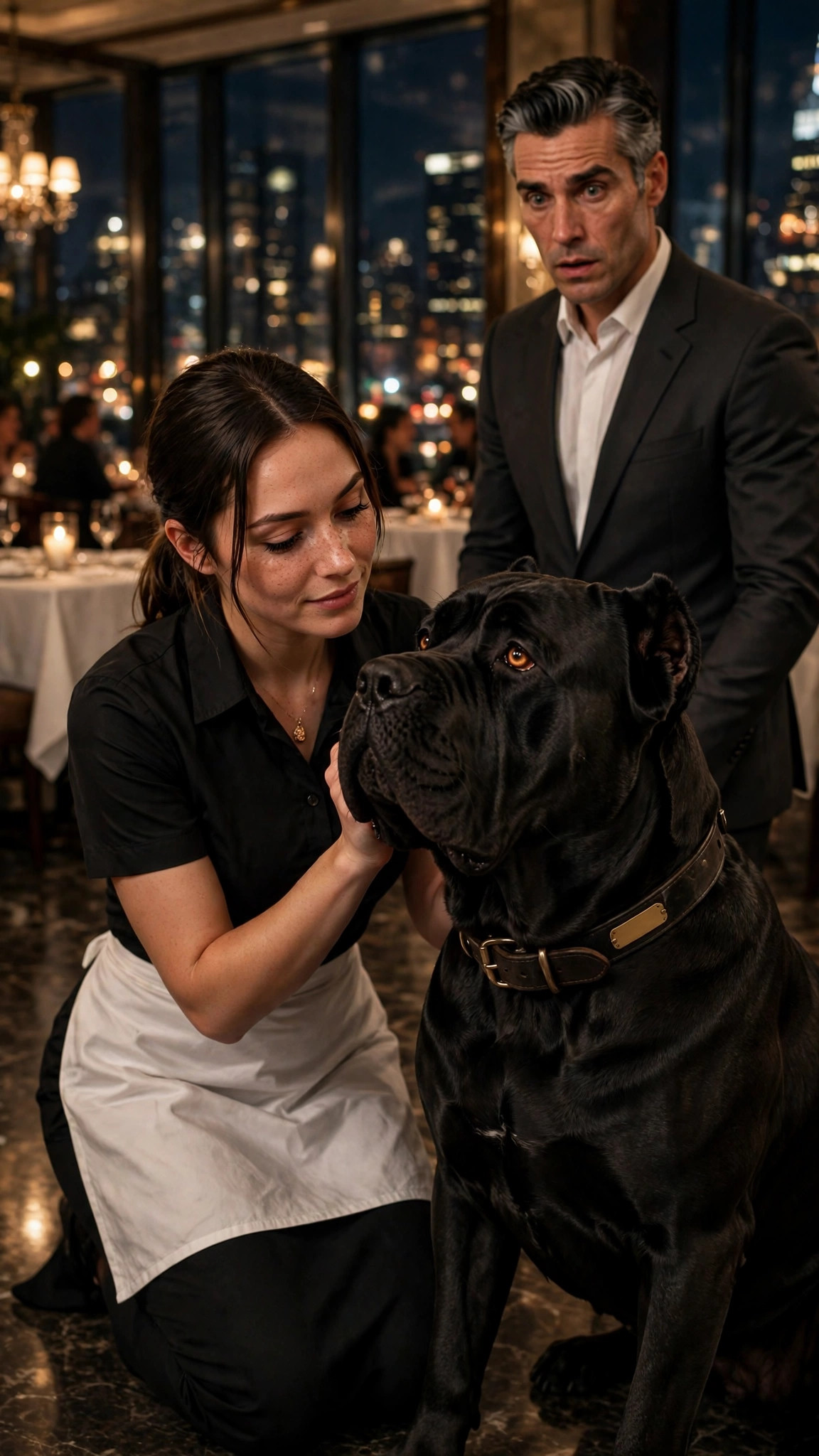
The trap was set for a Thursday. Dante told Enzo — and only Enzo — that I would be at a small café in Brooklyn at three o'clock in the afternoon, to meet a friend from my old life. He told Rocco nothing. He told me everything, and he made me promise to stay in the penthouse with the doors locked and Orion beside me.
"The café is a lie," Dante said. "There is no friend. There is no meeting. But Castellano's men will go there if Enzo tells them. And when they do, my men will be waiting, and we will know."
"And if they don't go?" I asked.
"Then Enzo is innocent, and the leak is somewhere else." Dante's voice was flat. "But they will go."
Thursday came. Three o'clock came and went. At four o'clock, Rocco came to the penthouse with a report: three of Castellano's men had been seen outside the café in Brooklyn. They had waited for an hour, then left. Dante's men had followed them. Enzo was the mole. It was confirmed.
Dante's face went very still. "Bring him to me," he said to Rocco. "Alive. I want to hear it from him."
Rocco left. Dante stood by the window, his hands behind his back, looking out at the park. Orion lay at his feet. I sat on the couch with a book I wasn't reading, and I tried not to think about what would happen to Enzo when Rocco brought him back.
"He has a sister," Dante said, without turning around. "Enzo. She's sick. Leukemia. The treatment costs more than he makes in a year. Castellano has been paying her medical bills."
"That's why he did it," I said.
"Yes. That's why he did it." Dante turned around, and his eyes were dark. "And that is why I will not kill him. But he will never work for me again, and he will never come near you again."
I nodded. I didn't know what to say. The world Dante lived in had rules I didn't understand — rules about loyalty and debt and what you owed a man who betrayed you and what you owed a man whose sister was dying.
At six o'clock, the phone rang. It was Rocco, and his voice was tight with panic.
"Mr. Moretti," he said. "Enzo is gone. He ran. And — sir, Castellano's men are at the penthouse garage. They didn't go to the café. They went to the real address. They knew where she was all along."
Dante moved so fast I barely saw him. He was across the room and had my arm in his hand, pulling me toward the interior hallway, away from the windows, and shouting at Rocco through the phone. Orion was on his feet, his hackles up, a low growl rolling in his chest like thunder.
"How did they know?" Dante said. "Enzo only knew the café. How did they know the penthouse?"
"They didn't need Enzo, sir," Rocco said. "They've been watching the building. They've been watching since the night at the restaurant. They followed the car. They knew the whole time."
The elevator dinged.
Dante shoved me behind him and drew a gun from inside his jacket — I hadn't known he carried one, and I wished I still didn't — and Orion went rigid, every muscle in his enormous body coiled, his amber eyes fixed on the elevator doors.
The doors opened. Two men stepped out, both in dark suits, both with their hands inside their jackets. Behind them, a third man stayed in the elevator, holding the doors.
"Mr. Moretti," the first man said, and his voice was polite, almost bored. "Mr. Castellano sends his regards. He'd like to have a word with the girl."
"No," Dante said.
"Mr. Castellano was afraid you'd say that." The man smiled. "He asked me to tell you that if you don't hand her over, he'll burn down the restaurant where she works. And then he'll burn down the building where she lives. And then he'll find the cat."
My blood went cold. Miso. Mrs. Alvarez. The little apartment in Queens with the chipped nightstand and the radiator that clanked all night.
"Don't listen to them," I whispered to Dante. "Don't —"
But Dante was already moving. He didn't raise his gun. He didn't shout. He did something much more frightening: he smiled.
"Tell Vincent Castellano," he said, very quietly, "that if he touches one hair on her head, or one brick of her building, or one whisker of her cat, I will burn down every warehouse, every casino, every restaurant, and every house he owns, starting with the one his mother lives in. And then I will come for him myself."
The man in the doorway hesitated. Just for a second. Just long enough for Orion to move.
I don't know what Orion did, exactly, because it happened so fast. One moment the man was standing in the elevator doorway, and the next moment Orion was between us and him, his teeth bared, his growl shaking the floor, and the man was backing into the elevator with his hands up, and the doors were closing, and the elevator was going down.
The second man followed. The third never got out.
Dante lowered his gun. His hands were shaking — the only time I ever saw them shake.
"They'll be back," he said. "Castellano doesn't give up. He'll try again, and next time he won't send two men to talk."
"Then what do we do?" I asked.
"We end it," Dante said. "Tonight. I go to him, and I end it, one way or another."
"No," I said. "You don't go alone. You don't —"
"I have to," Dante said. "It's the only way. He wants me, not you. If I go to him, he lets you go. That's the deal I will offer him."
"Dante," I said, and it was the first time I had used his first name. "If you go alone, he'll kill you."
"Maybe," Dante said. "But he won't touch you. And that's what matters."
He turned to go, and I grabbed his arm, and Orion pressed himself against my leg, and for a moment the three of us stood there in the hallway of the penthouse — a mafia boss, a waitress, and a dog — and I understood, finally, what this story was really about. It wasn't about a debt. It wasn't about a dog. It was about a man who had spent nineteen years carrying a stone in his pocket, and a girl who had spent her whole life being invisible, and the fact that they had found each other in the last place either of them expected: a restaurant, at table twelve, because a dog had decided to love her.
"I'm coming with you," I said.
"No, you're not."
"Yes, I am," I said, and my voice didn't shake at all. "You don't get to decide that for me. My father died for you. My mother hid me for nineteen years. I have spent my whole life being protected by people who wouldn't tell me the truth. I'm done with that. If you go to Castellano, I go with you. And Orion goes with us."
Dante looked at me for a long time. Then he looked at Orion, who was watching him with steady amber eyes. Then he nodded, once, the way a man nods when he has lost an argument he knows he should have won.
"All right," he said. "But you stay behind me. And you do exactly what I say. And if I tell you to run, you run."
"Deal," I said.
But before we ever got to the warehouse, there was the war council. That was what Dante called it, though it took place in his living room, around the coffee table, with Rosa bringing in coffee and sandwiches as though we were planning a dinner party instead of a confrontation with a rival mafia family.
Agent Dana Cole was there. She was a woman in her forties with short gray hair and a voice like gravel, and she had been building a case against the Castellano family for three years. She laid out photographs on the coffee table — Vincent Castellano at a restaurant, Vincent Castellano at a casino, Vincent Castellano shaking hands with a union official — and she explained, in plain language, what she needed from us.
"I need him to threaten you on tape," she said, looking at Dante. "I need him to say, in his own words, that he will hurt this girl if you don't sign over the docks. That's extortion. That's conspiracy. That's enough to put him away for twenty years. But he has to say it himself, and I have to hear it."
"And if he doesn't say it?" Dante asked.
"Then we try again," Cole said. "But he will say it. Men like Castellano can't help themselves. They love the sound of their own threats." She opened a case on the table and took out a small black device, no bigger than a matchbox, and she held it up. "This is a wire. Rocco will wear it. Every word in that warehouse will be recorded, and my agents will be listening from the cars outside. If Castellano so much as raises his voice at the girl, we come in. And the cars have cameras. And the warehouse has a camera we installed last week, in the rafters, while his men were drinking at a bar across the street." She looked at me then, and her gravel voice went almost gentle. "Miss Marshall, I know this is frightening. But I want you to know that you will not be alone in that room. Not for one second. There will be twenty agents outside, and a dog inside, and a man who would burn down the city for you. You are the safest person in New York tonight."
Dante's lawyer, a thin man named Adler who had been silent until then, cleared his throat. "For the record, Mr. Moretti, I advise against this. If anything goes wrong, the liability —"
"Adler," Dante said, without looking at him. "Shut up." And Adler shut up.
"Then we try again," Cole said. "But he will say it. Men like Castellano can't help themselves. They love the sound of their own threats."
Rocco was there too, and two other men whose names I didn't catch, and they spread a map of the docks across the table and pointed at the warehouse and the exits and the places where Cole's agents would be hidden. Dante listened without interrupting, his arms crossed, his face unreadable. When they finished, he looked at me.
"You stay in the car," he said. "With Rocco. You don't get out. You don't follow me inside. Do you understand?"
"No," I said. "I don't understand, and I don't agree. I'm not sitting in a car while you walk into a warehouse full of men who want to kill you. I'm coming inside."
"Olivia —"
"No," I said, and my voice was steady, and I was surprised at how steady it was. "My father died for you in an alley nineteen years ago, and my mother spent her whole life hiding me, and I have spent my whole life being protected by people who wouldn't tell me the truth. I'm done with that. If you walk into that warehouse, I walk in with you. And Orion walks in with us."
Dante looked at me for a long moment. Then he looked at Orion, who was sitting by the door with his leash in his mouth, as though he had already decided he was coming. Then Dante nodded, once, the way a man nods when he has lost an argument he knows he should have won.
"All right," he said. "But you stay behind me. And you do exactly what I say. And if I tell you to run, you run."
"Deal," I said.
Agent Cole cleared her throat. "For the record, I don't love this plan. The girl is a civilian. If anything happens to her —"
"Nothing will happen to her," Dante said, and his voice was so cold that the whole room went quiet. "I give you my word."
The drive to the docks took forty minutes. I sat between Dante and Orion in the back seat, and I watched the city change outside the window — the glass towers giving way to brick warehouses, the bright streets giving way to dark ones, the air smelling more and more of salt and diesel. Dante held my hand the whole way. He didn't say anything. He just held my hand, and his thumb moved back and forth across my knuckles, slow and steady, like a heartbeat.
When we pulled up outside the warehouse, Rocco got out first, and he scanned the street, and he nodded, and Dante got out, and I got out, and Orion got out, and the six black cars behind us emptied, and Dante's men fanned out across the yard with their faces set, and I realized that I was walking into a war.
But I wasn't afraid. Not anymore. Because the dog at my side had chosen me, and the man in front of me had spent nineteen years looking for me, and for the first time in my life, I was not alone.
When the meeting ended, Dante stood up, and he checked his gun, and he looked at me, and he said, "It's time." Rocco was already at the door with Orion's leash in his hand. My hands were shaking, but only a little. I thought about my father, who had walked into danger for a stranger, and my mother, who had hidden me for nineteen years, and I thought about the dog who had chosen me in a restaurant. And I walked to the elevator with my head high, because whatever happened next, I was not going to hide. Not anymore.
We went down in the elevator together — Dante, Rocco, Orion, and me — and the doors opened onto the garage, where six black cars were waiting, and Dante's men stood in a line with their faces set, and I realized that I was walking into a war. Rocco opened the back door of the first car for me, and Orion jumped in after me, and Dante slid in beside us, and the convoy pulled out of the garage in perfect formation, six black cars moving through the night like a single animal. Nobody spoke. Rocco drove with both hands on the wheel and his eyes on the mirrors. Dante stared out the window at the city sliding past, and his jaw was set, and I could see the weight of nineteen years sitting on his shoulders. I reached over and took his hand, and he looked at me, surprised, and then he squeezed my fingers, once, hard, the way a man holds on to the only solid thing in a storm.
But I wasn't afraid. Not anymore. Because the dog at my side had chosen me, and the man in front of me had spent nineteen years looking for me, and for the first time in my life, I was not alone.