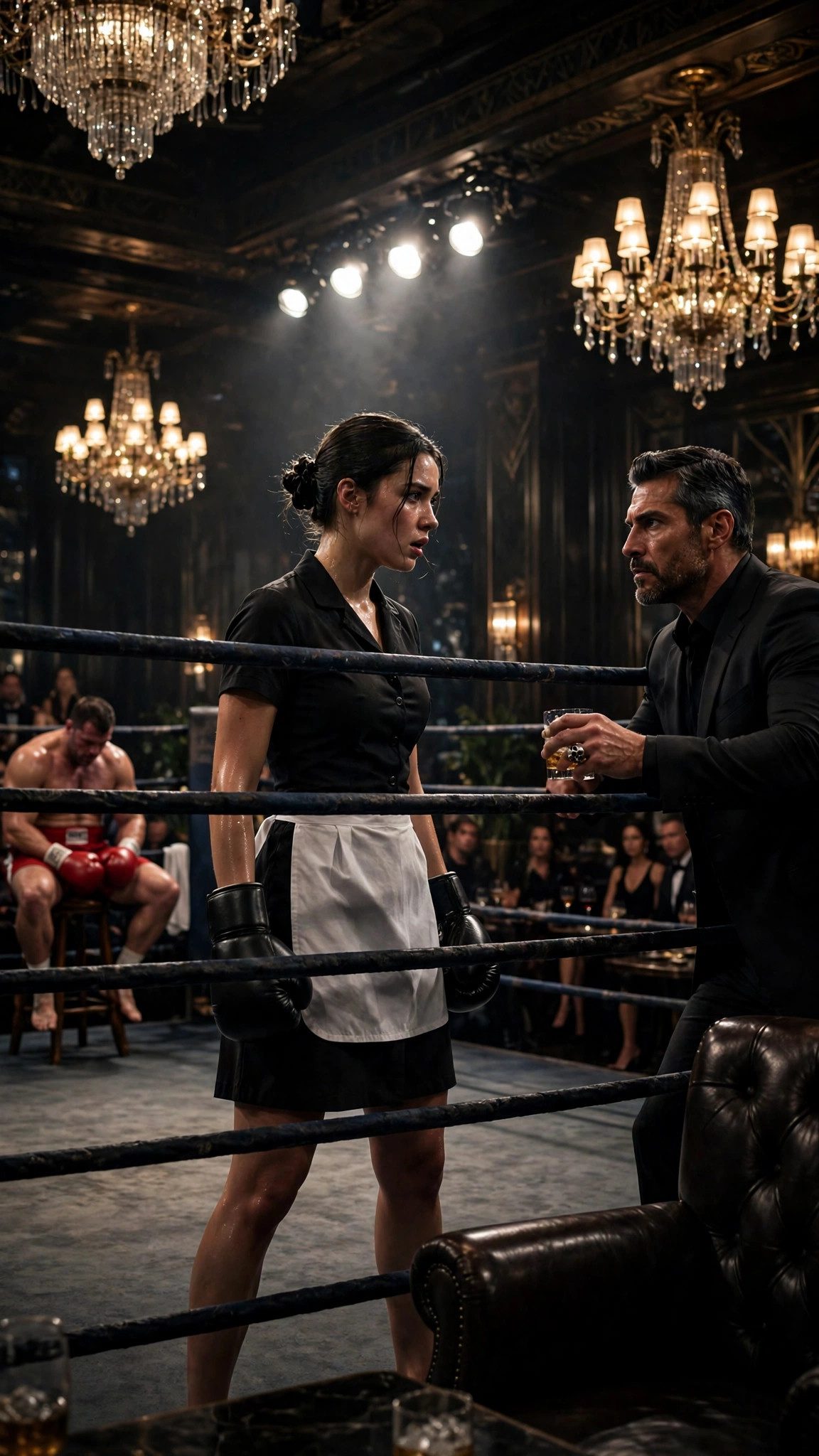
Vincent Castellano was sentenced to life in prison, without the possibility of parole, six months after the day he confessed to Dominic Russo in the private dining room of the Meridian Club.
The trial lasted three weeks. Eddie Marcone testified, his hands shaking, his voice barely above a whisper, but he told the truth, every word of it, and when he finished, the courtroom was so quiet you could hear the clock on the wall. Ray Deluca testified, too, and he told the court about the money Castellano had paid him, and about the telephone calls, and about the night he had told Castellano everything about Sadie and the notebooks and the driver in Gary. The three men who had tried to burn the gym testified as well, and they told the court about the gasoline cans, and about the orders Castellano had given them, and about the way Dominic Russo had stopped them in the street with his bare hands.
The photograph was shown to the jury. The betting slip was shown to the jury. Salvatore Russo's note was shown to the jury, the note that said, "Castellano handles Callahan. The boy refused." And my father's notebook was shown to the jury, open to the last page, where my father had written, in his careful, blocky handwriting, "He is the one who will come. Not the boy. Him."
When the verdict was read, Castellano did not react. He sat in his chair, silver-haired, soft-spoken, with the manners of a gentleman, and he looked at the jury, and he looked at the judge, and he looked at me, sitting in the front row beside Dominic, and he smiled, a thin, cold smile, and he said, "You win, Russo. You finally win. But you will never be free of me. You will carry me with you for the rest of your life, the way you have carried Callahan."
Dominic did not answer him. He did not look at him. He took my hand, and he held it, and we walked out of the courtroom together, into the sunlight, and for the first time in twenty years, the weight that Dominic Russo had been carrying began, very slowly, to lift.
Ray Deluca was sentenced to eight years in prison, with the possibility of parole after four, in exchange for his testimony. He wrote Sadie a letter from prison, an apology, and he told her that he had never wanted anyone to get hurt, that he had only wanted the money, and that he was sorry. Sadie read the letter once, and she folded it up, and she put it in a drawer, and she never read it again, because some apologies are not for the person who receives them. They are for the person who writes them.
Eddie Marcone moved out of the little house in Gary, Indiana, and into a small apartment in Chicago, paid for by Dominic, with a view of the river, and he spent his days fishing, and his nights writing in a new notebook, a notebook full of ordinary things, the weather, the fish he had caught, the birds he had seen. He was no longer afraid. He told Sadie once, over coffee, that for the first time in twenty years, he slept through the night.
Callahan's Gym was rebuilt. Dominic kept his promise. He hired the best builders in Chicago, and he tore down the burned walls, and he put up new ones, and he sanded the floors, and he hung new heavy bags from the ceiling, and he painted the sign himself, standing on a ladder in the cold October rain, with Sadie holding the ladder steady below him. The sign said, in big gold letters, "CALLAHAN'S GYM — EST. 1987 — JAMES CALLAHAN, TRAINER." And underneath it, in smaller letters, were the words, "A fight is won by the person who knows exactly what to do in the first thirty seconds."
The gym opened on a Saturday morning in October, exactly twenty years and one day after the night James Callahan died. The whole neighborhood came. Old men from the corner store came. Fighters from the old days came. Children from the block came, children who had never thrown a punch in their lives, and Sadie stood in the middle of the gym floor, in her black waitress uniform, because she had come straight from her shift at the Velvet Ring, and she taught them how to wrap their hands, and how to stand, and how to throw a jab, the way her father had taught her when she was eight years old.
Dominic stood in the doorway, watching her, and he smiled, and it was not a small, sad smile this time. It was a real smile, a full smile, the kind of smile that reaches a man's eyes and stays there, and I thought about the first time I had seen him smile, in the ring, after I had told him we would find the proof together, and I thought about how far we had come since that night, and how much had changed, and how much had stayed the same.
Sadie became the head trainer at Callahan's Gym. She quit her job at the Velvet Ring, and she put on her father's old coaching jacket, the one she had found in a box in the back room of the gym, the one that still smelled faintly of leather and sweat and liniment, and she taught children to box, and she taught them what her father had taught her, that a man's fists are the last thing he should reach for, not the first, and that a fight is never won by the strongest person in the room. It is won by the person who knows exactly what to do in the first thirty seconds.
Dominic took the Velvet Ring legitimate. He closed the betting room. He fired the men who had run the fixed fights. He turned the lounge into a restaurant and a club, a place where families could come for dinner, and where fighters could fight fair, and where nobody ever had to be afraid. Tony Marino became the head of security, and he never lost another fight, because he never fought another fight that was fixed, and he told everyone who would listen that the waitress had taught him the most important lesson of his life, which was that you should never, ever underestimate a woman in a black uniform dress.
And then, one evening in December, six months after the trial, Dominic Russo asked Sadie Callahan to meet him in the ring at the Velvet Ring, after closing, when the lounge was empty and the chandeliers were dimmed and the only light in the room came from the ring itself.
She went, because she always went when he asked her to go, and she climbed through the ropes, and she stood in the center of the ring, and Dominic stood in front of her, tall and powerfully built, in his tailored black suit, with the skull ring on his right hand, and he looked down at her, and he said, "Sadie, twenty years ago, I carried you out of a burning gym, and I put you in your mother's arms, and I told her to run. I have spent twenty years trying to make up for the fact that I could not save your father. I have spent twenty years carrying a secret, and carrying guilt, and carrying a promise I did not know how to keep. You came back to Chicago, and you walked into my lounge, and you dropped my champion in thirty seconds flat, and you woke up that secret, and you made me tell the truth for the first time in my life. You are the bravest person I have ever met, Sadie Callahan. You are the strongest person I have ever met. And I love you. I have loved you since the night I carried you out of that gym, when you were eight years old and asleep in my arms, and I have loved you every day since, even when I did not know your name, even when I did not know where you were. I love you, Sadie. Will you marry me?"
He got down on one knee, in the middle of the boxing ring, in the place where she had defeated his champion, in the place where he had asked her name for the first time in twenty years, and he took a small box out of his pocket, and he opened it, and inside was a ring, a simple gold band with a single diamond, and Sadie looked at it, and she looked at him, and she thought about her father, and about her mother, and about the promise she had made on her mother's deathbed, and about the twenty-year secret that had finally, at last, been told.
"Yes," she said. "Yes, Dominic. I will marry you."
They were married in the garden behind Callahan's Gym, on a warm Saturday in June, under a sky so blue it looked like it had been painted. Sadie wore a white dress, and her dark hair was down around her shoulders for the first time in years, and she carried a bouquet of white roses, and Dominic wore a black suit, and the skull ring was gone from his right hand, replaced by a simple gold band. Tony Marino was the best man. Gabby was the maid of honor. Eddie Marcone gave Sadie away, because there was no one else in the world who had earned the right to walk her down the aisle, and when he took her arm, his hands were steady for the first time in twenty years.
After the wedding, after the cake had been cut and the dancing had begun, Dominic took Sadie by the hand, and he led her into the gym, and he showed her the wall behind the heavy bags, the wall where he had hung her father's photograph, the photograph of James Callahan standing in front of the gym with his arm around his seven-year-old daughter, and underneath the photograph, on a brass plaque, were the words her father had written in his notebook on the last day of his life.
"Tell Sadie her father loved her, and tell her the boy tried."
Sadie stood in front of that wall, in her white wedding dress, with her husband beside her, and she read those words, and she cried, and Dominic held her, and the children from the neighborhood ran past them, laughing, chasing each other around the ring, and the heavy bags swung gently in the breeze from the open door, and the gym smelled of leather and sweat and liniment, the way it had always smelled, the way it would always smell, as long as there were children in Chicago who needed someone to teach them how to fight, and how to stand, and how to throw a jab, and how to know exactly what to do in the first thirty seconds.
My name is Sadie Callahan, and my father was James Callahan, and he was the best boxing trainer on the West Side of Chicago, and twenty years ago somebody murdered him in his own gym. And this is the end of the story, and it is also the beginning, because Callahan's Gym is open again, and my father's name is back on the wall, and the secret that slept for twenty years is awake, and it is told, and it is finished, and the woman who defeated the mafia's champion in thirty seconds flat is home, at last, in the gym where her father taught her to fight.
One year after the gym reopened, on a Saturday morning in October, we held the first anniversary celebration at Callahan's Gym, and the whole neighborhood came again, and this time the gym was full of children, dozens of them, in new gloves and new shoes, running around the ring, skipping rope, hitting the heavy bags, laughing the way children laugh when they are exactly where they are supposed to be.
Sadie's first student, a twelve-year-old girl named Maya with dark hair in a low bun, just like Sadie used to wear hers, had won the city junior title the week before, and she stood in the center of the ring with her little gold medal around her neck, and she said, in a clear, steady voice, "Miss Callahan taught me that a fight is never won by the strongest person in the room. It is won by the person who knows exactly what to do in the first thirty seconds. And she taught me that my hands are not weapons. They are tools. And I am going to use them to build things."
Dominic stood beside Sadie, and he had learned to wrap hands by then, and he spent the morning wrapping the children's hands, slowly, carefully, the way James Callahan had wrapped his hands when he was sixteen years old, and the children sat on the stools in a row, swinging their legs, watching his big hands work the wraps around their small fingers, and one of them, a little boy of eight, looked up at him and said, "Mr. Russo, are you a boxer?"
"I was, once," Dominic said. "A long time ago. A very good man taught me."
"Will you teach me?" the boy asked.
Dominic looked at Sadie, and Sadie nodded, and Dominic smiled, and he said, "Yes. I will teach you. And Miss Callahan will teach you, too. And together, we will teach you everything her father taught us."
That afternoon, we unveiled a new plaque on the wall of the gym, beside her father's photograph, a brass plaque with the names of every child who had trained at Callahan's Gym in its first year, and at the top of the plaque, in big letters, were the words, "IN MEMORY OF JAMES CALLAHAN — TRAINER, FATHER, FRIEND — AND IN HONOR OF SADIE CALLAHAN, WHO BROUGHT HIS GYM BACK TO LIFE."
Sadie stood in front of that plaque, in her coaching jacket, with her husband beside her, and she read it, and she smiled, and she thought about the night she had walked into Dominic Russo's lounge, six weeks after arriving in Chicago, and dropped his champion in thirty seconds flat, and woken up a secret that had been sleeping for twenty years. She thought about how far she had come, and how much she had lost, and how much she had found, and she knew, with a certainty that settled deep in her bones, that her father would have been proud. Not just of the way she fought. But of the way she had chosen, in the end, to forgive, and to build, and to stay.
The End.
THE END