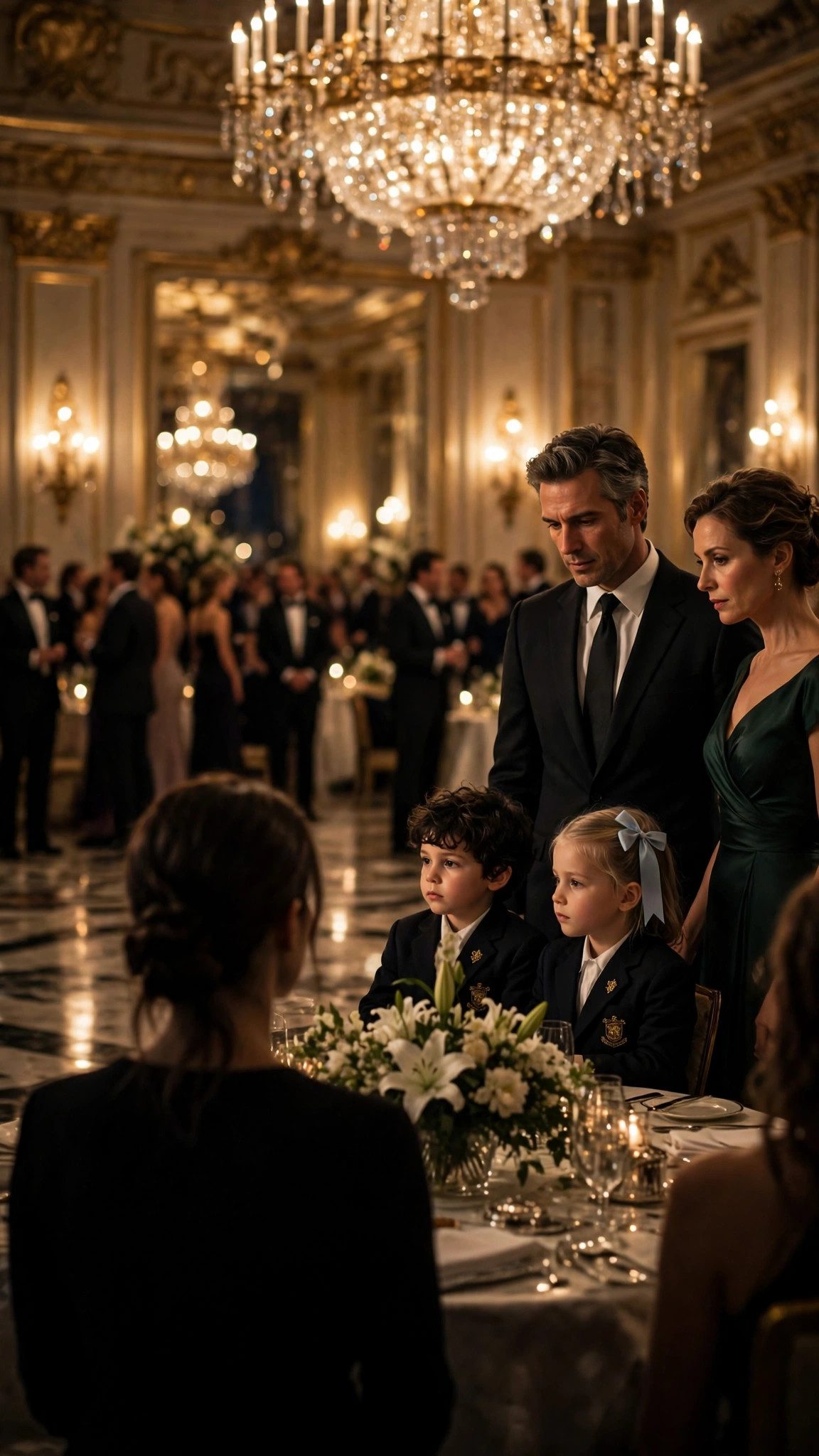
Milwaukee was gray. That was the first thing I noticed about it, stepping off the train with my bag and my four thousand seven hundred dollars and my nursing license: the whole city was gray. Gray sky, gray lake, gray buildings, gray faces on the gray streets. It suited me. I was gray inside, too — hollowed out, scraped clean, a woman with no husband, no children, no home, and a name that nobody in that city had ever heard before.
I found a room above a laundromat on the east side. It had a bed, a hot plate, a window that looked out onto a brick wall, and a radiator that clanged all night like someone knocking to be let in. It cost three hundred dollars a month. I paid three months in advance, in cash, and the landlady — a wide, tired woman named Mrs. Kowalski — looked at the money and then at my face and said, "You running from something, honey?"
"Yes," I said. "Myself."
She nodded like that was the most sensible thing she had ever heard. "Aren't we all."
I got a job at the county hospital, on the night shift, in the emergency department. The work was hard and relentless and exactly what I needed. On nights, there was no time to think. There were car wrecks and overdoses and heart attacks and gunshot wounds, and I moved from bed to bed with my hands steady and my voice calm, and I did not think about Leo, and I did not think about Lily, and I did not think about Adrian Mercer standing at the foot of my hospital bed with a folder in his hand.
I thought about them all the time. Of course I did. But on nights, I could pretend, for twelve hours at a stretch, that I was only a nurse, and not a mother who had left her babies behind.
That was what I did for money. That was why I had worked nights, covering up for everyone else — taking the shifts nobody wanted, covering for nurses who called in sick, covering for the young ones who could not handle the bad nights, covering for everyone who had somewhere better to be. I was the nurse who never said no. I was the nurse who never asked for a holiday. I was the nurse who worked Christmas and New Year's and her own birthday, because what else was I going to do? Go home to an empty room above a laundromat and listen to the radiator clang?
The other nurses liked me. They called me reliable. They called me a saint. They did not know that reliability was just another word for having nothing left to lose.
Once a year, on the twins' birthday — a Tuesday in October, the day Leo had come screaming into the world and Lily had followed eleven minutes later, quiet and watchful — I would buy a small cake from the bakery on the corner, and I would take it back to my room, and I would light six candles, and then seven, and then eight, and I would sit in the dark and watch the flames and whisper, "Happy birthday, Leo. Happy birthday, Lily. Mommy loves you. Mommy is sorry. Mommy is so sorry."
And then I would blow out the candles and go to work, because the night shift started at seven, and somebody had to cover it.
In my third year in Milwaukee, I stopped crying on their birthday. I told myself that was progress. It was not progress. It was just that I had run out of tears, the way a well runs out of water in a drought — not all at once, but slowly, and then one day you lower the bucket and there is nothing there at all.
In my fourth year, I stopped buying the cake.
In my fifth year, I stopped lighting the candles.
In my sixth year, I almost stopped remembering their faces. That frightened me more than anything else that had ever happened to me — more than the black SUV, more than the divorce papers, more than the night I signed my name and walked out of the hospital with empty arms. I could remember Leo's dark curls. I could remember Lily's tiny fist around my finger. But their faces — their real faces, the way they had looked in the nursery that one night — were fading, like a photograph left out in the sun.
I started keeping a notebook by my bed. Every night before my shift, I would write down everything I could still remember: Leo's cry, loud and furious. Lily's silence, watchful and old. The weight of them in my arms. The smell of them — milk and clean skin and newness. I wrote it all down, because I was terrified that if I did not write it down, I would lose it, and if I lost it, I would have nothing left at all.
And then, on a Thursday night in September, in my sixth year in Milwaukee, a man was brought into my emergency department with a bullet in his stomach, and he changed everything.
His name was Eddie Marcone. He was fifty-two years old, broad-shouldered, gray-haired, with a tattoo of a rose on the back of his right hand and a wedding ring he kept turning around his finger while he talked. He had been a soldier for the Mercer family for thirty years — a driver, a guard, a man who stood outside doors and kept the people inside them safe.
He was dying. We all knew it. The surgeon knew it. The charge nurse knew it. I knew it the moment I saw the color of his skin and the way his breathing had gone shallow and fast. But he was awake, and he was lucid, and he kept asking for someone named Clara.
"Not my Clara," he said, when I leaned over him. His voice was a wet rasp. "The other one. Mercer's Clara. The nurse. The one who left."
I went very still. My hands, which had been steady for six years, began to shake.
"I'm Clara," I said. "Clara Whitfield."
He looked at me for a long moment, and his eyes — gray, clouded with pain — widened.
"You're her," he whispered. "You're the mother. Jesus. You're the mother, and you're here, in Milwaukee, working nights." He laughed then, a terrible, bubbling laugh that brought blood to his lips. "He told us you were dead. Mercer told us all you were dead. He said the twins had no mother. He said it so many times I started to believe it."
"He told everyone that?" I asked. My voice sounded very far away.
"He told his own mother that," Eddie said. "He told the whole family. No mother. The twins have no mother. And we all believed him, because why would a man lie about something like that?" He coughed, and blood flecked his chin, and I wiped it away with a piece of gauze, my hands moving on their own, the nurse in me working while the woman in me fell apart. "Listen to me. Listen. Castellano is coming for the twins. Not the docks. Not the routes. The twins. He tried six years ago, the night they were born — Danny Cole, in the SUV, you remember? He tried, and Mercer stopped him, and Castellano has been waiting six years for another chance. The Foundation gala. Next Saturday. The Drake Hotel. Castellano's men will be in the room. They'll take the twins during the speeches, when the lights go down for the video. Mercer knows. He's been moving them from safe house to safe house for a month. But he can't be everywhere, and his own man — his own underboss — sold him out. Carlo Benedetti. Carlo sold the gala plan. Carlo sold the school route. Carlo sold everything."
"Why are you telling me this?" I whispered.
"Because you're their mother," Eddie said. His eyes were closing. His breathing was slowing. "And because Mercer isn't fighting to get them back. He's racing to reach them before Castellano does. And he's going to lose, Clara. He's going to lose, because he's one man, and Castellano has an army, and the only person Castellano never planned for is you. Because Castellano thinks you're dead, too."
He died three minutes later. I held his hand while he went. I did not know him. He did not know me. But in those three minutes, he had given me back everything I thought I had lost: my children were in danger, my husband had lied to protect me, and the only person who could reach the twins in time was the woman everyone believed was gone.
I finished my shift. I went home to my room above the laundromat. I packed a bag — two changes of clothes, my nursing license, the notebook full of memories, and the last of my savings, six hundred dollars in cash. I wrote a note to Mrs. Kowalski and left it on the table with the key. I got in my car — an old Honda with a dented fender and a hundred and eighty thousand miles on it — and I drove south, toward Chicago, toward the city I had sworn I would never see again.
I drove through the night, and I did not stop, and by the time the sun came up over the lake, I was back in the city where I had been a wife and a mother for exactly one night, and I was nobody again — just a woman in a cheap coat, with a bag and a notebook and a name nobody in Chicago had spoken in six years.
I got a job at a free clinic on the West Side, on the night shift, because the night shift was the only thing I knew how to do. During the day, I slept. In the late afternoon, before my shift, I would drive past the twins' school — a gray stone building with a wrought-iron fence and a gold crest above the door — and I would park across the street, and I would watch.
I watched them for two weeks. I watched Leo kick a soccer ball across the playground and argue with his friends about the rules. I watched Lily sit under a tree with a book, her ribbon coming loose in the wind, her face serious and old beyond her years. I watched them climb into a black car with tinted windows every afternoon at three-fifteen, flanked by two men in suits, and I watched the car pull away, and I watched the street go quiet again.
They were beautiful. They were alive. They were healthy. And they were walking around with a target on their backs, and their father was the only thing standing between them and the men who wanted to use them to break him.
On the Friday before the gala, I did something I had not done in six years: I bought a dress. It was black, simple, on sale at a department store on State Street — not a gala dress, not really, but the best I could afford on a clinic nurse's wages. I stood in the fitting room and looked at myself in the mirror, and I did not recognize the woman looking back at me. She was twenty-nine years old. She had dark circles under her eyes and gray in her hair she had not noticed before. She looked tired, and poor, and afraid.
But her eyes were not dead anymore. Her eyes were alive. Her eyes were the eyes of a mother who had found her reason to live again.
Tomorrow, I told the woman in the mirror, you will walk into a room full of people who believe you are dead. You will look at your children for the first time in six years. And you will not walk away. Not this time. Not ever again.
I was done covering up. I was done hiding. I was done being the ghost in my own children's lives.
That morning — the morning of the gala — I did not sleep. I lay in my bed in the small room I had rented on the West Side, staring at the ceiling, listening to the traffic on the street below, and I went over Eddie Marcone's words again and again, the way you go over a patient's chart before a difficult procedure, looking for the thing you might have missed.
"The Foundation gala. Next Saturday. The Drake Hotel. Castellano's men will be in the room. They'll take the twins during the speeches, when the lights go down for the video."
The lights go down for the video. That was the detail that frightened me most. Not the guns. Not the men. The darkness. A room full of two hundred people, plunged into darkness for a video presentation, and in that darkness, two small children in school blazers, being carried away by men they did not know. It was a good plan. It was a patient plan. It was the kind of plan a man makes when he has been waiting six years.
I went to the clinic that morning anyway, because I did not know what else to do with my hands. There was an old woman there — Mrs. Deluca, eighty-four, with a bad knee and a sharp tongue — who had been coming to the clinic for years, and who knew me only as the quiet night nurse who never talked about herself.
"You look like a woman going to a funeral," Mrs. Deluca said, watching me take her blood pressure. "Or a wedding. With you, I can never tell which."
"Neither," I said. "I'm going to see my children tonight. For the first time in six years."
Mrs. Deluca was quiet for a moment. Then she patted my hand with her papery one, and she said, "Then listen to an old woman, Clara. When you see them, don't apologize first. Children don't need apologies. They need you to be there. Just be there. Stand where they can see you. Let them come to you. That's all."
I thought about that all afternoon, while I got ready. I put on the black dress. I pulled my hair back. I looked at myself in the cracked mirror above the sink, and I practiced what I would say. Not a speech. Not an explanation. Just the truth, in the simplest words I knew: I'm your mommy. I never stopped loving you. I came home.
I took the notebook with me — the spiral notebook full of memories, six years of Leo's cry and Lily's silence and the weight of them in my arms. I put it in my bag, next to my nursing license, because it was the only proof I had that I had ever been a mother, and if tonight went wrong, if Castellano's men reached them first, if Adrian's men stopped me at the door, I wanted to have it with me. I wanted to have something of them, even if I could not have them.
Before I left, I stood at the window and looked out at Chicago — at the gray lake, at the towers downtown, at the city that had taken everything from me and was about to give it back, or take the rest. And I said, out loud, to no one, to the room, to the city, to God, to whoever might be listening: "I'm coming, Leo. I'm coming, Lily. Mommy's coming home."
Tomorrow, I would walk into the Drake Hotel, and I would find my babies, and I would bring them home — or I would die trying.