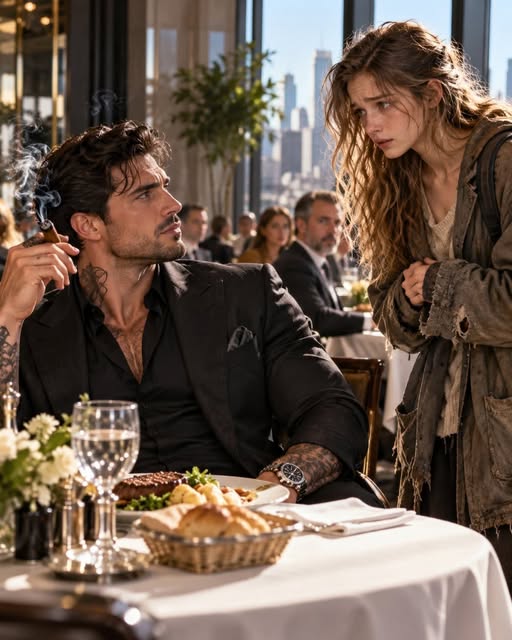
The plan was Emma's, which is why it worked, and it was mine, which is why it nearly killed me. Both of those sentences are true, and I have had a year to make peace with it.
Krell was watching us through Silas, and Silas, we now knew, was watching us for money from two directions at once. So we fed him. Marco let it slip — in a bar where slip-ups are a currency, to a man whose loyalty we had purchased the way you purchase weather — that I had found something in my father's archive that frightened me. Papers about Mara Krell. Papers I intended to move out of the hotel vault on Friday night, personally, quietly, to a Foundation warehouse on the Calumet docks, because I wanted them somewhere Daniel Krell would never think to look.
Every word of it was bait except the papers, and the papers were real. That was Emma's contribution, and it was the whole design.
"You can't trap him with a lie," she said from her hospital bed, with her notebook balanced on her knees and her handwriting gone spidery by the hour. "He's been living inside a lie for eight years; he'll smell another one like smoke. You trap him with the truth. You put the truth on a crate between you, and you let him walk up to it under his own power, because some part of him — the part that was nine years old at St. Brigid's and survived it — still wants to know what actually happened to his sister. That's not a man you outgun, Vincent. That's a man you out-remember."
Her terms were three, and she wrote them in the notebook and made me read them aloud.
One: she would be there. Not as bait, not as a blindfold — as a witness. She was the only living person who had known Mara at the home, and if Krell was going to hear the truth, some of it was hers to tell.
Two: nobody dies. Whatever happened at that dock, we were not going to answer a story about a dead girl with another body. Krell was to be taken alive, all of them alive, and handed to men with badges. She was inflexible on this in a way that suggested she had thought about it longer than I had.
Three — she looked up from the notebook for this one, and there was the flashlight teacher, steady as a lighthouse. "When it's over, whatever 'over' looks like, you stop calling it your war. It wasn't a war. It was a family that broke. There's a difference, and the difference is the whole point."
I read them aloud. Then I did the thing I'd have executed subordinates for contemplating: I agreed to all three, including the second, which Marco received with the expression of a man watching his employer sign a contract in crayon.
"Badges," Marco said, in the corridor, in the voice he keeps for genuine alarm. "Boss. We are the thing badges are for."
"Then we will be the thing that calls them, once," I said. "There's a federal agent named Osei who has wanted a clean, gift-wrapped Vardanyan smuggling crew for six years. Krell isn't coming to that dock to shake my hand, Marco. He's coming loaded, because men like us always come loaded. His cargo is our gift to Agent Osei. Our gift buys his people in the dark, outside the warehouse, where I want them. And when Krell walks in, he walks in to find me unarmed, with a folder." I let him look at me. "Mostly unarmed."
"Mostly," Marco repeated, with enormous weariness. "She's going to get you killed, and you're going to write her a thank-you note with your remaining hand."
Friday night was clear and bitter, the first clear night since the storm, and the Calumet docks were black glass and floodlight and the smell of diesel and river ice. The warehouse belonged to the Foundation on paper and to my family in fact; we'd stacked it with crates of donated goods — blankets, canned food, school supplies — which Marco observed was either camouflage or a conscience, and he hadn't decided which was worse.
I stood at a long table we'd set in the middle of the floor, and on the table I put the green folder. Beside it, over my objection, overruled by a woman with pneumonia and a notebook, we had placed one more thing: Emma's book. Dried now. Swollen, warped, its pages rippled like a riverbed — and open to the inside of its front cover, where a dead girl had written her name in pencil, small and sure, some twenty years before.
Emma waited in the shadow of the crate stacks with Marco, close enough to step into the light, far enough that I could lie to myself about her safety. She had refused the vest. She had also refused to stay in the car, the office, the hospital, or the state of Wisconsin, all of which I offered, in escalating order of desperation. She wore Aldo's good coat. Her hair was tied back. She looked like a teacher at the end of a long field trip conducted through a war.
"Tell me something true about her," I said, in the last of the waiting, because the silence in that warehouse had begun to feel like water rising. "Not the file. Yours."
Emma was quiet a moment, back against a crate of donated blankets, her breath still catching a little where the pneumonia keeps its souvenirs.
"She smelled like the library," she said. "Dust and paste. She had a braid she could sit on, and she did the voices even better than me — the giant used to make the little kids scream, the good way. And she had a rule." A smile moved through her face like weather clearing. "If you cried during a sad part, you had to say out loud what you'd fix. Not someday. Out loud, in front of everybody, so the story heard you. I cried at every sad part. I fixed hundreds of endings before I was ten years old."
"That's where it comes from," I said. "All of it. The terms. The notebook."
"Probably." She looked toward the dark end of the warehouse, where midnight was gathering itself. "She'd have had terms too. That's how I'll know if any of this worked, Vincent — if he still remembers she was like that. Under everything he built on top of it. If he remembers the braid and the voices, there's a man in there. If he only remembers the war—" She didn't finish. She didn't have to.
He came at midnight, exactly, because Daniel Krell had always had a sense of theater, and he came with Silas Dorn at his shoulder and two men behind, and a truck idling beyond the doors whose cargo I did not need to inspect to condemn.
He had aged the way cliffs erode — not smaller, just more weathered, the face I remembered worn down to something harder and more honest. He stopped twenty feet from the table and looked at the folder the way you look at a snake you're not sure is dead.
"Whitmore," he said.
"Daniel."
"You look old." He smiled without any of the machinery of smiling. "Grief does that, I'm told. Tell me — do you still eat alone in that mausoleum of yours? Silas says you've taken up charity. A little bird from St. Brigid's, fed at your table. I nearly laughed, Vincent. It was almost too easy. One hungry girl and the whole fortress turns to look at her. You've gone soft in the exact shape of your father."
"My father," I said, "is why you're going to open that folder."
"Your father is why I came to bury you."
"No." I kept my hands flat and visible on the table, on either side of the green card. "My father is the man who paid for your sister's treatment three times while you were selling his routes. My father is the man who wrote—" I recited it from memory; I will recite it on my deathbed. "'The boy's debt. Not hers.' It's all in there, Daniel. Receipts. The clinic in Wisconsin. Her name, hidden, because he knew you'd rather burn than accept it. He shielded her. For three years, while you were building a war out of her death, the man you murdered was spending his own money trying to keep her alive."
Lies hold still. The truth moves a man against his will — it's in the body, before the mind can vote. I watched it move him: a flinch he converted, too late, into a sneer.
"Paper," he said. "Paper lies for whoever pays the printer. You'd forge the Pope's diary to buy a night's sleep."
"Then don't read the paper." I looked past him, into the dark between the crates, and raised my voice the way you call someone in from another room. "Read the book."
Emma stepped into the light.
Krell's gun was in his hand before I finished the sentence — not aimed, not yet, just present, the way lightning is present. Silas shifted. Marco, in the dark, became a rumor.
"Who is this?" Krell said.
"I'm the little bird," Emma said. She was afraid — I could hear it under the words like a floor under a rug — and she walked toward the table anyway, and picked up the book with both hands the way she had set it by her plate that first night, like a sleeping child. "My name is Emma Carter. I aged out of St. Brigid's in the same library as your sister, twelve years behind her. I never met her grown. But when I was seven, and eight, and nine, a big girl named Mara read the damaged books to us at night. The librarians threw out the ones with missing pages, and Mara fished them back, and she read the true parts and invented the rest, and she told us — she told us every time—" Emma's voice shook, and held. "'The people who print books don't know everything. You get to fix the endings.'"
She opened the cover. She turned it toward him.
"She wrote her name in them, in pencil, so the next kid would know the book had been somebody's. This one survived. It's been rained on for eight months and it's still hers. Daniel — she is the reason I can read a room, she's the reason I teach, she's the reason I'm standing in front of a man with a gun telling him his story is wrong. Your sister spent her short life fixing endings for other people's children. And you have spent eight years making sure hers was the worst one anyone could write."
The gun came up.
It came up at her — instinct, training, a lifetime of aiming at the thing that hurts — and I moved the way I have moved exactly twice in my life, without the mediation of thought, and the shot, when it came, came from a different hand than his.
Silas.
I want to be precise, because precision is a debt too. Silas Dorn — who had limped into Emma's life with an envelope and a lie about an alumni circle, who had been feeding Krell a poisoned story of Mara's death for years on Vardanyan money, because a grieving Krell was a weapon the Vardanyans could aim — Silas understood, in the space of Emma's speech, that the weapon was being unloaded in front of him. He fired at Emma to keep the war alive.
He hit me, because I was standing where I had decided to stand.
The bullet took me high in the side, under the ribs — a hammer blow with a fire inside it — and the dock lights arrived all at once then, federal and merciless, Agent Osei's people materializing out of the dark they had owned all night, and there was shouting, and the truck, and Silas on the ground with Marco's knee in his back and Marco saying, almost conversationally, "The lady said nobody dies. So you're going to live, and you're going to talk, and those are the same sentence."
And Daniel Krell stood in the floodlights with his gun hanging forgotten in his hand and a ruined paperback open on the table in front of him, and he looked at me bleeding into Emma's hands — because she had caught me, all ninety pounds of her against my two hundred, and gone down to the concrete with me and pressed both her hands over the hole in my side like she could hold a life in with stubbornness alone.
"Stay with me," she said, in my ear, with absolute authority. "That's an order."
"Yes, ma'am," I said, and watched Daniel Krell set his gun down on the table, gently, beside his sister's book, like a man finally putting down a weight he had carried so long he'd forgotten it wasn't part of his body.
"She made them better," he said to no one, to Emma, to the book. "The endings. She always made them better than they were."