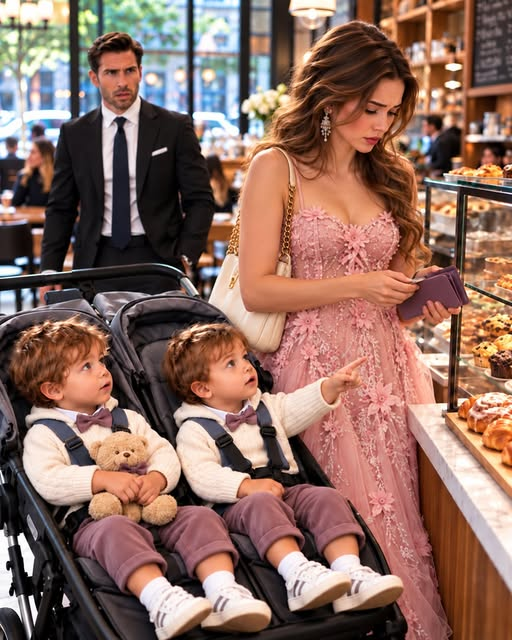
The audit closed on a Tuesday, in a letter so dry it took Emma three readings to understand that she had won everything.
No finding of misconduct. No impropriety. Reinstatement effective immediately, the district wrote, with full back pay and a formal correction entered into her personnel file — and, buried in the final paragraph in the bloodless language of institutions, an apology. She read it standing in her kitchen at six in the morning with the kettle going and the boys still asleep, and she laughed once, out loud, in disbelief, and then she cried for about ninety seconds with her hand over her mouth so as not to wake them, and then she washed her face and made oatmeal, because that was the kind of morning it was. That was the kind of life it was. It did not stop for vindication.
By Friday she was back in her classroom. Her students had made a banner — WELCOME BACK MS. PARKER, in glitter glue, with a rocket drawn in the corner by a twelve-year-old who did not know why he had drawn it, only that she liked rockets now. Her principal shook her hand like a colleague. The lab went forward with a different, smaller, ordinary grant that took eleven months and four committees, and Emma found she preferred it that way. Some things should arrive slowly, she thought, and be nobody's secret.
The garnishment took longer to kill. Hospital billing departments do not surrender the way panels do; they merely pause, and recalculate, and send the same threat in a new envelope. For six weeks Emma carried those envelopes to school unopened in the bottom of her bag, the way you carry a stone in your shoe.
Nathan did not pay it. That was the thing she had to explain to people later, and most of them never quite believed her: Nathan Harrison did not pay it.
He asked.
It happened on her porch, on a gray evening three weeks after the hearing, with the boys inside doing a puzzle loudly enough to constitute a contact sport. He did not come in a suit. He came in a jacket with his hands visible and empty, and he stood one step below her on the steps, and he said: "I've set up a trust. For Ethan and Noah. It's theirs — legally, irrevocably, theirs. You're the trustee, Emma. Sole trustee. Not me. I fund it; I don't touch it, I don't see the statements, I don't get a vote. The first thing it can do, if you say yes — only if you say yes — is clear the medical debt. All of it. The hundred and twenty. It's their money being spent on their own beginning, and the decision is yours, in writing, whenever you're ready. If you're never ready, it sits there and waits and that's fine too."
He held out a folder. Not a gift. A document. Terms she could read, refuse, amend — all the things he had never once offered her in their marriage: information, and time, and a genuine no.
Emma took the folder. She read it that night at her kitchen table after the boys were asleep, every page, twice, with a pencil. She called the attorney whose name was on it — her own call, her own questions — and then she called a second one, whose name was not, just to hear it confirmed by someone who owed Nathan Harrison nothing.
"A parent funding a trust for his children and putting the other parent in sole control," the second attorney said, "is either the most honest structure I've seen all year, or he's very sick. Is he sick?"
"Not anymore," Emma said, surprising herself, and signed the consent on a Thursday.
The debt died the way it had lived: in paperwork. A zero balance letter arrived in a plain envelope, and Emma stood in her kitchen holding proof that the number which had shadowed every decision of her adult life — every counted coin, every refused pastry, every no said to herself so the boys could hear yes — was gone. The collectors withdrew the garnishment filing the following week. She framed nothing. She put the letter in the drawer with the good scissors and the spare batteries, because that was where a woman keeps the tools of a working life, and she got on with hers.
Nathan, meanwhile, was doing something nobody on the business pages could make sense of: telling the truth at scale.
Harrison Development did not survive the Whitmore ballroom. It wasn't meant to, in the end. The board removed him within the month — fiduciary, they said, and the papers said king no more, and for a while the towers he'd built seemed to stand over the city like evidence. What rose in its place was smaller in every way except one. He started again with eleven people in a borrowed office over a warehouse: Harrison & Field, though there was no Field; he'd liked the honesty of admitting the second name was a hope, not a person. They took the jobs the big firms disdained — a clinic on the South Side, priced at cost; a school roof; housing that working families could actually rent, built to the standard he'd once reserved for penthouses. He paid his crews what he'd once paid his lobbyists. He signed less. He read everything.
"We'll never be kings," Marcus told him once, happily, sorting contracts at a desk made from a door. Marcus had followed him out of the glass tower with his Rolodex and his ulcer and a look of profound relief, like a man who had left a casino an hour before it burned.
"I know," Nathan said. "Isn't it restful?"
Weekends rewired themselves, slowly, the way true things do. Saturday mornings at first: the bakery, because Ethan had decreed that a man who had been given a drawing of that importance owed the bakery his Saturdays, and Noah had seconded the motion on medical grounds — "Mr. Russo's rolls are my medicine," he announced, four years old and shameless, and Mr. Russo, wiping his hands on his apron, had nodded with the gravity of a pharmacist and said, "The boy understands dosage."
So it became a ritual, and rituals are load-bearing. Nathan arrived at nine with the newspaper he never read. Emma arrived at nine-oh-five with the boys already arguing about whether the moon counted as a planet's house. The boys got cinnamon rolls — Ethan — and whatever Noah's current research required — and Nathan drank bad coffee he had developed a sincere fondness for, and learned the names of everyone in the neighborhood, and was, to his lasting astonishment, teased. Mr. Russo teased him. The retired ladies at the corner table teased him. He had been feared on three continents and he sat in a Chicago bakery being teased about his parking, and it was the happiest his face had ever been allowed to be in public.
The boys had a word problem to solve that spring, and they solved it the way they solved everything: directly, out loud, in front of witnesses.
They had known, since the hospital, that the tall man was theirs in some specific way that the word friend did not cover. Emma had told them on a quiet Sunday, simply, sitting on the floor of their room at eye level, because she had decided her sons would get the truth the way everything else in that house got handled: plainly and early and without decoration. "Nathan is your father," she said. "He made a mistake a long time ago, before you were born, and he didn't know about you, and that's why he wasn't here. He's sorry. He's learning."
Ethan had nodded like a magistrate. Noah had asked whether fathers were allowed to see the notebook, and upon learning that they were, had presented it for formal review.
But father is a title, and Dad is a job, and the boys — who did not deal in unearned promotions — spent two months conducting what could only be described as an evaluation period. Nathan was tested on rocket facts (he studied; Marcus confirmed he kept index cards in his coat). He was tested on cinnamon roll fairness arbitration, on nightmare response time, on whether he would sit through the whole of Ethan's forty-minute presentation on bridges without looking at his phone. He passed, mostly, with one documented failure on the planet Pluto, about which Noah remained vocal.
The moment, when it came, was small. That was how Emma knew it was real.
A Tuesday evening, nothing special — rain, homework at her kitchen table, Nathan washing up a saucepan because he had learned that in this house you did not sit while others worked. Ethan, without looking up from his worksheet, in the tone of a boy asking for the stapler, said: "Dad, what's nine and six?"
The saucepan stopped.
Nathan stood at the sink with his hands in the water and did not turn around, because he was doing arithmetic of his own — the kind where getting it wrong was not an option and the answer, arriving all at once and four years late, was fifteen, and also everything, and also please God let me not be loud about this. "Fifteen," he said, and his voice held, mostly. "Nine and six is fifteen, buddy."
"Okay," said Ethan, and wrote it down, and kicked his feet against the chair leg, and the world went on being ordinary, which is to say it went on being miraculous.
Emma, in the doorway with the laundry basket, said nothing at all, and smiled into the folded towels like a woman keeping a confidence for the universe.
So the year turned the way years do when people have decided, daily, to be decent inside them. Noah's lungs grew with him — the attacks came further apart, then rarely, then as stories the boys told about the brave chair and the man who wasn't sad loud. Nathan's small company acquired a reputation as the firm that read everything and built things that lasted, which turned out, to everyone's surprise including his, to be a viable strategy for a man who no longer needed to be a king. Emma taught, and graded, and was — there is no smaller or larger word for it — happy, in the sturdy unspectacular way of women who have come through.
And then it was a Friday again.
The bakery did what it always did on Fridays: steamed at the windows, smelled of cinnamon and yeast and sugar, filled up by nine-thirty with the neighborhood. The boys were at the pastry case — their case, in the proprietary sense that four-going-on-five-year-olds own the geography of their joy — with their noses at the glass, conducting the week's inspection. Nathan stood where he had stood a year and a lifetime ago, by the door, watching his ex-wife count out coins at the register out of pure habit — she still counted carefully; some disciplines you keep, not from need but from respect for the woman who needed them — and he thought, not for the first time, that everything he had ever actually owned fit in this one warm room.
He almost didn't notice the boys conferring. Ethan was whispering with the intensity of a tiny conspirator. Noah was holding something in both hands, against his chest, the way he held the teddy bear, the way he held anything that mattered — and when Emma turned from the register, the boys advanced on the two of them in formation, with the solemnity of an honor guard, and stopped exactly in front of the pastry case where a man in a suit had once frozen and lost everything and found it.
Noah opened his hands. In them, a little worn, a little crooked from being carried in a pocket for what was clearly several days of security breaches, was a small ring box.
"We catched it," Ethan announced to the room at large, "when Dad was hiding it in his coat at our house. We are giving it back so he can do it RIGHT THIS TIME."
"Ethan," Nathan said faintly, "we discussed the plan."
"The plan had too much waiting," Noah explained, with deep sympathy. "You wait a lot. It's your main problem."
Emma was laughing already — she had seen the box, and done her own arithmetic, and arrived, counting carefully, at her answer long before he asked. But she let him ask. Some things should be given the dignity of their moment, and she had learned, the hardest way there is, that Nathan Harrison could be trusted to finally, finally learn a thing all the way through.
He went down on one knee on the bakery floor, in front of the pastry case, in his good suit, in the sawdust-and-sugar grit of a Friday morning, and he did not make a speech. He had prepared one — Marcus had heard three drafts and wept at the second, for reasons he declined to specify — but in the event he set it all aside and said the plain thing, the way everything true in that family got said.
"Emma Parker. I signed the wrong papers once because I wasn't paying attention. I have been paying attention every day since. I will pay attention for the rest of my life. Will you marry me — again, and this time on purpose?"
Mr. Russo, behind the counter, said, "Friday special," in a voice not entirely steady, and slid two pastries across the counter into a bag that nobody would be permitted to pay for. "On the house. For the table. Don't anybody argue with me today."
"Yes," Emma said. She said it clearly, for the room, for the record, on purpose. "Yes. But I pick the date, and you read everything they put in front of you at that wedding, Nathan Harrison, every single word."
"I'll have Marcus notarize my attention," he said, and the ring — hers, the original, kept five years in a drawer by a man who had told no one — went onto her hand in front of the cinnamon rolls, and the bakery applauded, and the boys applauded loudest and longest, and Noah informed the retired ladies that this was his doing, medically, and Ethan said it was a group project.
The King of Concrete put his forehead against his wife's — his wife's, again, nearly, soon, already, in every way that the paperwork merely confirmed — amid the steam and the sugar and the applause of twenty neighbors, and he understood at last what the deal had never been able to tell him. A man could sign his name on a skyline and own nothing that mattered. Or he could stand in a little bakery on the North Side, holding a woman who counted carefully and two boys who had drawn him nearer, richer than any crown had ever promised to make him — richer than the deal would have made him, by exactly the sum of everything it would have cost.
"Stay for the second coffee," Emma said, against his shoulder, smiling. "It's terrible."
"It's my favorite thing in the world," said the King of Concrete, and stayed.