"You're not going."
It was the third time Alessandro had said it, and we were in the library this time because I had walked out of the study, and the dining room, and he had followed me from room to room like a man arguing with weather.
"The signing is mine," I said. "The stake is mine. The name on the trust is Chen. Not Caruso — Chen. My father's name. And if I don't sign by my twenty-fifth birthday, Victor Lanza gets the port my father died for. I am not hiding in your house while that happens. I did hiding. I was extremely good at hiding. It got people shot through bakery windows."
"You will sign from here." He was holding himself together visibly; I could see the effort in his hands. "The lawyers come to the house. Powers, proxies, whatever instruments they need — they exist. Men have signed from bunkers."
"And then what?"
"What do you mean, then what?"
"Then Lanza tells the board the signature was coerced. Then his lawyers spend two years arguing the ratification was done under duress, in a mafia house, by a woman nobody's seen in six years. And the whole time, the ledgers sit in a sealed packet that has to be delivered by the trust's own counsel, in person, as part of the ratification — those were my father's terms, weren't they? Dante read me the note twice. The evidence goes to the prosecutors through the trust, Alessandro, or it goes nowhere. It was designed that way so no one could bury it. Including you. Including me, if I got frightened." I stood my ground in the middle of his library with my heart slamming against my ribs. "My father designed a door that only opens if I walk through it in public, on the record, alive and unmistakably myself. He knew someone would try to keep me in a locked room for my own good. It turns out it's you."
The silence that followed was different from his other silences. This one had something breaking in it, quietly, like ice on a river far away.
"You are doing this," he said at last, "to prove something to me."
"I'm doing it because six years of my life were decided by other people in rooms I wasn't in. Marie decided. Lanza decided. My father decided — God rest him, he decided out of love, and it still counts. You decided, this morning, in a bakery: my job, my doctor, my home, gone, before I'd finished my coffee." I stepped closer, and made myself say the true thing. "I am not refusing your protection, Alessandro. I'm refusing to be the only person in my own story who never gets to choose. If I sign from behind your gates, I've just changed which man keeps me in a room. Do you understand? I need you to understand, because you're the only one I'm asking."
He looked at me for a very long time.
"Then we do it my way," he said finally. "Every other way. My cars, my men, my route, my timing. You wear what I tell you to wear. If I say run, you run; if I say down, you are already down before I finish the word. And if it goes wrong—" He stopped.
"If it goes wrong?"
"If it goes wrong," he said, "you will discover that I have not actually changed as much as this conversation suggests. Agreed?"
"Agreed."
That night I couldn't sleep, and sometime after two I went down to the kitchen for water and found him there ahead of me, sitting at the staff table in the dark like any insomniac in any house in the world, with his sleeves pushed up and a glass he hadn't drunk in front of him. The tattoos at his neck went down one forearm farther than I'd known. I had been his wife for two years, in aggregate, and I had never seen his forearms. There's a sentence for the whole marriage.
"Don't," he said, before I spoke. "Whatever you're about to say about tomorrow — the plan holds twelve men, four cars, two decoy routes, and a helicopter I am pretending is for freight. There is nothing you can add except fear, and yours is already fully represented. Mine too."
"I'm not here about the plan." I sat down across from him — the staff table, scarred wood, a bowl of lemons. "When I sign my name tomorrow. It's been Sophia Chen on rent books and Sophie on bakery forms for so long. Tomorrow it's going into a legal instrument that's older than my marriage. I keep — " I laughed, badly. "I keep worrying my handwriting has forgotten how."
He reached across the scarred table, turned my right hand palm-up — gently, the unbandaged one — and looked at it like a document.
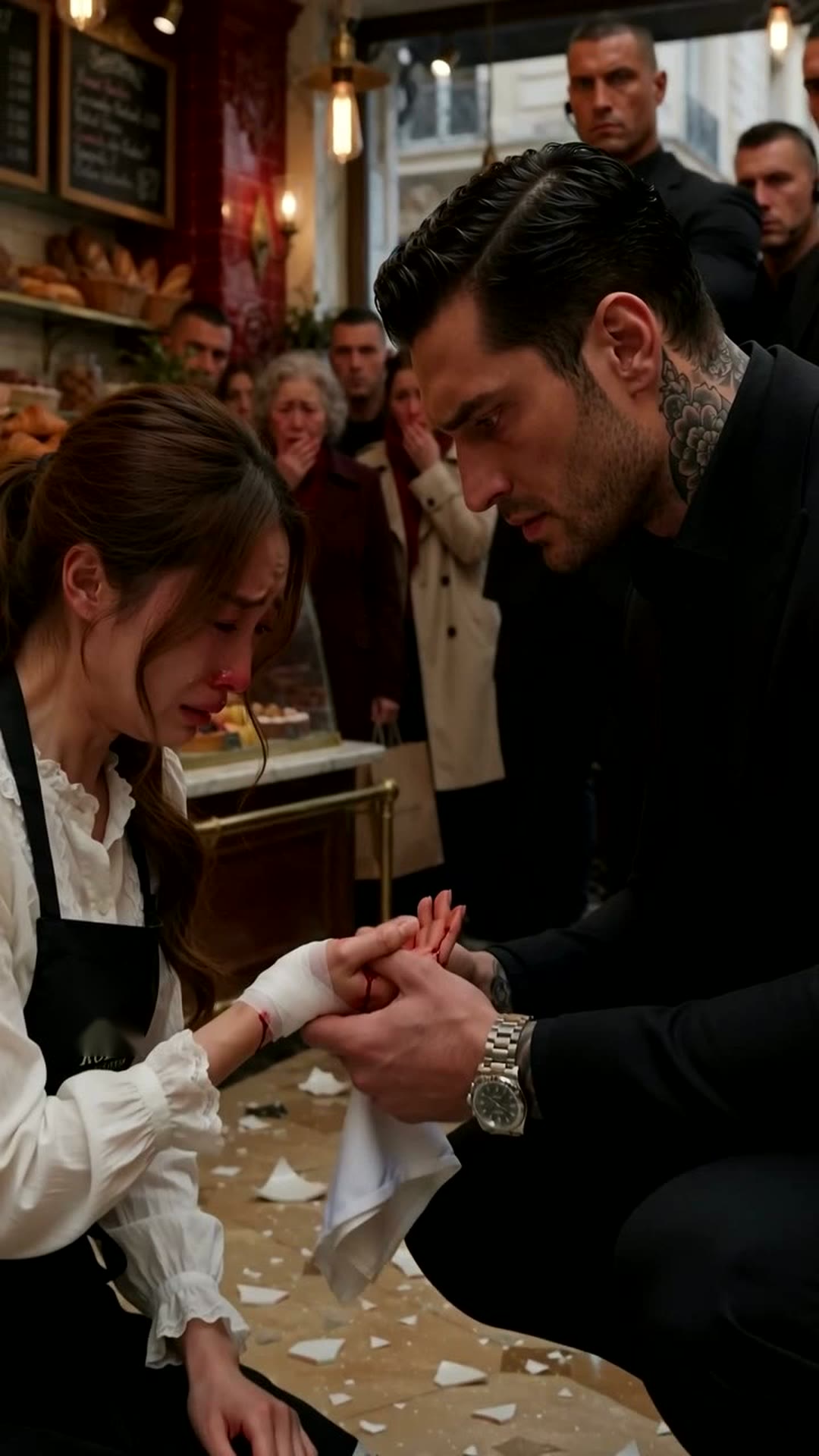
"Sign it the way you signed the marriage register," he said. "You were the only person in that chapel whose hand didn't shake. I watched it. The priest watched it. You signed like the paper owed you money." His thumb rested, briefly, in the center of my palm. "Six years hasn't taken that out of you. I have the bakery window to prove it — you were wrapping broken cups in your bare hands, bleeding on my shoes, apologizing. Your whole life is in evidence, Sophia: you do not drop things that matter. Tomorrow, the pen matters."
The morning of the signing, Signora Bianchi laid out my clothes like armor, because it was armor: a dark suit of my own, bought in my name, and beneath it — Alessandro's contribution, non-negotiable — a vest of some matte, dense material that weighed less than fear and more than dignity. "You look," he said, when I came down the stairs, "like your father going into a negotiation he intended to win."
"He lost his."
"He was alone." He held out his hand for the stairs' last step, and I took it, and neither of us mentioned that I didn't let go at the bottom. "You're not."
The trust's offices were on the nineteenth floor of a glass building downtown, all pale wood and quiet. The trustees' counsel was a woman named Hale with a handshake like a contract and not a flicker of reaction to the six armed men who took up positions in her lobby like furniture that breathed. The sealed packet went from Dante's case to her desk. She verified the seals against six-year-old instructions, read my father's covering note twice, and slid the ratification across the table to me with a pen that had clearly been waiting most of a decade.
"Miss Chen," she said, "before you sign. You understand that this instrument confirms your beneficial ownership of eleven percent of the Bellhaven Port Consortium, vested in you since your eighteenth birthday, and simultaneously instructs this firm to deliver the accompanying materials to the district attorney and to the consortium's remaining founding families. Once signed, neither act can be withdrawn. Not by you. Not by anyone."
"That's the point of it," I said.
"Yes," she said. "Your father was a careful man." She uncapped the pen. "So was mine. Sign here."
I signed. My hand — the unbandaged one — did not shake. I want that on the record somewhere, even if it's only here: Sophia Chen, in her own name, in a room full of witnesses, at last.
Afterward there were copies, and seals, and Ms. Hale making three phone calls in a tone of voice that suggested the calls had been composed years ago and merely stored. By the time we left, the packet was already moving through the machinery my father had built for it. It was over in forty minutes. Six years, four of them running, two of them hiding in plain sight — and it was over in forty minutes, with tea going cold on a sideboard.
Before we left, Ms. Hale walked me to the door herself, past the quiet lobby and the breathing furniture of my husband's security, and stopped me with a hand on my elbow that was, I realized, the first uncalculated touch I'd had from a stranger in days.
"He came here the week before he died," she said. "Your father. He sat where you sat. He checked every seal, twice, and then he asked me whether the pen on that desk was reliable, and I said it was a good pen, and he said — " her composure flickered, wonderfully, into an actual person, "— he said, 'Make it a better one. My daughter signs her life with it.' I bought this practice a new pen that Friday. It has been in that drawer six years, Miss Chen. I have refused three partners who wanted to use it for closings. It writes, if I may say so, extremely well."
"It does," I said. "It's a good pen."
"Yes," she said. "He had excellent judgment in everything except friends."
"You did it," Alessandro said in the elevator, standing close, watching the numbers fall. "It's done. You're — it's done, Sophia."
"Why don't I feel done?"
"Because you're smarter than the paperwork," he said, and almost smiled. "Garage. Then home."
The parking garage was concrete and echo and the smell of rain on hot stone. Our cars were thirty feet away. Dante had just raised his radio to call them forward when the sound came — not a bang this time. A cough. A cough with a metallic edge, from the ramp above, and Dante moved before I understood, and Alessandro moved before Dante, and the world became a wall of black suit again, his body folding over mine and driving me down behind a concrete pillar as the second and third shots punched sparks off the floor where I'd been standing.
"Down," he said, in my ear, almost conversationally. "You promised."
"I'm down, I'm down—"
"Good girl. Stay exactly this small."
His men were shouting; there was return fire, disciplined and short; a car alarm took up the chorus and wouldn't stop. I was folded against the pillar with Alessandro's whole weight braced over me, one of his hands cradling the back of my head, and through the noise I could feel his heart against my shoulder blades, slamming, human, terrified — and I understood that this was the sound it made, the thing he never let anyone hear.
Then the shouting changed key. Dante's voice, closer: "Shooter down on the ramp — second one ran, Marco's on him — boss, we're clear, we're clear in the garage—" and Alessandro was getting up, hauling me up with him, running his hands over me fast and clinical — arms, ribs, face — "Are you hit? Sophia. Are you hit?"
"No. No, I'm—"
"Because you're—" His hands stopped. He was looking at his own sleeve.
His right sleeve was dark, and getting darker, and the darkness was wet.
"Oh," he said, with great mildness, like a man noticing rain. "That's mine."
He didn't fall dramatically. That isn't how it happens. His knees simply declined, all at once, as if the idea of standing had been withdrawn, and I caught him the way he'd caught me — badly, too small for it, both of us going down against the pillar with my hands pressed hard over the hole in his shoulder and his blood coming up between my fingers, hot, in time with that heart I'd just heard being afraid.
"Stay with me."
"I'm here." His eyes were finding it hard to focus, and found me anyway. "Sophia. Did you sign?"
"I signed."
"Good." The ghost of the driest smile I have ever seen. "Then let them come. It's — evidence now." His hand came up, slow and uncooperative, and found my wrist — the bruised one — and held it with enormous care, the way you'd hold something already broken. "Not letting go," he informed me, with his eyes closing. "I never agreed. To let you go."
"Then don't," I said, and pressed down harder, and screamed for Dante, and for an ambulance, and for God, and under my hands the blood kept coming, and kept coming, and the man who had spent four years trying to find me went still and white in a parking garage while the sirens started up somewhere far above us, coming closer, and too slowly.