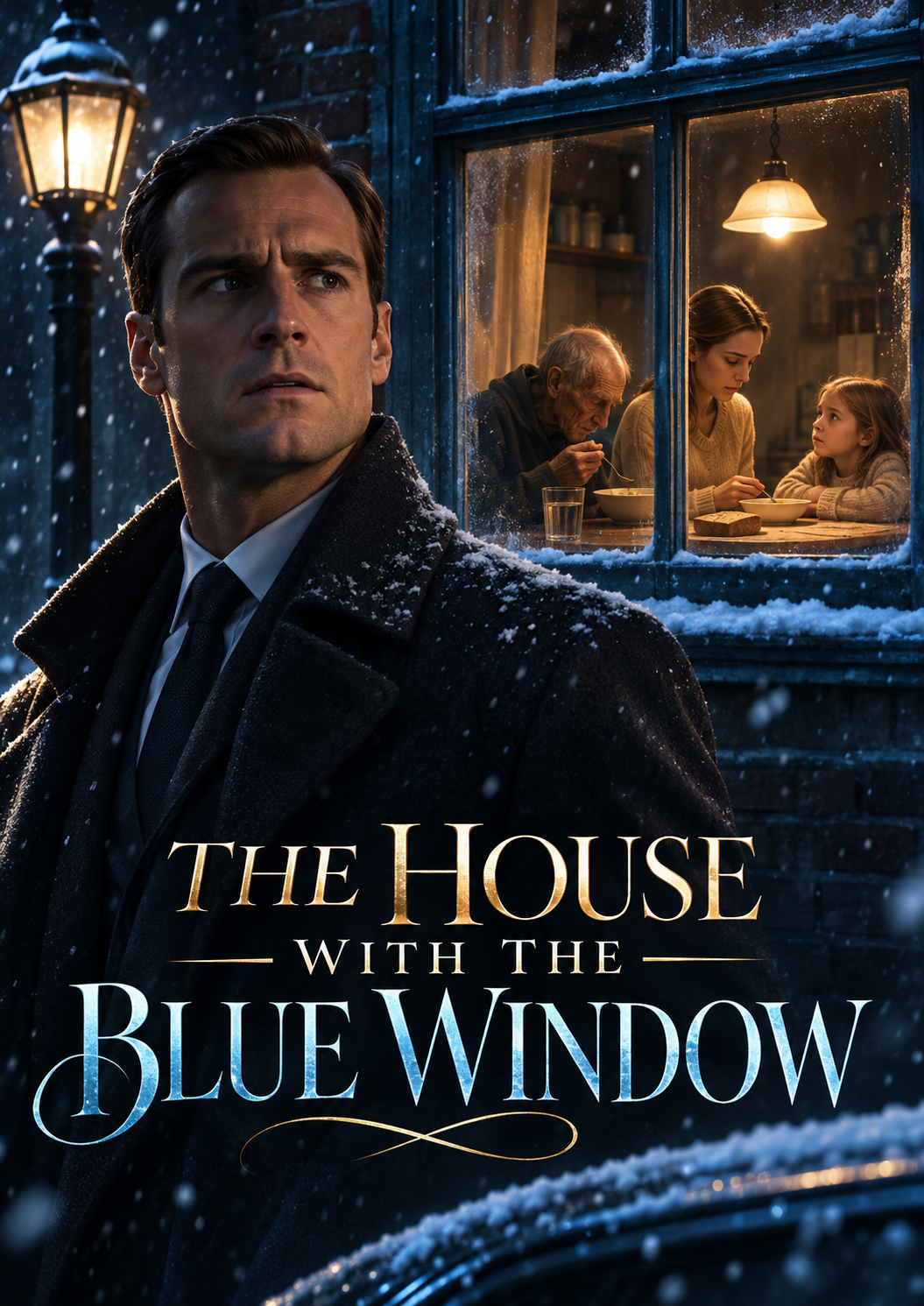
The most feared mafia boss in New York followed me home because he thought I had stolen from him. What he found instead was my six-year-old daughter carefully dividing a single bowl of soup into three portions while my father pretended he had already eaten. And the worst part was that the eviction notice on our table carried the name of the man standing outside our door. My name is Mara Collins. I was twenty-seven, a widow in every way that mattered even though Noah and I had never managed to get married, and for eleven months I had cleaned the mansion of Roman Castellano, a man whose name could empty a restaurant before his bodyguards reached the entrance. I had heard the whispers. The businesses along the waterfront paid him for protection. Men who crossed him disappeared from public view, sometimes for years. Yet in his house, Roman was mainly a quiet figure in expensive suits who came home after midnight and noticed everything people hoped he wouldn't. Until that Thursday, he had barely spoken ten sentences to me. I kept it that way. My work paid enough to buy my father's heart medication when the pharmacy didn't run short, and I needed the job more than I needed answers about its owner. That morning, however, Roman's cousin Victor had called me into the library. A black leather envelope containing forty thousand dollars was missing from Roman's desk. Victor stood beside the empty drawer with a friendly smile that made my skin prickle. He said only three people had passed through the library after midnight: a guard, a housekeeper, and me. When I told him I had been changing the fireplace ashes, he raised one eyebrow. 'Sometimes good people make desperate choices,' he said. I knew what he was implying. I also knew that desperate did not mean dishonest. I offered to empty my pockets, open my locker, and let them check the cameras. Victor told me to finish my shift. As I turned away, he added, 'You have a little girl, don't you?' I stopped so suddenly that my cleaning cart rolled into a table. I had never told anyone at the mansion about Evie. I had filled out a payroll form listing a dependent, but that information had no reason to be in Victor's hands. 'Leave my family out of this,' I said. His smile stayed exactly where it was. By six, snow was sticking to the sidewalks. I packed my cleaning gloves, put on the same thin coat I had owned since Noah died, and carried a paper bag of rolls the cook had told me to take before they were thrown away. I didn't know a dark car had pulled away from the curb behind me. I didn't know Roman had ordered his driver to stay back and watched me transfer buses twice to reach our street in Brooklyn. Later he told me he had been given security footage showing me near the library drawer and had decided to see where I went before calling the police. I told him that following a woman to her home wasn't an investigation. It was a violation. He did not argue. But I am getting ahead of myself. When I climbed the three flights to our apartment, Evie met me at the door wearing pink socks that didn't match. 'Mommy, Grandpa says he's not hungry again,' she whispered. My father, Walter Collins, sat at the kitchen table in the old wool cardigan Noah had bought him one Christmas. His hands shook as he folded a napkin over his empty plate. 'I ate earlier,' he said brightly. The stove hadn't worked properly for two days. We had heated soup on a little electric burner, and there was barely enough for Evie, let alone three people. She had already divided the soup with a spoon, pushing the biggest portion toward Grandpa. 'I can have bread,' she said. My chest tightened. Children should learn to share toys and birthday cake, not decide who deserves dinner. I broke the rolls into pieces, stirred warm water into the soup to make it stretch, and told a ridiculous story about the time Noah tried to cook pancakes and set off the smoke alarm. Evie laughed. Dad tried to. For a moment, with snow tapping the window and a crooked paper star hanging over the table, we almost felt like an ordinary family. Then someone knocked. Three measured knocks, calm enough to be frightening. I opened the door with the chain on and saw Roman Castellano standing in our hallway, black suit dusted with snow, no bodyguards visible. I stared at him. 'You followed me?' I asked. 'May I speak with you?' 'You could have spoken to me at work.' He looked past my shoulder. Evie's face had appeared near the kitchen doorway. Dad was struggling to rise from his chair. Roman's expression changed. Not pity, exactly. Something sharper, like he'd finally noticed a sound that had been playing all along. 'Mommy, is that your boss?' Evie asked. Roman crouched to her height without coming closer. 'I'm Roman,' he said. 'That's a serious name,' she replied. 'So is Evie,' he said. She considered this and returned to the table. I wanted to slam the door. Instead I asked what he wanted, because men with his reputation did not make house calls for nothing. He told me an envelope had vanished from his library. Heat rushed to my face. 'Then call the police. I didn't take it.' 'I haven't accused you.' 'Your cousin did. And you followed me home.' Roman's jaw tightened at the mention of Victor. Behind me, Dad began coughing, a deep rattling sound he tried to smother in his sleeve. I turned to help him, and the door swung open against the chain. Roman remained in the hall while I fetched a glass of water. When I returned, he was looking at the kitchen table through the narrow opening. There were three chipped plates. One bowl of soup. An orange prescription bottle with only two tablets. And the white envelope that had arrived that afternoon. He pointed at it. 'Where did that come from?' I laughed without humor. 'Your people sent it.' His face went still. I closed the chain, opened the door fully, and held out the notice. It said our building had been acquired by Castellano Urban Renewal, that we owed back charges we had never heard of, and that we had forty-eight hours to surrender the apartment. The printed signature at the bottom read ROMAN CASTELLANO. 'Your name is right there,' I said. 'You've already taken almost everything from us. Do you want the plates too?' He read it twice. The second time, his thumb pressed so hard against the page that it creased. 'I didn't sign this.' I had spent too many years listening to powerful men deny what their companies did. 'It's your company.' 'The name is mine. The signature is not.' I looked him in the eyes. 'Then somebody is using your name to put my daughter on the street. Is that supposed to make me feel better?' His answer came after a long silence. 'No.' Dad was standing now, holding the back of his chair. His face had gone white in a way that frightened me more than the coughing. He was staring at Roman as though he recognized a ghost. 'Castellano,' he whispered. Roman turned toward him. 'Have we met?' Dad shook his head. 'Not you. Your father.' I felt the room tilt. For two years, Dad had refused to talk about Noah's last week alive. Noah had worked as a municipal building inspector, and after he reported a condemned waterfront property being marked safe, he began receiving strange calls. One rainy night, his car went off a service road. Police said the brakes had failed. There was no investigation beyond that. He was twenty-nine. Ever since, Dad had kept a brown envelope sealed inside a battered cookbook and snapped at me if I asked why. Now he crossed the kitchen, pulled the cookbook from a shelf, and took out the envelope with trembling fingers. 'Noah told me this would matter someday,' he said. 'He said the men stealing those buildings would come back.' My heart slammed against my ribs. 'Dad, what are you doing?' 'What I should have done when he was alive.' He emptied the envelope onto the table. There was a photograph of a brick apartment building, an inspection report stamped REJECTED, and a copy of a transfer agreement bearing Roman's company seal. Across the bottom, in Noah's unmistakable handwriting, were five words: VICTOR KNOWS ABOUT THE FIRE. Roman picked up the report. His eyes darkened when he saw the address. 'The Fenwick building,' he said. 'That property burned two years ago.' 'Three families lost their homes,' Dad replied. 'And Noah died before he could prove the fire was deliberate.' From the hallway came the sound of a phone vibrating. Roman glanced at his screen and didn't answer. It vibrated again. Finally he turned it toward us. Victor's name was flashing. I took one step back. 'How does he know you're here?' Roman asked no one in particular. A new message appeared. I saw only the last line before he lowered the phone: STOP DIGGING INTO THE HOUSEKEEPER. Roman's posture changed. At the mansion he had seemed dangerous because people were afraid of him. In my kitchen he looked dangerous because, for the first time that night, he was afraid of what he hadn't known. 'Mara,' he said quietly, 'I need you and your family somewhere safe.' 'From whom?' I asked. He held up the inspection report, and for a moment every sound in the room disappeared except the electric burner's faint hum. 'From the man who just texted me,' he said. Then Evie stepped forward, holding the last piece of bread in both hands. 'If you're going to help us,' she asked him, 'could you please make Grandpa eat first?' Roman looked at her, then at the three plates. He didn't reach for his wallet. He didn't promise to fix our lives. He set his phone facedown on the table and said, 'I will find out what happened to your dad. And tomorrow, you'll get answers about this eviction.' I wanted desperately to believe him. That was precisely what made him terrifying. As he turned to leave, Dad caught his sleeve. 'One more thing,' he whispered. 'Noah said if Victor ever came looking for the original records, there was only one person who could tell whether they were real.' 'Who?' Roman asked. Dad's eyes moved to me. 'Mara,' he said. 'He hid the key with her. She just doesn't know it yet.'
Chapter 1: THE WINDOW IN THE SNOW
Written by
in
THE HOUSE WITH THE BLUE WINDOW · Chapter 1 of 7
Reading settings