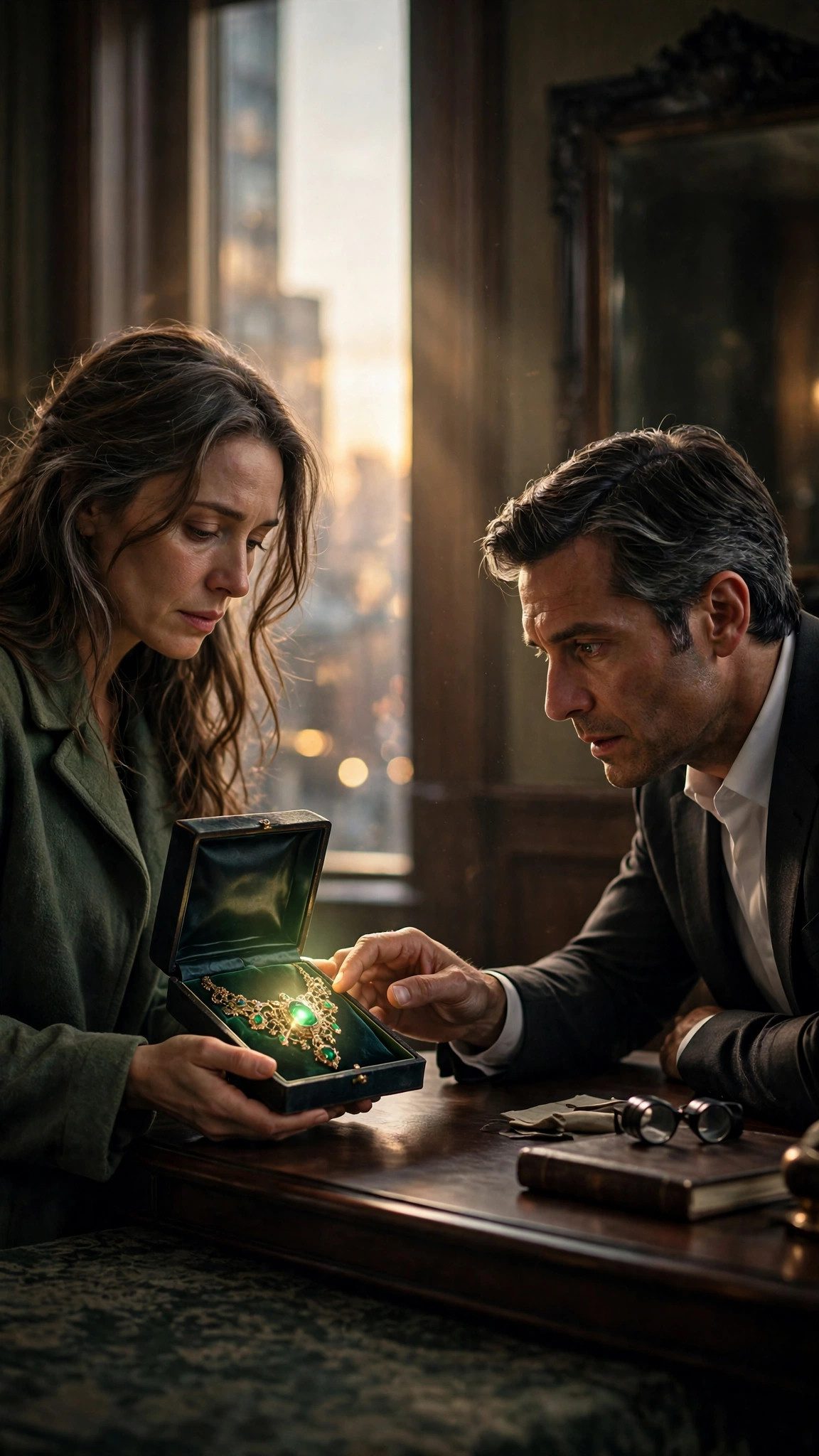
Valerie Bennett learned that Nathaniel was gone the way you learn that a light has gone out in another room — not all at once, but in the small, ordinary ways that add up to darkness.
He did not come the next day. He did not come the day after that. His phone went unanswered, and then it went dead. She went to the clinic and asked after him, and no one knew a man by his name. She walked the streets where they had walked together, past the parking lot where he had taught her to drive, past the bakery where he had bought her bread still warm from the oven, and every place was exactly the same and entirely different, because he was not in it.
Her grandmother, Rose, found her crying in the kitchen on the third night, and Rose did what she had always done: she put the kettle on, made tea too strong and too sweet, and sat across the table without saying a word until Valerie was ready to speak.
"He's gone, Gran," Valerie whispered. "He said he'd come back tomorrow, and he's gone."
Rose reached across the table and took her granddaughter's hand. Her own hands were thin and spotted with age, but they were steady. "Then he was a coward," Rose said, "or he was a man who loved you enough to be afraid. Either way, my girl, you are still here. And you will still be here tomorrow."
"What if he comes back?" Valerie asked.
"Then you will decide what he is worth," Rose said. "Not him. You."
He never came back. Valerie waited for a month, and then she stopped waiting, the way you stop pressing on a bruise once you accept that it will not heal any faster for your attention. She threw herself into her work at the clinic. She took extra shifts, and then she took the shifts no one else wanted — the night shifts, the holiday shifts, the shifts in the winter when the waiting room filled with coughing children and old men with nowhere else to go. The patients loved her. Mrs. O'Connor, eighty-four, with arthritis in both hands, told everyone who would listen that Valerie was an angel, and that angels were wasted on clinics. A boy named Sammy, nine years old, with a broken arm, drew her a picture of a superhero nurse with a green cape, and Valerie pinned it to the wall above her desk, and kept it there for years. She held the hands of strangers and told them they would be all right, and most of the time she believed it, because believing it was the only way to keep doing the work. She took extra shifts. She held the hands of strangers and told them they would be all right, and most of the time she believed it.
A year after Nathaniel disappeared, she met Thomas Bennett at a hospital fundraiser. He was a high-school history teacher with kind eyes and a laugh that arrived before he did, and he asked her to dance to a song she did not know, and stepped on her foot twice, and apologized so sincerely that she laughed for the first time in a year. He courted her the way decent men court women they respect: slowly, honestly, and without games. He brought her mother flowers on Sundays. He fixed Rose's leaking faucet with his own tools and refused to be paid. He asked Valerie to marry him on a rainy evening in the same kitchen where Rose had made her tea, and he cried when she said yes.
Thomas Bennett was not the love of her life. Valerie knew that, and Thomas knew it too, in the quiet way that good husbands sometimes know the things their wives cannot say. But he was a good man, and he loved her completely, and for eleven years he gave her a life that was steady and warm and honest. He bought her the green coat for their fifth anniversary — a beautiful coat, the color of spring leaves, the most expensive thing he had ever bought her — and she wore it everywhere, even after the color faded and the cuffs frayed, because it was his.
They never had children. Thomas used to say that God gives you the family you need, not the family you plan, and that their family was her mother, her grandmother, and the two of them, and that was enough. Valerie believed him. She believed him on the morning Rose died peacefully in her sleep at ninety-three, holding the velvet box with the necklace in it, and leaving a letter that Valerie did not open for a week because she could not bear to read her grandmother's last words.
The letter said: "My dearest Valerie, the necklace was never mine to keep. It was given in love, and love is the only thing that makes a jewel worth anything. It belongs to the woman who wears it with a full heart. Keep it until you need it more than you love it, and then let it go without shame. I loved Elias Cain once, and he loved me, and the world was too small for us. Do not let the world be too small for you. — Rose."
Valerie read the letter three times, and then she put it in the velvet box with the necklace, and she put the box at the back of a drawer, and she did not think about it again for years. She did not know who Elias Cain was. She did not know that the man she had loved at twenty-six was Elias Cain's grandson. She knew only that her grandmother had loved someone once, and that the world had been too small for them, and that Rose had never once sounded bitter about it.
Three years ago, Thomas Bennett died of a heart attack in his classroom, in front of thirty-two students, while writing the date on the board. He was fifty-one years old. Valerie held his hand in the ambulance and told him she loved him, and he smiled at her and said, "Take care of your mother," and then he was gone.
After Thomas died, the money ran out slowly, the way water runs out of a tap that has been left dripping. Valerie worked as a nurse's aide at a care home, twelve-hour shifts, lifting patients twice her weight, coming home with an aching back and hands that smelled of disinfectant no matter how many times she washed them. Her mother, Margaret, had worked in a laundry for forty years, and her body was giving out the way bodies do after forty years of hot water and heavy lifting. First it was her knees. Then it was her breathing. Then, last winter, the doctor said the word no one in the family had ever said out loud.
Cancer. In her lungs, and spreading. Chemotherapy could help — could give her time, could give her a chance — but chemotherapy cost money, and the insurance had run out, and the bills had piled up on the kitchen table like snow.
Valerie sold her car. She sold her wedding ring. She sold the television, the good dishes, the books Thomas had loved. She took a second job cleaning offices at night. She ate one meal a day so her mother could eat three. And still the bills came, and still the electricity company sent its final notice, and still the hospital called to say that the next round of chemotherapy would cost one thousand dollars, due before Friday, or they would have to postpone her mother's treatment.
On the last night before the appraisal, Valerie sat at her kitchen table with the velvet box open in front of her and her mother's hospital bracelet on the table beside it. She had not opened the box in years. The necklace lay inside on faded blue velvet, the emeralds catching the kitchen light like green fire, the gold warm even after all those years in the dark. It was the most beautiful thing she had ever owned, and she had never worn it, not once, because Rose had worn it twice in her life and Valerie had always felt that wearing it without a full heart would be a betrayal of her grandmother's gift.
"I need one thousand dollars, Gran," she whispered to the empty kitchen. "Just one thousand. For Mama's medicine. I'm sorry."
She closed the box, and she put on the green coat — Thomas's coat, faded now, the cuffs frayed — and she went to bed, and she slept the way exhausted people sleep, all at once and not deeply enough.
In the morning, she dressed carefully. She brushed her long brown hair and tied it back the way she had worn it when she was a nurse. She put on the shoes with the least wear. She took the bus across the city to a building she had never been inside, to a private appraisal room on the fourteenth floor, and she carried the velvet box in her bag like a heart she was about to cut out of her own chest.
She did not know that the building was owned by Nathaniel Cain. She did not know that the man behind the one-way glass had once taught her to drive in an empty parking lot at midnight. She did not know that the necklace she was about to sell for one thousand dollars was worth nearly two hundred thousand, or that it had once belonged to the family of the man she had loved and lost.
She knew only that her mother needed medicine, and that the electricity would be cut off soon, and that a grandmother's jewel was the last thing she had left to sell.
Their wedding was small. Twenty people in a church with peeling paint, and a reception in Margaret's backyard, and a cake that leaned slightly to the left because Thomas had insisted on carrying it himself. Valerie wore a simple white dress she had bought on sale, and Thomas wore a suit that was a size too big, and Rose wore the necklace — the emerald and gold necklace — for the second and last time in her life. She had worn it first on her own wedding day, seventy years earlier. She wore it that afternoon to her granddaughter's wedding, and she shone in it, and when Valerie asked her why she had chosen that day, Rose said, "Because today, my girl, my heart is full."
Rose died two years later, peacefully, in her sleep, at ninety-three. Valerie found her in the morning, in her small bed by the window, with the velvet box on the nightstand beside her and a letter on top of it. The funeral was small, like the wedding. The neighbors came. The women from the clinic came. Margaret cried the way mothers cry when they lose their mothers, and Valerie held her, and thought about the necklace in the velvet box, and the letter she could not bring herself to open for a week.
When she finally opened it, she read it three times, and then she put it back in the box, and she put the box at the back of a drawer, and she did not think about Elias Cain — a name that meant nothing to her then — for years.
The first year after Thomas died was the hardest year of Valerie's life, harder even than the month after Nathaniel disappeared, because grief for a good man is heavier than grief for a lost one. She went to work at the care home because she did not know what else to do. She lifted patients twice her weight, and she held the hands of old women who called her by their daughters' names, and she came home to an empty house where Thomas's shoes were still by the door, because she could not bring herself to move them.
She ate one meal a day — usually soup, usually standing up in the kitchen — so that her mother could eat three. She mended her own clothes. She stopped buying coffee. She sold the car first, because the car was the easiest thing to sell, and then the wedding ring, because the ring was the hardest, and she cried over the ring in a way she had not cried over the car, because the ring was Thomas, and the car was only a car.
Her mother tried to help. Margaret, whose knees were already failing, took in mending from the neighbors. She sewed buttons and hems for a few dollars at a time, and she pretended it was enough, and Valerie pretended to believe her. Between the two of them, they kept the house, and the lights, and the medicine for Margaret's breathing — until last winter, when the doctor said the word, and the bills began to pile up on the kitchen table like snow, and the electricity company sent its final notice, and the hospital called about the one thousand dollars.
On the last night before the appraisal, Valerie sat at the kitchen table with the velvet box open in front of her, and she thought about all of it — about Nathaniel, and Thomas, and Rose, and her mother sleeping in the next room. She thought about the green coat, hanging by the door, faded and frayed, the most expensive thing Thomas had ever bought her. She thought about the letter in the box, and the words Rose had written: "Keep it until you need it more than you love it, and then let it go without shame."
"I need it more than I love it now, Gran," she whispered. "I'm sorry. But Mama needs her medicine, and I have nothing left to sell."
She closed the box, and she went to bed, and she slept the way exhausted people sleep, all at once and not deeply enough.
She walked into the appraisal room with her chin up and her hands steady, the way Rose had taught her to walk into any room — like she belonged there, even when the world told her she did not.
And that was the moment everything changed.