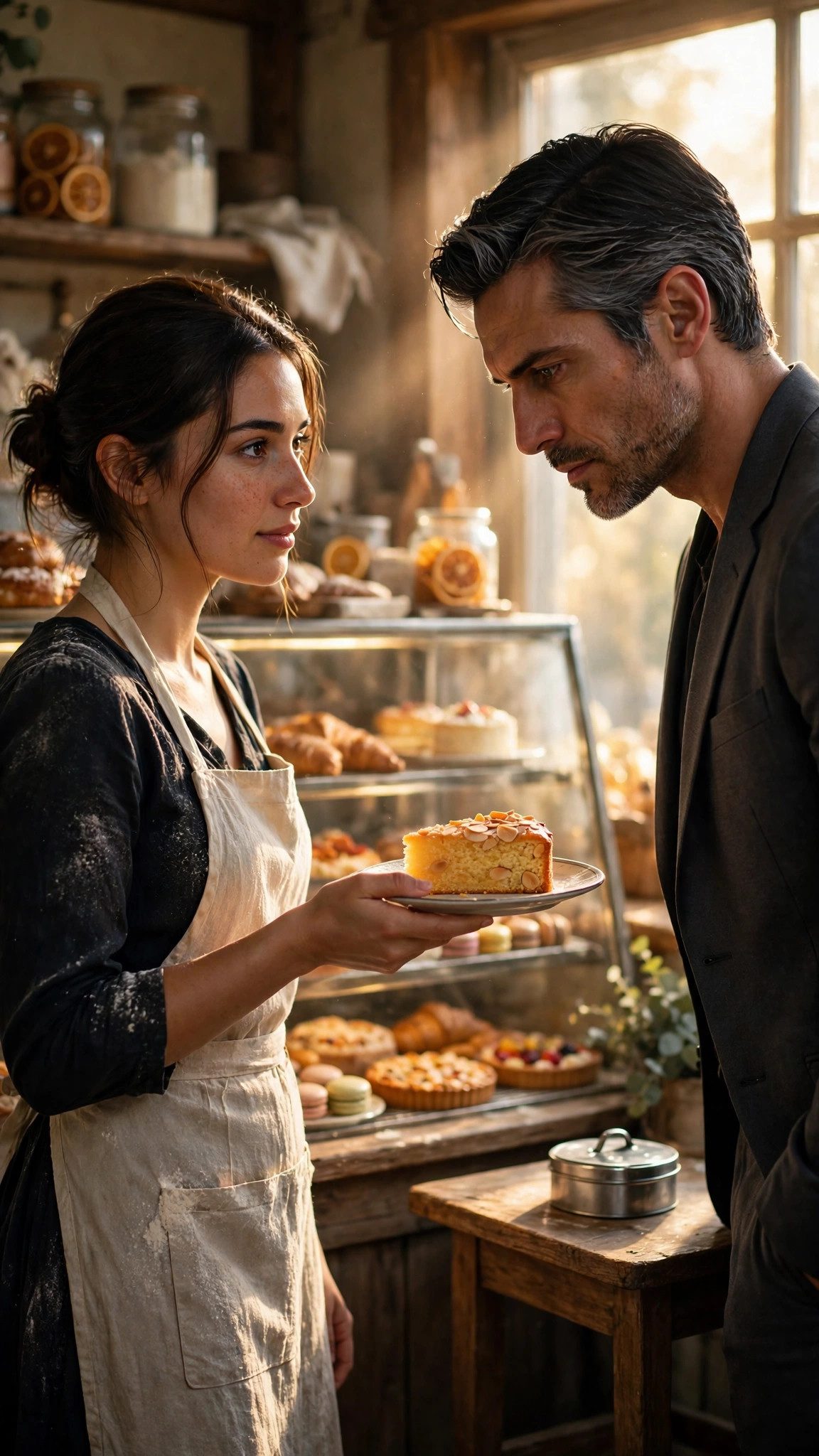
Castellano did not go quietly.
The morning after Adrien tore up the contract, Castellano came back to the bakery with six men, and he stood in the doorway, and he told me that the lease meant nothing, and that his lawyers were better than Adrien's lawyers, and that in thirty days I would be on the street no matter what piece of paper Adrien had signed.
But he had made a mistake. He had made the same mistake his whole life. He had believed that money could buy anything, and that fear could silence anyone, and he had forgotten that the one thing you can never be too careful about is who you trust.
Sal Ferraro, the driver who had sold Adrien's mornings to Castellano for fifty thousand dollars, went to the police. He went because his wife was sick, and because he was ashamed, and because Asher Romano went to his house one night and sat at his kitchen table and told him that there was still time to do one right thing. Sal told the police everything: the payments, the shell company, the threats to Frank Deluca, the plan to take the bakery and the recipe. And the police, who had been waiting for years for a reason to open Castellano's books, opened them, and what they found was enough to put him away for a very long time.
Castellano was arrested on a Tuesday morning, right when the sun hit the bakery window, and I watched it happen from behind the counter, and I did not feel triumph. I only felt relief, and then I felt sad, because he was an old man, and he had spent his whole life chasing something that had never belonged to him, and he had never understood that the thing he wanted was not a recipe at all. It was a kitchen where two women had once laughed together, a long time ago, in Palermo. And you cannot buy that. You cannot steal it. You can only be invited into it, and he never was.
After Castellano was gone, the bakery went back to being an ordinary bakery. Mrs. Delgado came for her rosemary bread. Old Mr. Okafor came for his coffee and his newspaper and his one slice of lemon pound cake. Priya finished her nursing degree, and she still works the counter three mornings a week, because she says she likes the smell of oranges in the morning. And Adrien came every morning, right when the sun hit the window, and he sat at the small table, and he ordered one slice of orange almond cake, and he ate it, slowly, all of it, every crumb, and he left exact change on the table, and he smiled at me, and I smiled back.
But it was not enough. Not for him, and not for me. Because the proposition he had made me, the one about the same cake every morning for the rest of our lives, had never really been about the cake. It had always been about the rest of our lives. And one morning, six months after the day he first sat down, he came into the bakery, and he did not sit at the window table. He came behind the counter, and he took my hands, flour and all, and he knelt down on the floor of my grandmother's bakery, in front of my ovens and my regulars and Priya and Mrs. Delgado and old Mr. Okafor, and he said, "Lucia Benedetti, I have been coming to this bakery every morning for one slice of cake. But the truth is, I never came for the cake. I came for you. I came because you are the only person in this world who ever asked me if something was good enough, and waited for the answer. Will you marry me? Will you bake the cake every morning, and let me sit at the window table and watch you work, for the rest of our lives? Not as a business. Not as a deal. As my wife."
I looked down at him, kneeling on the floor in his charcoal suit, with flour on his knees, and I thought about my grandmother Rosa, and about Caterina Moretti, and about two women laughing in a kitchen in Palermo, a long time ago. And I thought about the recipe card, and the words at the bottom: "For the medicine. Forgive me." And I thought about the fact that Rosa had sold the recipe to save her daughter, and that her daughter had died anyway, and that for thirty years Rosa had believed she had failed, when really she had done the bravest thing a mother can do. And I thought about the fact that the recipe had survived anyway, because Rosa had kept the truth in her hands, and she had given it to me, and I had kept it, and now it was going to live on, not as a secret, and not as a piece of paper, but as a family.
"Yes," I said. "Yes, Adrien. For the rest of our lives."
We were married in the bakery, on a Sunday morning in October, when the light came through the window just right and the whole shop smelled like oranges and toasted almonds. Priya was my maid of honor, and she cried through the whole ceremony, and Asher Romano gave me away, because he said Rosa would have wanted someone who had known her to walk me down the aisle, and there was no aisle, only the space between the ovens and the counter, and it was perfect. Adrien wore a charcoal suit, and I wore my grandmother's dress, the one Rosa had been married in, a long time ago, in Palermo, and Mrs. Delgado played the piano, very badly and very beautifully, and old Mr. Okafor danced with Priya, and everyone ate orange almond cake, and everyone said it was the best cake they had ever tasted.
After the wedding, we hung two photographs on the wall of the bakery, side by side, above the counter, where everyone could see them. One was the photograph from Adrien's house, of Rosa and Caterina laughing in a kitchen in Palermo, with the words on the back: "The only real one. Palermo, 1962." The other was a photograph of Adrien and me, on our wedding day, standing in the bakery with flour on our clothes and cake on our faces, laughing the same way our grandmothers had laughed, a long time ago.
And every morning, I bake the orange almond cake before dawn, the way Rosa taught me, with the orange zested by hand, and the almonds toasted until the kitchen smells like autumn, and the spoonful of orange blossom water that I will never write down. And every morning, Adrien sits at the small table by the window, and I bring him a slice, and he eats it, all of it, every crumb, and he looks at me, and he says, "It is perfect, Lucia. It is always perfect. Always."
And sometimes, in the quiet of the morning, before the regulars come, I think about my grandmother, and I think about his grandmother, and I think about the fact that the cake brought us together, and that the cake was never just a cake. It was a bridge between two families, and two women who loved each other, and a boy who stole almonds from a pantry, and a girl who sat on a flour sack and watched her grandmother work. It was the only real one. And now it is ours, for the rest of our lives.
On the morning of our wedding, I woke up before dawn, the way I always do, and I went downstairs to the bakery, and I baked the wedding cake myself, with my own two hands, an orange almond cake with three layers, and white icing, and sugared orange slices on top, and Adrien came downstairs in his shirtsleeves, with his hair still wet from the shower, and he stood in the doorway and watched me work, and he said, "You don't have to bake on your wedding day, Lucia. We hired a caterer. We hired three caterers."
"I know," I said, without looking up from the batter. "But Rosa always said that a bride should bake her own wedding cake, because then she knows exactly what she is promising. And I am promising you this cake, Adrien. Every morning. For the rest of our lives."
He came and stood behind me, and he put his arms around my waist, and he rested his chin on my shoulder, and he watched me fold the batter, and he said, "Then I am the luckiest man in Chicago. Because no one has ever promised me a cake before."
A year after the wedding, the bakery is still the same little shop on Taylor Street, with the bell over the door and the window that catches the morning sun. But some things have changed. There is a new sign above the door, painted in gold letters, that says "Benedetti Bakery," and underneath it, in smaller letters, "Est. Palermo, 1962." And there is a new girl in the kitchen, a girl named Sofia, sixteen years old, from the neighborhood, who sits on a flour sack in the corner and watches me work, the way I used to sit and watch Rosa. I let her lick the spoon when the batter is done, but only after she has washed her hands twice and promised not to tell anyone the recipe. And one day, when she is ready, I will teach her the spoonful of orange blossom water, and I will make her swear on her mother's memory that she will never write it down, and never tell anyone, and never sell it, not for any amount of money in the world. Because that is how a recipe lives. Not on a piece of paper. In hands, and in memory, and in the people who love it enough to keep it.
On the anniversary of Caterina's death, every year, Adrien and I drive to the cemetery together, and we bring two slices of orange almond cake, wrapped in white paper, and we set one on Caterina's grave, and one on Rosa's grave, and we sit on the grass under the old oak tree, and we eat our slices, slowly, the way a cake like that deserves to be eaten. And Adrien tells me stories about his grandmother, about the way she laughed, and the way she cooked, and the way she used to hide almonds in his pockets when his father wasn't looking. And I tell him stories about Rosa, about the flour sack, and the wooden crate, and the tin box full of recipe cards. And the two women are together again, in our stories, the way they were together in that kitchen in Palermo, a long time ago, with their hands in the same bowl.
And on the anniversary of the day we met, the Tuesday morning he first sat down at the window table, we close the bakery early, and we push the tables aside, and Mrs. Delgado plays the piano, very badly and very beautifully, and Adrien takes my hand, and he dances with me in the middle of my grandmother's bakery, in the light coming through the window, with flour still on my apron and cake crumbs on the floor. He is not a very good dancer. He steps on my toes twice, and he apologizes, and I laugh, and he laughs, and the bell over the door rings, even though no one has come in, as if the bakery itself is laughing with us. And I think about the first morning he walked through that door, and how frightened I was, and how far we have come, and I think that Rosa would have liked him, in the end. She would have looked at him, with his charcoal suit and his men with guns, and she would have seen past all of it, the way she always saw past everything, and she would have said, "He is a good man, Lucia. He only needs someone to bake for him." And she would have been right.
And when we go home, in the evening, with the sun going down over the lake, Adrien sits at the kitchen table in our house, and I bring him one more slice of cake, and he eats it, all of it, every crumb, and he looks at me, and he says, "It is perfect, Lucia. It is always perfect. Always."
And I look at him, and I look at the photographs on the wall, of Rosa and Caterina laughing in a kitchen in Palermo, and of Adrien and me on our wedding day, with flour on our clothes and cake on our faces, and I think about the fact that I am the luckiest woman in Chicago. Not because I married a billionaire. Not because I married a mafia boss. But because I married a man who comes to my bakery every morning for one slice of cake, and who looks at me the way my grandmother used to look at the oven, with patience, and with love, and with the certainty that what is rising inside is worth waiting for.
And every morning, before dawn, when I light the ovens and the bakery fills with the smell of oranges and toasted almonds, I say good morning to Rosa, and to Caterina, and to my mother, wherever they are. I tell them the bakery is safe. I tell them the recipe is safe. I tell them the cake is still the only real one, and that it always will be, because it is baked with love, and love is the one ingredient no amount of money can ever buy, and no man with gold teeth can ever take away. And then I tie on my apron, and I wash my hands twice, and I begin again, the way Rosa began, and the way her mother began before her, one cake at a time, one morning at a time, for the rest of our lives.
The End.
THE END