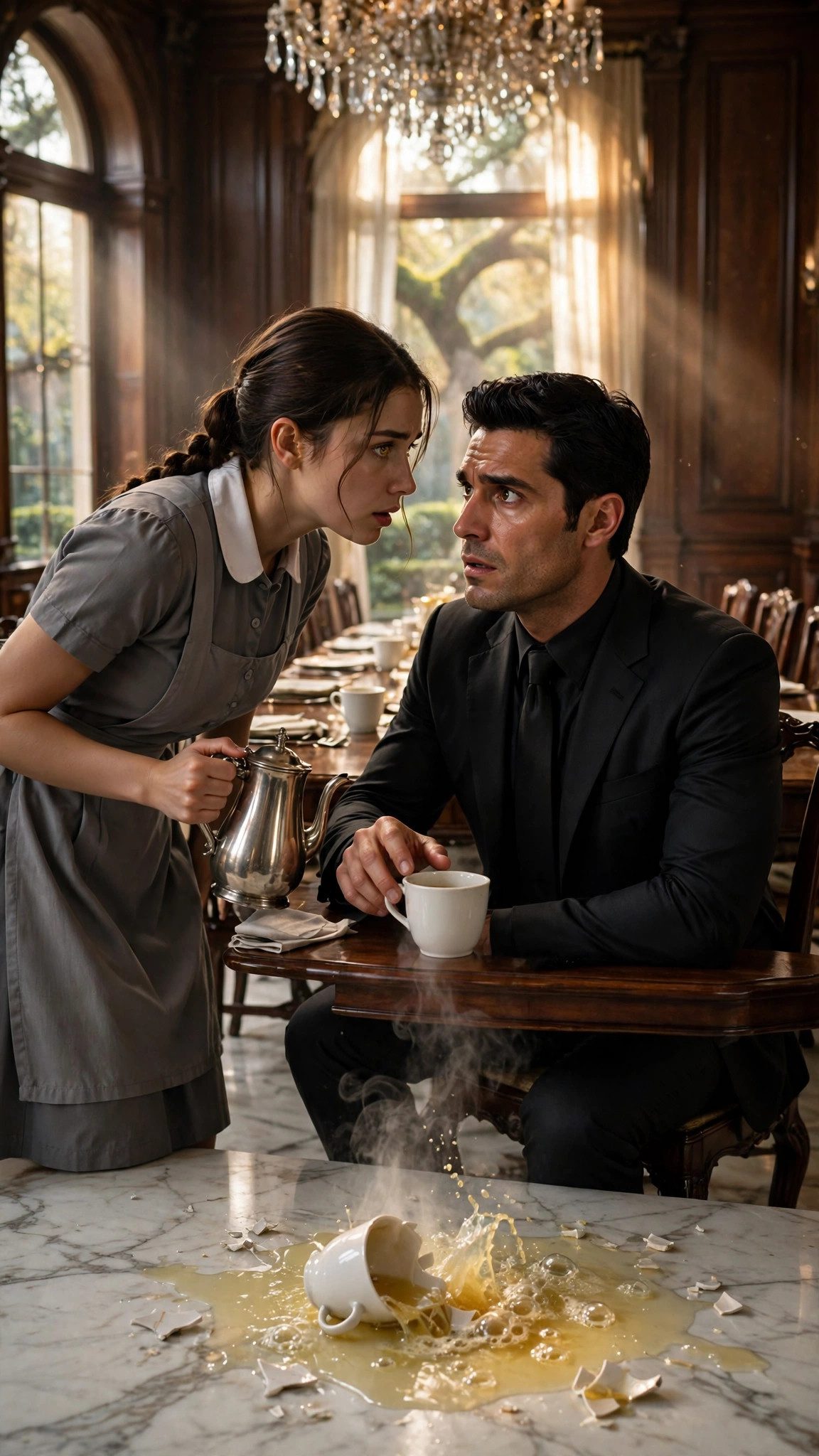
I was nineteen years old the night my father died, and I have spent fourteen years telling myself the same story about it.
The story went like this: Salvatore Orsini, my father, the man who built our family from a single dockside warehouse into the most powerful name in New Orleans, was driving home from a meeting on the river road when a rival family ambushed his car. The driver panicked and ran. My father died alone on a dark road with two bullets in his chest, and I was at home, nineteen and useless, arguing with him on the telephone an hour earlier about a girl I wanted to marry and a life I wanted to live that had nothing to do with his world. I inherited everything the next morning. I buried him the next week. I took revenge on the men I believed had done it, and I told myself that was justice, and I told myself that was enough.
It was not enough. It was never enough, because the story had a hole in it that I had never looked at directly. The driver. Thomas Delacroix. My father's driver for eleven years, a man who had eaten Sunday dinner at our table and taught me to drive in the empty lot behind the warehouse when I was fifteen. The official story said he ran. It said he abandoned my father on the river road and disappeared into the night, and nobody ever found him, and I accepted that because it was easier to hate a dead rival family than to ask what kind of man runs from a dying friend.
My mother died six months after my father. Elena Orsini, forty-one years old, beautiful in the way that made men quiet when she entered a room, dead of what the doctor called a broken heart and what I called grief, because she stopped eating and stopped sleeping and stopped answering when I spoke to her, and one morning in October she simply did not wake up. October 14th was the day they buried her. I had forgotten that until the girl in the gray uniform put a folded piece of paper in my hand with that date written on the corner.
I took over the family at twenty-one, after two years of my uncles running things badly and losing ground to the Castellanos, and I spent the next twelve years making sure no one ever doubted me again. I built the mansion up. I bought the docks outright. I made the police look the other way and the politicians take my calls, and I made the men who had killed my father pay in ways that are not written down anywhere. I became the man people chose their words carefully around, and I told myself that was what strength looked like.
It was not strength. It was a wall, and I lived behind it, and the only people who ever got through it were Benny Romano, who had been my father's friend before he was mine, and my mother, in my memory, telling me to be better than the men who had raised me.
Violet Delacroix came to work in my house three years ago, and I never noticed her because noticing people was not a thing I did anymore. The staff were furniture to me. The maids changed my sheets and polished my floors and carried my trays, and I did not learn their names because learning their names would have meant seeing them, and seeing them would have meant remembering that there were people in my house who were not soldiers and not enemies, and that was a kind of softness I had trained myself not to afford.
She was twenty-three years old when she arrived, hired on Maureen's recommendation, and Maureen had worked in this house for thirty years before she retired to a little house on the edge of the Ninth Ward with a girl she called her niece. I knew Maureen. Everyone in the house knew Maureen. She made the soup my mother liked, and she ironed my father's shirts, and she had a way of looking at you that made you feel like she knew exactly what you were thinking and had decided to forgive you for it in advance. When she asked me for a job for her niece, I said yes without looking up from my papers, because that was the kind of thing I did to keep the house running smoothly, and then I forgot about it entirely.
Violet learned my house the way a soldier learns a battlefield. She learned that I took my coffee at seven, black, with honey, and that I read the newspaper for exactly thirty minutes and never finished it. She learned that Benny arrived at seven-fifteen with his folder and his worries, and that the chef, Marcel Dubois, came in through the kitchen door at five-thirty and complained about the produce delivery every single morning. She learned that Clara, the other maid, the one with the loud laugh and the quick hands, always volunteered for the breakfast shift, and that Clara had a habit of standing too close to the guards and asking them questions about my schedule.
She learned all of this because her aunt had told her to. Maureen had sat her down in the little kitchen of the little house in the Ninth Ward, the night before Violet's first day of work, and told her the story of this family the way it actually happened, not the way I told it to myself.
"Your father drove for Salvatore Orsini," Maureen said. "He was a good boy who made a terrible choice. On the night Salvatore died, men came to your father and told him that if he drove Salvatore down the river road that night, they would kill your mother and you, a baby in her arms. And if he did not drive, they would kill Salvatore. Your father chose his family. He drove you and your mother out of the city that night, to a cousin's house in Baton Rouge, and Salvatore drove himself to the meeting, and the men who were waiting for him killed him. Your father came home the next morning and found out what he had done, and he never forgave himself. He drank. He stopped working. He died when you were six years old, of a liver that gave up and a heart that had already given up years earlier."
"And you?" Violet asked. She was twenty-three, and her hands were shaking around her cup of tea.
"I was your mother's sister," Maureen said. "I was a housekeeper in that mansion, and I stayed, because someone in this family had to stay and watch, and someone had to make sure that the boy Salvatore left behind did not end up the same way. Carmine was nineteen when his father died. He is a good boy who became a hard man, and hard men do not see the people who are trying to save them. So you will go into that house, and you will be quiet, and you will be invisible, and you will watch. You will learn every face and every habit. And if the day ever comes when someone tries to hurt him the way they hurt his father, you will be the one standing there, because nobody else in that house is watching."
"And the letter?" Violet asked, because Maureen had been holding a small folded square of paper in her lap the whole time, turning it over and over in her fingers.
Maureen held it out. It was folded seven times, soft at the creases, with two words written in faded ink on the corner. October 14.
"This is from Elena Orsini," Maureen said. "His mother. She wrote it the night before she died, and she gave it to me and told me to keep it safe, and to give it to Carmine when he turned eighteen. But he was not ready at eighteen. He was angry and grieving, and a letter like this would have broken him. So I kept it. And now I am giving it to you. You will carry it with you every day you work in that house. And when the day comes that you have earned the right to give it to him, when you have saved him or served him in a way that proves you are not just another face in the hallway, then you will give it to him. And you will tell him what your mother told you to tell him, before she died."
"What did she tell me?" Violet whispered.
Maureen put her hand over Violet's, and her eyes were wet, and her voice was steady. "She said, 'Tell him to find the letter.' She said his mother did not leave him alone forever, and that the truth about his father's death is not the story he tells himself, and that the letter will show him the way."
Three years. Three years Violet carried that folded letter in her apron pocket, through a thousand mornings of pouring coffee and changing sheets and polishing the marble floors of a house that belonged to a man who did not know her name. Three years of watching Clara volunteer for the breakfast shift, and watching the chef take phone calls in the pantry with the door closed, and watching men she did not recognize come in through the kitchen door with delivery boxes that were never opened in front of her.
She watched, and she waited, and she learned the rhythm of my house so well that on the morning of July 25th, when the coffee came out of the kitchen a shade too yellow and smelling a shade too sharp, she knew before anyone else in the world that something was wrong.
In her first weeks in the house, Violet started a small notebook. She kept it in the pocket of her apron, next to her mother's letter, and she wrote in it in tiny handwriting during the quiet hours of the afternoon, when the house was empty and the other maids were resting.
She wrote that Clara always volunteered for the breakfast shift, and that Clara lingered near the office door when she thought no one was looking, and that Clara asked the guards questions about Mr. Orsini's schedule with a laugh that was a little too loud and a little too long. She wrote that the chef, Marcel Dubois, took phone calls in the pantry with the door closed, and that he always stepped outside to smoke afterward, and that he never smoked unless he had just been on the telephone. She wrote that a delivery man came twice a week with boxes marked as produce, and that the boxes went straight to the chef's room and were never opened in the kitchen, and that the delivery man never once spoke to anyone except Marcel.
She did not know what any of it meant. She only knew that her aunt had told her to pay attention to the people who came in and out of the house, and to learn how they behaved, because behavior was a language, and people who were hiding something always spoke it, even when they thought they were being silent.
Carmine, for his part, had his own rituals that Violet learned without ever being told. He walked the house every night before bed, all four floors, checking the locks himself, the way his father had done. He stood at the fourth-floor window sometimes, looking out over the garden, with his hands behind his back, and he stayed there for a long time, and Violet, polishing the banister on the landing below, understood that he was standing in the place where his father used to stand. He ate alone. He slept alone. He kept his mother's portrait in the library, covered with a cloth, and once a month, on the fourteenth, he uncovered it and sat with it for an hour, and no one in the house was allowed to disturb him.
She watched all of this, and she wrote it down, and she waited, the way Maureen had taught her to wait, for the day when watching would not be enough.
That night, after the dining room had been cleaned and the marble scrubbed and the shattered cup swept away, I sat alone in my office on the fourth floor, and I took the folded letter out of my inside jacket pocket, and I held it in my hand for a long time without opening it.
I was afraid of it. I had not been afraid of anything in twelve years, and I was afraid of a piece of paper folded seven times.
Benny knocked once and came in without waiting, the way he always did, and he stood in front of my desk with his hands behind his back, and he told me what his men had found.
The chef's room was empty. Marcel Dubois had left in the night with a bag packed and his car gone, and his room had been searched before he left, or by someone after he left, and the drawers were open and the closet was bare.
Clara was in custody in the pantry, sitting on the floor with her back against the wall, a gun in one hand and a knife in the other, smiling, and she had not said a word since they found her except one sentence, over and over, in a voice that was almost a song.
"Tell him to follow the blood trail."
And in the kitchen, on the counter beside the coffee machine, Benny's men had found a packet of coffee with a banknote folded inside it, and written on the banknote, in small careful handwriting, were the words: For the boy who owes us a father.
I put the folded letter back in my pocket, and I told Benny to double the guards, and to find Marcel Dubois, and to keep Clara alive and talking, and to search this house from the cellar to the roof for blood, because someone had left me a trail and I intended to follow it to the end.
Then I sat alone in my office, in the dark, in the house my father had built, and I listened to the quiet of three floors of rooms where a girl in a gray uniform had been standing guard over my life for three years without my knowledge, and I wondered how many other things I had been wrong about.