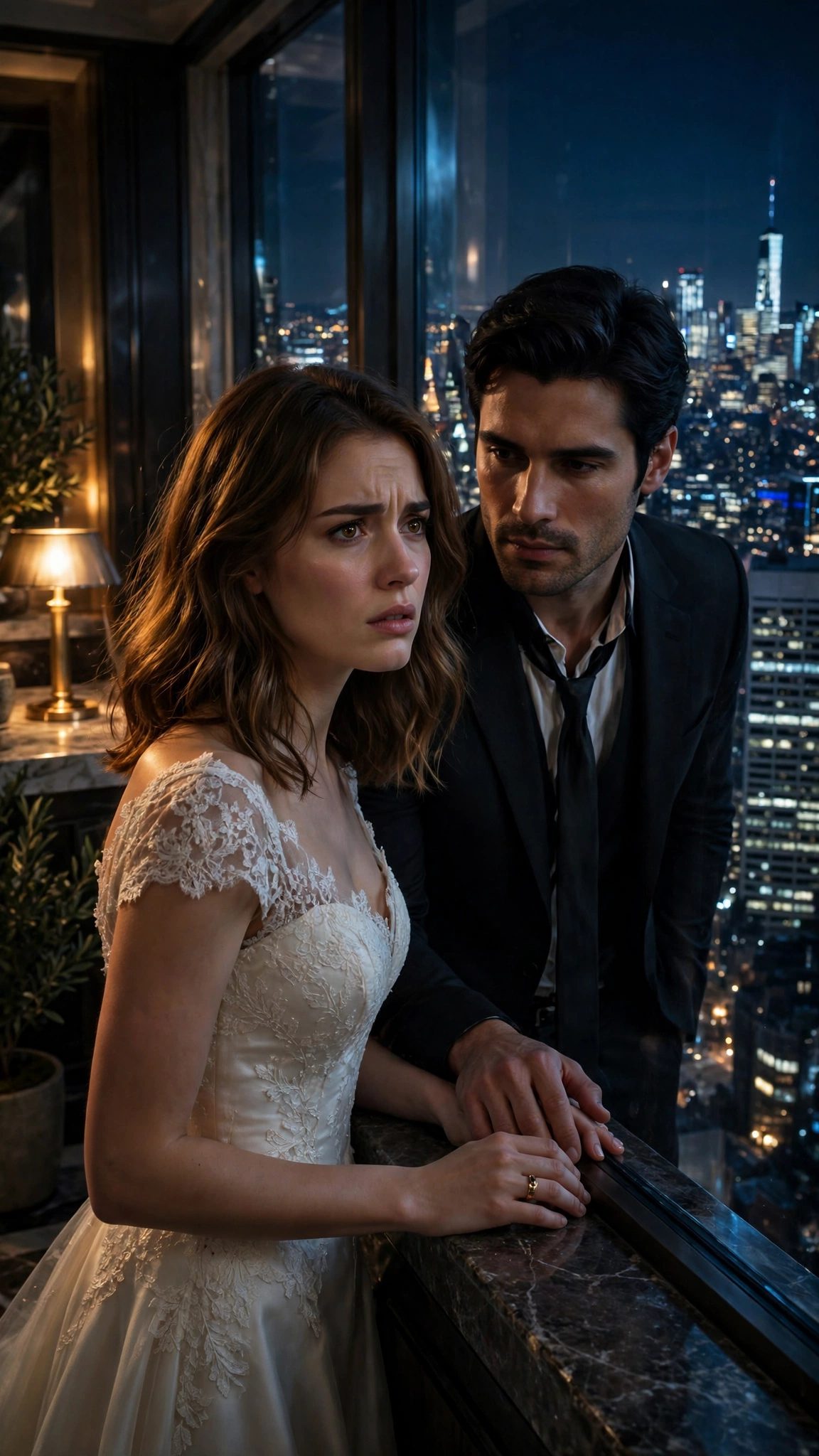
Anthony Moretti confessed on a Friday, in a small room with a tired detective and a lawyer who kept checking his watch, and by Monday the whole city knew.
The newspapers called it a scandal. The television called it a tragedy. The police called it what it was: a man who had stolen from his own family for two years, and killed his own cousin to hide it, and tried to kill a schoolteacher for overhearing a conversation in a parking lot.
I read the police report the way I had read everything else in this strange new life: slowly, carefully, the way I taught my students to look at a painting, noticing what was actually there instead of what I expected to see.
The report said that Isabella Moretti's car had gone off a rain-slicked road at 11:40 on a Tuesday night, two years earlier. It said the brakes had failed. It said the mechanic who had serviced the car the week before had left the country three days after her death. It said the investigation had been closed within a month, marked as an accident, signed by a detective who had since retired to a house he could not have afforded on a policeman's salary.
The report did not say what the mechanic's statement said, the statement that had been sitting in Dominic's safe for two years: that the brake lines had been cut, cleanly, with a tool, and that a man had paid him five thousand dollars in cash to say nothing, and that the man had been Anthony Moretti's driver.
The report did not say what the photographs said: Anthony meeting the gunman's handler at a restaurant on the docks, the same restaurant where the men from the parking lot had their meetings, the same restaurant where, two years earlier, a dockworker who had asked too many questions had eaten his last meal before being found in the river.
The report did not say what Isabella's letter said: that she had found the ghost warehouse, and that she had been afraid, and that she had loved her brother enough to write it all down in case something happened to her.
But the confession said all of it, in Anthony's own voice, on the record, and there was no taking it back.
Dominic did not go to the police station. He did not watch the news. He sat in his office for two days with the door closed, and when he finally came out, his eyes were red, and his bandage needed changing, and he looked like a man who had been carrying something heavy for two years and had only just set it down.
"She knew," he said to me, standing in the doorway of the office, his voice raw. "She knew it was Anthony, and she wrote it down anyway. She was braver than I was. I told her to be quiet and let me handle it, and she waited three weeks, and then she died. If I had acted the day she told me—"
"Stop," I said. I took his hand and led him to the couch, and I sat beside him, and I said the thing Rosa had told me to say, the thing I had been carrying since the hospital.
"She didn't die because you were slow, Dominic. She died because Anthony is a murderer. There's a difference. She died because a man who steals will kill to keep stealing, and no one could have stopped that except Anthony himself, and he chose not to. You didn't choose it. She didn't choose it. He did. All of it. The brakes. The river. The gallery. Every bit of it was his choice."
Dominic was quiet for a long time. Then he said, "I have spent two years believing that if I had been faster, she would be alive. Two years. I built this whole life around that belief. The penthouse. The rules. The chair I slept in on our wedding night. All of it was because I thought I didn't deserve anything that meant something, because the last thing that meant something to me died, and it was my fault."
"It wasn't your fault," I said. "And you do deserve something that means something. You deserve this. You deserve us."
He looked at me then, and I saw the wall come down, the whole wall, not a crack but the entire thing, falling away all at once, and behind it was a man I had only ever glimpsed: tired, and grieving, and kind, and so afraid of losing one more person that he had almost lost himself.
"I don't know how to do this," he said. "I don't know how to be a husband. I know how to be the head of a family. I know how to give orders. I know how to protect people by standing in front of bullets. I don't know how to sit at a table and talk about a boy who draws hands, or a girl who paints everything blue."
"Then I'll teach you," I said. "That's what I do. I teach people to see. And right now, I need you to see something."
I took his hand and put it over my heart, where it was beating too fast, the way it had beaten in the parking lot, and in the gallery, and in the hospital hallway.
"Feel that?" I said. "That's not a contract. That's not a wall. That's not a name. That's me, Dominic. I'm still here. I'm not going anywhere. And neither are you."
He held his hand there for a moment, feeling my heartbeat, and then he leaned forward and rested his forehead against mine, and we sat like that in the quiet office, with the city humming outside the window, and the safe standing open behind its painting of the sea, and the letter on the desk, and the whole terrible truth finally out in the open where it could no longer hurt us in the dark.
That evening, Rosa came to dinner, and she brought a bottle of wine and a photograph I had never seen: Isabella as a little girl, sitting on Dominic's shoulders at the beach in Maine, both of them laughing, the sea behind them gold in the evening light.
"She would have liked you," Rosa said to me, setting the photograph on the table between us. "She liked people who noticed things. She would have liked that you found the warehouse in one afternoon. She would have liked that you stayed in the hospital. She would have liked that you told my son the truth when no one else would."
"Thank you," I said, and my voice broke a little, because I had never met Isabella, and yet I felt like I had lost her too, like she was a sister I had never had the chance to know.
"Don't thank me," Rosa said. "Thank her. She wrote the letter. She found the numbers. She did the brave part. We just finished it."
After dinner, Dominic took me up to the roof of the penthouse, where the city spread out below us in every direction, lights upon lights, and he stood beside me at the railing, and he said, "I want to show you something."
He pointed north, toward the dark line of the horizon beyond the city. "Maine is up there. The house by the sea. Isabella's bedroom is still the way she left it. Her books. Her paints. She painted, you know. Not well, but she loved it. She would sit on the porch and paint the sea, over and over, and it never looked the same twice."
"She sounds like my kind of person," I said.
"She was," Dominic said. "And I think she would have wanted you to have her room. Not to live in. Just to see. To know the place where she was happy."
I looked at him, at the city lights reflecting in his dark eyes, at the bandage hidden under his shirt, at the man who had married me to keep me alive and had nearly died doing it, and I said, "Then let's go. Let's go to Maine. Let's see the house, and the sea, and her room. Let's go and come back as something new."
He nodded, and he took my hand, and we stood on the roof while the city glittered below us, and for the first time since the parking lot, I did not feel like a woman who had been pulled out of her life.
I felt like a woman who had found a new one, and who was finally, after everything, ready to live in it.
The detective came to the penthouse three days later, a tired man in a rumpled suit with a notebook full of names, and he sat in the living room with Dominic and me, and he asked me to tell him everything, from the beginning, in order, without guessing.
I told him about the parking lot, and the sketchbook, and the voices behind the maintenance building. I told him about the black car, and the door, and Dominic's hand catching my arm. I told him about the folder, and the photographs, and the police report, and the flash drive with the altered routes. I told him about the gallery, and the gun, and Dominic stepping between me and the bullet. I told him about the ghost warehouse, and the letter, and the trap at the docks, and the terrace, and Anthony's confession.
The detective wrote it all down, and when I finished, he closed his notebook and said, "Mrs. Moretti, I have been a policeman for twenty-six years, and I have never heard a witness tell a story that clearly. Most people guess. Most people add things. You told me what you saw, in order, without guessing. That's rare. That's the reason this case is going to hold together."
"Thank you," I said.
"Don't thank me," he said. "Thank Isabella. Her letter is the reason we could open the old investigation. Without it, the brakes would still be an accident, and the dockworker would still be an accident, and your husband would still be looking for proof. She did the brave part. You just finished it."
After he left, Dominic and I drove to the cemetery, to a quiet hill with an old oak tree, where Isabella was buried beside her father. The headstone was simple: her name, her dates, and underneath, in small letters, "She saw what others missed."
Dominic stood in front of it for a long time, holding a bouquet of white flowers, and I stood beside him, holding his hand, and neither of us spoke, because there was nothing to say that the stone did not already say.
Finally, Dominic knelt down and laid the flowers against the stone, and he said, very quietly, "I'm sorry, Bella. I was too slow. You told me, and I told you to wait, and you waited, and it cost you everything. I'm sorry."
Then he was quiet, and I knelt beside him, and I said, "She knows, Dominic. She knew you would finish it. That's why she wrote the letter to you. She trusted you. And you did finish it. You did."
We stayed there until the sun went down, and the oak tree threw long shadows across the grass, and when we finally left, Dominic's face was wet, and he did not try to hide it, and I held his hand the whole way back to the car, and I thought about how strange it was that grief could feel like relief, like a weight you had carried for so long that you had forgotten it was there, until someone helped you set it down.
The next week, I went back to my school.
I had not been there since the Thursday I stayed late to fetch my sketchbook, and walking through the front doors felt like walking into a life that belonged to someone else. The hallways smelled the same: chalk dust and floor wax and the faint smell of paint from the art room. My classroom was exactly as I had left it, the still lifes on the easels, the color wheel on the wall, the chipped blue mug on my desk.
My students were waiting. They had heard that I had gotten married, and that I had been in some kind of accident, and they had a hundred questions, and I answered the ones I could, and I smiled at the ones I couldn't.
The boy who drew hands showed me his newest drawing, a portrait of his grandmother, and the hands were perfect, every line, every wrinkle, every vein, and I told him so, and he beamed like the sun had come out.
The girl who painted everything blue showed me a painting of the sea at dusk, grey and gold, and I stared at it for a long time, because it looked like the painting over the mantel in the house in Maine, and like the painting in the gallery, and like every painting of the sea I had ever seen, and yet it was entirely her own.
"Why blue?" I asked her, the way I always did.
"Because blue is the only color that feels honest," she said, the way she always did.
I taught that day, and the next, and the day after that, and slowly, the ordinary came back: the grading, the lesson plans, the Sunday phone calls with my best friend, who had finally been allowed to call me again, and who cried when she heard my voice, and who said, "Emily Carter, you are the most stubborn person I have ever met, and I am so glad you are alive."
And every evening, Dominic came to pick me up, in the black car, with Jack driving, and my students would press their faces to the windows to watch, and Dominic would stand in the hallway of my school, in his black suit, looking completely out of place and completely at home at the same time, and he would say, "Ready to go home, Mrs. Moretti?"
And I would say, "Yes. Take me home."
Home. The word had changed its meaning. It used to mean a small apartment with a noisy radiator. Now it meant a penthouse with a painting of the sea, and a house in Maine with blue shutters, and a man who slept in chairs to keep his word, and a mother-in-law who measured me like a headmistress and loved me like a daughter, and a sister I had never met who had left me a letter, and a life I had never asked for, and would never give back.