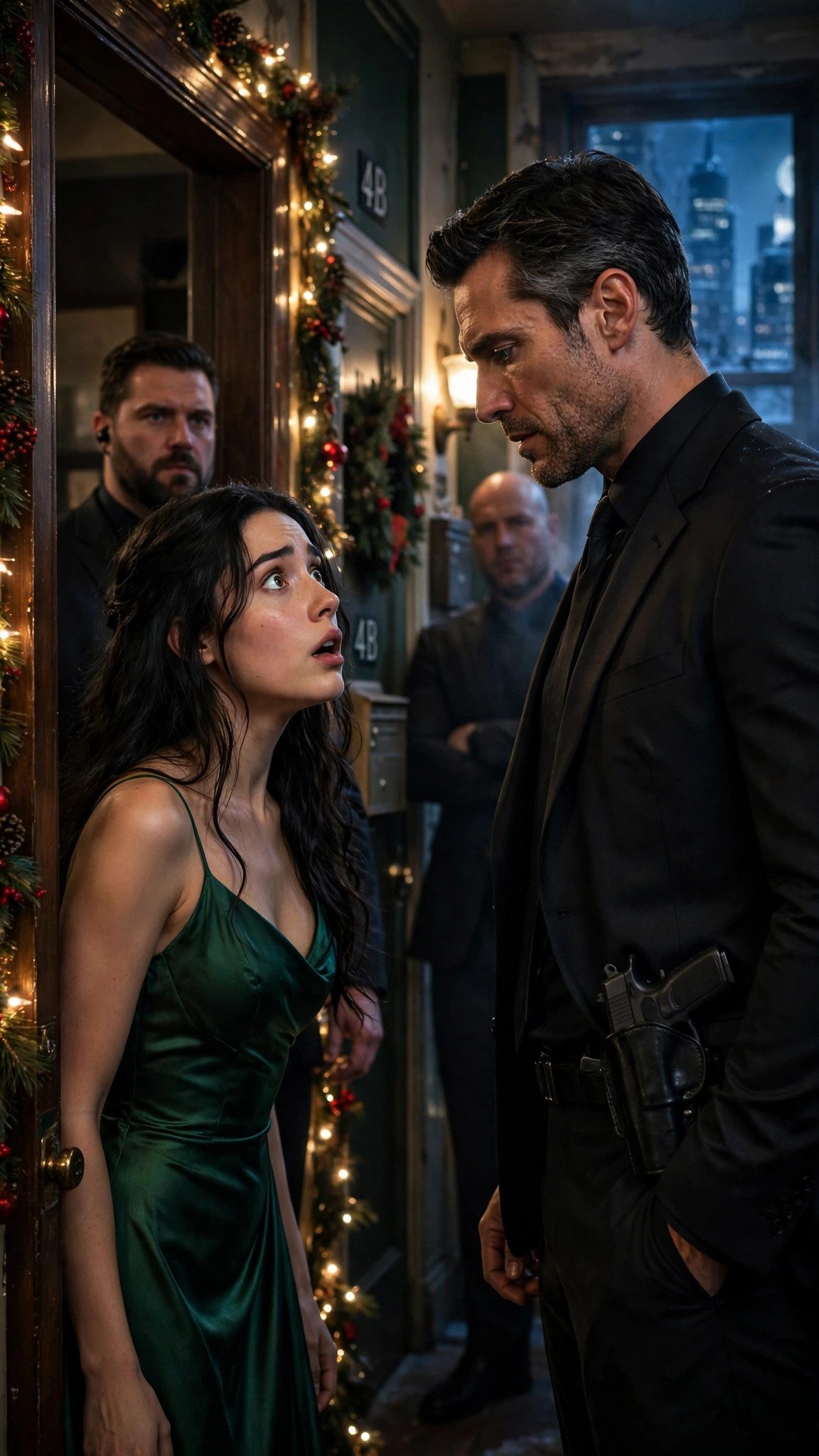
The week after Pier 17 felt like waking up from a dream.
Silas Kane was in prison, awaiting trial on charges that would keep him behind bars for the rest of his life. Victor Lang was in prison beside him. Marcus Hale was in prison too, and though he would spend years there, the judge had listened to his story — about his brother, about the warehouse, about twelve years of waiting — and the sentence was lighter than it might have been. Cassian had made sure of that. "He did a terrible thing," Cassian had said, "but he did it for a reason I understand. And understanding doesn't forgive it. But it matters."
The organization — the family — was changed forever. Cassian called a meeting of every man who owed him loyalty, in the same boardroom where he had once silenced executives with a single look, and he told them the truth: that there had been a traitor, that the traitor was gone, and that from now on, things would be different.
"No more secrets from the people who protect this family," he said. "No more shadows. We are going to be a legitimate business, and the rest — the rest we are going to close down, piece by piece, until there is nothing left for a man like Silas Kane to steal."
It was a bold promise. It was a dangerous promise. And I watched the men in that room — hard men, men who had lived their whole lives in the shadows — nod their heads, one by one, because they trusted the man standing in front of them.
Afterward, Cassian found me in the hallway outside the boardroom, and he said, "Walk with me."
We walked through the office, past the desks and the meeting rooms, past the conference room where Vanessa Cole had laughed at my dress, past my own desk — my desk, with its neat stacks of papers and its one-page briefings and its drawer where I kept a note that said "Good work. — C.B."
"Your apartment is safe now," Cassian said. "The men watching it are gone. The building has new security. You can go home whenever you want."
"Home," I repeated. The word felt strange in my mouth, like a word from a language I had half forgotten.
"But I want you to know something," Cassian said, and he stopped walking, and he turned to face me, and for the first time in three years, he looked nervous. Cassian Blackwood, the man who could silence a boardroom with one look, the man who had faced down Silas Kane on a pier at midnight — nervous.
"Elara, I brought you into my world to protect you. But the truth is, I don't want you in my world as my secretary. Not anymore. I want you in my life as my partner. Not because you saved me. Not because you remember things. Because in three years, you are the only person who has ever seen me — the real me, not the boss, not the name, not the empire — and stayed."
He reached into his jacket pocket and took out a small box. It was not a ring box. It was a key.
"This is the key to the penthouse," he said. "Not as an employee. Not as a guest. As the person who lives there. If you want it. And if you don't want it, I'll understand, and I'll drive you home myself, and I'll never ask you again."
I looked at the key. I looked at him. I thought about the emerald dress hanging in my closet, unworn, waiting for a party that had already happened without me.
"I want something else first," I said.
"Anything," he said.
"I want to wear the dress," I said. "Not to a party. Not for anyone else. For me. Tonight. Just dinner. You and me. In the penthouse. With the fire going and the city outside the windows. I want to wear the dress I bought, and I want to stop waiting for a reason to feel beautiful."
Cassian smiled — a real smile, warm and unguarded, the smile of a man who has just been given the one thing he wanted most and did not dare to ask for.
"Then wear the dress," he said.
That evening, I went home to my apartment for the first time in four days. The chicken was still on the table, long past saving. The wine glass was still on the coffee table. My phone was still on the kitchen counter, its battery long dead. I stood in the middle of my small living room, and I looked at the life I had lived there — the small couch, the small kitchen, the small, quiet, invisible life — and I felt a strange tenderness for it. It had not been a bad life. It had been a waiting life. A life spent preparing for something I had not yet dared to name.
I took the emerald dress out of the closet. I laid it on the bed. I took a long, hot shower, and I did my hair the way I had imagined doing it for the party, and I put on the dress, and I stood in front of the mirror.
The woman in the mirror was not a secretary. She was not an assistant. She was not furniture.
She was Elara Whitmore. Twenty-six years old. A woman who had faced down a traitor, lied to a mafia boss on a pier at midnight, and walked out alive. A woman who remembered everything.
And she was beautiful.
I took a car to the penthouse. Danny drove, and he did not say a word about the dress, but he smiled when he opened the door for me, and he said, "You look nice, Miss Whitmore."
Cassian was waiting by the fireplace when I walked in. He was wearing a dark suit, no tie, his collar open. He had set the table himself — I could tell, because the candles were slightly crooked and the plates did not match, and it was the most charming thing I had ever seen.
He turned around. And he stopped. And he stared at me the way he had stared at me in the hallway of my apartment building, at nine o'clock at night, when he had said, "You're coming home with me."
Only this time, there was no fear in his eyes.
There was only wonder.
"Elara," he said softly. "You look—"
"I know," I said, and I smiled. "I look like a woman who bought a dress and finally got to wear it."
"No," he said, and he walked toward me, and he took my hands in his. "You look like the rest of my life."
Dinner was simple: pasta he had ordered from a restaurant downtown, a bottle of wine, bread still warm from the oven. We ate by the fire. We talked. And for the first time in three years, we talked about things that had nothing to do with business.
He told me about his mother, who had died when he was nineteen, and who had taught him to cook the pasta we were eating. I told him about my mother in Ohio, and the Sunday phone calls, and the student loans, and the three jobs. He told me about the first time he had ever fired a gun, and how his hands had shaken for an hour afterward. I told him about the first time I had ever stood up to Vanessa Cole — which was, I realized, the night I had thrown a phone at Marcus Hale's face.
We laughed. We drank wine. And when the fire had burned down to embers, Cassian stood up, and he held out his hand, and he said, "Dance with me."
"There's no music," I said.
"Then we'll dance without it," he said.
And so we did. In the middle of the penthouse, in the dark, with the city glittering outside the windows and the fire dying behind us, I danced with Cassian Blackwood in my emerald-green dress. And he held me close, and he whispered in my ear, and what he whispered was not a business plan, or an order, or a warning.
It was three words I had waited three years to hear.
Not "You're coming home with me."
But: "Stay with me."
I stayed.
One year later, the Blackwood Group held its annual Christmas party again. The string quartet played in the lobby. The tree stood tall, brought in through the loading dock just like always. The champagne sparkled in glasses that cost more per bottle than I used to spend on groceries in a month.
And I walked in wearing the emerald-green dress.
It still fit perfectly. The fabric still fell like water. The color still made my dark hair look darker and my skin look warmer. But the woman wearing it was not the same woman who had bought it a year ago. That woman had been hoping to belong. This woman knew she did.
Vanessa Cole was standing near the bar with a group of executives, and when she saw me, her smile froze halfway to her lips. She opened her mouth — and then she saw who was standing beside me, his hand resting lightly on the small of my back, his eyes on me the way they had been on me for a year now — and she closed her mouth again, and she turned away, and she did not say a word.
Cassian leaned down and whispered in my ear, "Do you want me to fire her?"
"No," I said, and I smiled. "I want her to watch."
We walked through the party together, and people came up to us — executives, clients, friends — and they greeted Cassian with respect, and they greeted me with something I had never received in that building before: warmth. Genuine warmth. Not the politeness you give to furniture. The warmth you give to a person who matters.
"Elara," one of the junior executives said — the same one who had laughed about the dress a year ago — "you look beautiful tonight."
"Thank you," I said. "I know."
Later, when the party was in full swing and the music was loud and the lights were bright, Cassian took my hand and led me to the window, away from the crowd. Outside, snow was beginning to fall over Manhattan, soft and silent, turning the city white.
"A year ago," he said, "I knocked on your door at nine o'clock at night and told you that men had been watching your apartment. Do you remember what you said to me?"
"I said, 'I just got home,'" I said. "And then I said, 'What's wrong?'"
"And I said, 'You're coming home with me,'" he said. "I didn't know then what I know now. I didn't know that home wasn't a place. It was a person."
He reached into his jacket pocket. My heart stopped. It was a small box, and this time, it was a ring box.
"Elara Whitmore," he said, and he went down on one knee, right there in front of the window, with the snow falling outside and the whole party behind us, "you spent three years taking care of me. You spent one year saving me. Will you spend the rest of your life letting me take care of you?"
The room went quiet. The music seemed to stop. Every face in the lobby turned toward us.
I looked down at him — the cold, impossible, ruthless billionaire CEO, the mafia boss, the man who had knocked on my door and changed my life — kneeling on the floor of his own Christmas party, holding a ring, waiting for my answer with an expression I had never seen on his face before.
Hope. Pure, unguarded hope.
"Yes," I said. "Yes. A thousand times, yes."
He slid the ring onto my finger. The room erupted. People cheered. Someone popped a bottle of champagne. Vanessa Cole stood frozen by the bar, holding a glass she had forgotten to drink.
And Cassian stood up, and he took my face in his hands, and he kissed me, and the whole world — the party, the music, the snow, the city — fell away, and there was only us.
Later that night, after the party had ended and the guests had gone home, we stood on the balcony of the penthouse, looking out over the city. The snow had stopped. The streets glittered. Cassian's arms were around me from behind, and his chin rested on the top of my head, and I could feel the steady beat of his heart against my back.
"Do you ever think about that night?" he asked. "The knock at nine?"
"Every day," I said.
"And if you could go back? If you could change any of it — the dress, the party, the men watching your apartment — would you?"
I thought about it. I thought about the laughter in the hallway, and the chicken going cold on the table, and the gun under his jacket, and the lights going out, and the elevator dinging in the dark, and Marcus Hale's face, and Silas Kane on the pier, and the lie I had told that saved us all.
"No," I said. "I wouldn't change a single thing. Because every step of it led me here. To you. To this. To home."
He tightened his arms around me. "Then it was worth it," he said. "All of it. Every bit of it was worth it."
Below us, the city slept. Above us, the stars came out, one by one, over Manhattan. And I stood in my emerald-green dress, with a ring on my finger and the man I loved holding me close, and I thought about the secretary I used to be — the invisible woman with the neat desk and the one-page briefings and the note in her drawer that said "Good work."
She had not disappeared. She was still there, inside me, organized and reliable and watchful, remembering everything.
But she was no longer alone. She was no longer invisible. She was no longer waiting for someone to notice her.
She had been noticed. She had been chosen. She had been saved — not by a billionaire, and not by a mafia boss, but by a man who had knocked on her door at nine o'clock at night and said, "You're coming home with me."
And she had gone. And she had never looked back.
The End.
THE END