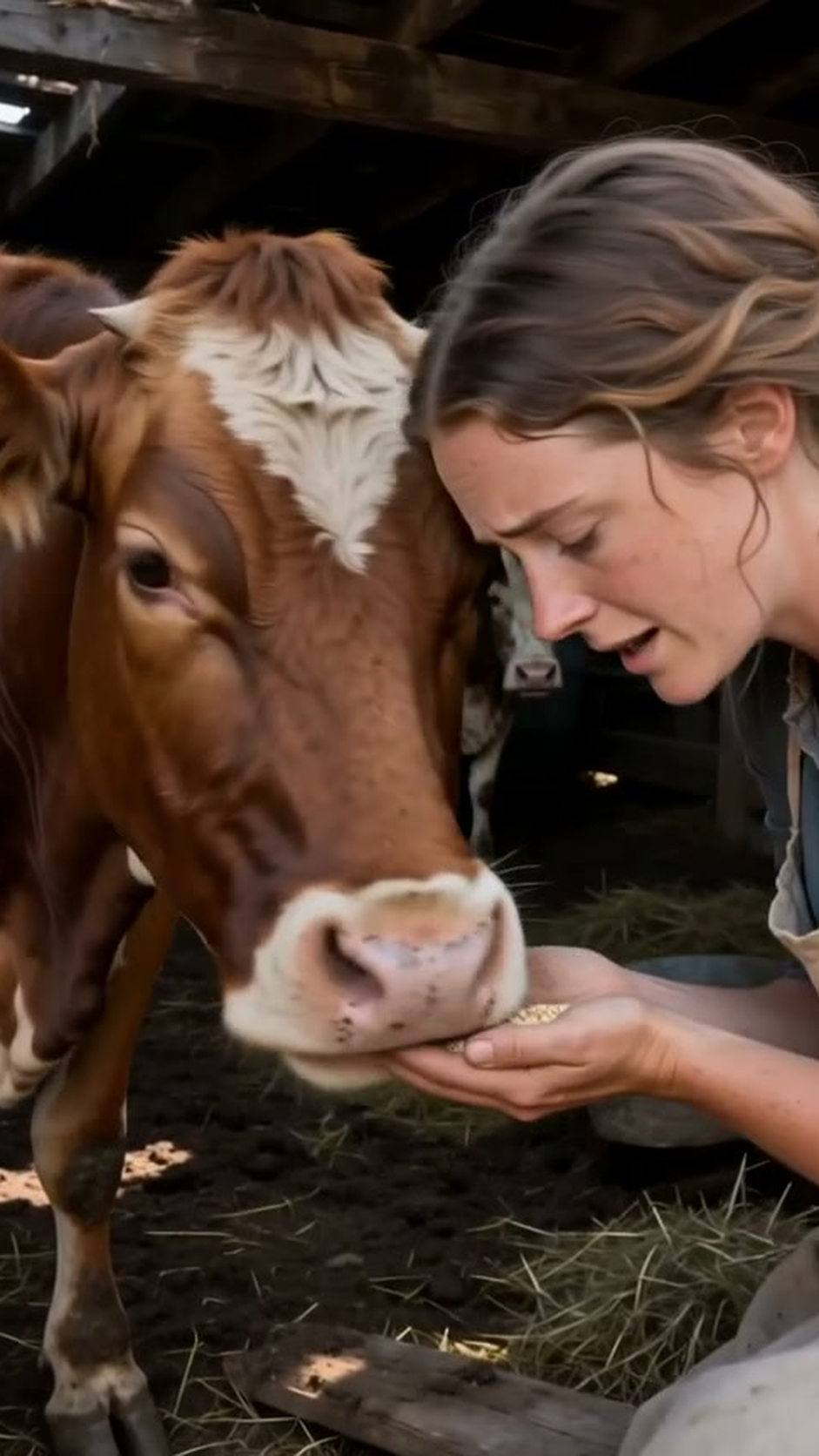
Lenora tore the dam out of her creek with her own hands the next morning, standing waist-deep in cold water at dawn with her skirts kilted up and her braid down her back, hauling sods and brush while the cows watched from the bank with the grave interest of stockholders. Tom Ellery arrived at seven with a pry bar and a second pair of shoulders and never asked her whose work they were undoing; they both knew, and knowing was enough. By nine the creek ran full and bright down its proper course again, and by ten Tom had ridden the high line and come back with his jaw set.
"They'll do it again," he said. "Or they'll try worse. A man who starts with a brush dam is only rehearsing."
"Let him rehearse," Lenora said. "I'll be watching the creek the way I watch Button. And I'll be in town Friday with butter, and half of Cedar Flats will know my name and my business by Friday night, and a thing the whole town knows about is a great deal harder to steal quietly than a thing nobody's heard of."
It was, she understood, the only armor she had: to be known. To be the woman whose cows came back from the dead, whose butter was on Harmon's shelf, whose deed had been witnessed by half the courthouse steps. Crowe's whole method was quiet — quiet offers, quiet papers, quiet dams. Very well. She would be loud.
Friday she rode into Cedar Flats with two stone crocks of butter in the wagon bed, packed in wet burlap, and her heart hammering harder than it had at the auction.
Harmon's Mercantile smelled of coffee, leather, kerosene, and money. Mr. Harmon was a narrow man of sixty with spectacles and the morals of a hanging judge where accounts were concerned. He cut a corner off her butter with his thumbnail, put it on his tongue, and went very still.
"Where'd you learn to make butter like this?" he said.
"My mother," Lenora said. "On a farm with no ice, in summers worse than this one. She said butter is mostly patience and cold water and keeping the cream sweet, and she was right about most things."
He named a price — a fair price, the price he'd paid Amos Hart at his best — and then, after a moment's consideration that she could watch traveling across his face like a cloud shadow, he named a better one.
"First of the season that's come in sweet," he said. "Hotel's been asking. Railroad crew out at the cut buys forty pounds a week when they can get it fit to eat, which in July is never. You bring me butter like this every Friday, Miss Vale, and I'll sell every pound you can churn, and the town will eat it and talk about it." He peered at her over the spectacles. "Talk is a kind of fence, in my experience."
By the time she drove out of Cedar Flats she had sold both crocks, been stopped twice by women who'd heard about the cows, and acquired the strangest and most valuable possession of her life: a reputation, traveling ahead of her faster than her wagon.
But July does not negotiate.
The heat came down the following week like a hand pressing on the whole world. The creek shrank in its banks. The grass cured standing. And the milk — the milk that was her whole fortune, coming now in real quantity from six recovering cows — began to defeat her. She churned at dawn to beat the heat and still lost a batch by noon. She set crocks in the creek and the creek ran warm as soup by afternoon. She lowered jars into the well on ropes and hauled up butter gone soft and weeping, its fine sweet flavor already fleeing. A whole Friday's churning, two days of rising before dawn, soured in the wagon bed on the ride to town inside its wet burlap, and Harmon — honest man — had to refuse half of it, and the look on his face was worse than anger. It was sympathy.
She drove home under a white sky with the unsold butter slumping in its crocks and did the arithmetic all the way, and the arithmetic said what it had said since the first morning: a farm that cannot keep its milk sweet is a farm that will die politely, a pound at a time, all summer long.
She fought the heat with everything a poor woman has, which is ingenuity and hours.
She cleared the standing half of the cabin's root cellar and set the crocks there, and the cellar — rubble-choked, shallow, breathing the cabin's own warmth — kept butter the way a pocket keeps a coin: a little better than nothing, and not nearly enough. She churned at midnight by lantern light, when the air was at its coolest, and packed the butter into crocks wrapped in burlap she kept soaked, and set them in the creek in the shade of the willows, and the evaporation off the wet cloth bought her hours — real hours, a whole morning of grace — but by noon on a white-hot day the creek itself ran tepid and the trick died with the dew. She lowered jars into the well on a rope and hauled them up cool to the hand and warm at the heart of the butter, which fooled her exactly once. She lost a full churning to a raccoon's curiosity. She lost another to a cracked crock.
She did the arithmetic in her ledger every night, in her careful ink, and the arithmetic wore a face she recognized from the Dawson years: it was the face of a thing ending slowly and reasonably, with every courtesy observed. Six cows producing like the little champions they were becoming. A buyer in town who wanted every pound she could make. And a river of good milk turning to waste between the barn and the shelf, a few degrees of heat at a time — because everything in her world that was cold was shallow, or temporary, or both.
What she needed did not exist on the surface of the earth in July. She needed January, stored somewhere. She needed the year's cold, kept.
She stood in her yard on the worst afternoon of it, with two crocks sweating spoilage in her hands and the heat standing on the hollow like a held breath, and she said it out loud to the empty air — to the farm, to the sky, to whatever had arranged the terms of her life: "I need cold. Real cold. Deep cold. And if it isn't on this land, I'll go down a well after it myself."
That afternoon — the afternoon this story has already shown you, though now you know what it cost her to reach it — Lenora Vale went behind her ruined cabin with a hoe over her shoulder, meaning to clear the old garden patch and think.
The grass stopped her.
One piece of ground in the scorched hollow was green as April. She knelt in it in the blazing heat and put her palm to the earth and felt the cold come up through the soil into her bones like a message tapped through a wall. She scraped the weeds aside with the hoe, thinking spring seep, thinking buried pipe, thinking anything at all — and the hoe rang against cut stone with a note like a struck bell.
CLANG.
What she uncovered, digging on her knees with both hands like a dog, was a door laid flat into the earth: fitted stone, squared and deliberate, with a rusted iron ring at its heart. What she felt when she braced her boot and hauled and the great stone groaned open on a breath of winter air was not fright, though her heart was slamming. It was recognition. As if some part of her — the part that had read Amos Hart's ledger at midnight, with its twenty years of summer butter that never once, in all those columns, had gone sour — had known all along that the hollow kept a secret under its skin, and had only been waiting for her to ask the ground about it directly.
She fetched the lantern. She went down stone steps worn in the middle by feet dead before she was born, into a room of fitted stone with empty shelves standing in rows, and a stream of ice water running in a cut channel through its floor, out of the rock and into the rock, older than the cabin, older than the county, patient as scripture.
She knelt and touched the water and jerked her hand back, laughing and gasping at once. Then she did the thing that Amos Hart had done, she was suddenly certain, on a July afternoon twenty years before: she looked at the stone shelves. She looked at the jars. And she began, that very hour, to carry her milk down into the cold.
By lantern light, with the heat of the day shut above her like a lid, Lenora filled the springhouse shelves: crocks of cream standing in the channel itself, butter crocks along the cold stone, jars in rows. The chamber breathed its winter breath around all of it. When she climbed the steps at last and hauled the stone door shut and kicked the turf back over its edges, she stood in the blazing yard with cold still prickling up her arms to the elbows, and looked at her ruined, impossible, wonderful farm with entirely new eyes.
She tested it that night like a scientist and slept like a miser. She left one jar of cream on the cabin table as a sacrifice and carried its twin down the steps to stand in the channel itself. She slept with the lantern trimmed, and at dawn — after a night so hot the hens had panted in the dark — she took up both jars. The one from the table had turned, as she had known it would: sour at the rim, done for. The one from the springhouse came up out of the dark cold to the touch, and when she lifted the lid the cream under her spoon was sweet as April and thick as velvet, and she stood at the top of the stone steps with the jar in her hands and tears running down her face into the bargain, laughing at herself for crying over cream.
Her breath had fogged down there. In July. In Kansas. Her breath had fogged in a room under her own ruined garden patch, and the butter she'd carried down soft as grease had come up firm enough to hold the print of her thumb like a seal in wax.
The problem that was going to kill her was solved. Solved so completely that it inverted: the thing that made every other dairy in the county fail in July — the heat — was now the thing that would make her. She had cold. Endless, running, God-built cold, in the middle of summer, and nobody in the world knew it but her.
She was still standing there with that thought rising in her like a tide when she heard the hoofbeats.
A rider, coming down the hollow track at an easy lope. Coming openly, in daylight, the way a man comes who wants to be seen arriving. The bay horse was worth more than her whole farm, and Silas Crowe rode it straight through her yard gate and pulled up in front of her cabin, and his eyes — traveling the yard the way they always traveled, pricing, counting, judging — stopped for one fractional second on the patch of fresh-turned earth behind the cabin where the weeds had been scraped away.
Then they moved on.
But Lenora, watching his face with six cows' worth of new-attuned attention, saw the fractional second. She saw him note it. She saw him file it away behind the pleasant, patient eyes like a paper going into a drawer.
"Afternoon, Miss Vale," Silas Crowe said. "Fine day. I was just passing, and I thought I'd ask — have you given any more thought to my offer? Because come the hearing about that boundary line, one way or another, I expect this hollow is going to change hands."
And he smiled at her, and she smiled back at him with her whole heart, thinking about winter water running in the dark under his horse's hooves.