Maine smelled like salt and pine and rain that had just stopped, and the house by the sea was smaller than I had imagined, and more beautiful for it.
It was a white house with blue shutters, set back from a rocky shore, with a porch that looked out over water that changed color every hour. Inside, it was warm and worn and full of the small, ordinary things that make a house a home: a kettle that whistled, a rug by the fire with a threadbare corner, books stacked on every surface, and a painting of the sea, grey and gold, hanging over the mantel in a frame that had been mended with gold paint.
"Isabella painted that," Dominic said, standing beside me in the living room, his voice quiet in the way it always went quiet here. "She was sixteen. She painted it the summer before she went to college. She said the sea was the only thing that never lied to her."
I looked at the painting, at the waves that could save you and drown you at the same time, and I thought about the painting in the gallery, and the way Dominic had said, "That's how I feel about this family." I understood now. The sea, the family, the love: all of it could save you, and all of it could drown you, and the only thing that mattered was who was standing beside you when the wave came.
Upstairs, Isabella's bedroom was exactly as Dominic had said: her books on the shelf, her paints on the desk, her bed made with a blue quilt, and photographs on the wall, the same laughing girl on the same beach, over and over, as if the room itself was trying to hold on to her.
I stood in the doorway for a long time, and then I went in, and I sat on the edge of the bed, and I said, very quietly, "Thank you, Isabella. For the letter. For the numbers. For being brave enough to look. We finished it. He's gone. Your brother is safe. I promise I'll take care of him."
Dominic stood in the doorway, watching me, and when I turned around, his eyes were wet, and he did not try to hide it.
"She would have liked you," he said. "Rosa was right."
We spent three days in Maine, and they were the strangest, quietest, happiest days of my life. We walked on the beach in the mornings, and Dominic showed me the rocks where Isabella used to look for sea glass, and I found a piece of green glass, smooth and perfect, and I put it in my pocket. We cooked in the small kitchen, badly, laughing at our own failures, and we ate on the porch while the sun went down over the water. We did not talk about trucks, or routes, or the trial, or the men in the parking lot. We talked about my students, and his childhood, and the books on Isabella's shelf, and the way the light changed on the water every hour.
On the second morning, my coffee appeared beside my sketchbook with one teaspoon of sugar and exactly enough milk, the way it had in the penthouse, and I looked up to find Dominic watching me from the doorway, trying not to smile.
"You remembered," I said.
"I remember everything you tell me," he said. "I just don't always say so."
On the third morning, when I mentioned once that the Maine wind made the studio cold, a wool blanket appeared over the chair the next afternoon, and I stopped pretending that I did not know what was happening.
He was courting me. Slowly, carefully, the way a man who has never courted anyone does it: with coffee, and blankets, and sea glass, and quiet mornings. No yelling. No pressure. No commands. Just a man who had married me to keep me alive, learning how to love me now that I was safe.
On the last evening, we walked down to the shore, where the rocks met the water, and the sun was going down in a wash of gold, and Dominic stopped, and took my hand, and said, "Emily."
"Yes," I said.
"I need to ask you something," he said. "And I need you to answer honestly. Not as my wife. Not as a woman I married to keep her alive. As Emily Carter, the art teacher who stayed late to fetch a sketchbook and overheard the wrong conversation and changed my whole life."
My heart was beating too fast. "Ask me," I said.
"Will you marry me?" he said. "For real this time. Not in a quiet room with a tired judge. Not to keep you alive. Not because my name is a wall. Because I love you. Because you found a ghost warehouse in one afternoon and you held my hand while I bled and you told me the truth when no one else would. Because you are the bravest person I have ever met, and I don't want to spend one more day pretending this marriage means nothing, when it means everything."
I stared at him, at the sea behind him, gold and grey, at the man who had stepped in front of a bullet for me, and I felt my mother's voice in my head, very clear and very certain, saying, "Say yes, Emily. Say yes."
"Yes," I said. And then I said it again, because once wasn't enough. "Yes. Yes, I'll marry you. For real this time. Forever."
He took the ring off my finger, the gold ring that had felt like it was strangling me on our wedding night, and he slipped it back on, slowly, like it was the first time, and this time it didn't feel like a chain. It felt like a promise.
"I love you," he said, and his voice broke as he spoke, the way it had broken once before, in a bedroom in Manhattan, when he had told me he didn't want to let go. "I don't want to let go. I never did."
"I love you too," I said. And in that moment, the panic completely faded, the way it had faded once before, and I knew that this was real, and that it was mine, and that no one could take it away.
We were married a second time a month later, in the garden of the house in Maine, with Rosa crying openly and Jack standing behind Dominic with his hands folded, and my best friend from school, who had finally been allowed to call me again, standing beside me as my witness, and the sea glittering in the distance like a promise kept.
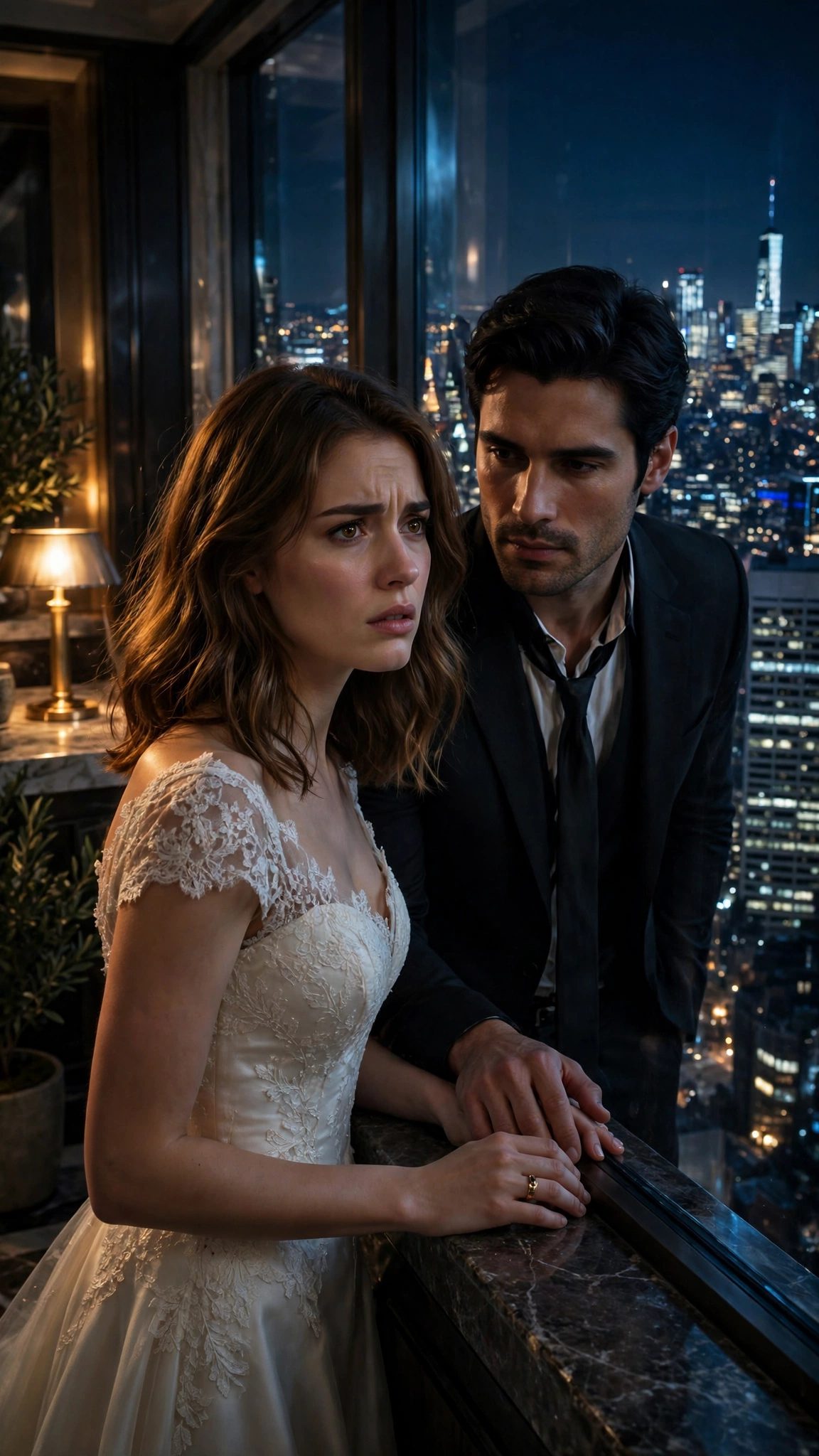
I wore the ivory dress. It fit differently this time, or maybe I fit differently inside it. Dominic wore a black suit, and this time he did not loosen his tie like a man finishing a long day. He looked at me the way he had looked at me on the beach in the photograph of his sister: like I was the best thing in the world, and he was lucky to be standing next to me.
"I, Dominic Moretti," he said, "take you, Emily Carter, to be my wife. Not to keep you alive. Not because my name is a wall. Because I love you. Because you are brave, and kind, and you see things other people miss. Because you are my family now. And I will spend the rest of my life proving that this marriage means everything."
"I, Emily Carter," I said, "take you, Dominic Moretti, to be my husband. Because you stepped in front of a bullet for me. Because you slept in a chair to keep your word. Because you brought me coffee with one teaspoon of sugar and exactly enough milk. Because you are the man who taught me that the most dangerous thing in the world can also be the safest place in the world, if the right person is standing beside you. And I will spend the rest of my life proving that this marriage means everything."
Afterward, we danced on the porch, badly, while Rosa laughed and Jack pretended not to watch, and the sun went down over the water, and the house by the sea stood warm and bright behind us, and Isabella's painting hung over the mantel, grey and gold, the sea that never lied.
Dominic changed the family business that year. The shipping went legitimate, every route on the books, every warehouse on the map, every manifest clean. It cost him money, and it cost him men, and he did not care, because he had learned the price of a secret, and he would never pay it again.
I went back to teaching, and my students painted still lifes, and the boy who drew hands won a prize, and the girl who painted everything blue painted a portrait of me, in shades of blue, because blue was the only color that felt honest to her, and I hung it in the penthouse, in the living room, where everyone could see it.
And sometimes, on quiet evenings, Dominic and I sit on the porch in Maine, and we watch the sea change color, and he holds my hand, and I think about a parking lot, and a sketchbook, and a black car, and a man who said, "You've heard too much," and I think about how the most dangerous thing about Dominic was never being married to him.
The most dangerous thing was falling in love with him. And the most wonderful thing was finding out that he had already fallen in love with me, on the day he married me to keep me alive, and that the marriage that had meant nothing had meant everything all along.
That autumn, I had my first art exhibition.
It was a small gallery, not the white room where Dominic had bled, but a warm one downtown, with wooden floors and soft light, and I hung twelve paintings on the walls: the city at dawn, the river at dusk, the penthouse windows, the hospital hallway, the sea in Maine, grey and gold, and a portrait of a man asleep in a chair, his dark hair falling across his forehead, his hands open on a white sheet.
Dominic stood in front of that portrait for a long time, and then he turned to me and said, "You made me look peaceful."
"You were peaceful," I said. "For the first time since I met you. I wanted to remember it."
People came, and they looked, and they asked questions, and my students came, all of them, dressed up and nervous and proud, and the boy who drew hands stood in front of his own portrait of his grandmother, which I had hung beside mine, and the girl who painted everything blue stood in front of the sea, grey and gold, and said, "Mrs. Moretti, your sea looks like my sea."
"That's because we were both painting the same thing," I said. "The truth."
That winter, Dominic's shipping company sent its first fully clean shipment: every route on the books, every warehouse on the map, every manifest clean, every driver paid fairly, every cargo counted twice. He stood on the docks in the cold, watching the trucks roll out in the early morning light, and I stood beside him, holding his hand, and he said, "Isabella would have liked this."
"She would have loved it," I said. "She found the numbers. You fixed them. That's the whole story, Dominic. That's what she wanted."
He nodded, and he squeezed my hand, and the trucks rolled out toward the sunrise, clean and honest, and I thought about the ghost warehouse, and the altered routes, and the men behind the maintenance building, and how far we had come from a parking lot on a Thursday afternoon.
On the anniversary of our second wedding, I wrote a letter. Not to Dominic. To Isabella.
I wrote it sitting on the porch in Maine, with the sea changing color in front of me, and the wool blanket over my chair, and my coffee beside my sketchbook with one teaspoon of sugar and exactly enough milk.
"Dear Bella," I wrote. "I never met you, but I know you. I know you from your letter, and your photographs, and your painting over the mantel, and your bedroom upstairs, and the way your brother says your name when he thinks no one is listening. I want you to know that we finished it. Anthony is gone. The routes are clean. The warehouse is real now, or rather, it isn't a ghost anymore, because there's nothing to hide. Your brother is safe. He's happy. He's learning how to be a husband, and I'm learning how to be a wife, and we're both terrible at it, and we're both getting better every day. Thank you for being brave enough to look. Thank you for writing it down. Thank you for trusting your brother to finish it. He did. We did. Rest easy, Bella. We've got it from here. — Emily."
I folded the letter and put it in the drawer of her desk, beside her paints, where it belonged, and I went downstairs, and Dominic was waiting for me in the living room, with two cups of coffee, and the fire going, and the painting of the sea over the mantel, grey and gold, and I sat beside him, and I took my coffee, one teaspoon of sugar, exactly enough milk, and I thought about how strange and wonderful it was that a sketchbook forgotten in an art room had led me here, to this house, to this man, to this life.
And sometimes, on quiet evenings, Dominic and I sit on the porch in Maine, and we watch the sea change color, and he holds my hand, and I think about a parking lot, and a sketchbook, and a black car, and a man who said, "You've heard too much," and I think about how the most dangerous thing about Dominic was never being married to him.
The End.
THE END