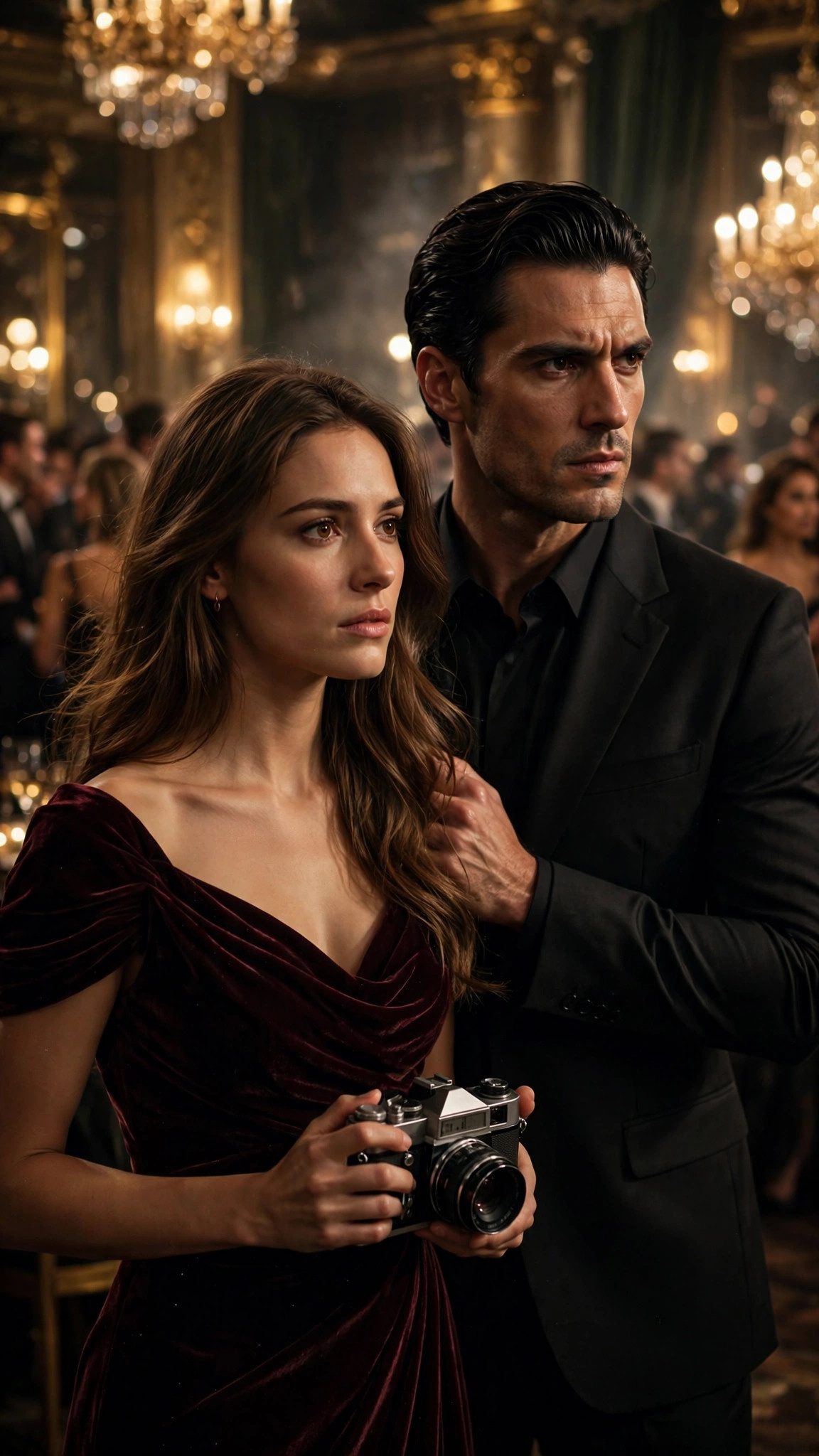
The morning after the bottling plant, I woke up in the guest room at the brownstone, in the bed with the window that looked out over the small garden, and for a moment, I did not know where I was. Then I smelled coffee and fresh bread, and I heard Rosa singing in the kitchen, an old Italian song I did not know the words to, and I remembered everything, and I got up, and I went downstairs, and King was sitting at the kitchen table with a bandage above his eye and a cup of coffee in his hands, and he looked up at me, and he smiled, and it was the best morning of my life.
"Good morning, photographer," he said.
"Good morning," I said. "How is your head?"
"It has been worse," he said. "Sit. Eat. Rosa made too much food, as always."
I sat, and I ate, and Vera came in, and she hugged me, and she told me she had slept for the first time in two days, and Enzo came in with a newspaper, and Sal came in with the news.
"They found the ledger," Sal said. He put the newspaper down on the table, and the headline said, in big black letters, "BUSINESSMAN ARRESTED IN KIDNAPPING CASE," and underneath, in smaller letters, "Photographer's evidence leads police to hidden records."
Alvarez had gotten the warrant at dawn. She had searched Blake's office and his apartment, and in a safe behind a painting in his office, she had found the black ledger, thick and worn, with the gold crest stamped on the cover. Inside were twenty years of records, every dollar Blake had stolen, every bribe he had paid, every name, every date, every amount, written down in his own hand. And there were photographs too, photographs Blake had taken of his own crimes, because men like Blake always need proof of how clever they were.
"He is finished," Sal said. "Kidnapping, extortion, embezzlement, money laundering. Alvarez says he will never see the outside of a prison again. And his men are talking. All of them. They are telling the police everything, because they know Blake is finished, and they want deals."
"And Derek?" I asked.
"Derek testified this morning," Enzo said. "He told the police everything. How Blake found him, how much he was paid, what he did in the warehouse, what he did in the van. He cried through most of it. Alvarez says he will get a deal, but he will still serve time. Two years, maybe three. He asked about you. He asked if you hated him."
I thought about that for a moment. "I don't hate him," I said. "I pity him. He sold everything he had for fifty thousand dollars, and he ended up with nothing. I hope prison teaches him what I learned in Detroit. That you cannot blame other people for your life forever. Sooner or later, you have to look at yourself."
King reached across the table and took my hand. "You are a better person than I am," he said. "I would not have been so generous."
"You would have," Vera said. "You spared Blake once, remember? You gave him a chance, and he threw it away. You are more generous than you think, brother."
In the weeks that followed, my life changed in ways I had never imagined. I moved out of the little apartment above the bakery, and I moved into a bigger apartment, a bright place with big windows and a darkroom, paid for with the money King insisted on giving me for the photographs I took of the family. I did not want his money. He insisted. "You work for this family now," he said. "And this family pays its people properly."
I photographed everything. I photographed Rosa in her kitchen, flour on her hands, singing her old Italian songs. I photographed Sal fixing a broken chair in the garden, his wedding ring catching the light. I photographed Enzo and his wife and their three children at Sunday dinner. I photographed Vera at her shelter, with the women she helped, women who had run from men who hurt them, women who were learning, the way I had learned, how to stand up.
And I photographed King. I photographed him in the morning, drinking coffee at the kitchen table. I photographed him in the evening, standing by the window, looking out at the city he ruled. I photographed him laughing, which was rare, and I photographed him thinking, which was not rare at all, and I photographed him the day he took me to the lake, and we sat on a bench, and he told me about his father.
"My father was a hard man," King said, looking out at the water. "He believed that fear was the only thing that kept people loyal. He was wrong. Fear keeps people quiet. It does not keep them loyal. I learned that when I was twenty-four, and he died, and I took over the family, and I looked at the men around me, and I realized that half of them were only there because they were afraid to leave. So I changed the rules. I told them they could leave, any time, no punishment, no revenge. Most of them stayed. Not because they were afraid. Because they wanted to be here. Because this family, for all its faults, takes care of its own."
"Is that why you stood up for me in the nightclub?" I asked. "Because you take care of your own?"
"No," King said. "I stood up for you because you were alone in a room full of people, and no one else was going to do it. And because, when I looked at you, I saw someone who had already decided she was not going to be afraid anymore, even if she didn't know it yet. I saw Vera's eyes. And I saw something else. I saw a woman who looks at the world and sees what is actually there. I have spent my whole life surrounded by people who see what they want to see. You see the truth. That is a rare thing, Harper. That is a precious thing."
We sat on the bench for a long time, watching the boats on the lake, and I thought about the photograph I had taken of Marcus Blake, and the ledger, and the van, and the warehouse, and the bottling plant, and all the things that had happened since the night with the cake, and I understood something.
I had come to Chicago to start over. I had thought starting over meant forgetting the past, leaving it behind in Detroit, in a refrigerator with a cake no one ate. But starting over did not mean forgetting. It meant taking what you had learned and building something new with it. I had learned to see. I had learned to stand up. I had learned that a photograph could be a weapon, and a promise could be a shield, and a family could be the people who choose you, not just the people who are born to you.
In November, the trial began. Blake pleaded not guilty, and his lawyers tried everything, and none of it worked, because the ledger was too complete, and the photographs were too clear, and Derek's testimony was too detailed. On the third day of the trial, Blake changed his plea to guilty, and the judge sentenced him to thirty-five years in prison, and Alvarez shook my hand outside the courthouse, and she said, "You did this, Miss Bennett. You and your camera. Three years I chased this man, and you caught him in one afternoon."
"It wasn't just me," I said. "It was King. It was Vera. It was Sal and Enzo and Rosa. It was a whole family."
"Then it was a family that did it," Alvarez said. "And that is how it should be."
Derek was sentenced the same week. Two years, with time served, and a promise to testify in any future case, and when he was led away, he looked at me, and he mouthed two words. "Thank you." Not for the deal. Not for the mercy. For the truth. For the fact that someone had finally told him the truth about himself, and he had finally listened.
In late November, Vera asked me to come to her shelter, and I went, and I understood why she had spent ten years of her life there. The shelter was a big old house on a quiet street, with a garden in the back and a kitchen that always smelled like soup, and inside were twelve women, women who had run from men who hurt them, women who were learning, the way I had learned, how to stand up.
Vera introduced me, and she said, "This is Harper. She is a photographer. She is going to teach you to take photographs. Not because you need to be photographers. Because taking a photograph is a way of saying, 'I was here. I saw this. This is the truth.' And when you have spent years being told that what you saw didn't happen, that is the most important thing in the world."
So I started a class, every Tuesday and Thursday afternoon, in the garden of the shelter, and I taught the women how to hold a camera, how to find the light, how to look at the world and see what was actually there. One woman, a girl really, only nineteen years old, named Ana, took a photograph of her own hands, and she looked at it for a long time, and she said, "I didn't know my hands could look like that. I thought they only looked like fists."
Another woman, Maria, forty years old, took a photograph of the garden gate, and she said, "That gate is the first thing I saw when I ran here. I thought it was the most beautiful thing I had ever seen, because it meant I was safe."
I took a photograph of all of them together, standing in the garden, twelve women and Vera, with the late autumn light on their faces, and I printed it, and I hung it in the hallway of the shelter, and Vera cried when she saw it, and she said, "This is the best photograph anyone has ever taken of us. Because you didn't photograph us as victims. You photographed us as women."
King came to the shelter one Tuesday, and he stood in the back of the garden, watching the class, and afterward, he said to me, "You know what you are doing, don't you? You are doing what Vera does. You are giving them a way to see themselves. That is what you did for me, too. You looked at me, and you didn't see a mafia boss. You saw a man."
I thought about that for a long time. I had spent my whole life thinking my camera was a way of looking at other people. I was beginning to understand that it was also a way of showing people to themselves.
That same week, Enzo came to me with an idea. "You should have an exhibition," he said. "A real one. In a real gallery. Your photographs of the city, and the family, and the shelter. We will pay for it. We will invite everyone. The newspapers will come. And you will call it whatever you want."
I called it "The Man Who Stood Between Me and the World." It was not just about King. It was about all of them. About Sal, who had come to my apartment in eleven minutes. About Rosa, who had put her arms around a stranger. About Vera, who had gone looking for her brother. About the twelve women in the garden. About every person who had ever stood between someone else and the world, and refused to move.
We hung the photographs in a small gallery on Michigan Avenue, thirty-two photographs in all, and on the opening night, the gallery was full, and King stood beside me in his black suit, and he did not say much, because King never says much, but he held my hand, and that was enough. Vera cried. Rosa cooked for everyone, even though there was no kitchen in the gallery, and somehow she still managed to feed a hundred people. Sal pretended not to cry, and failed. And Detective Alvarez came, in her sharp suit, and she looked at the photograph of Marcus Blake taking the cash, the one that had started all of this, and she said, "That photograph put a criminal in prison for thirty-five years. That is not a photograph. That is justice."
A man from a newspaper asked me what the exhibition was about, and I said, "It is about a woman who learned to stand up, and a man who stood up for her, and a family that taught her what family means." And the man wrote it down, and the next day, it was in the paper, and people came to see the photographs, and some of them cried, and some of them called their sisters, and some of them went home and looked at their own lives and decided to change them.
That night, King took me to dinner, to the same restaurant on the river where we had first met, where I had raised my camera and he had looked up and smiled. We sat at the same table by the window, and the light was the same, gold and low, and the city was the same, shining and dark at the same time, and King reached across the table and took my hand, and he said, "Christmas is in three weeks."
"I know," I said.
"And I made you a promise," he said. "I said I would ask you properly, at Christmas, with a real dinner and a real question. I am telling you now so you are not surprised. I am going to ask you to marry me. And I am telling you now because I want you to have time to think about it, and I want you to know that whatever you say, nothing changes. You are part of this family. You will always be part of this family. The ring is just a symbol. The family is the real thing."
I looked at him, at the man who had stood between me and the world, at the bandage long gone from above his eye, at the scar that would always be there, a thin white line, like a signature, and I said, "I don't need three weeks to think about it. But I will let you ask me properly at Christmas, because Rosa deserves to cook for a hundred people, and Vera deserves to cry, and Sal deserves to pretend not to cry. And when you ask me, I will say yes."
King smiled, the small, careful smile, and he kissed my hand, and the waiter brought our dinner, and outside the window, the river went on shining, and the city went on turning, and I thought about the woman I had been in Detroit, carrying a birthday cake through the rain, and I thought about the woman I was now, sitting across from a man who had stood up for a stranger, and I knew, with a certainty I had never felt about anything in my life, that I had finally come home.