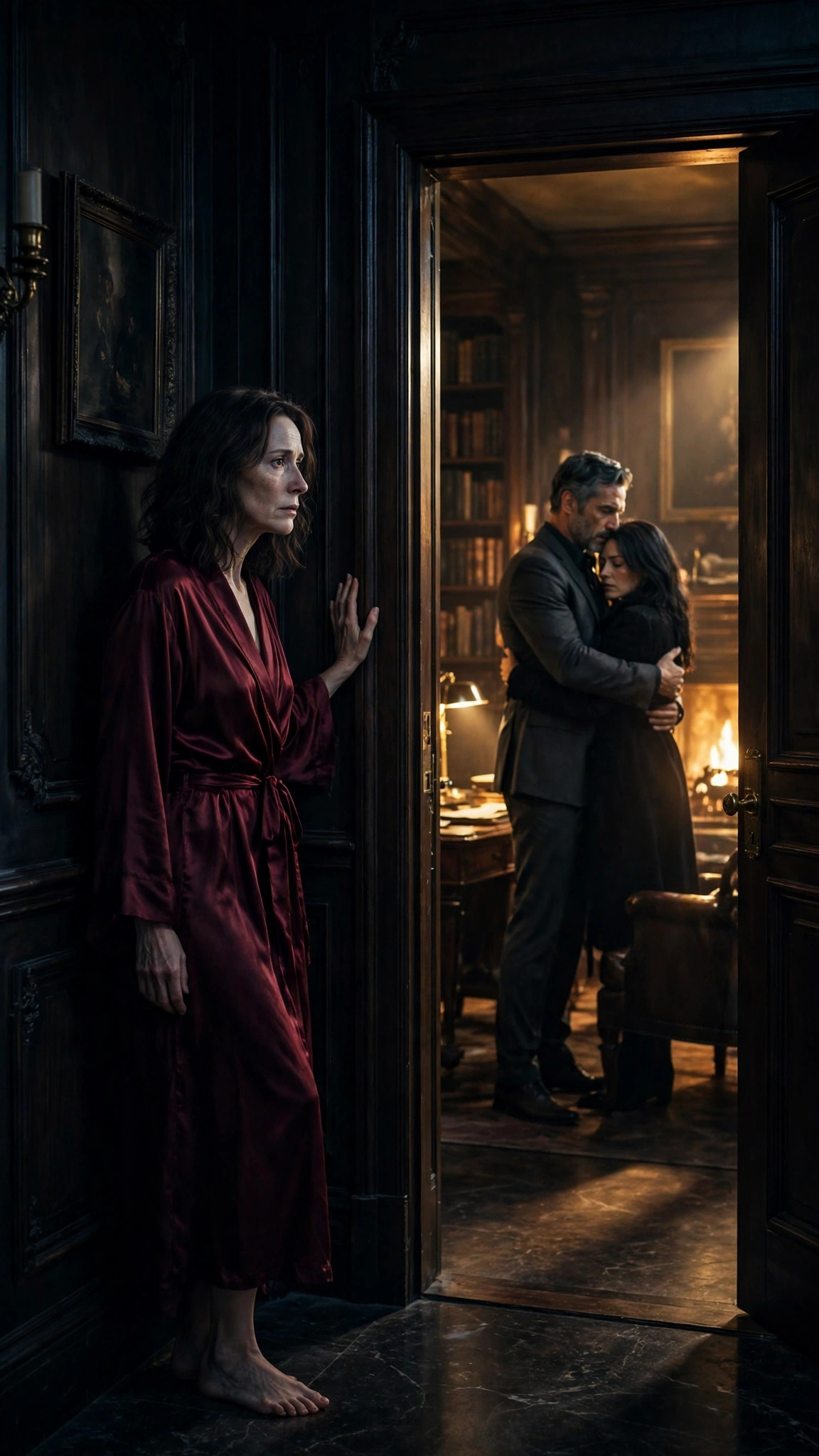
Vitale was arrested on a Tuesday, six days after I came back.
I read about it in the newspaper, sitting at the wooden table in the back room of the empty bakery in Pilsen, drinking coffee that had gone cold. The headline said that federal agents had arrested Salvatore Vitale, a Chicago businessman, on charges of racketeering, murder, and conspiracy, and that the arrest had followed the delivery of a ledger to the FBI by an anonymous source. There was a photograph of Vitale being led out of his house in handcuffs, his face grey, his suit wrinkled, and I looked at that photograph for a long time, and I thought about the man who had sent Elena a photograph of a ballroom with red letters across it, and I thought about the fact that his stage had been taken away from him, and his performance was over.
Adrian called me that afternoon. "It's done," he said. "The ledger did it. Elena's ledger. Every name, every date, every payment. Vitale's organization is finished. The docks are safe. The gala went ahead last night, and nothing happened, and no one was hurt."
"And Elena?" I asked.
"Gone," he said. "She left last night, before the arrest. New name. New city. New life. My lawyer arranged it. She'll be safe."
"Did she say goodbye?"
"She left you something," Adrian said. "A letter. It's on the desk in the study. Come and get it whenever you're ready."
I went the next day. The letter was waiting on the desk, in a plain white envelope, with my name written on it in Elena's handwriting. Inside was a single sheet of paper, and on it, in her careful script, were the words: "Thank you for the door. I hope you find yours, too. — E."
There was no return address. There never would be. That was the way women like Elena disappeared, cleanly and completely, leaving behind only a sentence and a debt that could never be repaid.
I folded the letter and put it in my pocket, next to my ring, and I went downstairs, and Rosa was in the kitchen, and she took one look at my face, and she said, "You're ready."
"Ready for what?" I asked.
"To build something of your own," she said. "Adrian told me about the bakery. He bought the building in Pilsen, next to Sofia's. It's empty. It's yours if you want it."
I wanted it. I had wanted it since the morning I woke up in Sofia's flat and smelled bread coming up from the bakery below and remembered who I had been before the estate, before the cameras, before the guards, before the fortress. I had been a girl who kneaded dough at midnight and pulled bread from the ovens at two in the morning, and I had been happy, and I had forgotten that happiness was something I could make with my own hands.
The building was small and old, with brick walls and tall windows and a kitchen that needed work, and I stood in the middle of it on the first day with flour on my hands and dust on my shoes, and I thought about the fact that I was forty-seven years old and starting over, and I thought about the fact that starting over was not the same as giving up, and I thought about the fact that the bravest thing I had ever done was not walking out of Adrian's house.
The bravest thing I had ever done was coming back and asking for what I needed.
Adrian came to the bakery every morning. Not at three in the morning, the way he used to come to Bellini's, but at dawn, when the bread was warm and the coffee was fresh, and he sat at the counter, and he drank his coffee black, no sugar, and he talked to me about his day, and I talked to him about mine, and for an hour every morning, neither of us had to be anyone else.
He told me everything now. Not every detail, because some details were still his to carry, but the truth about what mattered. The decisions. The risks. The men he trusted and the men he didn't. The study door stayed open, the way I had asked, and on the nights when he worked late, I could hear his voice through the open door, low and steady, and I knew what he was doing, and he knew that I knew, and the knowing was the marriage.
The bakery took shape slowly. Sofia helped me choose the ovens. Enzo drove the first delivery of flour. Rosa's niece, a girl named Lucia with flour already on her hands at nineteen, came to work the counter. Old Mr. Bellini, eighty-two years old and still baking, came on the first morning we opened, and he stood in the doorway with his cane, and he looked around, and he said, "You did it, Claire. You built yourself a bakery. Your mother would be proud."
I named it The Open Door. Sofia painted the sign herself, in blue letters on a white board, and we hung it above the entrance, and on the first morning, when I unlocked the door and turned the sign to OPEN, I stood in the doorway for a long time, looking at the street, looking at the city, looking at the ordinary people doing ordinary things, and I thought about the door I had walked through at 4:36 in the morning, and the door Elena had given me, and the door I had opened for myself.
The first morning we opened, I was awake at midnight, the way I had been awake at midnight for three years at Bellini's, and I kneaded the dough with my own hands, and I pulled the first trays from the oven at two in the morning, and the smell filled the whole building, and Lucia came downstairs at four with sleep in her eyes and flour already on her apron, and she looked at the trays cooling on the counter, and she said, "Mrs. Bellandi, this smells like my grandmother's house."
"Call me Claire," I told her. "And take a roll. The first one is always for the people who show up."
Customers came slowly at first, the way customers always come to a new place, one at a time, curious, cautious, and then they came back, because bread that is made by hand at two in the morning tastes different from bread that is made by a machine, and people can tell the difference even if they don't know why. An old man came every morning at six and ordered the same thing, black coffee and a roll, and he sat by the window and read his newspaper, and on the third morning, I realized I was watching for the sound of the door opening, the way I had once watched for it at Bellini's, and I understood that some circles do not close. They simply come around again, wider this time, with more room inside them.
Adrian came to the bakery every morning. Not at three in the morning, the way he used to come to Bellini's, but at dawn, when the bread was warm and the coffee was fresh, and he sat at the counter, and he drank his coffee black, no sugar, and he talked to me about his day, and I talked to him about mine, and for an hour every morning, neither of us had to be anyone else.
He told me everything now. Not every detail, because some details were still his to carry, but the truth about what mattered. The decisions. The risks. The men he trusted and the men he didn't. The study door stayed open, the way I had asked, and on the nights when he worked late, I could hear his voice through the open door, low and steady, and I knew what he was doing, and he knew that I knew, and the knowing was the marriage.
There were hard days, too. There were mornings when I woke up in the guest room and remembered the kiss, and the hallway, and the note, and I had to sit on the edge of the bed and remind myself that one second was one second, and that the man downstairs was the man who had ended it, and that the marriage I was rebuilding was not the marriage I had left. There were nights when Adrian came home and found me quiet, and he did not ask what was wrong, because he had learned that sometimes the kindest thing a husband can do is wait, and bring tea, and sit beside his wife in silence until she is ready to speak.
Rosa came to the bakery on Sundays, after church, and she sat at the counter with her coffee, and she watched Lucia work, and she watched Adrian talk to the customers like an ordinary man, and she said to me once, "You see, Claire? The house is not the marriage. I told you that. The marriage is the people who come home to it. And look. He comes home to you now. Every morning. He comes home."
Three months after I came back, Adrian asked me to marry him again.
He did it at dawn, across the counter of my own bakery, with the smell of fresh bread around us and the city waking up outside the window. He did not kneel. He did not produce a ring from a velvet box. He simply looked at me across the counter and said, "Marry me, Claire. Again. Properly this time. With the door open."
I looked at him, and I looked at the ring in my pocket, the ring I had carried for three months, the ring I had taken off in the dark and placed beside my phone, the ring that had been heavy for fifteen years, and I took it out of my pocket, and I held it in my hand, and I said, "I put this on myself this time. No one puts it on me. I choose it."
And I slid the ring onto my own finger, and it fit, and it was still heavy, but the weight was different now. It was not the weight of a cage. It was the weight of a choice.
We renewed our vows in the bakery, at dawn, with Sofia and Enzo and Rosa and Lucia and old Mr. Bellini standing around the counter, and there were no cameras, and there were no guards, and there was no fortress, and there was only bread and coffee and the people who loved us, and Adrian took my hand, and he said, "I will never lie to you," and I said, "I know," and for the first time in fifteen years, I believed it completely, because this time, I had seen the truth with my own eyes, and I had chosen it with my own hands.
Sofia cried. Enzo pretended he had flour in his eye. Old Mr. Bellini raised his cup of coffee like a toast and said, "To Claire, who left and came back, and to Adrian, who learned to leave the door open." And Rosa put her arms around me, and she whispered in my ear, "See? I told you. The house is not the marriage. The marriage is this. Right here. Bread and coffee and people who show up."
The estate is still there. The walls are still there. The cameras are still there, wired to both our phones now, so that if one ever goes dark, we will both know in the same second. But the estate is not our life anymore. Our life is here, in a small bakery in Pilsen, where the ovens are warm and the bread is fresh and the door is open.
On the evening of the vow renewal, after everyone had gone home and the bakery was quiet, Adrian and I stayed behind to close up together. He washed the coffee cups while I wiped down the counter, and the work was ordinary and companionable, the way work is when two people have done it side by side for a long time, and the ovens ticked as they cooled, and the street outside grew dark, and the sign above the door glowed softly in the window.
Lucia had asked me that morning what the name meant. "The Open Door," she had said, wiping flour from her hands. "Why that name? Most bakeries are named after people."
"Because a door is a choice," I told her. "A closed door says stay out. An open door says come in. I spent fifteen years behind closed doors, Lucia. Cameras and guards and gates. I want this place to be the opposite of all that. I want people to walk in off the street and smell the bread and know they are welcome."
She had nodded, the way young people nod when an older person says something they don't fully understand yet but want to remember anyway, and she had gone back to work, and I had watched her, and I had thought about the girl I had been at nineteen, working the night shift at Bellini's, and I had thought about how strange it was that life had brought me all the way around, back to a bakery counter, back to flour on my hands, back to the smell of bread at two in the morning.
Adrian came up behind me at the counter, and he put his arms around my waist, the way he used to do in the small apartment above the bookshop, and he rested his chin on my shoulder, and he said, "Thank you, Claire. For coming back. For giving me a second chance I didn't deserve."
"You didn't deserve it," I said. "I gave it to you anyway. That's what love is. Not deserving. Choosing."
He was quiet for a moment. Then he said, "The eastern camera sent an alert today. A delivery truck came through at 4:42, right on schedule. I checked it on my phone, and you checked it on yours, and we both knew, in the same second, that everything was exactly as it should be."
I laughed, and I turned in his arms, and I looked up at him, and I said, "That's the first time a camera has ever made me feel safe."
"That's because this time," he said, "the camera belongs to both of us."
We locked the bakery door together, and we walked home through the streets of Pilsen, hand in hand, like an ordinary couple coming home from an ordinary day, and the city moved around us, and the lights came on in the windows, and the smell of bread followed us down the street, all the way home.
I walked away from the mafia king once. I walked out of his fortress in a housekeeper's coat, in the dark, in the cold, with nothing but five words and a wedding ring I had left behind.
And I came back. Not because he asked me to. Not because he needed me to. Because I chose to. Because the woman who walked out of that house was the same woman who walked back into it, and she was not afraid anymore, and she was not waiting anymore, and she knew exactly who she was.
My name is Claire Bellandi. I am the wife who walked away from the mafia king.
And I am the wife who came back, on her own terms, through a door that will never be closed again.
The End.
THE END