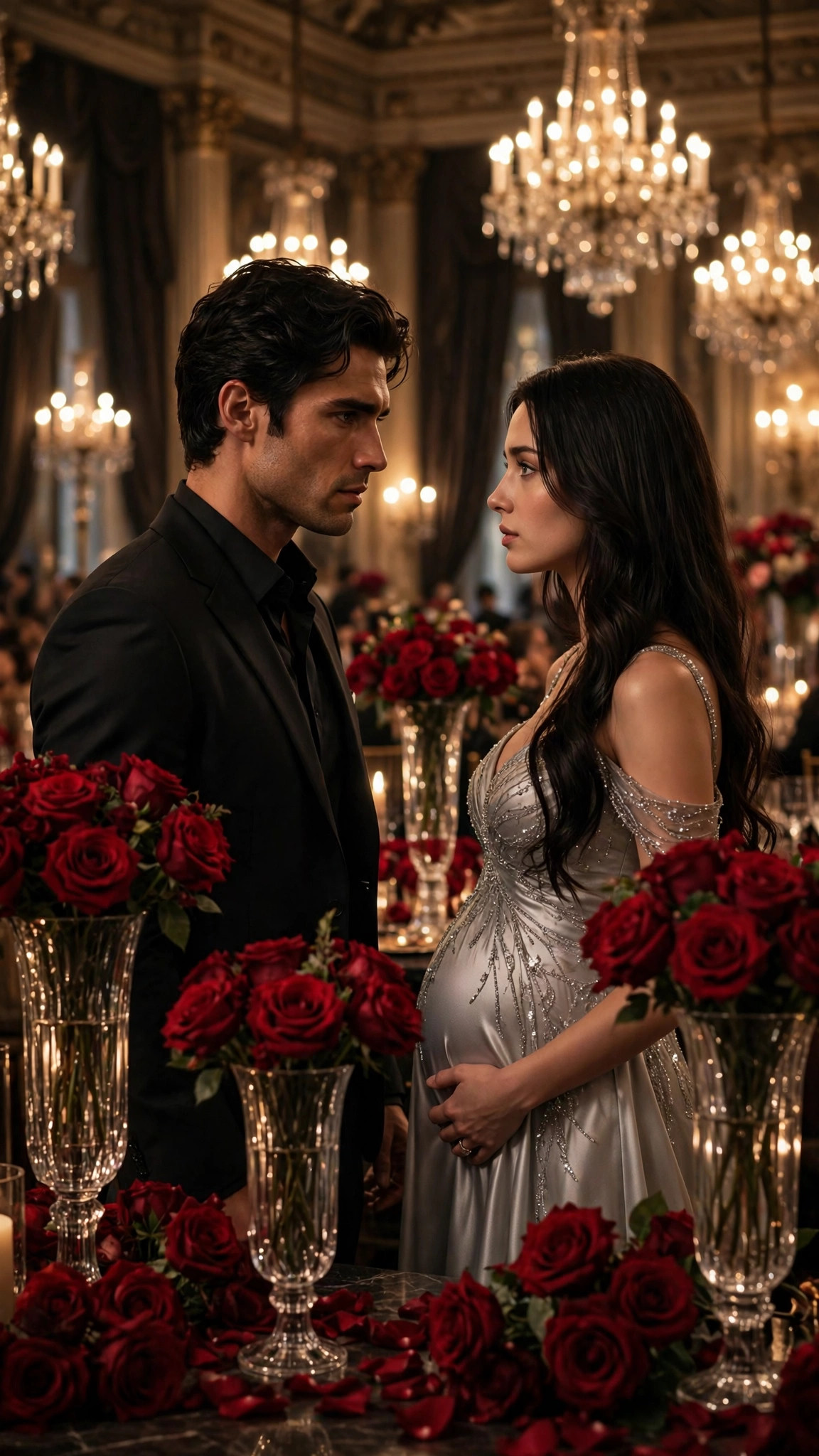
The wedding was held in the rose garden at the Moretti estate, on a Sunday in late June, when the roses Anna had planted five years earlier were in full and furious bloom, red and white together, the way she had always wanted them, and the air smelled of summer and flowers and new beginnings.
It was not a large wedding. Anna had insisted on that. No reporters, no cameras, no five hundred guests in black tie pretending to care. Just family — the real kind, the kind you choose and the kind that chooses you back. Grace stood beside Anna, holding her hand, crying unashamedly. Rosa, the housekeeper, wept into her apron. Tony, Vincent's head of security, stood at the back with his arms crossed, pretending not to cry and failing completely. And in the front row, in a small chair that had been brought out especially for him, Matteo sat in his best suit, holding a plastic watering can that had been polished for the occasion, watching his mother walk down the garden path with the solemn attention of a three-year-old boy who understood, in the way children understand important things, that something wonderful was happening.
Daniel Whitmore stood beside Vincent as his best man — or, as Daniel had put it, laughing, "as the only man in Chicago who has ever been both the groom and the best man at the same woman's weddings" — and he held the rings, and he smiled, and when Vincent looked at him, Daniel nodded, once, the way men nod when everything that needs to be said has already been said.
Anna walked down the garden path in a white dress that was simple and beautiful, the way she was simple and beautiful, with her long dark hair loose around her shoulders and a crown of red and white roses in her hair, and her hand rested lightly on her belly — seven months pregnant now, the baby strong and restless inside her — and Vincent stood at the end of the path in his black suit, and he watched her come toward him, and he thought about the last time he had watched her walk toward him, on the morning of the flight, in the terminal, with an ultrasound in her purse and a secret in her palm, and he thought about how far they had come, and how much they had lost, and how much they had found, and he wept, openly, without shame, because there are moments in a man's life when weeping is the only honest thing to do.
The ceremony was short. There was a minister, an old friend of Grace's, who spoke about love and forgiveness and second chances, and Vincent and Anna exchanged vows they had written themselves, and the vows were not the traditional ones, because nothing about their story was traditional.
"I choose you," Vincent said, looking into her gray eyes, holding her hands in his. "I choose you first. Every time. Without hesitating. Without looking back. I choose you in the morning and at night, in the garden and in the fire, in the good days and in the terrible ones. I choose you, Anna Bennett Moretti, today and every day, for the rest of my life."
"I choose you," Anna said, and her voice was steady and clear, carrying across the garden to where Matteo sat with his watering can. "I choose you, Vincent Moretti, not because you are perfect, but because you are mine, and because you have spent every day since the night of the gala proving that a man can learn to choose, and that a broken thing can be mended, and that love — real love — is not about never failing. It's about getting up, and coming back, and choosing again. I choose you. And I choose us. And I choose this family, all of it, exactly as it is."
And then Vincent took the ring — a new ring, a simple gold band, to replace the one that had been cut off her finger in the ambulance three years ago — and he slid it onto her finger, and Anna took his ring, and she slid it onto his, and the minister said, "You may kiss the bride," and Vincent kissed her, gently, in the rose garden, in the summer light, with their son watching, and the garden erupted in applause, and Matteo stood up in his little chair, and he shouted, "Papa! Mama! Papa!" and he ran down the path with his watering can held high, and Vincent swept him up into his arms, and Anna laughed, and Daniel laughed, and Grace laughed, and even Tony laughed, and for one shining moment, the whole world was exactly as it should have been.
After the ceremony, there was a reception on the lawn, with white tablecloths and crystal glasses and a small string quartet — the same kind of quartet that had played at the gala, except this time the music was for dancing, and this time Vincent did not stand frozen at the edge of the floor. This time he danced with his wife, slowly, in the summer evening, with her hand in his and her head on his shoulder, and Matteo danced between them, stepping on their feet and laughing, and Daniel danced with Grace, and Rosa danced with Tony, and the roses bloomed all around them, red and white, blood and forgiveness, memory and hope, all tangled together in the same garden, the way they had always been tangled together in their lives.
Later, when the sun was setting and the lanterns were lit, Vincent took Anna's hand and led her to the far end of the garden, to the small stone bench beneath the oldest rose bush, the one Anna had planted the first spring they were married, and they sat together, and they looked out over the garden, and Vincent said, "I have something for you."
He reached into his jacket pocket, and he took out a small velvet box, and inside it was a necklace — a thin gold chain, with a single pendant, a small rose made of gold, with a tiny red stone at its center, like a drop of blood, like a petal, like a promise.
"It's for the baby," Vincent said. "For our daughter. When she's born. I want her to have it. I want her to know — " He stopped, and his voice caught, and Anna took his hand, and she waited, and he said, "I want her to know that her father chose her mother, and that her mother chose him back, and that this family — our family — was built on that choice, and that nothing will ever break it again."
Anna took the necklace, and she held it up to the fading light, and the gold caught the sun, and the red stone burned like a small ember, and she said, "She'll love it. And Vincent — " She put her hand on her belly, where the baby was kicking, strong and certain. "She's kicking. She's saying hello to her papa."
Vincent put his hand over hers, over the swell of her belly, and he felt the small, fierce kicks of his daughter — his daughter, not by blood, but by choice, by vow, by love, which was, Anna had taught him, the only kind of blood that truly mattered — and he closed his eyes, and he thought about the plane, and the fire, and the choice, and the grave, and the roses, and he understood, at last, what the roses had been trying to tell him all along.
Roses remember blood. But they also remember love. They remember the hands that planted them. They remember the summers they bloomed in. They remember the woman who knelt in the dirt with her sleeves rolled up, laughing, saying that roses were the only flowers that remembered anything. And they remember, too, the man who came back to the garden, year after year, with his hands empty and his heart full, laying red roses on a stone and whispering, "I'm sorry. I was coming back for you."
The roses had remembered everything. And in remembering, they had brought Anna home.
That night, after the guests had gone and Matteo was asleep in his new room — the room that had once been a guest room and was now painted pale blue, with a small bed and a bookshelf and a plastic watering can on the windowsill — Vincent and Anna stood together in the garden, in the dark, under the stars, and Anna said, "Do you remember what I said to you, the first spring we planted these roses?"
"You said roses were the only flowers that remembered anything," Vincent said.
"I was wrong," Anna said, and she smiled, and she leaned her head against his shoulder. "Roses remember. But people remember too. And people can change. And people can come home. And that's better than any flower, Vincent. That's everything."
Vincent held her, in the garden, in the dark, with the scent of roses all around them, and he thought about the son asleep upstairs, and the daughter waiting to be born, and the wife in his arms, and the friend who had stood beside him at the altar, and the sister who had brought them all back together, and the woman in the black coat who had told the truth when it mattered, and the roses that had bloomed through it all, red and white, blood and forgiveness, and he knew, with a certainty that settled into his bones like sunlight, that the story that had begun on a burning runway had ended here, in a garden, in the arms of the woman he loved, with a future stretching out before them like a summer morning, bright and open and theirs.
Their daughter was born on a cold October morning, three months after the wedding, in the same hospital where Matteo had been born — the hospital where Anna had once woken up a Jane Doe with a scar on her throat and a flat stomach and a son waiting two floors below her — and this time, everything was different. This time, Vincent was there. This time, he held Anna's hand through every contraction, and he whispered to her, and he told her she was brave, and he did not leave the room, not once, not for a second, and when the baby finally came, small and red and furious, screaming her first cry into the bright hospital light, Vincent wept, openly and without shame, because he had been present for the birth of his daughter in a way he had never been present for the birth of his son, and the joy of it and the grief of it arrived together, the way they always arrived together in his life, two sides of the same coin.
They named her Ruby. Ruby Rose Moretti. Ruby, for the red of the roses. Rose, for the garden where her parents had been married, and for the flowers that had remembered everything. And when Vincent held her for the first time — this tiny girl, with dark hair already curling at the edges, with gray eyes like her mother, with a small fist curled against his finger — he thought about Matteo, three years old now, waiting at home with Grace, asking every five minutes when his baby sister would arrive, and he thought about Anna, exhausted and radiant in the hospital bed, and he thought about Daniel, who would be her godfather, and about the family they had built out of fire and forgiveness, and he said, quietly, to the small warm bundle in his arms, "Hello, Ruby. I'm your papa. I'm the man who chooses your mama first, every time, without hesitating. And I will choose you too. Every day. For the rest of my life."
Anna watched him from the bed, and she smiled, and she said, "Put the necklace on her." And Vincent took the small velvet box from his jacket pocket — the necklace he had given Anna in the garden on their wedding night, the thin gold chain with the small gold rose and the tiny red stone — and he held it up, and Anna said, "Not yet. When she's older. But keep it safe, Vincent. Keep it for her. So she'll know."
"I'll keep it safe," Vincent said, and he put the box back in his pocket, and he sat beside the bed with his daughter in his arms, and his wife beside him, and the October light coming through the window, and he thought: this is what a life is. Not the money. Not the power. Not the fear. Just this. A wife. A son. A daughter. A garden. A home.
Matteo met his sister that afternoon, and he stared at her for a long time, very seriously, the way he stared at everything important, and then he leaned down, and he kissed her forehead, very gently, and he said, "Hello, Ruby. I'm your big brother. I'll teach you how to water the roses. Mama says roses need water every day, or they forget. But we won't forget. I promise."
And Anna, watching her son welcome her daughter into the world, thought about the morning of the flight, and about the explosion, and about the coma, and about the flower shop in Brooklyn, and about the gala, and about the terrace, and about the choice, and she understood, with a clarity that settled over her like sunlight, that every terrible thing that had happened had led, in the end, to this: to a hospital room in October, to a husband who had learned to choose, to a son who watered roses, to a daughter named Ruby Rose, to a family that had been broken and mended and made stronger in the mending, the way a broken bone heals stronger at the break.
She reached for Vincent's hand, and he took it, and they sat together in the quiet, with their children around them, and the roses — the roses in the vase on the windowsill, red and white, sent by Grace that morning — bloomed in the October light, remembering everything, and forgiving everything, and promising, in their silent red language, that the future would be bright, and open, and theirs.
A week later, a package arrived at the estate, with no return address, and inside it was a bouquet of white roses, and a card, in a woman's careful handwriting, that said: "For Anna and Vincent. For the garden. For the future. I'm sorry, and I'm glad. — Sophia."
Anna read the card, and she smiled, and she put the white roses in a vase on the kitchen table, beside the red roses Vincent had cut that morning, and the two colors stood together in the light, white and red, forgiveness and memory, and Anna looked at them for a long time, and then she went upstairs to wake Matteo for breakfast, and Vincent went to his study to begin the day, and the house — the house that had been empty for three years — was full of voices and laughter and the smell of coffee and roses, and it was, at last, a home.
The End.
THE END