I met Alexander Moretti on a Tuesday in September, in an economics lecture hall that smelled of old wood and chalk dust, and I did not know for three weeks that the quiet young man two rows behind me was the son of one of the most powerful families in Chicago.
I knew only that he had kind eyes and a habit of arriving early and sitting in the same seat, and that he carried himself like a man who was used to being watched and had learned to be comfortable with it. He wore dark sweaters and good shoes, and he never raised his hand in class, and when the professor asked a question no one could answer, he would answer it in a low, certain voice, and then go back to his notes as if he had said nothing at all.
I was eighteen years old, working two part-time jobs, and considering dropping out. That is the part of the story people always forget when they hear it later, the part that matters most. I was not a girl who had everything. I was a girl who had almost nothing, and I was holding on to college with both hands because my mother had told me every night of my life that it was the one thing no man could take away from me.
My scholarship covered tuition, but it did not cover books, and it did not cover the bus pass, and it did not cover the winter coat I needed when the Chicago wind came off the lake and cut straight through the thin jacket I had brought from home. I worked mornings at a bakery on the corner of our street, kneading dough before dawn with flour in my hair, and I worked evenings at the library, shelving books until closing time, and in between I went to class and tried to stay awake and tried to believe that all of this effort was going to add up to something.
Alexander noticed. I do not know how he noticed, or when, but he did. One afternoon I was sitting in the library with a stack of economics textbooks I could not afford to buy, copying pages by hand into a notebook because the library would not let me take them home, and he sat down across from me and pushed a cup of coffee toward me without a word.
"You look like you need this more than I do," he said.
I told him I was fine. I had been telling people I was fine since I was ten years old, and I had gotten very good at it. But he looked at me the way my mother looked at me when she knew I was lying, and he said, "Claire, you have been copying that same page for twenty minutes. Your hand is shaking. Drink the coffee."
I drank the coffee. It was the best thing I had tasted all week, hot and sweet and strong, and I did not know then that it was the first of a thousand small kindnesses that would slowly, quietly, change the entire direction of my life.
He started showing up at the library at midnight with coffee when I was studying for finals. He carried my textbooks when my arms were full. He walked me to the bus stop on the nights when the wind was too cold and the streets were too dark, and he never once made me feel like he was doing me a favor. He made it feel like the most natural thing in the world, like two people who had found each other and decided, without saying it out loud, to look after each other.
"Let me help you," he said one night, when I told him my scholarship was in danger because I had missed a payment deadline for a fee I had not known existed.
"I don't need help," I told him, and I meant it, because needing help felt like weakness, and weakness felt like the one thing I could not afford.
"Everyone needs help sometimes," he said. "Even you. Especially you. You have carried everything alone since you were ten years old. Let someone carry something for you for once."
I cried that night, in the library, with my face in my hands, and he did not try to fix it or talk me out of it. He just sat beside me and waited, and when I was done, he handed me a clean handkerchief, and he said, "Tell me what you need."
What I needed was money for tuition. My scholarship had fallen through in my junior year because of a paperwork error, a missed form, a deadline that had passed while I was working double shifts at the bakery, and the university was telling me I owed more money than my mother made in three months. I was going to have to drop out. I had already started looking at full-time jobs, already started telling myself that maybe college was not for girls like me, maybe my mother had been wrong, maybe some doors were never meant to open.
Alexander paid my tuition. He did not make a speech about it. He did not ask for anything in return. He simply walked into the bursar's office with me and paid the balance, and when I tried to argue, when I tried to tell him I could not accept that kind of money from anyone, he said, "Claire, this is not charity. This is an investment. You are going to do something important with your life, and I want to be the man who made sure you got the chance."
He bought my textbooks. He bought me a winter coat, a good one, dark blue wool with a hood, and when I tried to give it back he said, "You are going to freeze to death in that jacket, and I am not going to watch it happen."
He fixed my mother's leaking roof. He came to our house on a Saturday with a toolbox and a ladder, and he climbed up onto the roof in the rain, and my mother stood in the yard with her hands on her hips and watched him work, and when he came down, soaked and muddy, she made him sit at our kitchen table and eat soup, and she looked at him across that table the way she had not looked at any man since my father left.
"He is a good man," she told me that night, after he had gone. "I can see it in the way he looks at you. He does not look at you like you are something to own. He looks at you like you are something to protect."
I believed her. I believed him. I believed that the man who had saved my future was going to be the man who shared it with me.
We dated for three years. He took me to quiet restaurants where the waiters knew his name, and he took me to the lakefront on summer evenings where we sat on the seawall and watched the sun go down over the water, and he told me about his family in pieces, slowly, the way a man tells a woman things he is afraid will scare her away. His father had died when he was young. His mother lived in a big house in the suburbs and worried about him constantly. The family business was complicated, he said, and he did not want to talk about it, and I did not press him, because I was too happy to ask the questions that might have changed everything.
He proposed to me on a cold night in December, in our apartment, with no audience and no grand gesture, just the two of us and a ring in a small velvet box and his hands shaking in a way I had never seen before.
"Claire Bennett," he said, "will you marry me?"
I said yes before he had finished the sentence. I said yes with my whole heart, and I meant it with my whole heart, and when he slipped the ring onto my finger, I believed I was the luckiest woman in Chicago.
Our wedding was small and beautiful. My mother cried through the whole ceremony. Alexander cried too, once, when I walked down the aisle in a dress my mother had helped me choose, and I thought, this is it, this is the beginning of everything I ever wanted. A husband who loves me. A mother who is proud of me. A future that belongs to us.
I did not know then that Sophia Reynolds was already on her way back into our lives.
I did not know that the man who had paid my tuition and bought my textbooks and fixed my mother's roof was carrying a first love in his heart like a wound that had never healed, and that the woman who had left him when he was poor was about to come back now that he was rich, and that he would not know how to say no to her.
I did not know that the kindest thing Alexander ever did for me would become the thing that made it hardest for me to leave him, because how do you walk away from a man who saved your future? How do you tell yourself that gratitude is not the same as love, and that a man can be good to you in a hundred ways and still fail you in the one way that matters most?
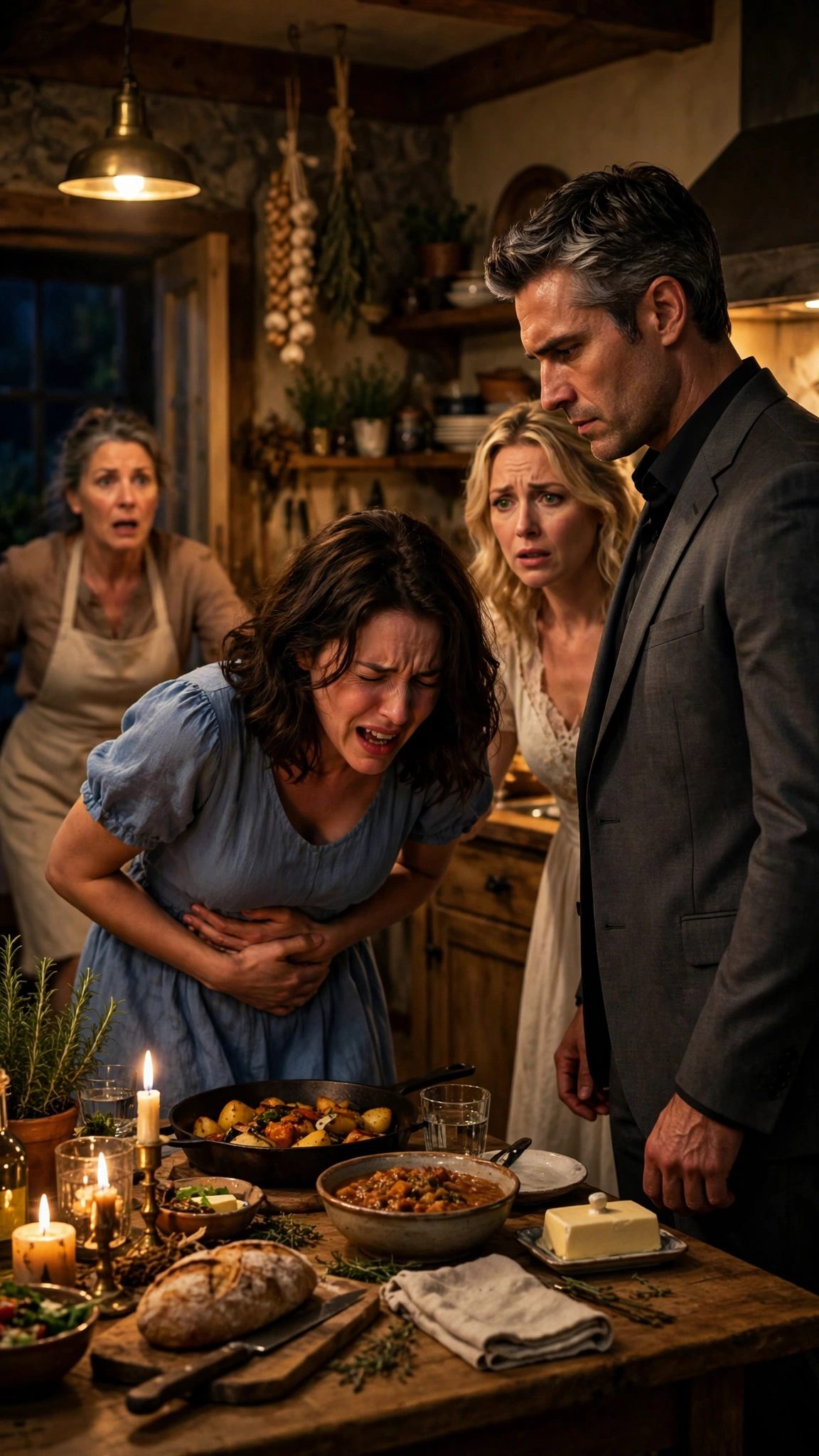
I learned the answer to that question at my mother's table, on the night my husband let another woman shove me into it.
But before that night, there were five years of marriage, and in those five years, there was a woman named Sophia Reynolds, and she was the slow poison in everything we built together.
This is her part of the story.
He started coming to Sunday dinner at my mother's house. Not every Sunday, at first, but often enough that my mother began setting an extra place at the table without asking, often enough that I began to look forward to the sound of his car pulling up outside, often enough that the small house I had grown up in began to feel like a home again, instead of a place where two women had learned to survive on their own.
My mother would cook all afternoon, and Alexander would sit at the kitchen table and watch her work, and he would ask her questions about the recipes, about where she had learned to cook, about the dishes she had made for me when I was little. He listened the way people listen when they genuinely care, not the way people listen when they are waiting for their turn to talk, and my mother noticed, because my mother had spent her whole life watching men, and she knew the difference.
"He asks about the food," she told me one night, after he had gone, "not because he is hungry, but because he wants to know who we are. A man who asks about your mother's cooking is a man who is trying to understand where you came from. Remember that."
He came to my graduation. I walked across the stage in a black gown with a cap that kept slipping off my head, and I looked out into the audience, and I saw my mother in the front row, crying, and I saw Alexander beside her, standing up and clapping louder than anyone else in the room, and I thought, this is it, this is the moment my mother dreamed about when she told me every night that I was going to college, that I was going to build a life no man could take away from me.
After the ceremony, he took us both to dinner at a quiet restaurant downtown, and he ordered champagne, and he raised his glass, and he said, "To Claire Bennett, who worked two jobs and never gave up, and to Rose Bennett, who raised a daughter strong enough to do the impossible."
My mother cried into her napkin. I cried too. Alexander reached across the table and took my hand, and he said, "I am so proud of you. I have never been proud of anyone the way I am proud of you."
We got engaged on a cold night in December, in our apartment, with snow falling outside the window and the whole city gone quiet. He had cooked dinner himself, which was a small miracle, because Alexander Moretti could run a family business and negotiate with dangerous men, but he could barely boil water without setting off the smoke alarm. He had made pasta, and it was slightly burned, and the salad was mostly lettuce, and the candles he had lit kept going out, but he had tried, and that mattered more than anything.
After dinner, he took my hands, and he knelt down on one knee, right there on the rug in our living room, and he opened a small velvet box, and inside was a ring, simple and beautiful, a gold band with a single diamond that caught the light from the window.
"Claire Bennett," he said, and his voice was shaking, "will you marry me?"
I said yes. I said yes before he had finished the sentence, and I threw my arms around him, and we both laughed, and we both cried, and the pasta got cold, and the candles went out, and none of it mattered, because I was going to marry the man who had saved my future.
Our wedding was small and beautiful. We had it in a garden in the spring, with white flowers and wooden chairs and a string quartet that played too softly for anyone to hear. My mother walked me down the aisle, because my father was not there, because my father had chosen not to be there, and my mother held my arm the whole way, steady and proud, and she whispered in my ear, "You look beautiful, baby. Your father should have been here to see this, but I am here, and that is enough."
Alexander cried when he saw me. He tried not to, but he did, once, when I reached the end of the aisle and he took my hands, and the minister asked if he took me to be his wife, and he said, "I do," in a voice so certain it sounded like a vow and a promise and a prayer all at once.
We danced our first dance to a song my mother had chosen, an old song about two people finding each other after a long journey, and Alexander held me close, and he whispered in my ear, "I am going to spend the rest of my life making sure you never have to carry anything alone again."
I believed him. I believed him with my whole heart, and I danced with him under the string lights in that garden, and I thought, this is the beginning of everything I ever wanted. A husband who loves me. A mother who is proud of me. A future that belongs to us.
I did not know then that Sophia Reynolds was already on her way back into our lives. But on that night, in that garden, with my husband's arms around me and my mother's smile watching us from across the dance floor, I was happy, truly and completely happy, and that happiness was real, even if it did not last.