The first rule of loving Dante Moretti was that no one could know.
Not his men. Not his family. Not my friends. Not my sister. Especially not my sister.
The second rule was that I never called him. He called me. He would send a car, or a text with an address and a time, and I would go, and the door would open, and for a few hours the world would narrow down to a penthouse above the city, a bottle of wine, and a man who looked at me like I was the only honest thing he had ever touched.
The third rule was that I never asked about his work. I never asked about the trucks, or the docks, or the men who came to the penthouse late at night with their hats in their hands. I never asked about the phone calls that made his face go still, or the mornings when he came home with blood on his cuff that was not his own. I learned to read his silences instead. There was the tired silence, after a long day, when he would sit on the couch with his shoes off and his head back and let me bring him coffee. There was the angry silence, when his jaw would set like stone and the whole room would feel smaller. And there was the frightened silence, which he would never have admitted was fear, when he would stand at the window looking down at the city for hours, and I would sit behind him on the bed and wait, because the only thing I could give him was my presence, and the only thing he would take from me was that.
People think the wife of a powerful man lives in luxury. The secret of a powerful man lives in a small apartment with a leaky faucet and a camera bag by the door, and she counts her blessings in the hours she gets, not the things she owns.
I did not mind, at first. I was twenty-two, and then twenty-three, and then twenty-four, and every time the car came for me it felt like being chosen. He would send Marco, his driver, a big quiet man with kind eyes who never spoke unless spoken to, and Marco would open the door for me like I was a lady, and I would ride through the city with my heart beating too fast, and Dante would be waiting at the top of the building with the lights low and dinner already ordered from Sofia's, and he would pour the wine himself, because he did not like staff in the penthouse when I was there, and he would ask me about my photographs.
He remembered everything I told him. He remembered the name of the little girl whose birthday I had photographed in Pilsen, and the old man in the park who fed pigeons every morning, and the light in the botanical gardens in October. He remembered, and he asked after them, and I began to understand that the man the newspapers called a monster was, in private, a man starved for ordinary things. He wanted to hear about a birthday cake. He wanted to know if the pigeons had come back. He wanted, more than anything, to be a man for a few hours instead of a boss.
I learned his body the way a photographer learns light. The knife scar across his ribs, white and old, from a fight when he was nineteen, before he was anyone, when his father was still alive and the family was still small. It pulled when the cold came in off the lake, and on winter nights he would press his hand against it without thinking, and I would warm my hands and put them over his, and he would close his eyes and breathe.
The bullet scar on his left shoulder, from a night outside a restaurant on Mulberry Street, six years before I met him, when a rival's man had put a bullet through his shoulder and his driver, Thomas, had thrown himself in front of the second one. Thomas had died, and Dante had never forgiven himself, and he visited Thomas's grave every year on the fourteenth of March, alone, with a bottle of whiskey he never opened. He told me that on a night when the snow was coming down outside and the penthouse was warm and dark, and his voice was so low I had to lean in to hear it, and I understood that I was the only person in the world he had ever told.
He told me about his father, who had built the family from nothing, from a pushcart and a butcher's shop, and who had died of a heart attack in his office when Dante was twenty-six, leaving him an empire he had not asked for and a war he had not started. He told me about his mother, who had died when he was twelve, and how he could still remember the smell of her kitchen, garlic and basil and bread, and how Sofia's restaurant was the only place in Chicago that smelled like that.
He never told me he loved me. Not in words. He showed me in the way he held my hand under the table when we ate, in the way he remembered how I took my coffee, in the way he kept a spare toothbrush for me in his bathroom and a pair of my shoes by his door. He showed me, and I believed it was enough, and for a long time, it almost was.
I remember one Christmas Eve, three years into it, when the snow was coming down so hard over the lake that the whole city looked like it had been shaken inside a snow globe. Dante had a family dinner he was supposed to attend, a table full of cousins and uncles and men who called him boss, and he told them he was sick, and he came to my little apartment instead, with a bottle of wine and a bag of groceries, and he cooked for me. He was terrible at it. He burned the garlic and undercooked the pasta and cut his finger on the bread knife, and we laughed until our stomachs hurt, and we ate it anyway, sitting on the floor by the window with the snow coming down outside, and he said, "This is the best Christmas I've had since I was twelve," and I believed him, because his eyes were shining the way a child's eyes shine, and for one night he was not the most powerful man in Chicago. He was just a man who had burned the garlic for me.
I remember the night he taught me to dance in the penthouse, because I had told him I had never learned, and he had laughed, a real laugh, deep and surprised, and he had put on a record, an old Sinatra record his mother had loved, and he had taken my hand, and he had shown me, step by step, in the dark, with the city spread out below us, and I had stepped on his feet a dozen times, and he had not minded at all, and when the song ended he had not let go of my hand, and we had stood there in the dark, swaying, long after the music stopped.
Those were the nights I held on to, in the years after, when the doors were closed and the invitation had arrived and I was alone in Geneva with snow on the windowsills. Those were the nights that made the eight years worth it, even when the price was everything else.
My sister Victoria lived a different life. She was three years older than me, and she had always been the one our father could rely on. While I was out at night with a camera, she was at home learning the family business, Carter Freight, the little shipping company our father had built and our mother had kept alive with her bookkeeping. Victoria was calm where I was reckless. She was steady where I was restless. She wore her hair in a smooth knot and her suits pressed, and she could sit in a room full of angry men and make them all feel heard, and I admired her for it even as I resented it, because being the reckless sister meant always being the disappointment, the one who had chosen art over the family, the one who photographed other people's weddings instead of having one of her own.
Our father died when I was twenty-four, a heart attack at his desk, the same way Dante's father had died, and I thought for a while that Victoria and I might finally become close, the two of us alone with the company and the house and the grief. But grief made Victoria harder, not softer. She threw herself into Carter Freight, working sixteen hours a day, and the company began to fail anyway, because our father had been the one who held the clients with his handshake, and without him the contracts drifted away like smoke.
Our mother died four years before the wedding, quietly, in her sleep, a year after our father, and after that it was just Victoria and me, and the distance between us grew wider every year, until we were two women who shared a last name and a childhood and almost nothing else.
I did not know, in those years, that Victoria had met Dante. I did not know that she had been introduced to him at a charity dinner as the head of Carter Freight, or that he had seen in her something I had never seen: a solution. The Moretti family needed the Carter docks. The Carter family needed Moretti money. It was, as these things always are, a perfect match on paper. She presented the flawless wife to the Moretti organization. Her calmness attracted him. Her smile improved the numbers. Her touch made the family even more envied.
I found out the way you always find out the worst things in life: from an envelope with my name on it, delivered by a courier who did not know he was carrying a bomb.
The ivory invitation. Gold edges. Two names in elegant black script. Dante Moretti and Victoria Carter.
I sat on my kitchen floor with that invitation in my hands for an hour, and I did not cry, because crying would have meant accepting it, and I was not ready to accept it. I called Dante. He did not answer. I called again. He did not answer. On the third call, his voice came on the line, low and tired, and I said, "Is it true?"
A long silence. Then: "Elena."
"Is it true?" I asked again.
"It's an alliance," he said. "The family needs the docks. The Carters need the money. It's business."
"I'm your business?" I said. "Or is she?"
"Don't do this," he said.
"Do what?" I said. "Ask you to choose me? I've been asking you for eight years, Dante. Eight years behind closed doors. When are you going to stop treating me like a secret and start showing the world you care about me?"
"I can't risk my Empire for you," he said, and his voice broke on the last word, just slightly, just enough for me to hear it, and I hated him for it, because if he had said it coldly I could have hated him cleanly, but he said it like a man being torn in half, and I loved him even then.
"When you keep me in your past," I said, "I will always endure everything."
I hung up. I did not go to the wedding. That is what I told everyone, and it was almost true. I did not sit in the church. I did not watch him say the vows. But I could not stay away entirely, and so on the day of the wedding I went to the church early, before the guests arrived, and I stood in the little dressing room off the vestry with my camera in my hands, and I listened to the organ through the wall, and I heard the doors open and the music change, and I heard the murmur of the crowd, and I knew that in the room beyond that wall my sister was walking down the aisle in the decorated room, in the dress I had seen in the shop window, and I was in the dressing room, in the dark, with a camera I could not use.
She took the decorated room. I took the dressing room. She became Mrs. Moretti. And I learned to conceal how the pain felt.
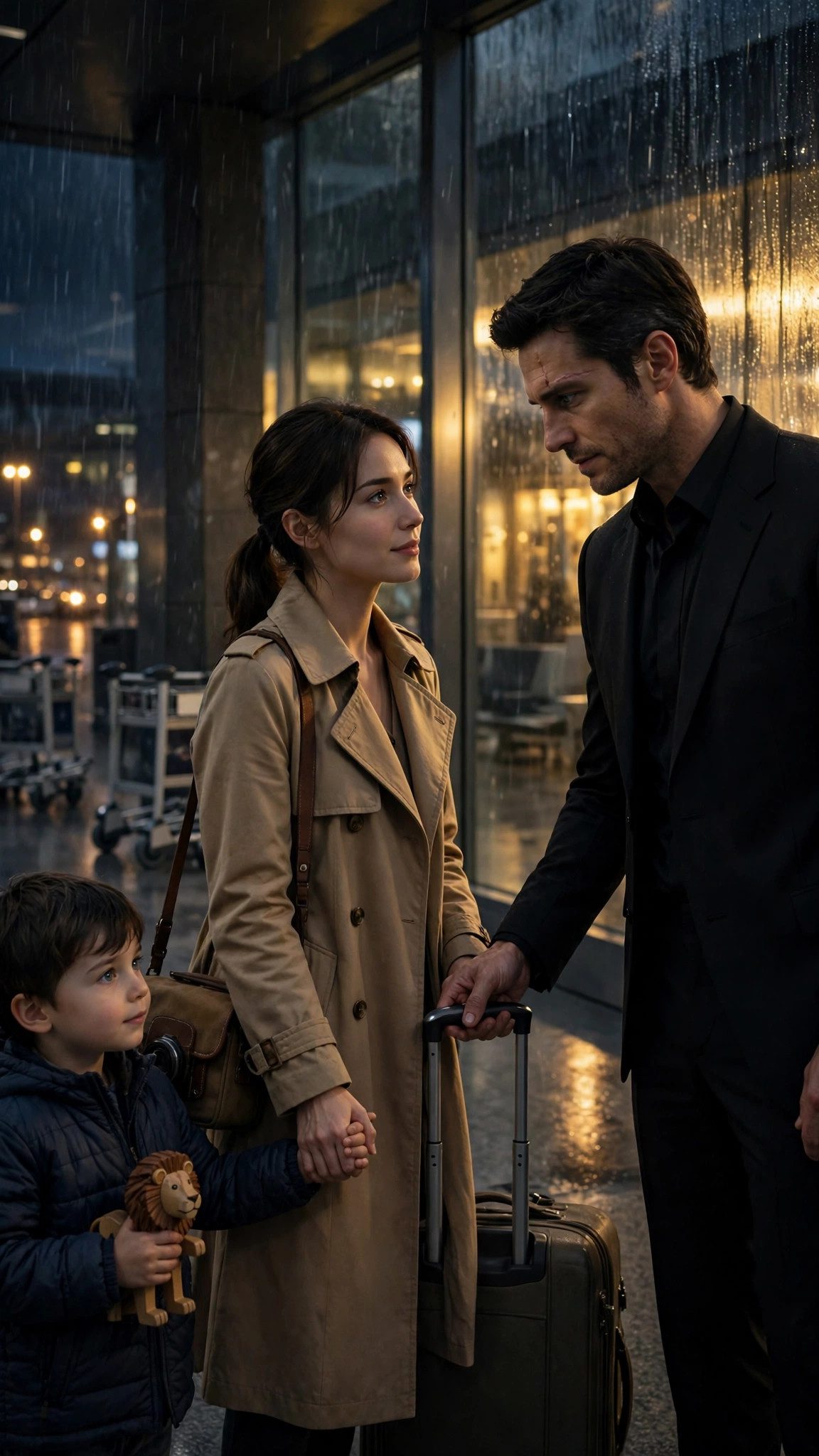
When it was over, I walked out through the kitchens, past the waiters carrying trays of champagne, and into the rain, and I did not stop walking until I was at the airport, and by midnight I was on a plane to Geneva with a suitcase full of clothes and a camera bag and a heart that felt like it had been cut out of my chest with a dull knife.
Dante stayed away from me for three years after that. Or I stayed away from him. It was hard to tell the difference, and it did not matter. What mattered was that I was gone, and he was married to my sister, and the doors that had been closed for eight years were now locked, and I told myself I was free.
I was not free. I was just far away. And far away, in a little apartment in Geneva with snow on the windowsills and a job photographing conferences for people whose names I could not pronounce, I learned the difference between being free and being alone. Free is a choice. Alone is just what is left when the choice is made for you.
I threw myself into work. I photographed everything. Weddings in old churches. Babies in christening gowns. Businessmen shaking hands in hotel ballrooms. I built a small reputation, and a smaller life, and I told myself it was enough, and for a while, on good days, I almost believed it.
But at night, in the dark, I could feel the absence of him like a missing tooth, a space my tongue kept finding. I missed the weight of his hand on the back of my neck. I missed the way he said my name when he was tired. I missed the coffee, black with one sugar, scalding hot, in a plain white mug. I missed the quiet, the long silences at the window, the way he would stand there for hours looking down at the city he owned, and I would sit behind him and wait, because waiting was the only thing I had ever been good at.
And then, one grey morning in February, with snow falling outside the clinic window and my hands cold in my lap, a doctor told me I was pregnant, and I sat very still for a long time, and I thought about the man who was now my sister's husband, and the child growing inside me that belonged to both of us, and I understood that I had a choice to make, and I made it.
I would keep the baby. I would raise him alone. I would never tell Dante, because telling him would mean going back, and going back would mean watching my sister's marriage fall apart, and I had already lost my father and my mother, and I would not lose my sister too, even if she had taken the only man I had ever loved.
That was the promise I made to myself in that little Swiss clinic. And for three years, I kept it.