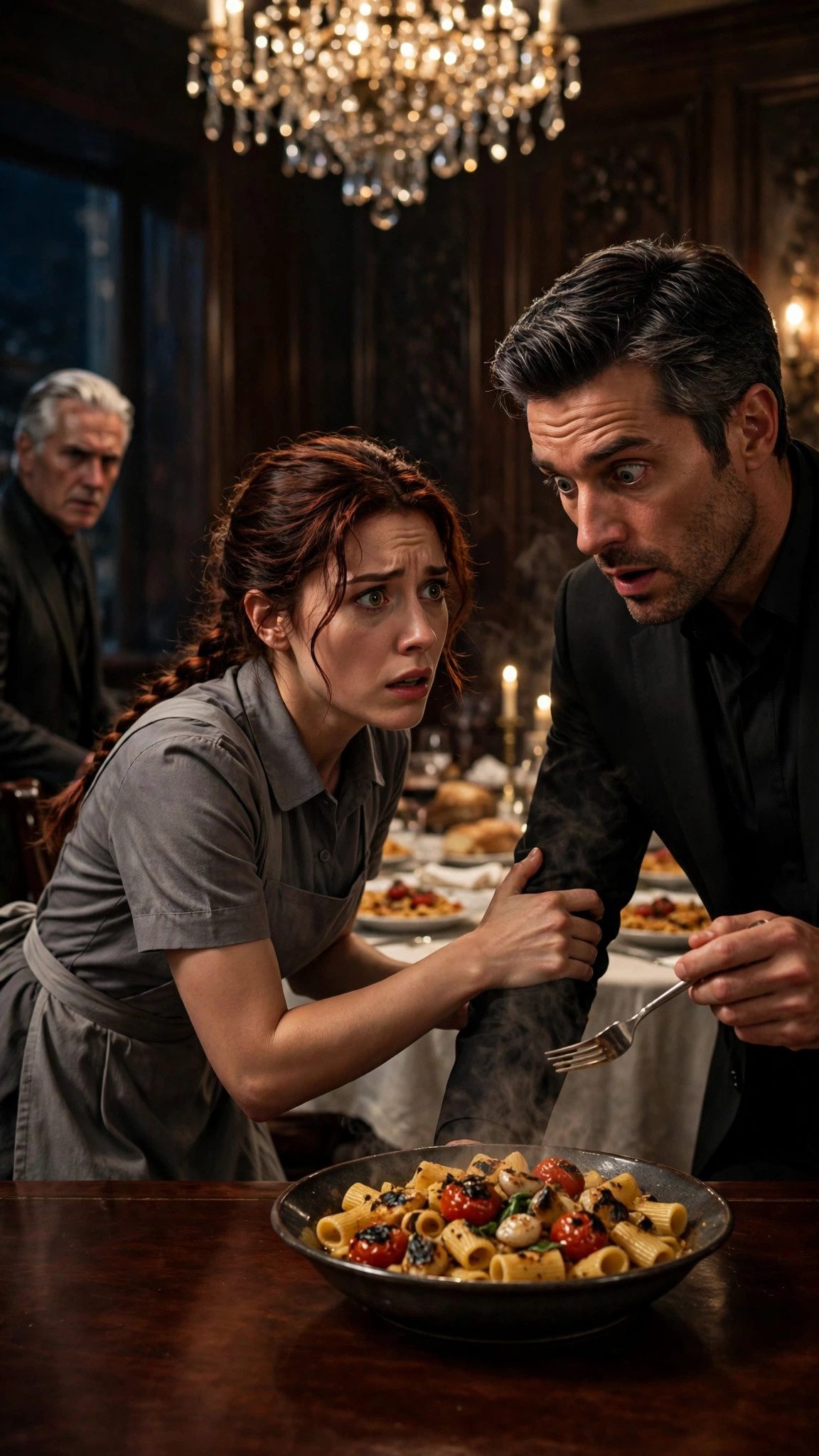
My father died because he could smell.
That is the sentence I have carried for seventeen years, and it has never stopped being true, and it has never stopped being unfair. Bill Hayes was a line cook, not a great chef, not a famous one — a man who worked the night shift in a restaurant kitchen and came home smelling of garlic and smoke, and who taught his daughter to cook by standing her on a chair beside the stove and letting her stir. He had a nose like a bloodhound. He could tell when the oil was ready by the smell, when the bread was done by the smell, when the milk had turned by the smell. The other cooks laughed at him for it. They called him the Hound. He was proud of it.
The night he died, he brought home a cardboard box. Someone at the restaurant had sent food home for the staff, the way restaurants do — a stew, in a plastic container, inside a cardboard box. He set it on the kitchen table and lifted the lid, and the smell came up at him, sweet and oily and wrong underneath the smell of the meat. He frowned. He said, "Let me smell." He leaned in closer. And then he said, very quietly, "Don't eat this, Nora."
He said it to me. I was nine years old, sitting at the table in my nightdress, waiting for my father to come home. He said, "Don't eat this," and then he went to the sink and was sick, and then he sat down very slowly in his chair, and then he did not get up again. The ambulance came. The doctors said his heart had stopped. They said it was sudden. They said these things happen. But I had watched him lift that lid, and I had watched his face change, and I knew what I knew: the stew had been poisoned, and my father had smelled it, and smelling it had not saved him.
They never found out who poisoned the stew. The restaurant said it must have been a bad batch of mushrooms. The police said there was no evidence of foul play. My mother cried for a month and then went back to work, and my grandmother took me into her bakery and taught me everything she knew about food — how to tell good flour from bad, how to know when a tomato is ready, how to smell a dish and know what is in it before you taste it. "Your father gave you his nose," she used to say, pressing a wooden spoon into my hand. "It is a gift, Nora. But a gift like that is also a burden. You will smell things other people cannot smell. And when you do, you will have to decide what to do about it."
I decided, at nine years old, that I would never let what happened to my father happen to anyone else if I could stop it. It was a child's promise, and like most children's promises, it stayed with me longer than anyone expected.
I grew up in the bakery. I learned to bake bread before I learned to ride a bicycle. I learned that rhubarb root, dried and ground, smells sweet and oily, and that a pinch of it in a stew will make the whole pot taste bitter, and that a spoonful of it will stop a man's heart — because my grandmother, who knew every plant that grew in her garden, told me so one afternoon when I was twelve, and showed me the root, and made me smell it, and said, "Remember this smell, Nora. This is the smell that kills quietly. If you ever smell it in a kitchen where it does not belong, you run, and you tell someone."
I remembered. I have remembered for seventeen years.
When I was twenty-four, my grandmother died, and the bakery was sold, and I went to work in other people's kitchens — restaurants, hotels, private houses. I was good at it. I was quiet, I was clean, I was fast, and I could smell a dish going wrong before anyone else could. People liked that about me. They did not know why I was so careful about tasting, so careful about smelling, so careful about who handled the food before it reached the table. They thought I was fussy. I let them think it.
Then, three weeks ago, a letter came. It was short, and it was from a housekeeping agency, and it said that a great family in Chicago needed a new maid, immediately, because the last one had quit without notice and without explanation. The pay was twice what I was making. The house was a mansion. The family name was Moretti.
I knew the name. Everyone in Chicago knew the name. The Morettis were the family you did not cross, the family whose name made restaurant owners straighten up and made policemen look the other way. I had never met a Moretti. I had never wanted to. But the pay was twice what I was making, and my rent was due, and my grandmother's voice was in my head saying, "A gift like that is also a burden."
So I ironed the gray uniform, and I packed a small bag, and on a Tuesday morning I walked up the long drive to the Moretti mansion with my hair in a braid and my hands steady, and I told myself that it was only a job, and that I would cook and clean and keep my head down, and that in six months I would have enough saved to open a bakery of my own.
The housekeeper met me at the door. Her name was Mrs. Delgado, and she was a thin woman with tired eyes who had worked in the house for twenty years. She looked at me the way a woman looks at a lifeboat when the ship is sinking.
"Where is Gabby?" she asked, before she even said hello. Then she caught herself, and shook her head, and said, "Never mind. You're Nora. Come in. I'll show you the kitchen."
"Who is Gabby?" I asked.
"The maid before you," Mrs. Delgado said. "She went upstairs after the birthday party, and then she was gone. She left her uniform folded on her bed and her wages uncollected. Twenty-three years old. She'd been here two years." She lowered her voice. "She was a good girl. She didn't steal. She didn't lie. She just left. In the middle of the night. And no one will tell me why."
"Did something happen at the birthday party?" I asked.
Mrs. Delgado looked at me for a long moment. "Mr. Vittorio died at the birthday party," she said. "His heart. In the dining room. In front of everyone. Since then —" She stopped. She looked down the hall, toward the great dining room, where the table was already laid for dinner, though it was only ten in the morning. "Since then, Mr. Arthur doesn't eat. He sits at the table and stares at the food until we take it away. The doctor says it's grief. Miss Aria says it's grief. But I have worked in this house for twenty years, Nora, and I have seen grief. Grief eats. Grief eats too much, or it eats nothing for a day, and then it eats again. This is not grief. This is a man who is afraid of his own kitchen."
She took me to the kitchen then, and I met Chef Pascal, who was sixty-two years old and had cooked for the Morettis for thirty years, and who stood at his stove with his arms folded and his eyes red, and who said, "I made the best meals. Everyone exclaimed, no one could beat him." He was talking about himself, I think, or about the old Don — it was hard to tell, because he kept starting sentences and not finishing them. "The menu seemed endless," he said, staring at his pots. "Every dish exquisite. All the dishes looked as if they had been created by an artist. Each was seasoned with their care." He looked at me then, and his voice dropped. "I cooked the birthday dinner, girl. I cooked it with my own hands. And now the old man is dead, and the young one won't eat, and everyone looks at me as if I did it. As if I would poison the family I have fed for thirty years."
"I don't think you did it," I said. It was the first honest thing I had said in that house, and I said it because it was true. Chef Pascal's kitchen smelled of garlic and butter and clean iron. It did not smell of rhubarb.
He looked at me for a long time. Then he nodded, once, and turned back to his stove. "You're the new maid," he said. "Mind the pantry. The bottom shelf. There's a box down there that's been there since the party. Nobody will throw it away. I don't know why."
I went to the pantry that afternoon. It was a long, cool room lined with shelves, smelling of soft wood and flour and dried herbs. On the bottom shelf, pushed back against the wall, was a cardboard box. It was the kind of box a restaurant sends food home in. The lid was half off. And underneath the lid, faint as a rumor, was the smell.
Sweet. Oily. Wrong.
I stood there with a bag of flour in my hands and my father's voice in my ears — "Let me smell" — and I understood, all at once, why the boss wouldn't eat, and why the staff cried behind the pantry doors, and why Gabby had gone upstairs and never come back down.
Somebody in this house was poisoning the food. And the boss knew it. He had known it since the night his father died with a teacup in his hand. He just didn't know who.
I put the flour on the shelf. I closed the pantry door. I went back to the kitchen and I cooked, because cooking was what I knew how to do, and because I needed time to think. And while I cooked, I made a promise to my father, and to my grandmother, and to the girl I had been at nine years old, sitting at a kitchen table in my nightdress.
This time, I would smell it first. And this time, I would stop it.
My grandmother's bakery was a small place, with flour on every surface and a wood-fired oven that my grandfather had built with his own hands, and a bell over the door that rang every time a customer came in. I grew up in that bakery the way other children grow up in a house — it was my whole world. I learned to knead dough before I learned to write my name. I learned to tell when bread was ready by the sound it made when you tapped it, and when a cake was ready by the smell that came out of the oven door.
But the most important lesson my grandmother ever taught me was not about bread. It was about smelling.
She had a garden behind the bakery, and in that garden she grew everything she cooked with — tomatoes, basil, garlic, and, in one fenced corner, the plants she would not let me touch. "Those are medicine plants, Nora," she said. "Some medicines heal, and some medicines kill, and the difference is in how much you use, and in who is holding the spoon." One afternoon, when I was twelve, she took me into that corner, and she dug up a rhubarb root, and she held it under my nose, and she said, "Smell this. Remember it. This is the smell that kills quietly."
The root smelled sweet. It smelled oily. It smelled, underneath the sweetness, like something rotting in a damp cellar. My grandmother watched my face change, and she nodded, and she said, "Good. You smell it. Your father could smell it, too. That is why he is gone — because he smelled it, and he was too late. But you, Nora — you are going to be early. You are going to smell it before anyone else does, and you are going to be the one who says it out loud."
She made me smell it again the next day, and the next, until I could pick it out of a kitchen full of other smells — garlic, butter, bread, smoke — with my eyes closed. She ground a pinch of it into a pot of soup once, just to show me, and the whole pot turned bitter, and the whole kitchen smelled wrong, and she threw the soup away, pot and all, and said, "That is what a spoonful does to a meal. Imagine what it does to a man."
I never forgot. I have never forgotten a smell in my life. That is the gift, and that is the burden.
When I was sixteen, I got my first job in a real restaurant kitchen, washing dishes, and within a month I had saved a customer without knowing I was doing it. A pot of stock had gone bad — not poisoned, just spoiled, left too long on a warm stove — and I smelled it from across the kitchen, and I told the chef, and he laughed at me, and then he tasted it, and his face went white, and he threw the whole pot away. "How did you know?" he asked me. "I smelled it," I said. He looked at me the way people look at a dog that has just pointed at a bird no one else can see, and he said, "Girl, you have a nose like a bloodhound. Don't ever lose it."
I never lost it. I carried it with me from kitchen to kitchen, from job to job, and everywhere I went, I smelled things other people could not smell — milk turning before it turned, oil going rancid before it smoked, fish going soft before it stank. People thought I was fussy. People thought I was strange. But no one who worked with me ever got sick from my food, and that was enough for me.
What I did not tell anyone, in all those years, was the real reason I was so careful. I was careful because I had watched my father die of a smell, and I had promised myself, at nine years old, that I would never let it happen again. Every kitchen I walked into, I walked in looking for it — the sweet smell, the oily smell, the wrong smell. And for seventeen years, I never found it.
Until the Moretti house. Until the pantry. Until the cardboard box on the bottom shelf, with its lid half off, and the smell rising from underneath it like a ghost coming up out of a grave.