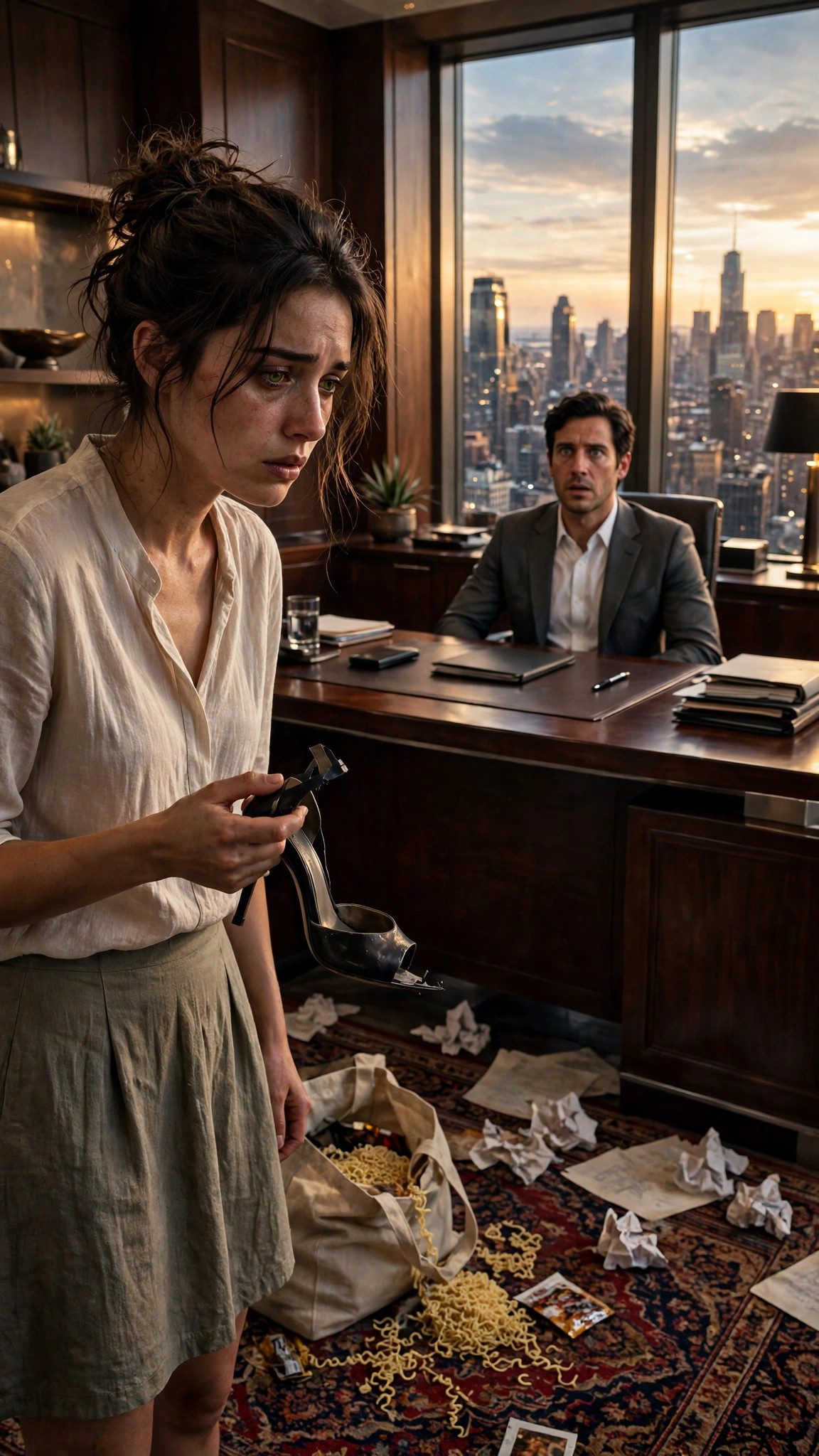
The morning after the docks, I woke up in my own bed, in my own apartment, and for the first time in three years, I did not wake up afraid.
My mother was in the kitchen, making tea. She was standing at the counter, holding the kettle with both hands, steady on her feet, and when she saw me, she smiled, the way she smiled on the good days, and she said, "The medication came. This morning. A whole box of it. And a letter. From the trust. It says the payments will never stop. It says — " She stopped, and her voice caught. "It says, 'For the woman who stayed.'"
I went to her, and I held her, and we stood there in our small kitchen in Queens, holding each other, and the sun came through the window, and the kettle sang, and the whole world felt new.
That afternoon, Lorenzo came to our apartment. He knocked on the door, politely, like a man who has never knocked on a fourth-floor walk-up in Queens before, and when my mother opened the door, he took off his coat, and he sat down at our kitchen table, and he drank tea out of a chipped blue mug, and he told my mother everything. He told her about the trust. He told her about Voss. He told her about Castellano, and the docks, and the FBI, and the medication. And he told her about Leonardo, and the park, and the bench, and the plane tree, and the story he had never told anyone.
My mother listened, the way she always listened, with her eyes closed and her hands folded in her lap, and when he finished, she reached across the table, and she took his hand, and she said, "You were a good big brother. Leonardo told me so. He said you were the strongest person he knew. He was right."
Lorenzo cried then. Not the silent tears on the bench. Real tears, the kind that come when a man has been holding something for eleven years and finally lets it go. He cried at our kitchen table, in our small apartment in Queens, with a chipped blue mug in front of him, and my mother held his hand, and I held his other hand, and none of us said anything at all.
When he finally stopped, he looked at me, and his grey eyes were clear, and he said, "Mia. I have something to ask you. Not here. Not like this. Tomorrow. In my office. Nine o'clock. Don't be late."
"I won't be late," I said.
"I know," he said, and he smiled, and he stood up, and he put on his coat, and he left, and my mother looked at me, and she smiled, the way mothers smile when they already know.
The next morning, I went to work early. I wore my best blouse. I braided my hair. I wore two matching shoes. I walked into Conti Enterprises, past the receptionist with the perfect hair, past the dangerous men in the outer office, who all nodded at me now, like I belonged there, and I sat down at my desk, and I waited.
At nine o'clock, Lorenzo came out of his office. He was wearing a charcoal suit, and he was carrying a small box, and the whole office went quiet, the way it goes quiet when something important is about to happen, and Frankie Russo stopped in the middle of the room with a stack of papers in his hands, and Patricia from human resources put her hand over her mouth, and Enzo Ricci stood by the door with his arms crossed, trying very hard not to smile.
Lorenzo walked to my desk. He knelt down, on one knee, right there in the middle of the office, in front of everyone, and he opened the box, and inside was a ring — simple, gold, with a single diamond — and a pair of earrings, small and gold, shaped like tiny shoes.
"Mia Sullivan," he said, and his voice was steady, and his grey eyes were clear, and he was not cold, and he was not silent, and he was not the most dangerous man in New York. He was just a man, kneeling on the floor of his office, asking a question. "You walked into my office wearing one broken heel, and you called me by my brother's name, and you fixed my filing cabinet, and you bandaged Frankie's lip, and you found the mole in my ledgers, and you stood on a dock in the middle of the night and refused to hide, and you taught me how to say my brother's name again, and how to stop carrying everything alone. I do not want to be alone anymore. I want to be with you. I want to take care of your mother, and I want you to take care of me, and I want us to build something together that is not built on silence. Will you marry me?"
The office was silent. Forty-two floors above Park Avenue, in the middle of the most powerful company in New York, surrounded by dangerous men and accountants and lawyers, it was completely silent, and everyone was looking at me, and I was looking at Lorenzo, kneeling on the floor, holding a ring, and I thought about my mother, and about Leonardo, and about a broken heel in a subway grate, and about a tote bag full of medical bills, and about a man who had hired me because of a name I had said by accident.
"Yes," I said.
Frankie cheered. Patricia cried. Enzo clapped Lorenzo on the shoulder so hard he nearly fell over. The receptionist with the perfect hair came out of her office with a bottle of champagne, and someone put music on, and the whole office, the whole dangerous, frightening, impossible office, turned into a celebration, and Lorenzo stood up, and he put the ring on my finger, and he kissed me, right there, in front of everyone, and the world, which had turned over so many times in the last few weeks, finally settled into place.
We were married three months later, in a small ceremony in the park, under the plane tree, on the bench where Lorenzo had told me about his brother. My mother was there, in a wheelchair, wearing a blue dress, smiling the way she smiled on the good days. Frankie was there, with a bandage on his lip, crying openly and not caring who saw. Enzo was there, standing by the door, the way he always stood by doors. And Patricia from human resources was there, with a camera, taking photographs of everything, because someone had to remember it all.
Lorenzo and I said our vows under the plane tree, and when it was over, he took my hand, and he said, "There is one more thing."
He had started a foundation. The Leonardo Conti Foundation, for families living with multiple sclerosis. It would pay for medication, and for nurses, and for home care, and for everything the insurance companies refused to pay for. It would be funded by the trust, and by Conti Enterprises, and by every dollar Castellano's seized shell companies had ever held. My mother would be its first honorary chair. I would run it. And every year, on October 17th, the anniversary of Leonardo's death, we would hold a dinner, and we would read pirate stories, and we would remember a boy who laughed, and a nurse who stayed, and a brother who finally learned how to put things down.
My mother lived to see it. She lived to see the foundation open its doors. She lived to see me married, and happy, and safe. She lived to see Lorenzo learn how to laugh — not the rusty, careful laugh of a man who has forgotten how, but a real laugh, loud and surprised, the way Leonardo used to laugh. And on the good days, when the medication was working and the pain was far away, she would sit in the garden of our new house, and she would close her eyes, and she would say, "He would have liked this. Leonardo. He would have liked all of this."
And Lorenzo would take my hand, and he would say, "Yes. He would have."
I still work at Conti Enterprises. I still sit at the desk outside Lorenzo's office, with my name on a brass plate. I still fix the filing cabinet when it explodes, and I still bandage Frankie's lip when he comes in bleeding, and I still butcher Italian surnames on the phone, and I still forget toner, and I still misplace pens. Some things do not change.
But some things do. Now, when Lorenzo looks up from his ledgers, he smiles. Now, when the dangerous men come into the office, they nod at me, and they call me Mrs. Conti, and they ask me how my mother is doing, and they mean it. Now, when I walk into his office, I do not call him Leonardo. I call him Lorenzo. And he answers to it, every time, with a smile, because he knows what I know: that a name is not just a name. A name is a person. A name is a story. A name is a boy who laughed, and a nurse who stayed, and a brother who finally came home.
And every morning, before I leave for work, I put on two matching shoes. I pack my tote bag — no more ramen, no more aspirin, no more medical bills, just a notebook, and a pen that works, and a photograph of a young man standing in front of a lake with his arm around his big brother. And on the back, in faded ink, it says: LEONARDO — SUMMER, LAKE COMO.
I keep it on my desk now. Face up. Where everyone can see it. Where Lorenzo can see it. Where I can see it, every day, and remember how it all began: with a broken heel, a subway grate, and a name I said by accident, in the office of the most dangerous man in New York, who turned out to be the kindest man I had ever known.
One year later, on October 17th, we held the first dinner of the Leonardo Conti Foundation. It was in the garden of our new house, under string lights, with forty-one families at long tables, and my mother at the head of the table in her blue dress, and Rosa Delgado beside her, and her husband, healthy and smiling, holding her hand. Frankie was there, carving a roast, with a bandage on his thumb, telling everyone that he had cut himself opening a bottle and not, as Enzo claimed, trying to impress a waitress. Enzo was there, standing by the gate, the way he always stood by gates, but smiling, really smiling, for the first time since I had met him. Agent Reyes was there, in a suit that did not quite fit him, eating two helpings of everything and pretending he was only there in an official capacity.
And when dinner was over, Lorenzo stood up, and he held up a book — a book of pirate stories, old and worn, with a cracked spine — and he read aloud, to forty-one families, in the garden, under the string lights, the story of a pirate who sailed around the world looking for an island no one had ever found, and who named it after his brother.
My mother cried. Rosa Delgado cried. Frankie cried, and pretended he had something in his eye, and Enzo looked at the sky, and Agent Reyes blew his nose very loudly into a napkin, and Lorenzo read on, steady and clear, until the story was finished, and the garden was quiet, and the string lights swayed above us, and the whole world felt like it was holding its breath.
"This foundation," Lorenzo said, when he had closed the book, "is for the people who stay. For the nurses who hold hands in the night. For the daughters who fight insurance companies. For the mothers who never give up. For the families who trust us, and who we will never fail again. My brother stayed brave until the very end. My wife's mother stayed with him. My wife stayed with her mother. And I — I stayed alone for eleven years, because I did not know how to do anything else. I know how now. I stay with them. I stay with all of you. That is my promise, and I intend to keep it."
He sat down, and he took my hand, and my mother reached across the table and took his other hand, and the three of us sat there, holding hands, under the string lights, while forty-one families applauded, and the night went on, warm and gold and full of laughter.
Later, when the guests had gone and the tables were cleared and the house was quiet, Lorenzo and I sat in the garden alone, under the plane tree we had planted that spring, and he said, "Do you remember the first day? The broken heel? The wastebasket?"
"I remember," I said. "I remember all of it."
"Do you remember what you called me?"
"Leonardo," I said. "I called you Leonardo."
"And do you know what I thought, in that moment?" he asked. "I thought: he sent her. Leonardo sent her. He sent me a woman with a broken heel and a tote bag full of medical bills, because he knew I would not be able to turn her away, and he knew she would not be afraid of me, and he knew she would fix my filing cabinet and find my mole and save forty-one families and teach me how to say his name again. He sent her. And she came. And she stayed."
I leaned against him, and I looked up at the string lights, and I thought about a boy I had met once, when I was five, who had waved at me from a hospital bed and given me a pirate sticker, and I thought about a man who had hired me because of a name I had said by accident, and I thought about a mother who had stayed, and a daughter who had stayed, and a brother who had finally come home, and I said, "He would have liked this. Leonardo. He would have liked all of this."
"Yes," Lorenzo said. "He would have."
His name is Lorenzo Conti. And he is mine. And I am his. And Leonardo — sweet, brave, laughing Leonardo — is with us, always, in every room we walk into, in every story we tell, in every life we save.
The End.
THE END