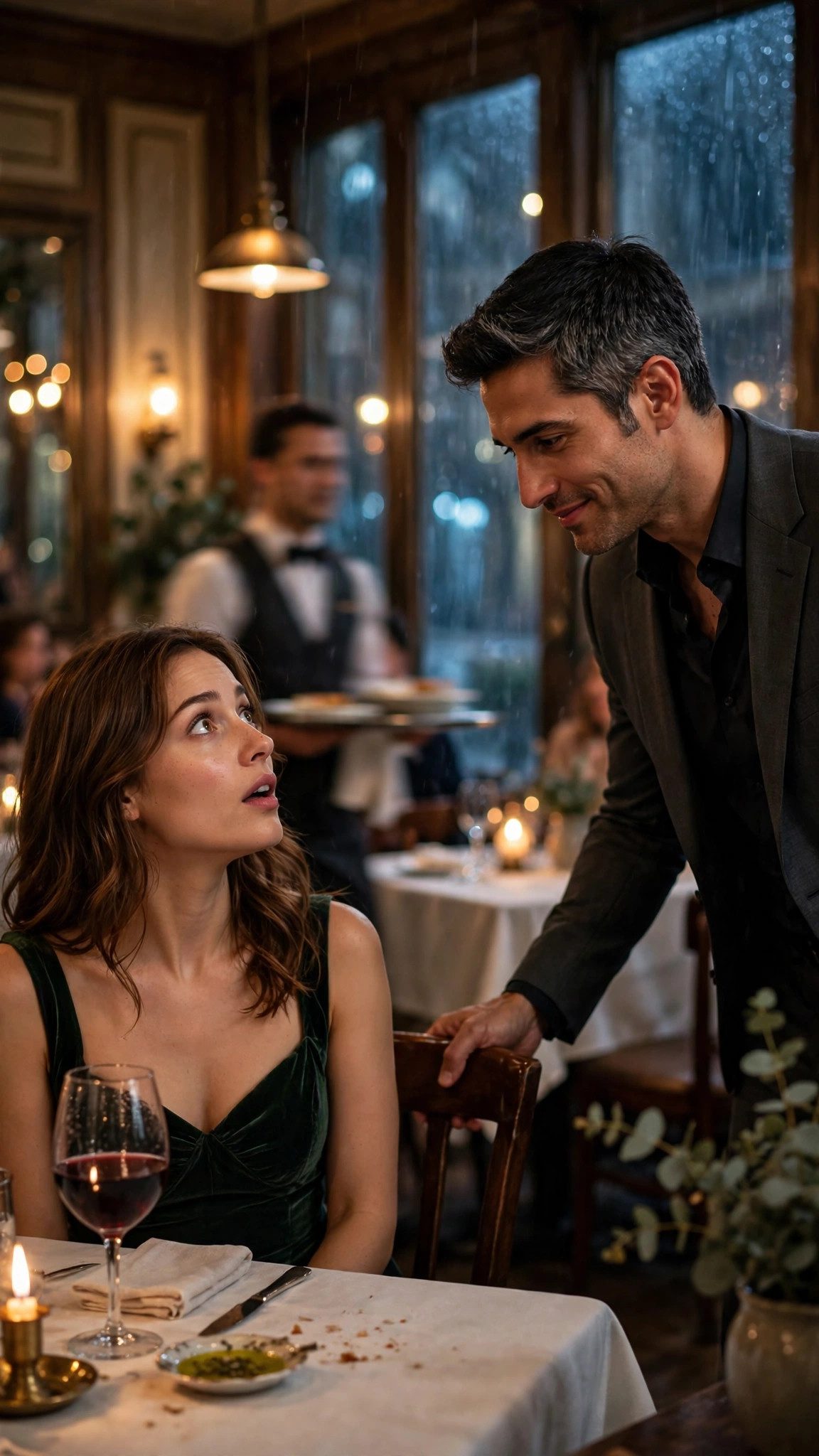
The spring gala was Louise's idea. Meadowbrook had held one every year for as long as anyone could remember, a fundraiser in the garden behind the facility, with twinkling lights strung between the trees and long tables with white cloths and a little stage where the residents' choir sang songs they had known since they were young. This year was different. This year, the gala was a celebration. The program was saved. The garden Anthony had promised was already being built, stone by stone, just beyond the old oak tree. And this year, for the first time, the whole city was coming.
I spent the week before the gala running on coffee and nerves. I ordered flowers. I confirmed the caterer.
I ordered lilacs, because Mrs. Alvarez loved lilacs, and she had told me once that her husband used to bring her lilacs every spring, and she could not remember his face anymore, but she could remember the smell. I rehearsed the choir twice, and Mrs. Alvarez sang every word of "Amazing Grace" without missing one, and Mr. Kowalski sang harmony in a voice that shook but never broke. I walked the garden path a dozen times, checking that the stones were even, that the wheelchairs would fit, that the twinkling lights were strung high enough that no one would catch their hair on them. Louise supervised everything with her clipboard, and every time I started to panic, she put a hand on my shoulder and said, "Breathe, Emma. The lilacs are ordered. The choir knows the words. The lights are up. It is only a party." But it was not only a party. It was the night the whole city would see us together, and I knew it, and Louise knew it, and we did not say it out loud. I made sure Mrs. Alvarez's wheelchair would fit down the garden path and that Mr. Kowalski's hearing aid had fresh batteries so he could hear the choir. Louise supervised everything with her clipboard and her iron spine, and every time I started to panic, she put a hand on my shoulder and said, "Breathe, Emma. It is only a party."
But it was not only a party. I knew that, even if Louise did not say it out loud. Anthony was coming, and he was coming publicly, as my escort, and the whole city would be watching. The photograph had already made us a story. The gala would make us something more.
The night of the gala, the garden was beautiful. The twinkling lights were strung between the trees like a sky that had come down to earth. The tables were set with white cloths and candles. The choir was warming up on the little stage, and the smell of the lilacs was everywhere, sweet and heavy in the spring air. I was wearing a pale green dress I had bought for the occasion, and my hands were shaking as I pinned my hair up, and then Anthony arrived, in a dark suit with a white shirt and no tie, and he looked at me the way he had looked at me in the ballroom, like I was the only interesting thing in the room, and my hands stopped shaking.
"You look beautiful," he said.
"You look like you belong here," I said, and I meant it. He did belong there, among the nurses and the families and the old people in their wheelchairs, because for all the power he carried, he was, at his heart, a man who took care of his people. And these were his people now, too. He had saved their program. He had built their garden. He had stood in a ballroom and told a thousand strangers that their mothers and fathers mattered.
We walked through the garden together, holding hands, and people came up to us, and they thanked him, and they thanked me, and an old woman named Mrs. Delgado took my face in her hands and said, "You are a good girl, Emma. You have always been a good girl." And I cried a little, and Anthony handed me his handkerchief, and I laughed, because who carries a handkerchief anymore, and he said, "My mother taught me. A gentleman always carries a handkerchief."
It was perfect. It was the kind of night you dream about and never quite believe is real. And that was when it happened.
I do not remember the sound of the shot. I remember the lights. I remember the way the twinkling lights suddenly seemed too bright, too sharp, and then Anthony was moving, and he was not moving like a man in a suit at a garden party. He was moving like a man who had spent his whole life preparing for this exact moment. He pulled me down behind the stone wall of the garden, and his body was over mine, shielding me, and his voice was in my ear, low and calm, the way it had been in the café two years ago, the way it had been in the ballroom, and he said, "Stay down, Emma. Stay down and do not move."
There were more shots. I heard shouting. I heard Louise's voice, sharp and furious, telling everyone to get inside. I heard the choir director screaming. And then I heard a sound I will never forget, the sound of a man running through a garden, and then a thud, and then silence, and then Anthony's voice, saying, "It's over. It's over, Emma. You're safe."
I looked up. His bodyguard, a man named Tony Mercer who had stood by the front door of his house the night I had dinner there, was holding a young man down on the grass.
Around us, the garden was in chaos. Louise was herding the residents toward the doors with her clipboard held high like a weapon, telling everyone to stay calm, telling Mrs. Alvarez that it was all right, telling Mr. Kowalski to keep his hearing aid in. The choir director was crying in the corner, holding her sheet music to her chest. A waiter had dropped a tray of glasses, and the broken glass glittered in the grass like fallen stars. And through it all, the twinkling lights stayed on, strung between the trees, shining down on the tables with their white cloths and the candles that had not yet been lit, as if the garden itself did not know that anything had gone wrong. The young man's face was twisted with fear. A gun lay on the ground beside him, black and ugly in the grass. And standing at the edge of the garden, with his hands in the air and two federal agents on either side of him, was Marco Benedetti.
Marco. The underboss with the cold eyes. The man who had been selling Anthony's freight routes to Vincent Castellano for years. The man who had sold the gala security plan to Castellano for fifty thousand dollars, so that Castellano's gunman would know exactly where Anthony would be standing, and when, and with whom.
"Anthony," Marco said, and his voice was shaking. "Anthony, listen to me—"
"Don't," Anthony said. His voice was very quiet. "Don't say my name. Not anymore."
The federal agents took Marco away. They took the gunman away.
Agent Reyes knelt beside me on the grass, and he spoke to me gently, the way you speak to someone who has just been through something terrible. "Miss Hart," he said, "I need you to tell me what you saw. Take your time. There is no hurry." So I told him. I told him about the lights, and the shots, and the way Anthony had pulled me down behind the stone wall, and the way Tony Mercer had brought the gunman down. Reyes wrote it all in his notebook, and when I was done, he closed the notebook, and he looked at Anthony, and he said, "Mr. Russo, you did the right thing tonight. You called us when you did, and you kept her safe. Castellano is finished. I promise you that." And then he turned to me, and he said, "Miss Hart, you are safe now. I want you to believe that. And then a man in a dark suit walked across the garden toward us, and I recognized him from the news, from the stories Louise had told me about the way the law worked in this city. FBI Agent Daniel Reyes. He had been building a case against Vincent Castellano for two years, and Anthony had been feeding him information for almost as long, and tonight was the night it all came together.
"Mr. Russo," Agent Reyes said, shaking Anthony's hand. "Thank you. We have the gunman. We have Benedetti. We have the wire transfers, the phone records, everything. Castellano is being arrested in Buffalo as we speak."
Anthony nodded. He did not look triumphant. He looked tired, and relieved, and something else, something I could not quite name, until he turned to me and took my hands in his, and I saw it. It was fear. Not for himself. For me.
"Emma," he said, "there is something I have never told you. Something about Canandaigua. About that day in the café."
I looked at him. The twinkling lights were above us. The garden was quiet now, except for the sound of the agents talking quietly and the choir director crying softly in the corner. And Anthony Russo, the most feared man in Rochester, held my hands in his, and he told me the truth.
"The two men at the next table that day," he said, "were Castellano's men. They were arguing about a shipment. A shipment of guns, coming through Rochester on one of my trucks, a truck I did not know about, a truck Marco had arranged without telling me. They saw you listening. They wanted you dead, Emma. They were going to follow you out of that café and make you disappear, and I was there to stop a hit, and I stopped it, and then I sat down across from you, and I asked you why I shouldn't kill you, because I needed to know if you were one of them, or if you were just a girl who had been in the wrong place at the wrong time."
My breath caught in my throat. "And I told you the truth."
"And you told me the truth," he said. "You were afraid, and you told me the truth anyway. And I let you go, because you were the only honest person I had met in ten years. And then I spent two years making sure Castellano's men never found you. I had someone watching over you, Emma. Not following you. Watching over you. From a distance. So that you would never know, and never be afraid."
I stared at him. Two years. Two years of a guardian I had never seen, a shadow I had never noticed, a man I had never known was there. Two years of Anthony Russo keeping me safe from a world I did not even know existed.
"Why didn't you tell me?" I whispered.
"Because I wanted you to live your life," he said. "I wanted you to be Emma Hart, the woman who takes care of people who are losing their memories. I did not want you to be a woman who was afraid. Not ever. Not for one day."
He pulled me close, and he held me, and the twinkling lights were above us, and the garden was quiet, and the whole world had narrowed down to his arms around me and his voice in my ear, low and quiet, the same words he had whispered to me in the ballroom, the same words he had whispered to me on Friday night when he told me to text when I got home.
"You're safe now," he whispered. "I promise you, Emma. You're safe now. Castellano is finished. Marco is finished. The men who wanted you dead two years ago are finished. And I am here. I am right here. And I am not going anywhere."
Until that moment, I still hadn't understood. I didn't get it. But he was smiling at me. And my head was spinning. And then, finally, I understood everything.
The man who had once asked me why he should kill me, in a café in a small town I never thought I'd visit again, was sitting there, holding me by the hand and whispering to me under twinkling lights, "You're safe now."
He was still looking directly at me. His name was Anthony Russo. The mafia boss. And he was walking directly toward me, holding my hand, and I was not afraid. I was not afraid at all. Because I knew, now, what I had not known in the café, and what I had not known on Friday night, and what I had not known in the ballroom.
He had saved my life twice. And he would save it a hundred times more, if he had to. And I would spend the rest of my life making sure he never had to do it alone again.
I looked up at him, and I said the only thing I could think of to say.
"Anthony," I said, "take me home."
And he did. He took me home, and he stayed until I fell asleep, sitting in the chair beside my bed like a guardian, and for the first time in two years, I slept without dreaming about the café.
The next morning, I woke to the smell of coffee, and for a moment, I did not know where I was. Then I saw him, sitting in the chair beside my bed, still in his suit from the night before, his eyes closed, his head tipped back against the wall, asleep. He had stayed all night. He had not left me alone for a single minute. I lay there for a long time, watching him sleep, listening to the bakery below my apartment coming to life, the ovens, the voices, the smell of bread rising through the floorboards, and I thought about how a man who controlled half a city had spent the night in a chair beside my bed, because he had promised me I was safe, and he meant to keep that promise.