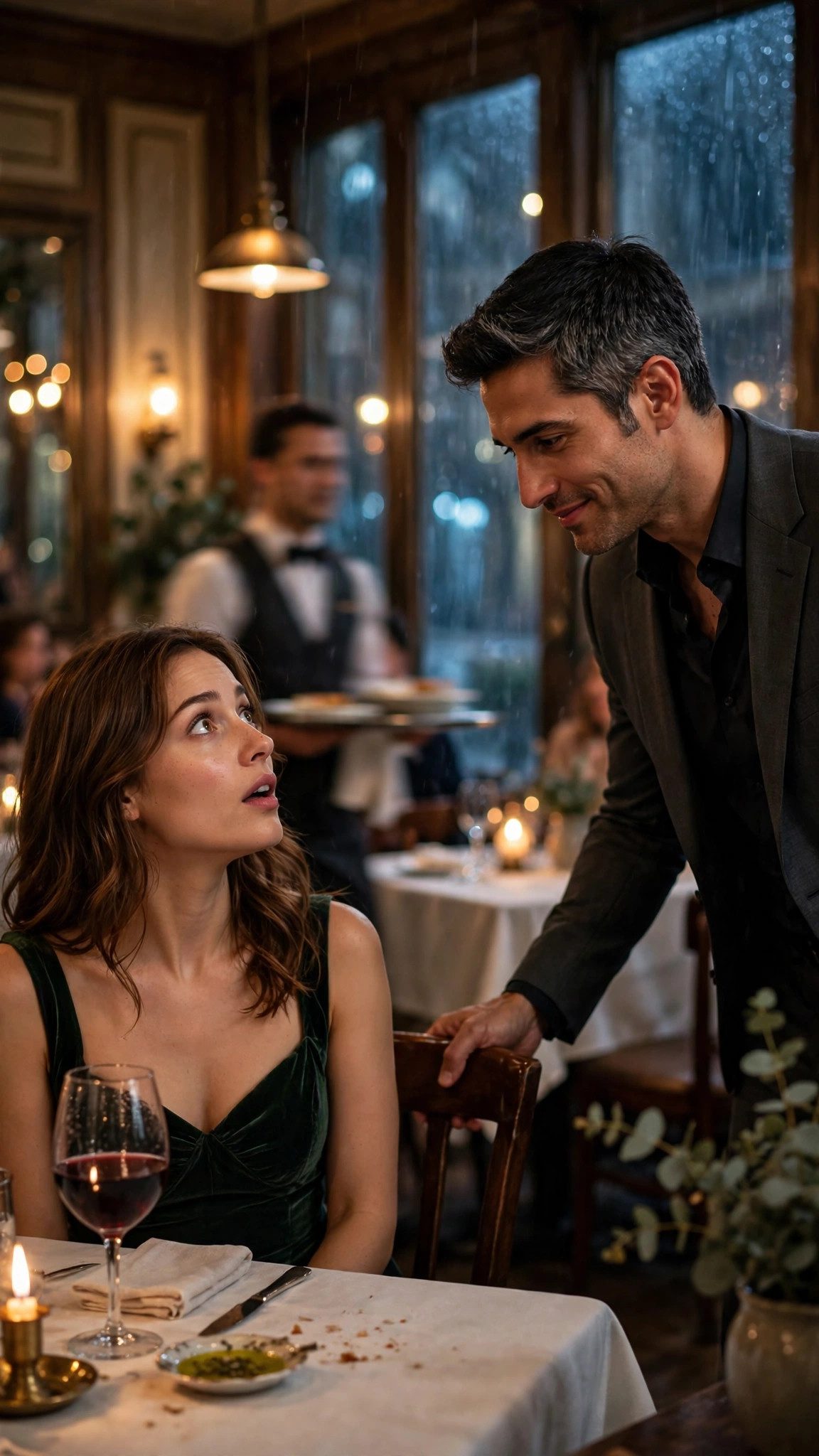
The morning after the gala, the whole city knew what had happened. It was on the news before I woke up. "FBI arrests reputed crime boss Vincent Castellano in Buffalo." "Russo underboss charged in shooting at Meadowbrook fundraiser." "Gunman in custody after attempt on Anthony Russo's life."
I sat at my kitchen table with a cup of tea I did not drink, reading the headlines on my phone, and I thought about how strange it was that my life had become a news story. A week ago, I had been a care coordinator at a senior facility, fighting budget cuts and eating lunch alone in the break room. Now I was the woman in the photograph, the woman whose hand the mafia boss had held in front of the whole city, the woman a gunman had tried to kill in a garden full of twinkling lights.
Louise called me at eight. "Are you all right?" she asked.
"I'm all right," I said. "Are you?"
"I am furious," she said. "I am furious that a man brought a gun into my garden. I am furious that Marco Benedetti sold us out for fifty thousand dollars. And I am furious that I did not see it coming. But I am not afraid, Emma. And neither are you. Do you hear me? We are not afraid."
"I hear you," I said.
"Good," she said. "Now come to work. Mrs. Alvarez is asking for you. She says she had a dream about you last night, and she wants to tell you about it."
I went to work. I sat with Mrs. Alvarez while she told me about her dream, which involved a garden and a man in a dark suit and a little girl in a green dress, and I held her hand, and I thought about how life goes on, even after the worst night of your life, and how the people who need you do not stop needing you just because your world has turned upside down.
Agent Daniel Reyes came to the facility that afternoon. He was a quiet man, in his forties, with tired eyes and a suit that had seen better days, and he sat in Louise's office with a tape recorder and a notebook, and he asked me to tell him everything. So I told him. I told him about the café in Canandaigua. I told him about the note under my door. I told him about the gala, and the shots, and the way Anthony had pulled me down behind the stone wall. I told him everything, and when I was done, he turned off the tape recorder, and he looked at me, and he said, "Miss Hart, you are a very brave woman."
"I'm not brave," I said. "I was terrified."
"That is what brave means," he said.
Over the next few weeks, the case came together the way Agent Reyes said it would.
I watched the trial on the news every night, sitting on Rosa's couch with a cup of tea going cold in my hands. The reporters talked about wire transfers and phone records and a freight company that had been used to move guns. They talked about Marco Benedetti, the underboss who had sold his own family for fifty thousand dollars, and they talked about Danny Cole, the twenty-year-old boy who had been promised a new life and given a gun instead. And they talked about Vincent Castellano, the man from Buffalo who had wanted Rochester, and who had ordered a hit in a garden full of old people, and who was going to spend the rest of his life in a federal prison. One night, a letter came in the mail. It was from Danny Cole's mother. She wrote that her son had been a good boy once, and that she was sorry, and that she prayed for me every night. I wrote her back. I told her I prayed for him too. I told her that twenty years old was too young to be finished, and that I hoped prison would give him time to become someone else. She wrote back once more, just a card, with three words on it: Thank you, Emma. Marco Benedetti, facing twenty years in prison, agreed to testify. He told the FBI everything: the freight routes he had sold, the money he had taken, the men he had introduced to Castellano, the gala security plan he had handed over for fifty thousand dollars. He got eight years, and I did not feel sorry for him, not even a little, because he had sold out the people who trusted him, and he had put a gun in a garden full of old people and children.
The gunman, a young man named Danny Cole, twenty years old, testified too. He told the FBI that Castellano had hired him, that he had been promised fifty thousand dollars and a new life in another city, and that he had not known Emma Hart would be there, and that he was sorry. He got fifteen years, and I thought about him sometimes, about how young he was, and how someone had taken a scared twenty-year-old boy and turned him into a weapon, and I hoped that prison would give him time to become someone else.
And Vincent Castellano, the man who had wanted Rochester for himself, the man who had wanted me dead two years ago for overhearing a shipment time, the man who had ordered the hit in the garden, was arrested in Buffalo, tried in federal court, and sentenced to life in prison, with no possibility of parole. Agent Reyes called me the day the verdict came in. "It's over, Miss Hart," he said. "He will never hurt anyone again."
Anthony did what he had told me he would do. He closed the gambling parlors. He converted them into licensed security contracts and a training center for the young men and women he hired from the neighborhoods nobody else would touch. He opened his freight books to the FBI and to the state, and he let them audit every truck, every route, every dollar. He kept the construction company, and he kept the security company, and he let go of everything else, and he did it all in public, with lawyers and accountants and press releases, so that no one could ever say he had done it in the dark.
"I am not a saint, Emma," he told me one evening, standing in the freight yard at dawn, watching the trucks roll out. "I have done things in my life that I am not proud of. I have made choices that I would not make again. But I am trying to be a better man than the one my father raised me to be. And you are the reason I am trying."
The memory-care wing opened in June. It was everything Anthony had promised and more.
The opening ceremony was on a Saturday, warm and bright, with the garden in full bloom and the fountain singing. The mayor came. The county health commissioner came. The families came, dozens of them, and they walked through the new rooms with tears in their eyes, touching the windows, sitting in the soft chairs, looking out at the garden. Mrs. Alvarez cut the ribbon with a pair of oversized scissors, and everyone cheered, and then the choir sang, and Mr. Kowalski sang harmony, and I stood beside Anthony under the old oak tree, and I watched it all, and I thought about the memo in my drawer, and the layoffs, and the three months Louise and I had spent fighting for this, and I thought about how none of it would have happened without a man who had once asked me why he should not kill me, and who had answered his own question by spending two years keeping me safe. New rooms with windows that looked out on the garden. A dining hall with a piano. A library with big-print books and soft chairs. And the garden itself, the garden he had built, with stone paths wide enough for wheelchairs and benches in the shade of the old oak tree, and a fountain that sang all day long. The families came, and they cried, and they thanked him, and he stood there in his dark suit, shaking hands and accepting their thanks the way a man accepts something he does not feel he deserves.
Louise retired that summer. Not all at once. She went to part-time, and then to consultant, and then to "director emeritus," which was her way of saying she was still in charge without having to come to meetings. And she named me as her successor.
My first day as director, I stood in front of the staff in the break room, twenty-three nurses and aides and kitchen workers, all looking at me, and my hands were shaking, and I thought about Louise, and what she would say, and then I heard her voice in my head, clear as if she were standing right beside me. "Breathe, Emma. It is only a job. And you have been doing it for years." So I breathed. And I told them the truth. I told them the program was saved, and the wing was open, and the garden was built, and none of it would have happened without them, without the nights they had stayed late, without the weekends they had given up, without the love they poured into people who could not always remember their names. And then Mrs. Alvarez, who was sitting in the front row in her wheelchair, raised her hand, and she said, "Emma, you are a good girl. You have always been a good girl." And the whole room laughed, and I cried, and then I got to work. Me. Emma Hart. Director of the Meadowbrook memory-care program. I was twenty-seven years old, and I was in charge of the program I had spent three months fighting to save, and I stood in front of the staff on my first day and I cried, and then I laughed, and then I got to work.
The staff gave me a gift that first week, a little potted plant for my new office, with a card signed by all twenty-three of them. It said, "To Emma. Thank you for fighting for us. We will fight for you." I put the plant on my windowsill, where it could see the garden, and I watered it every morning, and it grew, the way the program grew, the way the garden grew, steady and green and alive. And every time I looked at it, I thought about Louise, and about Anthony, and about all the people who had believed in me before I believed in myself.
My birthday came and went, and then it came again, a year after the show. Anthony remembered it properly this time. He did not turn it into a ballroom full of people. He cooked dinner for me in his kitchen, just the two of us, and he gave me a small box wrapped in brown paper, and inside it was the photograph, the one he had taken of our joined hands in the ballroom, printed and framed in silver, and underneath it, in his own handwriting, the words: "The day I stopped being afraid of my own name. — A."
And then he gave me something else. A key. A small brass key, on a chain, warm from his pocket.
"What is this?" I asked.
"It is the key to my house," he said. "Not the mansion. My house. The one I grew up in. My mother still lives there, and she has a room at the back, with a window that looks out on the garden, and she has been asking me for a year when you are going to move in. So I am asking you, Emma. Will you move in? Will you let me come home to you every night, instead of coming home to an empty house?"
I looked at the key. I looked at the photograph. I looked at him, and I thought about the café, and the restaurant, and the ballroom, and the garden, and all the ways he had kept me safe without ever asking for anything in return.
"Yes," I said. "Yes, Anthony. I will move in."
He took my hand, and he kissed it, and he said, "Then there is one more thing I need to tell you. One more thing about my last name."
I waited.
"My father," he said, "was Salvatore Russo. He built the freight company from one truck. He was a hard man, Emma. He was not a kind man. He taught me that a name is a weapon, and you use it or you lose it. And for most of my life, I believed him. But you taught me something else. You taught me that a name is a promise. And I want to spend the rest of my life keeping the promise I made to you in that ballroom. You're safe now. That is my name, Emma. That is what Anthony Russo means, from now on. You're safe now."
I cried. I did not try not to. I cried, and he held me, and the kitchen smelled like garlic and tomatoes, and the sun was going down over Rochester, and I thought about how far I had come from a Friday night in March, sitting alone at a table for two, waiting for a man who never showed up.
That night, I called Louise, and I told her everything, and she laughed, a real laugh, the kind that filled a room, and she said, "Emma, I told you. I told you that man was not a monster. And now you are going to live in his mother's house, and his mother is going to feed you until you burst, and you are going to be happy. Do you hear me? You are going to be happy."
"I hear you, Louise," I said.
"Good," she said. "Now go to sleep. You have a program to run in the morning."