The wedding was held one year later, in the garden behind Dante's house on the lake.
It was a small wedding. Harper had insisted on that. No four hundred guests. No politicians. No cameras. Just the people who mattered: her mother, Ruth, who had flown in from Ohio and who cried through the entire ceremony; Priya, her best friend, who had dared her to apply for the job three years earlier; Tony Mercer, who stood beside Dante as his best man and who had never once looked prouder; Rosa, Dante's housekeeper, who had cooked for three days straight and who wept into her apron when Harper walked down the aisle; and Dr. Alvarez, who had come because she had been there on the worst morning of Harper's life and wanted to be there on the best one.
Harper wore a simple white dress, with her dark brown hair down around her shoulders for the first time in years, and she carried a bouquet of white roses, and when she walked down the aisle between the rows of white chairs, Dante Moretti, the most feared man in Chicago, stood at the altar with tears in his eyes.
The ceremony was short. The vows were simple. Harper promised to stand beside him, in good times and in bad, and to never let him forget that the world was bigger than a boardroom. Dante promised to protect her, to honor her, to listen to her, and to never again let anyone in his world believe that she was only a secretary.
When the minister said, "You may kiss the bride," Dante did, and the small crowd cheered, and Harper laughed, and for a moment, the whole world was nothing but sunlight and white roses and the sound of her mother's crying and the smell of Rosa's cooking drifting out from the kitchen.
After the ceremony, they danced in the garden, under strings of small white lights, while the sun went down over the lake and the music played soft and slow. Dante held her carefully, the way he had held her in the hospital, as if she were something precious and breakable, and Harper leaned her head against his chest, and she thought about everything that had happened in the last year.
The honeymoon was a week at the lake house, with no phones, no meetings, no lawyers, and no one but the two of them and the water and the trees. They cooked together, badly, and they laughed about it. They walked along the shore in the mornings, and they read in the afternoons, and in the evenings they sat on the porch and watched the stars come out, and Dante told her stories he had never told anyone: about his father, about the day he took over the family, about the night he decided he wanted a different life, and about the morning he sat beside her hospital bed and understood that she was the reason.
On the third day, it rained, and they stayed inside, and Harper found an old piano in the corner of the living room, covered in dust, and she sat down and played the only song she knew, a simple piece her father had taught her when she was a girl, and Dante sat beside her and listened, and when she finished, he said, "Play it again." So she did. And then he said, "My mother used to play that song." And Harper understood, in that moment, that the house on the lake was not just a house. It was the place where Dante had been a boy, and where his mother had played the piano, and where, now, his wife was playing it too.
When they came home, Harper hired her own assistant. Her name was Ana Morales, and she was twenty-four years old, and she had just graduated from college, and she was smart, and stubborn, and not afraid of powerful men, and on her first day, Harper handed her an emergency contact form, and Ana stared at it for a long time, and then she wrote down a name, and Harper did not ask whose name it was, because she already knew what it felt like to write down the only name you trusted.
The foundation office opened that autumn, in a bright room on the second floor of the Moretti Building, with a sign on the door that said "The Moretti Foundation" and a desk, and a phone, and a window that looked out over the river. Harper sat at that desk every morning, and she read applications, and she met families, and she signed checks, and she built the program she had dreamed about in the hospital: free legal help, free counseling, free medical care, and a safe place to stay for anyone who had been hurt the way she had been hurt. On the first day, a young woman came in with a bruised face and a baby in her arms, and she would not look Harper in the eye, and Harper took her hand, and she said, "You are safe here. No one is going to hurt you. I promise." And the woman cried, and Harper held her hand, and she thought about Grace the nurse, and about the night she had lain awake in the hospital, and about how far she had come.
She thought about the night of the attack, and the black Lincoln, and the man who had whispered in her ear. She thought about the hospital room, and the gray morning light, and Dante sitting beside her bed in absolute silence. She thought about the zoning boardroom, and the numbers, and the vote. She thought about the trap, and the trial, and the ledger, and the day Castellano was sentenced to life in prison.
And she thought about the message.
Tell Moretti the docks are Castellano's. He pulls his bid before the zoning vote on Tuesday, or next time we don't stop at his secretary.
Castellano had sent that message through her. He had used her body as an envelope and her pain as the ink. He had believed that fear would do what votes could not.
He had been wrong.
Because the message had not frightened Dante. It had not frightened Harper. It had done something Castellano had never expected: it had shown them both what they were to each other. It had stripped away the three years of professional distance, and the rules, and the job titles, and it had left only the truth: that Dante Moretti loved Harper Bennett, and that Harper Bennett loved him back, and that no beating, no threat, no stolen laptop, and no red rose could change that.
A year after the wedding, Harper stood on the waterfront at dawn, watching the sun come up over the river, and the docks stretched out in front of her, alive with cranes and ships and longshoremen, and she held a hard hat in one hand and a set of plans in the other, and her name was on every document.
The community center opened that spring, on a bright Saturday morning, with children running across the new playground and the smell of fresh paint in the air. Harper cut the ribbon herself, with a pair of oversized scissors, and the crowd cheered, and the library inside was named after her father: the Daniel Bennett Reading Room. There was a plaque on the wall, with his name on it, and a photograph of him standing by the river when he was young, and Harper stood in front of it for a long time, touching the frame, thinking about the history teacher who had taught her that whoever controlled the river controlled the city, and who would have been so proud to see his name on a library by the water.
Dante's mother came to the opening. She was eighty-one years old, small and sharp-eyed, with white hair and a cane she refused to use properly, and she took one look at Harper, and she took one look at the library, and she said, "So. You are the woman my son would not stop talking about." And Harper, who had faced down Vincent Castellano and a courtroom full of lawyers, felt her knees go weak, because there are some audiences no amount of preparation can ready you for. But then Dante's mother smiled, and she took Harper's hand, and she said, "He chose well. His father would have liked you. I like you. Now come and have lunch with me, and tell me everything about the docks, because my son never tells me anything."
The library's first story hour was held on a rainy Saturday, and Harper read to a room full of children, sitting cross-legged on the rug in front of them, with a picture book open on her lap. She read about a river, and a city, and a girl who was not afraid, and the children listened with their mouths open, and when she finished, a small boy in the front row raised his hand and asked, "Miss, were you ever scared?" And Harper thought about the alley, and the hospital, and the courtroom, and she said, "Yes. I was very scared. But being scared does not mean you stop. It only means you keep going anyway." The boy nodded, as if that were the most sensible thing he had ever heard, and Harper knew, in that moment, that the library was the best thing she had ever built.
The Moretti Waterfront Project had broken ground that spring. Two thousand jobs. Forty-seven acres. Three warehouses. Two deep-water berths. A rail spur that connected directly to the interstate. And a community center at the heart of it, with a library, and a clinic, and a job training program for the children of the longshoremen, because Harper had insisted, and Dante had agreed, and no one in the city had argued with either of them.
Her mother called every Sunday. Priya visited every month. Tony still drove, and Rosa still cooked, and Dr. Alvarez still sent a card every Christmas. And every morning, Harper woke up beside Dante Moretti, and she made coffee in the chipped blue mug her mother had mailed her from Ohio, and she stood at the window while the city woke up below her, and she thought about how strange life was, and how a terrible night could become the beginning of everything good.
On the first anniversary of the attack, Harper did something she had been planning for months.
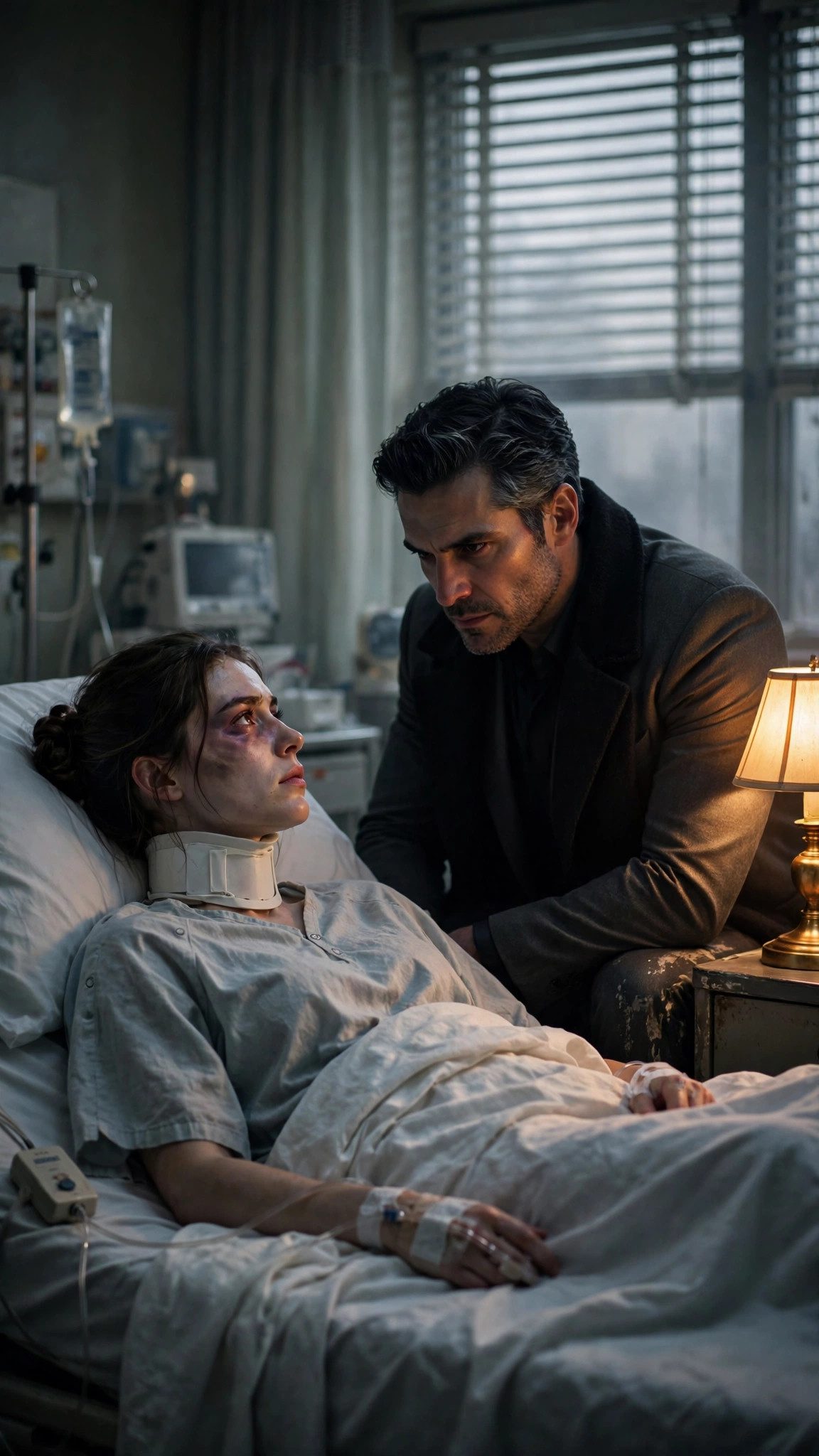
She drove to West End General Hospital, and she walked into the room where she had woken up with two cracked ribs and a fracture near her eye, and she stood beside the empty bed, and she looked out the window at the gray morning light, and she thought about the woman she had been that morning: frightened, hurt, alone, and certain that her life had been broken.
Then she walked downstairs to the hospital's foundation office, and she signed a check for one million dollars, from the Moretti Foundation, to fund a new program for victims of violent crime: free legal help, free counseling, free medical care, and a safe place to stay while they healed.
She named it after no one. She did not need to. Everyone who mattered already knew what it was for.
That evening, she came home to the house on the lake, and Dante was waiting for her in the garden, and there was a letter on the table, and he handed it to her with a small smile.
"What is this?" she asked.
"Read it," he said.
She opened the envelope. Inside was a single sheet of paper, in a handwriting she recognized immediately, because she had seen it on a hundred birthday cards and a thousand grocery lists.
It was from her mother.
"My dearest Harper," it read. "Your father used to say that Chicago was built on the river, and that whoever controlled the river controlled the city. He was wrong about one thing. He thought the river was the most important thing. It isn't. The most important thing is the person who stands beside you when the river rises. I am so glad you found yours. I love you. Mom."
Harper folded the letter carefully and put it back in the envelope, and she looked at Dante, and he looked at her, and neither of them said anything, because there was nothing left to say.
Later that night, after dinner, they sat on the porch and watched the stars come out over the lake, and Dante took her hand, and he said, "Do you ever think about the message?"
"Every day," she said.
"And?" he asked.
"And I think about the answer," she said. "Castellano sent a message through me. He told you the docks were his. He told you to pull your bid, or next time they wouldn't stop at your secretary."
She turned to look at him, and the starlight caught her face, and she smiled.
"But here is what he did not understand," she said. "I was never just his message. I was always your answer. And my answer was this: the docks are ours. The vote is won. I am still here. And I am not a secretary anymore. I am your wife."
Dante leaned over, and he kissed her, soft and slow, under the stars, and the lake moved dark and quiet below them, and the house behind them was warm and lit, and Harper Bennett Moretti closed her eyes and thought about the long road that had brought her here: the alley, the hospital, the courtroom, the garden, and all the mornings in between.
A year ago, three men had beaten her in an alley and told her to deliver a message.
She had delivered it.
And then she had spent the rest of her life answering it.
And somewhere far away, in a small gray cell, Vincent Castellano read about the waterfront in a newspaper, and he understood, too late, that the secretary he had tried to use as an envelope had become the one person in Chicago he could never frighten again.
The End.
THE END