Six months later, on a bright morning in late spring, Maxwell Rourke stood up.
He did not stand up all at once. He stood up the way he had learned to do everything in the last six months: slowly, carefully, with his hands on the parallel bars in the therapy room at Harborview, with Martha beside him counting, with his jaw set and his eyes fixed on the far wall.
"One," Martha said. "Two. Three."
He rose. His legs shook. His right knee bent and straightened, bent and straightened, like a machine remembering how to work. His left leg trembled, but it held. Sweat ran down his face. His hands gripped the bars so hard his knuckles went white.
"Four," Martha said. "Five."
He stood. For ten seconds, he stood, swaying slightly, his feet flat on the floor, his weight on his own two legs for the first time in twenty months.
Then he sat down, hard, in the wheelchair, and laughed — a great, startled, joyful laugh that filled the therapy room and brought Grace Okafor running from the next room to see what had happened.
"He stood," Martha said. She was crying, and she did not care who saw it. "He stood for ten seconds."
Grace looked at Maxwell, and then at Martha, and then at the blue notebook on the table, full of maps and temperatures and toe movements, and she shook her head slowly.
"I have worked in rehabilitation for fifteen years," Grace said. "I have never seen a recovery like this. Not the legs. The legs are remarkable, but they are not the miracle." She put her hand on Martha's shoulder. "The miracle is that someone was in the room when it started happening, and she wrote it down."
The standing became walking. The walking became a walker, and then a cane. By the end of the summer, Maxwell could walk the length of the garden at Rourke House with a cane in his right hand and Martha's arm in his left. By the autumn, he could walk it with the cane alone.
The house changed, too. Victor was gone — sentenced to life in prison, no parole, on the testimony of Cole Bennett, Eddie Krol, and the bank records that led from Bellini Holdings to Vincent Castellano. The illegal side of the Rourke family was finished, dismantled piece by piece, the way Maxwell had promised the council it would be, fourteen months and one bullet ago. The docks were inspected now. The trucking companies paid their taxes. The warehouses held what their manifests said they held. The family was smaller, and poorer, and cleaner than it had ever been — and Maxwell, walking through the garden with a cane, said it was the first time in his life he had been proud of his own name.
Martha's life changed, too. The Rourke family established a rehabilitation wing at Harborview, in the same building where she had worked for six years, and they named it for Walter Abernathy — the retired schoolteacher who liked crossword puzzles, the patient whose death had cost Martha her license and whose name, finally, was attached to something that healed people instead of hurting them. Martha ran the wing. She hired the therapists. She wrote the protocols. She kept the notebooks, in handwriting so clear and careful that no one would ever be able to call them a lie.
And on the first Saturday of October, in the garden at Rourke House, under the same trees where Victor had once walked past her without a glance, Martha Kovak married Maxwell Rourke.
It was a small wedding. Rosa cooked. Tony drove the car. Miss Delaney arranged the flowers and cried twice, once during the vows and once during the first dance. Grace Okafor sat in the front row with the blue notebook in her lap, because Martha had insisted it be there — not as a decoration, but as a witness.
Maxwell walked down the garden path on his own two legs, with a cane in his right hand and nothing in his left, because he did not need anything in his left. He walked slowly, and his gait was uneven, and his left foot dragged just a little on the gravel, and it was the most beautiful thing Martha had ever seen.
At the altar — a simple wooden arch covered in white roses — he stopped, and he looked at her, and he said, in a voice low enough that only she could hear it, "Six months ago, you told me a foot that moves is a foot that can walk."
"And a man who can walk," Martha said, "can stand up in front of the people who tried to bury him and tell them the truth."
"I did," Maxwell said. "And now I am standing here."
They were married as the late afternoon sun came through the trees, and when the minister said, "You may kiss the bride," Maxwell set his cane aside, very carefully, and took Martha's face in both his hands, and kissed her, standing on his own two feet, in the garden of the house where he had once been a prisoner in his own chair.
Maxwell proposed on a Tuesday evening in September, in the garden, at the end of the path where he had once sat alone in his wheelchair looking out at the water.
Martha had come out to the garden to call him in for dinner, and she found him standing by the low stone wall, with his cane in his right hand and a small box in his left. He was standing without the cane touching the ground — just holding it, the way a man holds something he no longer quite needs but is not ready to put down.
"Martha Kovak," he said, "I have practiced this three times, and every time I have made a mess of it, so I am going to say it plainly. Fourteen months ago, I was shot for trying to make my family honest. Six months ago, a woman I had never spoken to walked into my bathroom and told me the water was too hot. Today, I can walk the length of this garden on my own two legs, and I can feel the gravel under my feet, and I can feel the cold when the wind comes off the water, and I owe all of it to you."
He opened the box. Inside was a ring — simple, gold, with a single small diamond that caught the evening light.
"I am not a good man," he said. "I have done things in my life I am not proud of, and I have a name that has hurt people. But I am trying to be a better one, and I would like to try for the rest of my life, with you, if you will have me."
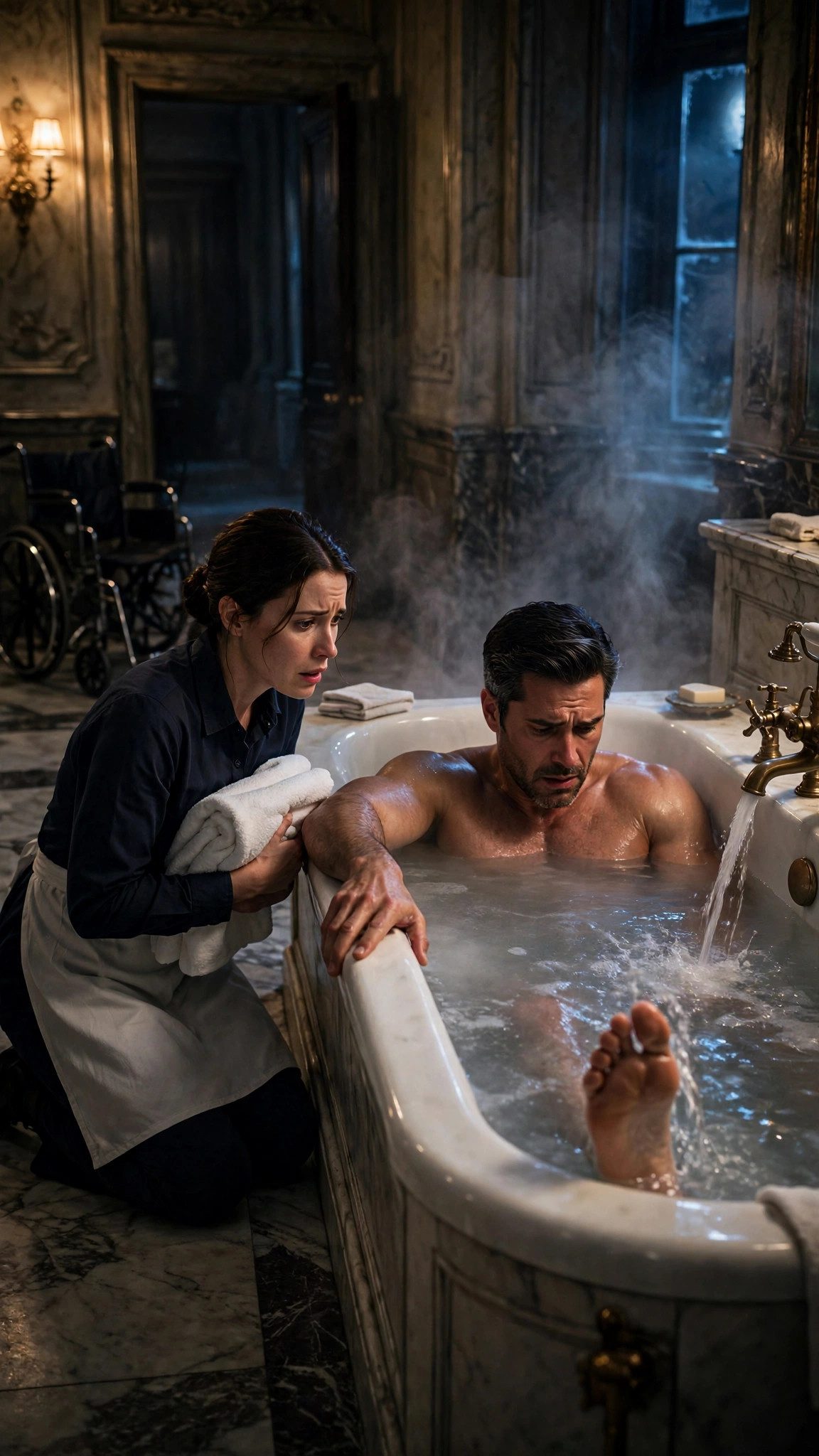
Martha looked at him — at the man who had once been afraid in a bathtub full of steam, who had hidden his healing for four months, who had trusted her with the truth when he trusted no one else in the world.
"Yes," she said.
He took her hand, and he slid the ring onto her finger, and his hands were steady, and hers were not, and they stood there in the garden as the evening darkened over the water, and neither of them said anything at all for a long time, because there was nothing left that needed saying.
The wedding took a month to plan, and Miss Delaney planned most of it, with the brisk efficiency of a woman who had run Rourke House for thirty years and considered a wedding a small matter beside a Tuesday visit from Victor. Rosa cooked for a week. Tony polished the car until it shone like a mirror. Grace Okafor came from Harborview with the blue notebook in her bag, because Martha had asked her to bring it, and because some witnesses are more important than others.
On the morning of the wedding, Martha stood in the small staff room on the second floor — the same room where she had once slept with the door locked, listening to the house settle around her — and she looked at herself in the mirror in a simple ivory dress, with her hair down for the first time since she had come to Rourke House, and she thought about the road that had brought her here. The hearing. The revoked license. The two years of cleaning rooms. The towels. The steam. The foot that had pulled away from cold water.
Miss Delaney came in with a pair of pearl earrings and a look on her face that Martha had never seen before — something soft, and proud, and almost maternal.
"My sister was in Harborview," Miss Delaney said, fastening the earrings for her. "After her hip. The nurses there were kind to her. You were kind to this house, Miss Kovak, in a way no one else has ever been. You checked the water." She stepped back and looked at Martha in the mirror. "You look beautiful. Now go downstairs and marry that man before he wears a hole in the garden path with his pacing."
Martha went downstairs. She walked out into the garden, where the white roses were thick on the arch and the late afternoon sun came through the trees, and Maxwell was waiting for her at the end of the path, standing on his own two legs, with a cane in his right hand and nothing in his left, because he did not need anything in his left.
The Abernathy Wing opened in January, in the same building where Martha had worked for six years, on the same floor where Walter Abernathy had once finished a crossword puzzle and held it up for her to see, proud as a schoolboy.
Martha stood in the doorway of the new therapy room on the first morning and looked at the parallel bars, and the treatment tables, and the shelves full of notebooks — blue notebooks, all of them, because Martha had ordered blue ones, and because some habits are worth keeping — and she felt something she had not felt in two years. Not relief. Not triumph. Something quieter. The feeling of a door closing behind her, and another one opening in front of her.
The first patient was a young man of twenty-three who had fallen off a scaffolding and could not feel his left leg. Martha sat beside him on the first day, and she took out a tuning fork, and a cotton ball, and a safety pin, and she said, "We are going to map this together. Slowly. Carefully. And we are going to write everything down, because a record is the only thing that protects both of us."
Maxwell came to the opening ceremony in a suit, walking with the cane, and he stood beside the plaque on the wall — Walter Abernathy Rehabilitation Wing — and he read the name aloud, slowly, the way a man reads a name he wants to remember.
"He was a schoolteacher," Martha told him. "He liked crossword puzzles. He called me 'dear.' And his death cost me my license, and his name is on this wall now, and that is how it should be. Because a man's name should be attached to something that heals people, not something that hurts them."
Maxwell took her hand. "Then this is his room now," he said. "And it is yours. And no one is ever going to take it away from either of you again."
In the months that followed, the wing filled up. Patients came from all over Rhode Island — from car accidents and falls and surgeries gone wrong — and Martha hired the therapists herself, and she trained them the way she had been trained, and she told them on their first day, every time, the same thing: "Write it down. All of it. Dates, times, numbers, in order. Because a record built on facts is a record no one can call a lie."
And every evening, she went home to Rourke House, where Maxwell was waiting for her, and they ate dinner together, and they talked about the day, and the house that had once been a prison felt, more and more, like a home.
One year later, on a bright morning in late spring, Martha stood in the therapy room at the Abernathy Wing and watched a young man take his first steps on new legs, with a therapist counting beside him and a blue notebook open on the table.
"One," the therapist said. "Two. Three."
The young man rose. His legs shook. His hands gripped the bars. And Martha, standing in the doorway with her own notebook in her hands, thought about a bathroom full of steam, and water that was too hot, and a foot that pulled away from the cold, six inches, maybe less.
Enough.
She stepped into the room then, and she put her hand on the young man's shoulder, and she said the words she had said to every patient she had ever believed in, in the same calm voice she had used in that bathroom so long ago: "Again. You can do it again. Your body remembers. You just have to give it a reason to remember."
The young man nodded. He took a breath. He tried again. And his foot moved — just a little, just enough — and Martha wrote it down in her notebook, in handwriting so clear and careful that no one would ever be able to call it a lie.
She went home that evening to Rourke House, where Maxwell was waiting for her in the garden, walking without the cane now, his gait still uneven, his left foot still dragging just a little on the gravel. He held out his hand to her, and she took it, and they walked together toward the house, slowly, side by side, the way two people walk when they have all the time in the world and nowhere else they would rather be.
Behind them, the sun set over the water. In front of them, the lights of the house came on, one by one, warm and steady. And in Martha's bag, beside her lunch and her spare apron, sat a blue notebook, full of maps and temperatures and toe movements — the record of a man who had come back to life, and a woman who had gotten her life back, written down in handwriting so clear and careful that no one would ever be able to call it a lie.
The End.
THE END