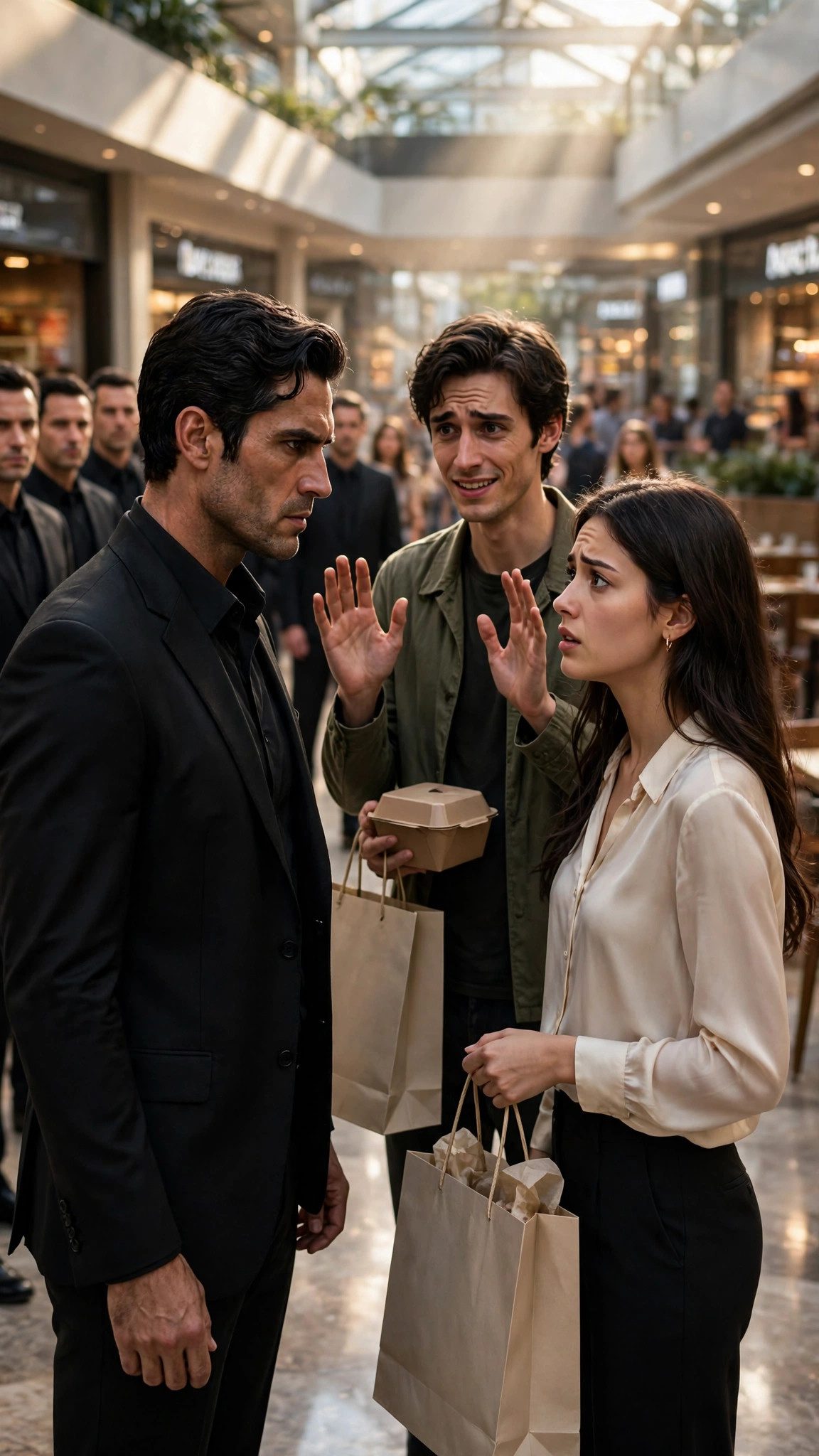
Six months after the day Vincent Castellano was led out of the Huntington conference room in handcuffs, I stood in the garden of the house on Lake Shore Drive, wearing a white dress, holding a bouquet of white roses, and waiting to marry my husband for the second time.
The first time, I had married him in a cathedral full of strangers, in a dress my father's tailor had chosen, with a brother who could not come and a best friend who was told not to call and a husband who looked at me for four seconds and said, "She will do."
The second time, I married him in a garden I had planted myself — roses along the south wall, lavender by the kitchen door, a small herb garden that Mrs. Okafor tended with great seriousness and even greater pride — in a dress I had chosen myself, with my brother standing beside me as my witness, my best friend Priya holding my bouquet before the ceremony, and a husband who had spent the morning asking me, three times, whether I was sure, whether I was happy, whether the roses were the right ones.
"They are the right ones," I had told him, the third time. "They are white. White roses mean new beginnings. I looked it up."
"You looked it up," Julian said, and he smiled — a real smile now, not the rusty laugh of a man opening a door that had been shut too long, but a smile that came easily, the smile of a man who had learned how to be happy in his own house.
Daniel stood at the front of the garden, in a suit that actually fit him this time, holding the rings, and when I walked down the path between the rows of white chairs, he winked at me, and I laughed — the loud, helpless, undignified laugh that had started all of this, the laugh I had not laughed for six weeks before that Tuesday in the mall — and the guests turned to look, and I did not care, because this time, the man watching me laugh was not deciding whether to kill someone. He was deciding whether to cry.
Julian met me at the end of the path. He took my hands. His hands were warm, and large, and calloused, and they held mine gently, as if I were something precious, and he looked at me — really looked at me, the way he had learned to look at me over the past six months, the way a man looks at a woman he actually knows — and he said, very quietly, so that only I could hear it, "You look beautiful. Blue is your favorite color. Your favorite food is your mother's chicken soup. Your best friend is Priya, from Evanston. Your brother is Daniel, and he is standing right there, and he is not going anywhere. And I know all of that, because I asked."
I laughed again, and then I cried, just a little, and then I laughed again, because that was the kind of day it was.
The ceremony was short. We said the words — new words, our own words, not the words from the first wedding, which had been chosen by lawyers and signed by families. Julian said, "I promise to ask. I promise to listen. I promise to know you, every day, for the rest of my life." And I said, "I promise to tell you. I promise to laugh. I promise to let you know me, every day, for the rest of my life." And Daniel handed us the rings, and Priya cried, and Mrs. Okafor cried, and even Mr. Huntington, sitting in the second row, wiped his eyes with a handkerchief and pretended he had something in them.
After the ceremony, there was dinner in the garden, under strings of lights that Daniel and Julian had hung themselves the day before — badly, both of them admitted, but with great enthusiasm — and there was dancing, and there was cake, and there was a toast from Daniel that made everyone laugh and then made everyone cry, because he said, "My sister married a man who did not know her. And then that man decided to learn. And that is the bravest thing I have ever seen anyone do."
Later, when the guests had gone and the lights were still swaying in the garden and the night was warm and full of the smell of roses, Julian and I sat on the steps of the house, and he put his arm around me, and I leaned against him, and we looked out at the garden — my garden, our garden — and he said, "Do you remember the first time I asked you what you ate for breakfast?"
"Toast with strawberry jam," I said. "And too much coffee."
"And do you remember what you said to me in the mall, that first day? When I told you to stop, and you said I was very persuasive?"
"I remember," I said.
"I was not persuasive," Julian said. "I was terrified. I had just seen the woman I married laughing with a man I did not know, and I thought I was losing the only thing in my life that I had not chosen for business. And then I found out that the man was your brother, and that I did not know you had a brother, and that I did not know anything about you at all, and I was more terrified than I had ever been in my life. Not of losing you. Of having already lost you, six months ago, on the day I told you I did not expect conversation."
I took his hand. "You did not lose me," I said. "You never lost me. You just had not found me yet."
He was quiet for a moment. Then he said, "I found you in a food court. You were laughing. And I decided to kill the man who made you laugh. And that man turned out to be your brother. And your brother turned out to be the best man I have ever met. And you turned out to be the best thing that ever happened to me. That is a strange story, Audrey."
"It is our story," I said. "And I like it."
The next morning, I woke up early, and I went down to the kitchen, and Julian was already there, standing at the counter, making toast. The third slice was golden and perfect. He put strawberry jam on it. He set it in front of me, with a cup of coffee beside it. Too much coffee, the way I liked it.
"Toast with strawberry jam," he said. "And too much coffee."
"Thank you," I said.
And then I went to the library, and I took out my sketchbook — the one I had kept since I was twelve — and I turned to a fresh page, and I drew the three of us at breakfast, eating pancakes, Daniel on his third, Julian burning the toast, me laughing. I drew it slowly, carefully, the way I drew everything that mattered. And when I was finished, I showed it to Julian, and he looked at it for a long time, and he said, "That is us. That is exactly us."
Daniel came home for Christmas that year, and the year after that, and the year after that. Priya came for dinner every Sunday. My father came for the first time in two years, and he and Julian sat in the library for three hours, and when they came out, my father shook Julian's hand, and he said to me, "Your husband asked me about your mother. No one has asked me about your mother in seven years."
The Sterling organization changed, too. Slowly, the way a large ship changes course — not all at once, but steadily, and then, one day, you look up and realize you are sailing in a different direction. Julian legitimized the family businesses, one by one, the shipping routes, the warehouses, the mall agreements. He kept the men who were loyal, and he let go of the men who were not. He built a foundation in my mother's name, for children who had lost a parent, and he put Daniel on its board, because Daniel understood what it meant to lose someone and keep going.
And me? I kept painting. I kept laughing. I kept telling my husband everything — about my mother, about my childhood, about the summer Daniel nearly sank the boat, about the sketchbook, about the garden, about the things I wanted and the things I feared. And he kept asking. Every day, he asked. What did you dream about? What do you want for dinner? What are you painting today? What made you laugh? What made you sad? Small questions, careful questions, the questions of a man learning a language, one word at a time.
People in Chicago still tell the story of the day Julian Sterling lost control in a shopping mall. They tell it as a story about a mafia boss who nearly killed a stranger over his wife. But that is not the story. That is only the first page.
The real story is about a man who married a name, and woke up one morning to discover that the name had a brother, and a best friend, and a favorite color, and a laugh he had never heard before — and who decided, on that morning, to learn everything else.
The real story is about a woman who laughed in a food court, and changed her husband's life with a single sound.
And the real story ends the way all the best stories end: not with a punch, and not with a threat, and not with a man announcing to a crowd that a woman belongs to him — but with a man standing in a kitchen, making toast, and asking his wife what she wants for breakfast.
Because that is what it means to know your wife.
We went on a honeymoon, of sorts, a month after the garden wedding — not to Paris or Rome, but to the lake house. Julian had bought it back, as he had promised in the car that night, and Daniel came with us for the first weekend, and Priya came for the second, and Mrs. Okafor sent us off with a basket of food and strict instructions to eat properly and rest.
The lake house was smaller than I remembered, and shabbier, and more beautiful than any place I had ever seen. The beach was still there. The water was still cold. The sun still set over the lake in a way that made the whole sky turn gold and pink and then deep, dark blue. On our first evening there, Julian and I walked down to the water, and he took off his shoes, and he stood in the shallows in his bare feet, a mafia boss in rolled-up trousers, laughing, and I laughed too, and I thought about the photograph — the boy of ten with the bucket, the girl of seven with sand in her hair — and I thought about how strange and wonderful it was that a life could come full circle like that, that a woman could stand on the same beach where she had been a happy child, holding the hand of a man who had once been a stranger, and feel, for the first time in her adult life, completely at home.
On the first anniversary of the garden wedding, Daniel gave a toast that made everyone cry. He said, "A year ago, my sister married a man who did not know her. Today, that man knows her favorite color, her favorite food, the name of her best friend, and the fact that she burns toast when she is nervous. He knows that she laughs too loudly and cries at sad movies and talks to her plants. He knows her. And she knows him — that he is stubborn, and proud, and afraid of toasters, and that he loves her more than he loves his own pride. That is not an arranged marriage. That is a real one."
And on the second anniversary, I finished the sketchbook — the one I had kept since I was twelve — with a drawing of the three of us at breakfast, eating pancakes, Daniel on his third, Julian burning the toast, me laughing. I showed it to Julian, and he looked at it for a long time, and he said, "That is us. That is exactly us." And then he took out a new sketchbook, blank pages, and he set it on the table beside the old one, and he said, "Start another one, Audrey. We have a lot of years left to draw."
We did. We are still drawing it, one page at a time, one breakfast at a time, one question at a time. And every morning, Julian makes the toast — golden and perfect now, he has learned — and he sets it in front of me with strawberry jam and too much coffee, and he says, "Toast with strawberry jam. And too much coffee." And I say, "Thank you." And that is how every day begins, in a house with eleven bedrooms, and a garden full of roses, and a family that finally, finally knows each other.
In the third year of our marriage — our real marriage, the one that began in a garden under strings of lights — Julian gave me a gift. It was not jewelry, although he had given me jewelry before, and it was not a house, although he had already bought back the lake house. It was a small, leather-bound book, and inside it, on the first page, in his own handwriting, were the words: "Everything I know about my wife." And on the pages that followed, in his careful, blocky handwriting, were the facts he had learned, one by one, over three years: her favorite color is the blue of the lake before a storm; her favorite food is her mother's chicken soup; her best friend is Priya, from Evanston; her brother is Daniel, and he is a surgeon, and he makes terrible toast; she laughs too loudly and cries at sad movies and talks to her plants; she is afraid of thunderstorms and loves the rain; she paints the lake when she is happy and the sea when she is sad; she is brave in a way that frightens me, and kind in a way that humbles me, and she is mine, and I am hers, and I know her.
I read the whole book in one sitting, crying, and when I finished, I closed it, and I held it against my chest, and I said, "You know me." And Julian said, "I know you. Finally. I know you." And that was the best gift anyone had ever given me — not the book, but the knowing.
The End.
THE END