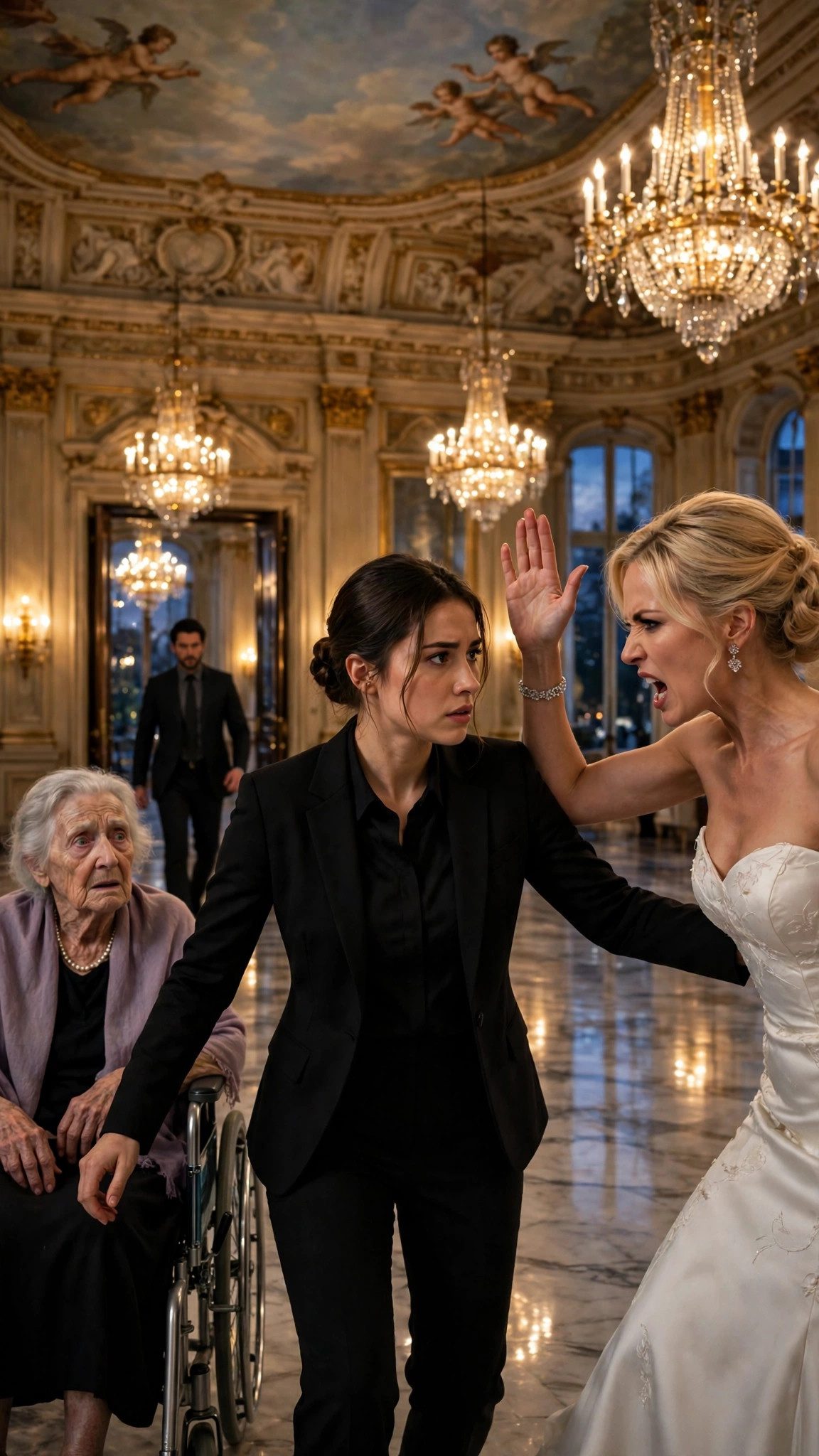
The Whitmore House had been dying for five years before Julian Cross bought it, and everyone who worked there knew it, even if no one said it out loud.
We said it in other ways. We said it when the boiler rattled so hard in January that the guests on the third floor complained, and my father stuffed rags into the pipes and prayed for spring. We said it when the roof leaked over the library and Rosa Delgado put a bucket under the drip and emptied it every morning like a ritual. We said it when the bank sent its letters, thin white envelopes with the kind of handwriting that means trouble, and I hid them in the bottom drawer of my desk so my mother would not see them and worry.
My mother worried anyway. Mothers always know.
"Emma," she said to me one cold morning in March, standing at the kitchen door with her bucket in one hand and her bad knee bent at an angle that made my chest hurt. "If the house goes, where do we go? Your father and I have lived here for twenty-three years. We do not know how to live anywhere else."
"We are not going anywhere," I told her, and I took the bucket out of her hand, and I carried it up the stairs myself, because her knees were shaking and the stairs were steep and I was not going to let her fall. "The house is not going anywhere. I will not let it."
That was a promise I had no right to make. The bank owned the house, not me. The bank owned the gardens and the ballroom and the roof that leaked, and the bank was going to sell all of it to the highest bidder, and the highest bidder was going to tear it down and build condominiums with a view of the river. I knew it. My father knew it. The whole staff knew it. We just did not say it, because saying it would have made it real.
Then the email came. Cross Holdings. Friday. Have the books ready.
I spent three days getting the books ready, and I do not think I slept for any of them. I went through every ledger and every invoice and every payroll sheet, and I wrote a letter to the new owner, a letter I never sent, explaining that the hotel was not just a building, that it was a home for twenty-one people, that my parents had given it their whole lives, that the roses in the garden had been planted by my father's own hands. I wrote it and I tore it up, because men who buy hotels out of bankruptcy do not read letters from hotel managers. They read numbers. And our numbers were terrible.
On Friday, it rained. It rained the way it only rains in the Hudson Valley in the spring, hard and cold and sideways, and the river went gray, and the gardens went dark, and I stood at the front door in my black manager's suit with my hair pulled back and my hands folded in front of me, the way I had been taught to stand when important guests arrived. Behind me, the whole staff stood in a line in the lobby, housekeepers and cooks and gardeners and waiters, all of us in our uniforms, all of us waiting to find out if we still had jobs.
The black cars came up the drive at four o'clock. Three of them, long and dark and silent, the kind of cars that cost more than any of our salaries combined. The doors opened, and two men in black suits got out first, and they looked at the house the way soldiers look at a building they are about to search. And then Julian Cross got out of the middle car, and I understood, in one look, why powerful men lowered their voices when they said his name.
He was tall, taller than any man I had ever stood next to, with dark hair going gray at the temples and eyes the color of the river on a cloudy day. He wore a black suit that fit him like it had been sewn onto him, and a white shirt with no tie, and he moved the way a man moves when he has never once in his life been afraid of anything. He did not look at me. He looked at the house. He looked at the porch and the windows and the gardens going dark in the rain, and his face did not change at all.
"Show me everything," he said. "All of it."
So I showed him everything. I showed him the lobby with its marble floor and its chandelier, and the ballroom with its painted ceiling, and the library where the roof leaked, and the kitchens where my mother had worked since she was nineteen. I showed him the boiler room where my father had stuffed rags into the pipes, and the staff quarters where my parents had lived for twenty-three years, and the little office off the kitchen where I kept the books. I showed him the gardens, even though it was raining, because the gardens were the most beautiful part of the house, and I wanted him to see them before he decided to tear them down.
He did not say much during the tour. He asked questions, short ones, in a voice so low I had to lean in to hear him. How many rooms? How many staff? How much does the boiler cost to replace? How old is the roof? And then, at the end, in the garden, with the rain coming down on the roses, he asked me the question I had been dreading.
"Why is this place still standing?" he said. "The books say it should have died five years ago."
I could have lied. I could have told him about the occupancy rates and the wedding bookings and the corporate retreats. But I was tired, and I was wet, and my mother's knees were shaking on the stairs that morning, and I told him the truth.
"Because the people who work here love it," I said. "Because my mother climbs those stairs every morning on knees that do not work anymore. Because my father prunes roses nobody pays him to prune. Because I have not taken a day off in three years. Because this house is not a building to us. It is our home."
He looked at me for a long time. The rain ran down his face, and he did not wipe it away, and his gray eyes did not give anything away.
"Then you will run it," he said. "You will run it, and I will pay for the roof and the boiler, and no one here loses their job. That is the arrangement. Do you accept?"
I accepted. I signed the papers, and he signed the papers, and The Whitmore House belonged to Julian Cross, and I belonged to The Whitmore House, and for a year, that was enough.
For a year, the hotel came back to life. The roof was fixed. The boiler was replaced. The gardens bloomed. My mother got a new cart so she did not have to carry her bucket up the stairs. My father got a boy to help him with the heavy work. The ballroom was painted, and the chandeliers were cleaned, and the weddings came back, one after another, brides in white dresses dancing under the painted sky.
And Julian Cross came once a month, always on a Friday, always in the rain or the sun, always with his two men in black suits behind him. He walked through the rooms and he looked at the books and he never said very much. But he always stopped in the library, where Eleanor Cross sat by the window in her wheelchair, and he always knelt down beside her, and he always took her thin old hand in both of his, and he always asked her the same question.
"How are you, Grandmother?"
And Eleanor, who was eighty years old then, would smile up at him with her sharp blue eyes, and she would say, "I am fine, Julian. The girl reads to me. She has a lovely voice. You should listen to her sometime."
The girl was me. I read to Eleanor every evening, after the dinner service, in the library, while the light went down over the river. I read her novels and poetry and old magazines, and sometimes she listened, and sometimes she fell asleep, and sometimes she held my hand and told me stories about Julian when he was a boy, stories about a little boy who was afraid of thunderstorms and who hid under his grandmother's bed, stories about a young man who had lost his parents and had decided, at seventeen, that he would never need anyone ever again.
"He built walls around himself," Eleanor told me one evening, her voice clear and sharp, the way it got when the fog lifted. "My grandson built walls so high that no one could climb them. Not his mother. Not his father. Not me. But walls keep people out, Emma. They also keep a person in. Remember that."
I remembered it. I just did not understand what it meant, not yet.
In the second year, everything changed. Julian came to the hotel on a Friday in June, and he was not alone. Beside him, stepping out of the black car in a white dress and high heels that sank into the gravel of the drive, was the most beautiful woman I had ever seen.
Vivian Calder was twenty-nine years old, with blonde hair that fell to her shoulders in perfect waves and blue eyes the color of a summer sky and a smile that never quite reached her eyes. She wore a white dress that cost more than my mother's whole year of wages, and she carried a small white dog in a bag that cost more than my father's truck. She looked at The Whitmore House the way a woman looks at a dress in a shop window, trying to decide if it is worth the price.
"Julian, darling," she said, her voice high and bright. "It is charming. In a rustic sort of way. We will have to redo everything, of course, but the bones are good."
Julian did not answer. He looked at me, standing at the front door in my black suit, and he said, "Emma, this is Vivian Calder. We are engaged. The engagement party will be held here, in the ballroom, in three weeks. You will be in charge of all of it."
"Of course, Mr. Cross," I said, and I lowered my head, the way I had been taught to lower my head when important guests arrived.
But inside, something cold settled in my stomach, because I had seen the way Vivian Calder looked at the house, and I had seen the way she looked at the staff standing in the lobby, and I had seen the way she looked at my mother, standing at the back of the line with her bucket and her bad knees, and I knew, in the way you know things without anyone telling you, that this woman was going to be trouble.
That night, after the dinner service, I read to Eleanor in the library, and she was restless, turning her head toward the door, listening for footsteps in the hallway.
"She is here," Eleanor whispered. "The Calder girl. I knew her mother. Her mother was the same. Beautiful and cold and always counting what things cost."
"Grandmother," I said gently, "it is just an engagement. Mr. Cross is happy. That is what matters."
Eleanor looked at me then, and her eyes were clear, clearer than I had seen them in weeks, and she took my hand with her thin, cold fingers, and she squeezed it so hard it hurt.
"Emma," she said. "You are not just a maid. You are the best thing that has ever happened to this house. And one day, my grandson is going to see it. One day, he is going to look at you the way he looks at the river. Like you are the only thing in the world that is real."
I laughed it off. I told her she was being silly. I told her Julian Cross was engaged to a beautiful woman from a rich family, and that I was the hotel manager, and that the two things had nothing to do with each other.
But Eleanor just smiled, and she said, "We will see, Emma. We will see."
And then she closed her eyes, and the fog came back, and she forgot what she had said, and I kept reading, and the evening went on, and I told myself that an eighty-one-year-old woman's dreams were just dreams.
Three weeks later, Vivian Calder moved into the hotel to plan her engagement party, and the dreams ended, and the trouble began.
She arrived with twelve suitcases and a team of wedding planners and a small white dog that barked at everyone, and within one day she had rearranged the lobby furniture, fired the florist, and told Rosa Delgado that the housekeepers' uniforms were "depressing" and needed to be replaced with something "more elegant." She walked through the kitchens and wrinkled her nose at the smell of bread baking. She walked through the gardens and told my father that the roses were "the wrong color." She stood in the ballroom and told me, in front of the whole staff, that the painted ceiling was "tacky" and that she wanted it covered with white fabric for the party.
"The ceiling stays," I said. It was the first time I had ever said no to a guest, and my voice shook when I said it. "The ceiling is original to the house. It has been there for a hundred and forty years. It stays."
Vivian looked at me for a long moment, and her blue eyes went cold, and she smiled, the way a cat smiles at a bird.
"We will see about that, Emma," she said. "We will see about a lot of things."
That was the first warning. There were more. She sent my mother's cleaning cart back to the storage room because it "ruined the look of the hallway." She told the cooks that their food was "too heavy" and ordered a new menu from the city. She stood in the doorway of my little office and looked at the books on my desk, and she said, "It is a shame, really. A girl with your face, working in a place like this. You could have been something, if you had any ambition at all."
I said nothing. I had spent my whole life learning how to disappear into a room without making a ripple, and I disappeared. I went back to my work, and I planned her party, and I ordered the flowers and the champagne and the string quartet, and I told myself that three weeks would pass, and the party would be over, and Vivian Calder would go back to the city, and the house would be quiet again.
But the morning of the party, everything changed. The morning of the party, Vivian Calder's diamond engagement ring went missing. And by noon, the whole hotel knew that someone had stolen it. And by one o'clock, the security men were searching my locker.
And that was when I understood that Vivian Calder had not come to The Whitmore House to plan a party. She had come to destroy someone. And she had chosen me.