It was a Saturday in June, six months after the night in the hospital, and the garden behind Dante's house in the North End was full of white lilies and sunlight, and Noah was running — really running, on his own two feet, wobbling and laughing — across the grass in a tiny blue suit, chasing a butterfly.
I stood at the edge of the garden in a white dress, and I watched him, and I thought about how much had changed. Six months ago, my son had been a secret, hidden in a nine-hundred-dollar apartment. Today, he was the center of the world, and the whole world knew it.
Dante came up behind me and put his arms around my waist, and he kissed the top of my head, and he said, "Are you ready?"
"Ready for what?" I asked, though I already knew. I had known for weeks. I had known since the night in the nursery, when he had asked me to stay, and I had said yes, and we had both known it was not only for Noah.
"To marry me," Dante said. "For real this time. Not a deal. Not an arrangement. Not a mistake. A wedding. In this garden. With Rosa and Mrs. Darrow and Noah and everyone we love. Will you marry me, Mariah Cole?"
I turned around in his arms, and I looked up at him, and I thought about the library gala, and the borrowed dress, and the dance, and the one night, and the envelope, and the fourteen months, and the hospital, and the birthmark, and everything that had brought us here, to this garden, on this perfect June morning.
"Yes," I said. "Yes, I'll marry you."
He kissed me then, properly, in the sunlight, while Noah chased his butterfly and Rosa cried happy tears into her handkerchief, and Mrs. Darrow clapped her hands like a girl.
The wedding was small. Rosa insisted on making the sauce. Mrs. Darrow insisted on making the cake. Noah was the ring bearer, and he carried the pillow very seriously for about ten seconds before he dropped it and ran off to chase a pigeon, and everyone laughed, and Dante laughed hardest of all.
I wore my mother's pearls. They were the only thing of hers I had left, besides the book of poems with her handwriting in the margin, and I wore them, and I felt her there with me, in the garden, smiling.
Dante wore a black suit, and he looked beautiful, and when the priest asked him if he took me to be his wife, he said, "I do," in a voice so clear and so sure that the whole garden seemed to hold its breath.
And when the priest asked me, I said, "I do," too, and I meant it with my whole heart.
After the ceremony, we danced in the garden, to the same slow, sad song the band had played at the library gala, and Dante held me close, and he whispered in my ear, "Do you remember the first night we danced?"
"I remember," I said. "You asked me to dance, and I said yes, because my mother always told me to say yes to a dance."
"Your mother was a wise woman," Dante said. "And I am going to spend the rest of my life being grateful that you listened to her."
Noah fell asleep in Rosa's arms halfway through the dancing, and Mrs. Darrow took him upstairs to bed, and the guests drifted away, one by one, until it was just Dante and me in the garden, under the string lights, with the lilies glowing white in the dark.
"There's something I want to show you," Dante said, and he took my hand and led me to the back of the garden, where a small stone bench stood under an old oak tree. Carved into the bench, in careful letters, were two names: Antonio Russo and Rosa Russo. And underneath, in smaller letters, freshly carved: Dante Russo and Mariah Russo. And underneath that, in the smallest letters of all: Noah Russo.
"My father had this bench made when he married my mother," Dante said. "He said that a family is like a tree. It grows slowly, and it needs strong roots, and it needs someone to tend it, and if you do it right, it will outlast you. I had our names added this morning. So that one day, when Noah is old enough to read, he can come here and see that he belongs to something. That he has roots. That he has a family."
I touched the carving, and I traced the letters of my son's name with my finger, and I thought about the crescent moon on his shoulder, and the moon over the harbor, and my mother's words, and I understood, finally, what she had meant.
The moon is always there, even when you can't see it. Love is like that, too. It is always there, even in the darkest nights, even when you are running, even when you are afraid. It waits for you. It finds you. It brings you home.
We spent our honeymoon at a small cottage on Cape Cod, the same one where the Darrow family used to summer, with a porch that looked out over the water and a kitchen barely big enough for two. Rosa and Mrs. Darrow watched Noah, and Dante and I had seven whole days alone together, the first seven days we had ever had that belonged entirely to us.
We walked on the beach in the mornings, and we cooked dinner together in the evenings, and we talked. We talked about everything: about his father, about my mother, about the fourteen months, about the future. Dante told me about the first time he saw the ocean, when he was six years old, and how his father had held him up so he could see over the dunes. I told him about the bookstore, and about the afternoons I spent doing my homework behind the counter, and about the day my mother taught me to shelve books by the author's last name, and how I got it wrong for a whole summer, and how she never once scolded me for it.
On the last night, we sat on the porch, watching the moon rise over the water, and Dante took my hand, and he said, "Mariah, I want you to know something. I have spent my whole life being afraid. Afraid of losing the family. Afraid of losing the money. Afraid of losing my mother. Afraid of becoming my father, and afraid of not becoming him. But I am not afraid anymore. Because I have you, and I have Noah, and I have a home, and that is all I ever needed. Everything else was just noise."
I leaned my head on his shoulder, and I watched the moon, and I thought about my mother's words, and I said, "The moon is always there, even when you can't see it."
"Your mother was right," Dante said. "And so are you. You were always right, Mariah. About everything."
Noah turned two that autumn, and we had a party in the garden, with a cake shaped like a boat and balloons in every color, and all the children from the neighborhood came, and Rosa made sauce, and Mrs. Darrow made shortbread, and Noah wore a tiny sailor suit that Rosa had sewn herself, and he spent the whole afternoon chasing bubbles and laughing, and Dante spent the whole afternoon chasing Noah, and I spent the whole afternoon watching them both, thinking that this — this ordinary, noisy, joyful afternoon — was what I had been fighting for all along.
Dante started teaching Noah Italian that winter, one word at a time, the way his own father had taught him. "Mamma," he would say, pointing at me. "Papà," pointing at himself. "Luna," pointing at the moon through the nursery window. Noah repeated them all, in his small, serious voice, and when he said "Papà" for the first time, Dante picked him up and spun him around the room, laughing, and Noah laughed too, and Rosa cried, and I cried, and the whole house was full of joy, the kind of joy that comes when a family finally, finally feels complete.
That winter, Cole's Books reopened. The bell over the door was the same one my mother had hung there forty years ago — Dante had found it in a box in the basement, wrapped in newspaper, and had it polished and rehung. The shelves went all the way to the ceiling, just the way they used to. The first day, a little girl came in with her mother, and she asked me if I had any books about the moon, and I gave her my mother's book of poems, the one with her handwriting in the margin, and I watched her read it, sitting on the same stool I used to sit on, and I cried, just a little, because some circles close so quietly that you don't even notice until they're complete.
Dante came by that afternoon, with Noah on his shoulders, and he looked around the shop, and he said, "Your mother would be proud, Mariah."
"She would be proud of all of us," I said.
The spring after the wedding, the Mariah Cole Foundation gave out its first scholarships: ten children from public schools across Boston, each one receiving books, a backpack, and a promise that someone would be there to help them with their homework, every single week. I stood on the stage at the library, looking out at ten small faces, and I thought about my second graders, and about the little girl who had asked me for a book about the moon, and about Noah, sitting in the front row in his tiny blue suit, clapping louder than anyone else in the room.
Afterward, one of the scholarship children, a shy girl of eight with braids and a missing front tooth, came up to me and tugged on my sleeve. "Miss Mariah," she whispered, "is it true that your mama owned a bookstore?"
"It is true," I said, kneeling down so we were eye to eye. "And do you know what she used to tell me? She used to tell me that the moon is always there, even when you can't see it. And that books are like that, too. Even when you feel alone, even when the world feels dark, there is always a story waiting for you, somewhere, to light the way."
The little girl smiled, and she hugged me, hard, and she ran off to find her mother, and I stood there for a moment, watching her go, and I thought about how far a single kindness can travel. My mother was kind to me. Mrs. Darrow was kind to me. And now, I get to be kind to them. That is how the world gets better, I think. Not all at once. One child at a time. One story at a time.
One year later, on a rainy evening in November, exactly one year after the night Noah got sick and I carried him into the emergency room, we were sitting in the living room of our house, and Noah was playing on the rug with his toy trucks, and Dante was reading the newspaper, and Rosa was knitting, and I was holding the book of poems my mother had left me, open to the page with her handwriting in the margin.
"For Mariah," she had written. "The moon is always there, even when you can't see it."
Noah looked up from his trucks, and he crawled over to me, and he climbed into my lap, and he put his small hand on my cheek, and he said, "Mama, read."
So I read to him. I read him the poem about the moon over the harbor, the one my mother used to read to me, and Dante put down his newspaper and listened, and Rosa stopped knitting and listened, and the rain fell on the windows, and the house was warm, and the world was quiet and safe.
When I finished, Noah yawned, and he laid his head on my shoulder, and he fell asleep, and Dante came and lifted him gently, and he carried him upstairs to bed, and I followed, and we stood together in the nursery doorway, watching our son sleep, and Dante put his arm around me, and he whispered, "Look."
I looked. Noah had rolled over in his sleep, and his little shoulder was bare, and there, in the soft light from the hallway, I could see it: the faint red crescent moon, shaped like a small curved smile, on the soft skin above his shoulder blade.
"The crescent on his shoulder," Dante whispered. "The mark of a Russo. The mark of our son."
"He's not just a Russo," I whispered back. "He's a Cole, too. He's both. He's ours."
"He's ours," Dante agreed, and he kissed my forehead, and we stood there together, two parents watching their son sleep, while the rain fell on the North End and the moon hid behind the clouds, waiting, as it always does, to come out again.
Cole's Books reopened that spring, with a bell over the door and shelves all the way to the ceiling, and children come every afternoon to do their homework behind the counter, the way I did. The Mariah Cole Foundation funds libraries in schools all over Boston. Dante's shipping company is real now, with real books and real taxes, and he comes home for dinner every night. Marcus Hale is serving his eight years. Tommy Falco is serving his eight. Vincent Castellano died in prison last winter, alone, with no heir and no one to mourn him. Mrs. Darrow still comes for tea every Sunday, and she still tells Noah stories about Harold, and she still says, "I told you so, Mariah. I told you he would come find you."
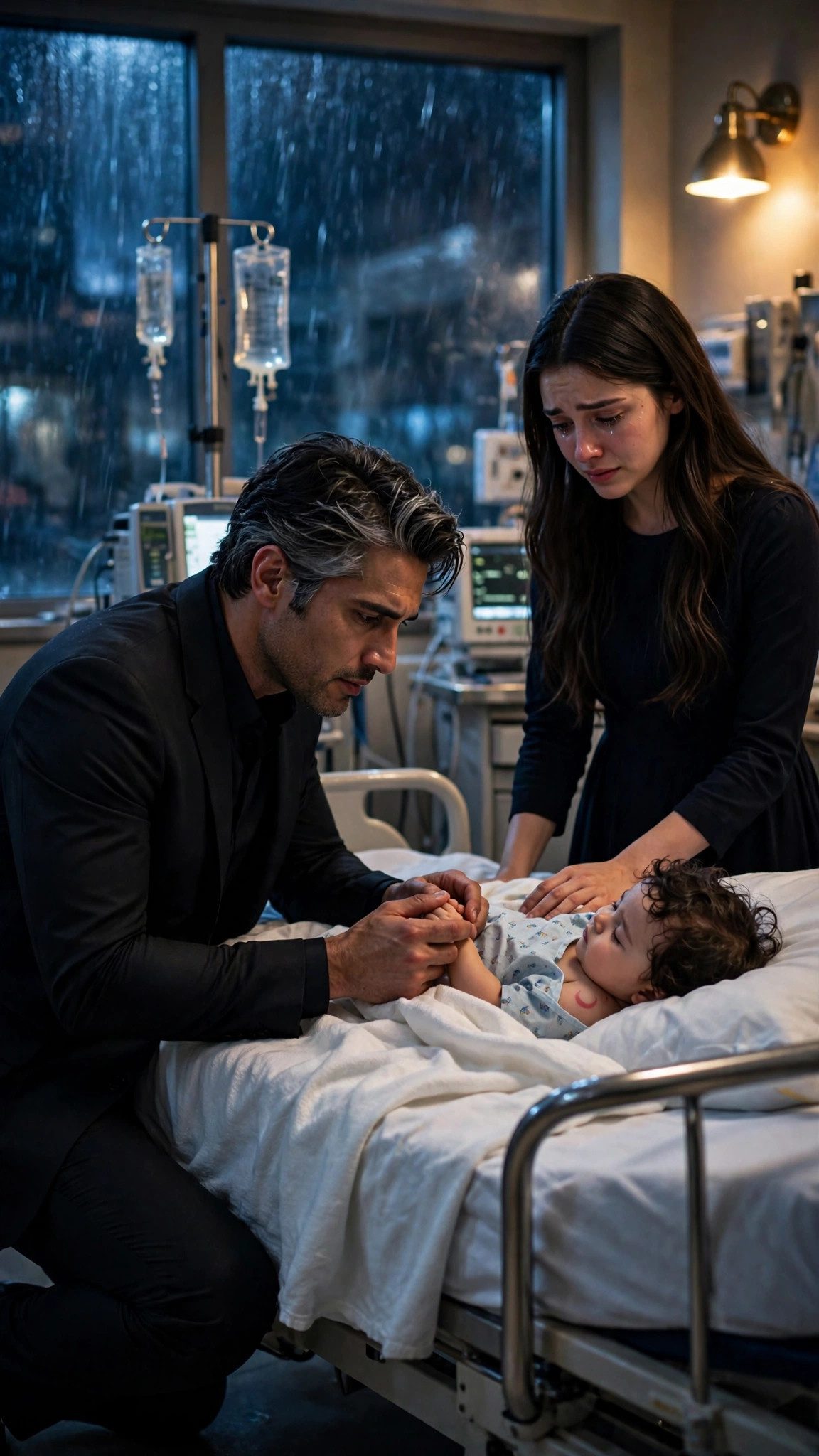
And she was right. He did come find us. Not because he was looking. Because my son got sick on a rainy night, and I carried him into a hospital, and the most feared man in Boston was sitting three chairs down from the triage desk, waiting for news about his mother, and a small boy reached for his finger and held on.
That is how it happened. That is how a schoolteacher and a mafia boss and a fourteen-month-old boy with a crescent moon on his shoulder became a family.
And that, in the end, is the whole story.
The End.
THE END