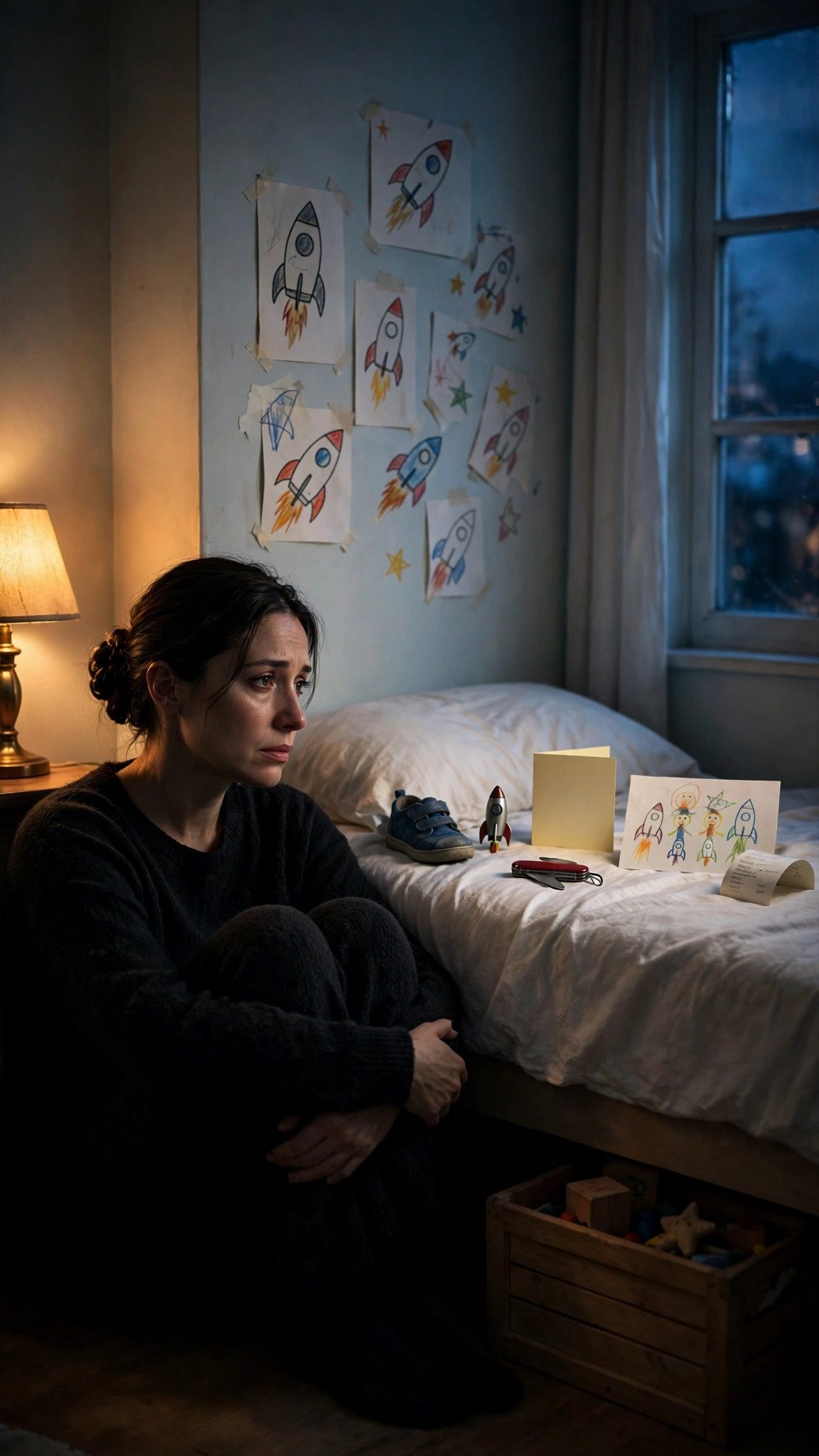
A year passed. Then another. The foundation grew. The hospital built a new wing with Noah's name on it, the Noah Vale Wing, with bright windows and a playroom full of rockets, because I told the architects that the children needed to see the stars, even from inside.
Marcus worked for the foundation now. Not as a boss. Not as a donor. As a driver. He drove the van that took the sick children to their appointments, and he carried their bags, and he waited in the hallways, holding the hands of frightened parents, the way someone had once held my hand in a hallway a long time ago.
Frank had taught him how to drive the van. Frank had taught him how to be patient. Frank had taught him that sometimes the most important thing a man can do is show up, and stay, and not leave, even when it is hard, even when it hurts, even when he would rather be anywhere else.
Marcus showed up every day. He was never late. He never missed a shift. He learned the children's names. He learned their favorite colors. He learned which ones liked rockets and which ones liked dinosaurs. And the children loved him, because children can always tell when a man is truly sorry, and when he is trying, really trying, to be better than he was.
I watched him from a distance for a long time. I watched him carry a little girl's oxygen tank up three flights of stairs. I watched him sit on the floor of the playroom, building a rocket out of blocks with a boy who had no hair left from the treatments. I watched him hold a mother's hand in the hallway while the doctors talked to her husband, and I watched him cry, quietly, in the van, after he dropped them off, because he could not help them, and he wanted to, more than anything.
One evening, after a long day, he came to my office at the hospital. He knocked on the door, very gently, and he said, "Claire. I know I have no right to ask. But would you have dinner with me? Not as my wife. Not as anything. Just dinner. Two people who once loved the same little boy, having dinner together."
I looked at him for a long time. He was wearing a plain shirt and jeans, not a suit. His hands were rough from carrying bags and oxygen tanks. There was a smudge of paint on his cheek from the playroom. He looked nothing like the man I had married, the man in the black suit who owned half the shipping on the lake. He looked like a man who had been broken, and who had put himself back together, piece by piece, into something smaller, and kinder, and truer than what he had been before.
"All right," I said. "Just dinner."
We went to a small restaurant, not Duca's, not anywhere fancy, just a quiet place with white tablecloths and a waitress who called us honey. We talked about the foundation. We talked about the children. We talked about Noah, for the first time in two years, really talked about him, not in anger, not in grief, but in love. Marcus told me about the time Noah had hidden his shoes in the oven. I told him about the time Noah had tried to teach the cat to fetch. We laughed, and then we cried, and then we laughed again, because that is what grief does, when you finally let it breathe. It turns into love, and love, it turns out, does not die. It only changes shape.
After dinner, he walked me to my car. He did not try to kiss me. He did not try to hold my hand. He only said, "Thank you, Claire. Thank you for tonight. I know I do not deserve it. But thank you."
I drove home that night, to Grace's house, where I still lived, and I lay awake for a long time, thinking about the man in the plain shirt with paint on his cheek, and about the boy who had once said his father was his hero just because he always came back, and I thought about what coming back really meant.
It did not mean bringing presents. It did not mean flying home on a private jet. It did not mean saying sorry and expecting everything to be all right.
It meant showing up, every day, even when it was hard. It meant staying, even when you wanted to leave. It meant doing the work, the slow, quiet, unglamorous work of becoming a person who deserved to be loved again.
Marcus was doing that work. He had been doing it for two years. And I was starting to see it. I was starting to believe it.
The opening of the Noah Vale Wing was on a bright morning in May, two years after Noah died. The hospital had painted the walls the color of the sky, and the playroom had rockets on every wall, and there was a ceiling full of glow-in-the-dark stars, so the children could connect the dots and draw their own rockets, even at night.
I gave a short speech. I told the crowd about Noah, about his questions, about his wooden box, about the sword and the magnet and the little Swiss army knife, and about the way he had once said that his father was his hero just because he always came back. I told them that the wing was not a memorial. It was a promise. A promise that every child who came through those doors would be cared for, and loved, and listened to, and that no mother would ever have to sit alone in a hallway, holding her child's hand, wondering if anyone was coming.
Marcus was in the back of the crowd, standing beside Frank, in his plain shirt and jeans, with his hands in his pockets. He did not speak. He did not come forward. He only stood there, listening, and when I finished, he nodded, once, very slightly, and I nodded back, and that was enough.
After the ceremony, a little boy came up to me. He was seven years old, with dark hair and a missing front tooth, and he tugged on my sleeve and said, "Nurse Claire, is it true that the wing is named after your son?"
"Yes," I said. "It is."
"Was he brave?" the boy asked.
"He was the bravest boy I ever knew," I said.
The boy nodded. "I want to be brave like him," he said. "When I grow up, I want to be a rocket man. I want to draw rockets on the ceiling."
"You already are brave," I said, and I knelt down so I was at his level. "You are here, and you are smiling, and you are asking questions. That is what brave looks like."
He grinned, and he ran off to the playroom, and I stood there for a moment, watching him go, and I felt Noah very close, closer than he had been in a long time, as if he were standing right beside me, tugging on my sleeve, asking me if the stars were working yet.
Later that day, Marcus found me in the playroom, sitting on the floor, building a rocket out of blocks with three children. He sat down beside me, very quietly, and he picked up a block, and he helped us build, and for a while, we did not speak at all. We only built, together, in silence, while the children chattered around us, and the sun came through the bright windows, and the stars on the ceiling glowed softly overhead.
One of the children, a little girl with a bandage on her arm, looked at Marcus and said, "Are you Nurse Claire's friend?"
Marcus looked at me. I looked at him. And then he said, very gently, "I am trying to be. I am trying very hard to be."
The little girl nodded, satisfied, and went back to her blocks. And Marcus and I kept building, side by side, in silence, and I thought about the man he had been, and the man he was becoming, and about the long road between those two men, and about how far he had already traveled, one day at a time, one shift at a time, one child at a time.
We had dinner again the next week. And the week after that. And then we started going to the cemetery together, on Sundays, standing side by side at Noah's grave, bringing white lilies, telling him about the foundation, and about the children, and about the rockets in the playroom, and about the new wing with his name on it.
One Sunday, a year after that first dinner, Marcus took my hand. Not in the cemetery. Afterward, in the parking lot, in the rain, with no umbrella, the way it had been that first time, all those years ago, on the terrace at the gala, when he had asked me if I would rather be anywhere else.
"Claire," he said. "I am not going to ask you to come back. I am not going to ask you to forgive me. I am only going to ask you one thing. Will you let me keep showing up? Will you let me keep coming home? Because I have learned, finally, what home means. Home is not a house on the lake. Home is not an empire. Home is where you are. And I want to come home, every day, for the rest of my life, if you will let me."
I looked at him, standing in the rain, holding my hand, with his hair getting wet and his shirt sticking to his shoulders, and I thought about the six items on Noah's bed. The shoe. The magnet. The Swiss army knife. The birthday card. The drawing of the four of us as rocket ships. And the receipt from Zurich, for a dinner for two, 3,680 Swiss francs, on the day our son died.
I thought about all the things Marcus had left behind. The empire. The money. The power. The fear. And I thought about the one thing he had not left behind, the one thing he had carried with him through all of it, even when he did not deserve to carry it.
His promise. The promise he had made in the maternity ward, with Noah in his arms, that no harm would ever come to his son while he was alive to stop it. He had broken it once, and it had cost him everything. But he had spent two years trying to keep it in the only way left to him: by making sure that no other child, no other family, would ever have to go through what we went through. By showing up. By staying. By coming home.
"Yes," I said. "You can keep showing up. You can keep coming home."
He did not kiss me. He only held my hand, a little tighter, and we stood there in the rain, and I thought about Noah, and about the stars, and about the rocket on the ceiling, and about the boy who had once believed, with his whole heart, that his father was his hero just because he always came back.
This time, I thought, he came back. This time, he stayed. This time, he meant it.
And that, in the end, is the whole story. Not the story of a marriage that ended. The story of a man who lost everything, and a woman who lost more, and a little boy who taught them both, even after he was gone, what it meant to come home.
The six things are still on Noah's bed. I never moved them. The shoe. The magnet. The Swiss army knife. The birthday card. The drawing of the four of us as rocket ships. And the receipt, faded now, from a restaurant in Zurich, on the day our son died.
They are not a monument to what we lost. They are a reminder of what we learned. That a promise is only as strong as the man who makes it. That love is only as strong as the choices you make when no one is watching. And that coming home, really coming home, is the bravest thing a man can do.
Marcus comes home every night now. He puts his keys in the bowl by the door. He takes off his shoes. He asks me about my day. And every Sunday, we go to the cemetery together, and we bring white lilies, and we sit beside our son's grave, and we tell him about the rockets, and about the stars, and about the foundation, and about the children, and about the life we are building, slowly, carefully, one day at a time, in his name.
We moved into a new house that autumn, a small house with a garden, not on the lake, not anywhere near the old life, just a quiet street with good neighbors and a school nearby. It was not grand. It was not impressive. But it was ours, and it was honest, and every room in it had light, and every window looked out on something living.
Marcus built a bookshelf in the living room, with his own hands, because he had never built anything with his own hands before, and he wanted to learn. He put Noah's wooden box on the top shelf, with the sword and the magnet and the little Swiss army knife inside it, and he put the drawing of the four of us as rocket ships in a frame on the wall beside it, and he put the birthday card, the one that said "To Daddy, my hero," on the mantelpiece, where he could see it every morning.
The receipt from Zurich is in a drawer now, in my desk, folded up small. I keep it because I never want to forget what it cost us. But I do not look at it anymore. I do not need to. I have learned the lesson it taught me, and the lesson is this: a man is not his worst day. A man is what he does after his worst day. And Marcus, after his worst day, chose to come home, and to stay home, and to mean it.
And every night, before I fall asleep, I whisper the same three words I whispered to him on the last night of his life.
"Mommy's here."
And now, finally, so is Daddy.
The End.
THE END