The morning after the night of truth dawned clear and cold, as if the rain had washed the house clean. I woke early, as I always did, and for a moment I lay still, listening to the quiet of the estate, trying to believe that what had happened in my study was real. Vittorio had confessed. Salvatore had written it down. The secret that had poisoned my family for three years was no longer a secret. It was a fact, spoken aloud, and facts, once spoken, cannot be unspoken. That should have felt like an ending. Instead, it felt like a beginning, because I still had the most important part of the story to finish, and it had nothing to do with Vittorio or with Carmine Falcone or with shipments or ledgers. It had to do with a little girl and her mother, and with what kind of home I was going to make for them.
I found them in the kitchen, where the morning light came through the tall windows and made the room feel warm in a way the rest of the house rarely did. The girl was sitting at the table in her blue dress, the one from the cover of her story in my mind, with her blue bow neatly tied and her fox toy beside her plate. Her mother was beside her, in her maid's uniform, though she was no longer only a maid in this house, and we both knew it, even if neither of us had said it aloud yet. The girl was eating toast, slowly and carefully, as if she were concentrating very hard on not dropping it, and when she saw me, her whole face lit up.
"Renzo!" she said, clear and happy, without fear and without sleepiness, and she held out her arms to me.
I knelt beside her chair, as I had knelt in the meeting room on the day she first walked in, and I let her wrap her arms around my neck. Her mother watched us, her hands folded in her lap, and I saw tears in her eyes, but they were not the tears of a woman who was afraid. They were the tears of a woman who had waited a long time to see her daughter safe.
"Good morning, sweetheart," I said. "Did you sleep well?"
She nodded, and she pointed at her fox. "Foxy slept well too," she said, very seriously, as if this were important news that I needed to know. "He was not scared. Not at all."
"Good," I said. "Then today will be a good day."
Her mother smiled, a small, careful smile, and I knew that she was waiting for me to speak first, because she had learned, over years of working in other people's houses, that it was safer to wait. I did not want her to wait anymore. Not in my house. Not ever again.
"Come and sit with me," I said to them both, and we moved to the small table by the window, where the light was best, and where no one would interrupt us. Salvatore had already taken Vittorio to a room where he would wait until Carmine arrived, and the house was quiet, in the way a house is quiet when something important is about to be decided, and everyone in it is holding their breath.
I looked at the mother first, because she deserved to hear this before anyone else. "You told me the truth," I said, "when it would have been easier and safer to stay silent. You gave me Matteo's letter. You trusted me with your daughter, even though this house had not earned that trust. I want you to know what I am going to do, and I want you to be able to say no, if you want to. You are not a servant to be ordered around in this. You are a mother, and you are the person who kept Matteo's promise alive when no one else did."
She shook her head slowly. "I did not keep it alive," she said. "Matteo did. He was kind to us when no one else was. He told me that if anything happened to him, I should find his brother, because his brother would understand. I did not believe him, not really, not until my daughter walked into your meeting and you picked her up instead of sending her away."
"I understand," I said. "And I am asking you now, not as your employer, but as a man who has lost his brother and found, in your daughter, a reason to be better than I was. Will you stay here, with me, as family? Not as staff who must be invisible. As family. You will have your own rooms, your own life, and no one in this house will ever make you feel small again. And your daughter—" I paused, because this was the part that mattered most, and I wanted to say it right. "Your daughter will be my daughter, in every way that matters. Not to replace Matteo, and not to replace you. You will always be her mother. But I want to be her guardian, her father in this house, the man she can call when she is afraid, and the man who will sit beside her bed at night and tell her that she is safe."
The mother covered her mouth with her hand, and for a moment she could not speak. The little girl, who had been listening with great seriousness, looked from her mother to me and back again, and then she said, in the clearest voice I had ever heard from her, "Can I call you Papa?"
I felt my throat tighten, and I had to swallow before I could answer. "Yes," I said. "Yes, sweetheart. You can call me Papa, if you want to. And you can still call me Renzo, too. Renzo is the name Matteo gave me, and it is the name you gave back to me. It will always be yours to use."
"Papa Renzo," she said, trying the words out, as if she were tasting something sweet. "Papa Renzo, can Foxy live here too?"
"Foxy can live here forever," I said, and everyone at the table laughed, even her mother, even me, and the laughter felt strange and wonderful in a house that had forgotten how to laugh.
Later that morning, Carmine Falcone arrived. He came alone, without his men, which was a sign of respect I had not expected, and he sat in my study with Salvatore as witness while Vittorio confessed again, calmly and fully, what he had done. Carmine listened without interrupting, his face hard, and when Vittorio finished, Carmine was silent for a long time. Then he looked at me, and he said, "Three years ago, I believed your family had betrayed me. Now I know the betrayal was inside your own house, and that you have paid for it with your brother. There will be no war, Lorenzo. Not over this. Not ever, if you keep your word that no child will be touched in this fight again."
"I keep my word," I said, and we shook hands, two men who had spent years as enemies, agreeing, at last, on something that mattered more than territory or money. Vittorio would leave the estate that same day, under escort, and he would face the family's justice, not in secret and not with violence, but in the open, with his confession written down and his fortune returned. He would live, but he would live without the house, without the name, and without the power he had betrayed his nephew to keep. It was a hard justice, and a just one, and it was enough.
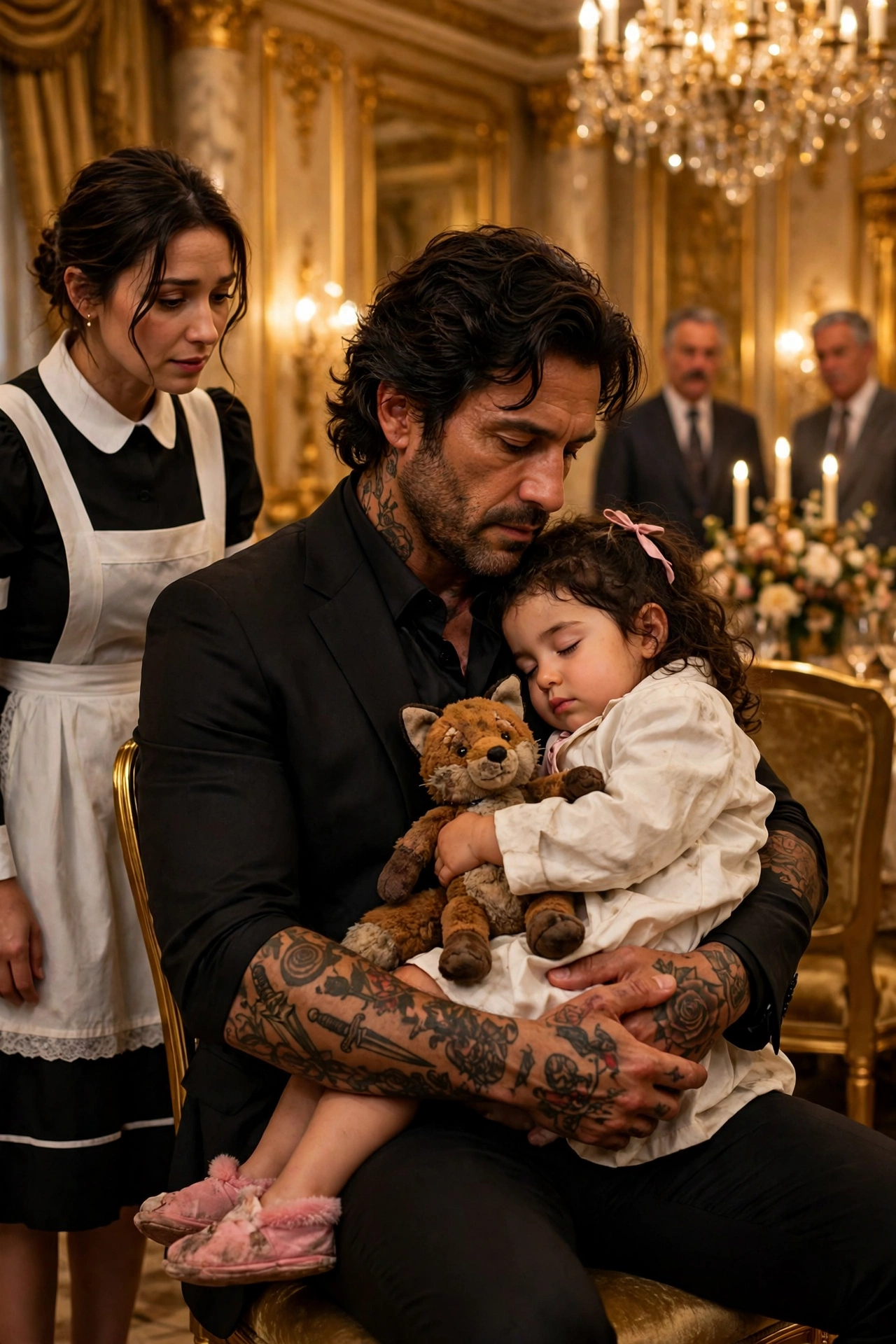
When Carmine left, I walked back to the east wing, where the girl was playing on the floor with her fox, building a small house out of cushions, and her mother was watching her with a peace I had never seen on her face before. I sat down beside them, on the floor, in my suit, without caring about the dust or the formality of it, and the girl immediately climbed into my lap, as she had climbed into my arms on the first day, and she leaned her head against my chest.
"Are you my home now, Papa Renzo?" she asked, sleepily, as the afternoon light grew soft.
"Yes," I said. "This is home. You are home. Your mother is home. Foxy is home. And no one is going to take that away."
She yawned, and her eyes began to close, and her mother reached out and took my hand, briefly, in gratitude, and then let it go, because we did not need grand gestures. We had something better. We had a quiet room, a child asleep in my arms, and a house that was finally, after three long years, beginning to feel like a place where good things could happen.
That evening, we ate dinner together, just the three of us, at the small table by the window, and the girl told us a long, winding story about Foxy and a dragon and a castle, and she laughed so hard at her own story that she nearly fell off her chair, and I caught her, easily, as I had caught her on the first day, and I held her close for a moment longer than I needed to, because I could.
Before bed, I carried her to her room, a room that was no longer a servant's spare room, but her own room, with blue curtains and a small bed and a shelf for her fox, and I tucked her in, and her mother kissed her forehead, and I kissed her forehead too, and she looked up at me with those trusting brown eyes that had changed everything.
"Good night, Papa Renzo," she whispered.
"Good night, sweetheart," I said. "Sleep well. I will be right here in the morning."
"Promise?" she asked.
"I promise," I said, and I meant it, in a way I had never meant a promise before. "I will never leave you. Not in the morning, not at night, not ever."
She smiled, and she closed her eyes, and her breathing softened, just as it had on the day she first slept on my chest in the meeting room, and I stood in the doorway for a long time, watching her, with her mother beside me, and I thought of Matteo, not with the sharp pain of his funeral, but with a quiet gratitude. He had called me Renzo, and he had warned me not to trust the people who only called themselves family. He had also, without knowing it, sent me a little girl who would teach me what family really meant.
The next morning, I woke to sunlight and to the sound of small feet in the hallway, and for a moment I thought I was dreaming. Then the door opened, just a little, and a small face appeared, with a blue bow slightly crooked and a fox tucked under one arm.
"Papa Renzo, are you awake?" she whispered, as if waking me were a great adventure.
"I am awake now," I said, sitting up and smiling, and she ran to me and climbed onto the bed beside me, very carefully, as if she were afraid I might disappear if she moved too fast. I did not disappear. I stayed, and I listened while she told me, in great detail, about a dream in which Foxy had learned to fly, and about how, in the dream, she had flown with him over the gardens, and how they had seen the whole estate from above, and how it had looked small and safe from up there.
After breakfast, we walked together in the gardens, her hand in mine, her mother walking beside us, and Salvatore following at a respectful distance, not as a guard, but as a friend of the family. The girl stopped at every flower, and she named them, inventing names when she did not know the real ones, and her mother laughed, and I laughed, and the gardens, which had once felt like a place for secret meetings and whispered warnings, felt like a place for a family walk.
"This is what Matteo would have wanted," Salvatore said quietly, when the girl ran ahead to chase a butterfly. "Not a bigger empire. Not a harder house. This. A child laughing in the garden, and a man who is not afraid to be gentle."
I nodded, because he was right, and because I had spent three years believing that strength meant never bending, never softening, never letting anyone close. Matteo had known better. He had been gentle, and he had been brave, and the two had not been opposites in him. They had been the same thing. I was only now learning that lesson, from a three-year-old girl who had taught it to me simply by trusting me.
That afternoon, her mother and I sat together and made plans, real plans, not promises made in a moment of feeling. She would learn to read the letters Matteo had left, if she wished. She would choose her own rooms, and her own work, if she wished to work at all, and no one would call her only a maid again unless she chose that name herself. Her daughter would go to school when she was ready, and she would have friends, and birthdays, and ordinary days, and she would never again have to walk into a room full of dangerous men to find someone to hold her. She would have a home that came to her, instead.
When evening came again, and the light grew soft, we sat together once more, and the girl fell asleep in my arms, just as she had on the first day, and I carried her to her bed, and I knew that this was not a single happy day. This was the beginning of a life, built slowly, day by day, on truth and on care.
Outside, the estate was dark and still, and the house that had once been ruled by fear was, at last, a home. Not because the past was erased, because it was not, and it never would be. But because the truth had been spoken, justice had been done without more blood, and a three-year-old girl who had walked into the wrong room had, in the end, walked into exactly the right one. She had found a father, her mother had found safety, and I, Lorenzo Moretti, a man who had once made a rule that no child should ever enter his estate, had learned that sometimes the bravest thing a man can do is to open his arms, and let a child in, and never let her go.