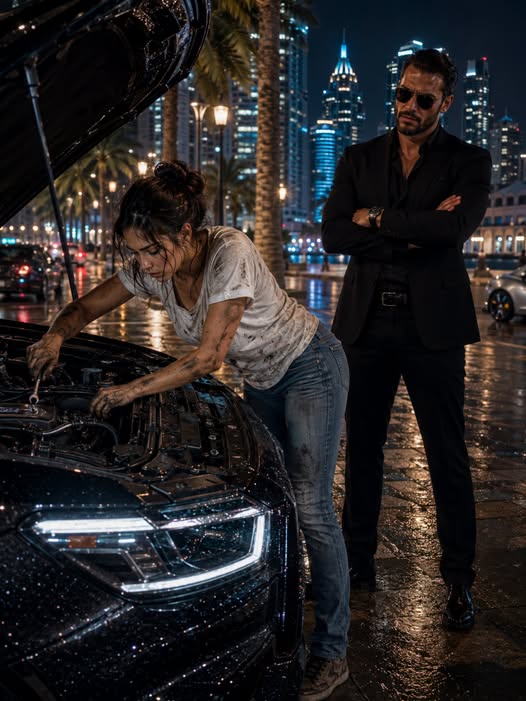
The morning after dinner at the Romano estate, Emma Carter woke to the sound of her own alarm and the smell of weak coffee from the kitchen of their small apartment. For a moment, lying under the thin blanket, she was not sure whether the previous evening had really happened. The lake house with its warm lights, Sofia Romano laughing at the head of a long table, the food that had tasted like someone had cooked it with patience instead of hurry — all of it felt like a dream she had borrowed for one night.
Then Diane called from the kitchen, her voice thin but cheerful, and the ordinary world came back into focus.
"Emma, honey, your toast is getting cold. And don't tell me you forgot your apron again."
Emma smiled, swung her feet onto the cold floor, and pulled her dark hair into its usual messy bun. The apartment was small, the paint a little faded around the windows, the couch worn where Diane liked to sit with her feet up in the afternoon. It was not grand. It was theirs. Emma liked that. She liked knowing exactly which floorboard creaked and which burner on the stove took too long to heat.
At the kitchen table, Diane was already dressed, her reading glasses perched on her nose, a crossword half-finished beside her plate. She looked tired in the way she always did now, since the kidney disease had settled into their lives like an unwelcome houseguest — managed, stabilised by her doctors, but never gone. Emma watched her mother stir sugar into her tea with careful, steady hands and felt the familiar squeeze in her chest: love, and worry, and the determination not to let either one turn into panic.
"So," Diane said, with the bright, too-casual tone she used when she was fishing for news, "how was dinner with the nice young man and his mother?"
Emma laughed. "Mom, you make it sound like a school dance."
"Well? Was he polite? Did his mother like you?"
"He was polite," Emma said. "His mother liked me a little too much, I think. She kept refilling my plate and telling stories about him when he was a boy. He pretended to be embarrassed, but he wasn't very good at it."
Diane's eyes softened. "Good. A man should be a little embarrassed by his mother sometimes. It means he still listens to her."
Emma did not say the rest of it — that she had sat in a house by the lake and felt, for an evening, as if she belonged somewhere larger than her own life, and that the feeling had frightened her almost as much as it had warmed her. She had refused Luca Romano's money under a broken hood in the rain because she did not want to owe anyone. A dinner invitation was different. A dinner was just a dinner. She told herself that firmly as she kissed her mother's cheek and headed for the door.
Sunrise Diner was already humming when she arrived. Rick Dawson, her manager, was behind the counter with a coffee pot in one hand and a frown that meant the lunch delivery was late again.
"Emma, thank goodness," he said. "Booth six is yours, and the Hendersons want extra toast, and don't let Mr. Alvarez talk you into a third cup before his pills."
"Yes, boss," Emma said, tying on her apron.
The diner was her place in a way the lake house could never be. The vinyl seats were cracked in familiar places. The regulars knew her name and she knew theirs: Mrs. Patel with her crossword and her decaf, old Mr. Alvarez who tipped in exact change and told the same joke about the weather every Tuesday, the truck drivers who came in loud and left quiet after a plate of eggs. Emma moved between the tables with the easy rhythm of someone who had done this a thousand times, refilling cups, remembering orders, listening to half a dozen conversations at once.
It was ordinary. It was hers. And for most of the shift, that felt like enough.
Luca did not come to the diner that morning. Emma told herself she was relieved. She also caught herself glancing at the door every time the bell rang, which annoyed her so much that she scrubbed booth six twice just to have something to do with her hands.
In the afternoon, after her shift, she walked to the hospital with Diane for a routine check. It was not an emergency visit, just one of the regular appointments that had become part of their calendar, like rent and laundry and the electric bill. Diane chatted with the nurse about the weather. Emma sat in the waiting room with a magazine she did not read, thinking about the stack of bills at home and the way the numbers never quite added up, no matter how many evening office-cleaning shifts she took on.
That was when the billing clerk called her name.
"Miss Carter? Could I speak with you for a moment?"
Emma followed her to a small desk by the window. The clerk, a kind-faced woman with a name tag that read Janice, smiled in a way that was meant to be reassuring and somehow made Emma nervous instead.
"I just wanted to let you know," Janice said, lowering her voice, "that your mother's next specialist consultation has been covered. In full. And part of the current treatment bill as well. It came through as a charitable care grant."
Emma stared at her. "A grant? From whom?"
"From the Romano Family Foundation," Janice said. "It's a legitimate charity, Miss Carter. They fund care grants for patients in the area. The paperwork came through this morning. You don't owe anything on those items."
For a second, Emma felt nothing but relief, so sudden and complete that her knees nearly gave way. A consultation covered. Part of a bill gone. That was real money, real breathing room, the kind of help she had dreamed about on nights when she added up her two jobs and still came up short.
Then the name caught up with her.
Romano.
She thought of Luca sitting in booth six for forty minutes, patient and quiet, watching her work. She thought of Sofia refilling her plate and saying, with warm directness, that she liked people who were interesting. She thought of the several hundred-dollar bills Luca had tried to press into her hand in the rain, and how she had refused them, clearly, twice.
He had listened to her refusal. And then he had found another way around it.
"Thank you," Emma said to Janice, because the clerk had done nothing wrong and did not deserve her anger. "Thank you for telling me."
She walked back to Diane with a smile pinned to her face and said nothing about the grant until they were home. Diane was delighted, of course — she talked about how lucky they were, how some charities really did change lives — and Emma nodded and made tea and waited until her mother was settled on the couch before she slipped out of the apartment with her phone in her hand and her jaw set.
She did not call Luca. She texted him, short and plain: I need to talk to you. Outside the diner. After my evening shift. Not inside.
He replied within a minute: I'll be there.
The evening office-cleaning shift dragged. Emma vacuumed empty rooms and wiped desks and tried not to rehearse the conversation too many times, because every rehearsal made her angrier, and she did not want to be angry. She wanted to be clear. There was a difference, and her father had taught her that difference a long time ago, in the garage, when a bolt would not move and shouting at it never helped but a steady hand did.
Her father had been a mechanic. He had died six years ago, and Emma still kept his tools everywhere — in a drawer at home, in a bag by the diner door, in the glove box of any car she borrowed. He had taught her how to fix things herself. He had not taught her how to accept help she had not asked for.
By the time she walked back to Sunrise Diner, the sky was darkening and the streetlights were coming on. Luca was waiting outside, as promised, not inside where the customers could stare. He was in his perfectly tailored black suit, tall and broad-shouldered, his dark hair neat despite the evening breeze. Marco Bellini stood a little way off, discreet and watchful, the way a good security chief is watchful without making a show of it. Luca's phone buzzed once; he glanced at it, said something brief about a freight delivery to the caller — Adrian Cole, his logistics manager, Emma heard him say the name — and then put the phone away entirely, as if to prove he was listening.
"Emma," Luca said. "Thank you for meeting me."
"I found out about the grant today," Emma said. She did not raise her voice. She did not need to. "From the hospital, not from you. The Romano Family Foundation covered my mother's consultation and part of her bill."
Luca did not pretend not to know. That, at least, was honest. "Yes."
"Luca, I refused your money in the rain for a reason. It wasn't a game. I don't want to be bought. I don't want to feel like every kind thing you do comes with a price tag I can't see, or a debt I'm supposed to repay later with gratitude."
"I know," he said quietly.
"Do you? Because this felt like the same thing, just wearing nicer clothes. A charity grant sounds clean. But you didn't ask me. You didn't tell me. You decided what my family needed and you fixed it from a distance, and then you waited for me to be grateful. That is not help, Luca. That is control with good manners."
The words landed. She saw it in his face — not anger, not the cold pride she had half expected from a man used to being obeyed, but something quieter and more uncomfortable. He looked down at the pavement for a moment, and when he looked up, his eyes were serious.
"You're right," he said. "About the method. I won't argue with that."
Emma blinked. She had expected a defence.
"I told myself I was being respectful," Luca went on. "You refused cash, so I thought — find a proper channel, a real foundation, something that wouldn't embarrass you. But I didn't ask you because I was afraid you would say no, and I didn't want to hear no. That is not a good reason to do something for someone. I'm sorry for the method, Emma. I'm sorry I went around you."
"But not for caring?" she asked, testing him.
"No," he said, and there was a firmness in it that she respected, even as she held her ground. "Not for caring. I won't apologise for caring about you, or about your mother. I will apologise for doing it in secret, and I will promise you this: no more secret payments. No grants you don't know about, no bills quietly settled, no help that arrives before a conversation. If I want to help, I will ask first, openly, and you can say no, and I will accept it."
Emma folded her arms, then unfolded them, because she did not want to look like she was closing a door she was actually trying to keep open. "That's the only way this works," she said. "Help has to be honest and asked-for. Otherwise I spend all my time wondering what I owe, and I can't — I won't live like that. I work two jobs because I want my mother cared for by my own hands, not because I enjoy being tired. My dignity isn't for sale, Luca, not even to a nice man with a foundation."
"I understand," he said. "I think I'm beginning to, anyway. My world runs on favours and debts, Emma. Everyone owes someone. You are the first person in a long time who looked at what I offered and said, no, I will do this myself. I didn't know what to do with that. So I tried to be clever instead of being honest."
"Don't be clever with me," Emma said, and despite herself, a small smile touched her mouth. "Be honest. It's harder, but it lasts longer."
Luca nodded slowly. Then, after a pause, he asked, "May I ask you something else? Not as a benefactor. As myself."
Emma waited.
"Will you let me take you for coffee? Just coffee. No foundation, no SUVs if you don't want them, no fixing anything. Just you and me, talking, like two ordinary people. If you say no, I will go home and leave you in peace."
Emma looked at him — really looked at him. Not the suit, not the name that made other diners whisper, not the four black SUVs that had once filled the street outside. Just a man standing outside a diner in the evening, waiting for an answer he could not buy.
"Tentative yes," she said at last. "Coffee. As yourself. And if you ever try to pay for my mother in secret again, I will find out, and we will have this conversation again, only louder."
"I believe you," Luca said, and he smiled, a real smile this time, relieved and a little rueful. "Thank you, Emma."
She walked back toward her apartment with the streetlights buzzing overhead and her mother's crossword waiting at home, and she felt something she had not expected: not victory, not surrender, but a truce she had made on her own terms. She would consider any future help only if it was offered openly. She would keep her jobs, her apartment, her name, and her stubbornness. And she would have coffee with Luca Romano, not because he could pay for things, but because, for once, he had listened.
That, she thought, was a beginning she could live with.