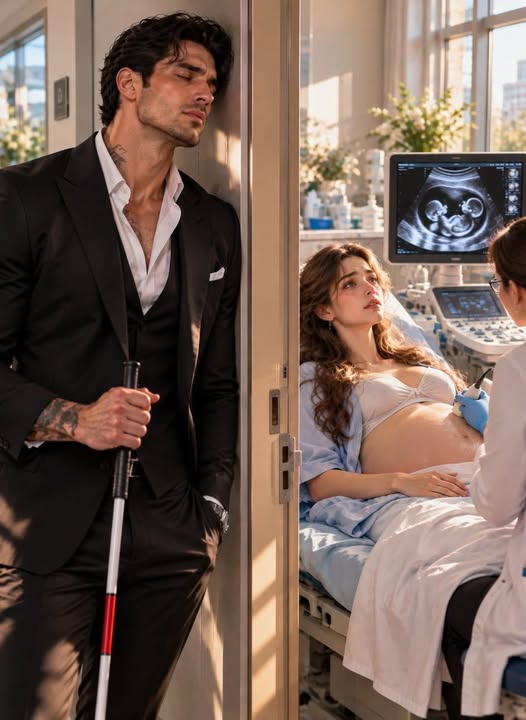
Gus Ferro had wired my father's office in 1987, my office in 2015, and half the rooms in New York where powerful men said things they later denied. He was seventy-three years old, dying by inches of something he refused to name, and he worked the way surgeons and safecrackers work — without hurry and without mercy. Marco brought him to the house at midnight, through the service entrance, with his cases of equipment smelling of hot dust and old cigarettes.
He listened to the recording twice through headphones before he said a word. Then he took the headphones off, and I heard him sit back, and the chair leather sighed.
"Luca," he said. "Every word of this is you. And you never said it."
"Tell me how you know."
"Reverb." I heard the smile in his voice, the old craftsman pleased with the flaw in another man's work. "Every room a voice is recorded in signs its name on the sound. Your voice saying *liability* was recorded in a small room with carpet — your study, probably, years back. *If a child comes* — that was spoken in a car, I can hear the cabin of it. *It changes nothing* — that's the council room, marble, I know that echo like my own kitchen. Somebody went through a library of your voice like a man going through a dictionary, Luca, cutting out words and pinning them in a row. Word by word. It took weeks. It took love, almost." A pause. "And the raw material — there's only one place on earth that holds that much of your voice, indexed, going back years."
"My own archive," I said.
"Your own archive," Gus agreed. "The office recordings. Which means the man who made this either has your credentials, Marco's, or—" He stopped, because we were all standing in the same room with the third name, and nobody wanted to be the first to say it into the air.
Marco said it. Marco always says it, in the end; it is why he is worth more than my money. "The access logs. I pulled them before Gus came." Papers, a laptop's small chime. "Ninety days. Every entry is accounted for — yours, mine, the quarterly audits. Except one. Eleven forty-seven p.m., three nights before Emma left. The archive was opened for two hours and nine minutes, and eleven years of your voice was copied out of it. The credentials were Dante's."
The clock in the library ticked on, very loud, the way clocks get when a room is deciding what it believes.
Dante. My cousin. My father's brother's son, raised at my father's table after his own father — my uncle Salvatore — died the year after the explosion, raised in my house, seated at my right hand in every council since I took the chair I could not see from. Dante, who had brought me the news of two wars and stood godfather-straight at my wedding. Dante, who in the weeks after Emma left had come to this study with a bottle of my father's brandy and said, *She made her choice, cousin. A man doesn't chase. It's beneath the name.* Dante, who had told me not to look for her — and had needed me not to look, because a man who is looking finds things, and the first thing he finds is a wife three weeks pregnant, and the second thing he finds is a recording that doesn't survive questions.
"Cousin," I said, quietly, "you have been very patient with me."
"Boss." Marco's voice, careful. "What are the orders?"
That was the moment to be the Don. I felt the old machinery of it engage — the cold, the arithmetic, the clean, terrible simplicity of an order given in this room and a car leaving in the night with no plates. Dante's throat, Dante's hands that had copied my voice out of my own walls to unmake my family. Two hours and nine minutes. I could have it finished before the clocks finished striking.
And then, from the pocket of my jacket where it lay against my ribs, Emma's gift of the day before came back to me — not a thing, a sound: a heartbeat, galloping through a clinic door, too fast and too steady, the bravest sound in the world. My child had survived nine weeks in hiding with a terrified mother. My child did not need a father who fed it a war in its first hour home.
"No blood," I said. "Not yet, and maybe not by my hand at all. A snake you watch is a snake you can catch, and I want him *caught*, Marco — caught in the open, in front of the families, with his hand in the machinery, so that no one in this city ever stands up afterward and says Luca Romano murdered his cousin on a suspicion. I want the truth to do the killing. Double the watch on Emma instead. Two more men, invisible ones. And Dante—" I smiled, and felt it come out wrong, the way smiles do when they are made of grief. "Dante gets invited to Sunday dinner. I want to hear him breathe in my house while he still thinks he's safe."
For three days, we watched, and Dante breathed easy, and Emma kept her phone on, and twice — twice — she called me for no reason she would name, and we talked about nothing: the weather in Astoria, a painting she was restoring, the price of peaches. Her voice did something to the silence of the house that I refuse to describe, except to say the staff began, quietly, to hum again in the corridors.
On the fourth evening she called me and her voice was wrong.
"Luca." Low, fast, the words tripping. "There's a gray car. It's passed the building four times since I came down. I'm at the pharmacy on the corner — I needed— Salvo's across the street but the car's coming around again and I don't—"
"Stay inside the pharmacy. Behind the counter if they'll let you. I'm coming. Emma — stay on the phone with me. Do not hang up. Count for me."
I was already moving; a man who lives by sound lives fast when it matters, and Marco had the car around before I'd finished crossing the hall. I counted with her the whole way across the river — her voice in my ear counting ceiling tiles, prescriptions called, a child crying two aisles over — while Marco drove the way he drives when I have given him permission to break the world, and the city's noise tore past the windows.
We were four minutes out when I heard it through the phone: a door chime, and Emma's breath, and then a man saying something low — and Salvo's voice, suddenly, shouting, and the line went to screaming and glass.
The parking garage under her building. That is where they made their try — Salvo had gotten her down the service stairs and into the garage toward his car when they came out of the concrete dark between the pillars, three of them, and the first shot took Salvo in the shoulder and spun him down. Marco brought our car in through the exit ramp against the arrows with the lights off and the engine screaming, and the garage erupted.
People who can see imagine the dark as an absence. For me there is no absence; there is only the room, telling me everything. A garage tells you a great deal. It told me the wet slap of a shoe changing direction by the third pillar. It told me a safety clicking off, left side, high. It told me Emma's breathing — I will always, always be able to find Emma's breathing in any noise on this earth — behind an SUV, and a man moving toward that sound with his boots scuffing the painted concrete, announcing himself with every step to the one man in the building who did not need to see him.
"Emma," I said, and my voice went out flat and carrying, the Don's voice, "get down and stay down." And I fired at a scuffing boot and a held breath, twice, and the garage rang like a bell, and a man fell making the sounds men make.
The second one ran — for the ramp, for the light, a mistake; running men are metronomes. The third had the sense to freeze, and freezing saved his life, because Marco was already on him out of the dark with the car door's edge and then his hands, and it was over in the time a heartbeat takes — my child's heartbeat, galloping in my memory, setting the tempo of the whole filthy scene.
Marco dragged the frozen one to the SUV and put him against the wheel with his hands where he could keep them honest, and then he went to Salvo, and I went where I was needed, which was down on the concrete beside Emma, who had got Salvo's head into her lap and her scarf wadded hard against the hole in his shoulder, talking to him in a voice like a hand on a child's back. *Stay. Stay, you hear me? I did not run nine weeks to lose the first friendly face. Stay.*
Salvo, who is sixty-one years old and has been shot at in four decades, made a sound that in a healthier man would have been a laugh. "Signora," he said, "tell Rosa… I missed dinner. She'll kill me worse than this."
"She'll have to queue," Emma said, and her hands did not shake while she said it — I could hear that too. Terror and competence are not enemies in some people, and my wife, it turns out, is built the way my best soldiers are built.
I put my coat under Salvo's head. I told Marco the ambulance would come to the street entrance and he was to meet it. I told the man against the wheel, conversationally, in the voice men lower their conversations for, that his friends had made a poor bargain and that his own portion of it was still, unusually, negotiable. He was already talking before I had finished — prices, a cut-out, instructions passed through a barber in the Bronx — the cheap music of a man selling what he has before it devalues. Marco recorded all of it on his phone, standing in the ringing concrete dark.
Police sirens, far off and coming. Marco bundled the living one into our trunk with the efficiency of a man packing luggage. Emma — I found her by her breathing, crouched behind the SUV with her arms wrapped around her belly and Salvo's blood on her sleeve where she'd dragged him behind a wheel with her, my wife, eleven weeks a fugitive, hauling my wounded man to cover under fire. She was shaking so hard her teeth knocked. I got my arms around her and she came apart against my chest, fists in my coat, and I stood in the smell of cordite and gasoline and held the mother of my child while she shook, and I made her a promise out loud, so the concrete and the dark and God could all witness it:
"It's finished running. You come home tonight. Not because I order it — because the next man who comes for you comes through me, and I am very tired of being easy to get past."
The one in the trunk talked before we reached the river. Men in trunks usually do; Marco has a gift for the conversation. He'd been paid in cash through a cut-out, five thousand now and twenty when it was done, and the instructions had not been *kidnap* and had not been *ransom*, and I made Marco repeat them to me word for word so that there would be no mistake in me later:
"We were told the kid never gets born," Marco said. "That was the whole of the job. The woman didn't matter except she was carrying it. Boss — they were sent to kill the baby."
Emma, asleep at last in the back seat with her head on my shoulder, did not hear it. I sat in the moving dark with her weight against me and my hand resting, weightless, over the place where my child was, and I understood the war completely now, perhaps for the first time.
It had never been about Emma leaving me. It was about my heir never existing at all.