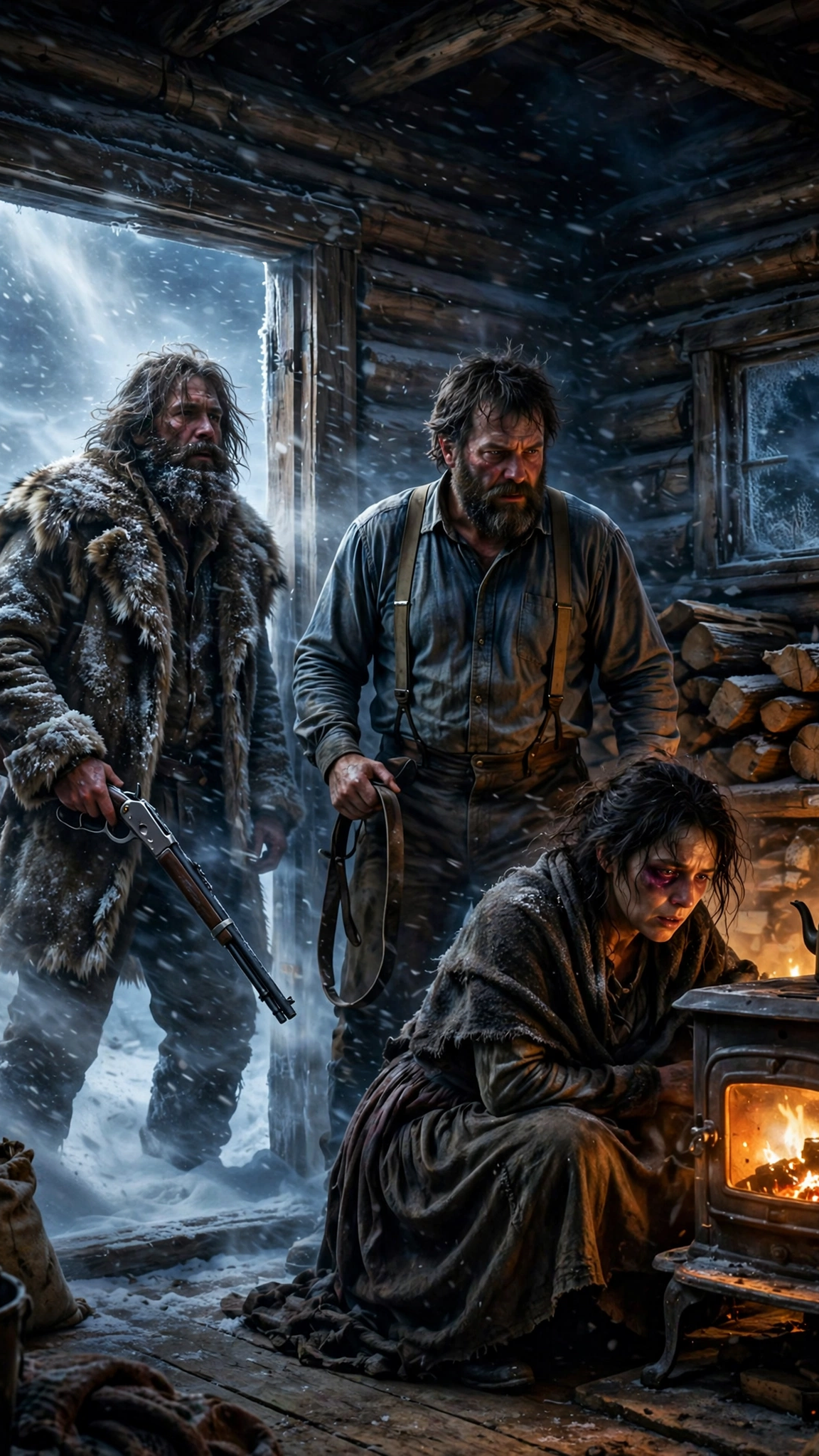
Spring came to the high country the way spring always came — slowly, and then all at once.
One morning the snow was still deep, and the next morning the creek was running, and the birds were back, and the air smelled of wet earth and pine, and Hazel stood in the doorway of Harlon's cabin and breathed it in, and she thought about how long it had been since she had smelled spring.
Harlon's cabin was small, but it was warm, and the stove was good, and the roof did not leak. There was a garden patch already turned, and a woodpile stacked high, and a creek that ran cold and clear behind the cabin, and a pine tree on the hill where Harlon's wife was buried, and Hazel had put flowers on that grave in the spring, wildflowers from the creek bank, and she had stood there for a while, and she had thought about the woman she had never met, and she had thanked her, silently, for the man she had left behind.
The winter had been hard, but it had been a good hard — the kind of hard that comes from work and weather, not from fear. Hazel had learned to trap. Harlon had taught her patiently, the way he taught everything: how to set a snare, how to read a track, how to skin a beaver without ruining the pelt. She had learned to shoot, too. Harlon had given her a small rifle, a .22, and he had taught her to aim, and to breathe, and to squeeze, and not to flinch, and she had learned, and she was a good shot, better than she had expected, and the first time she hit the target — a tin can on a fence post, fifty yards away — Harlon had smiled, and she had smiled, and the sound of the shot had echoed through the pines, and it had not frightened her at all.
She had learned to cut wood. She had learned to haul water. She had learned to bake bread in the iron stove, and to salt pork, and to make soap from ash and fat. She had done all of it before, in the other cabin, but this time it was different. This time she did it because she wanted to. This time nobody told her to. This time, when she filled the woodbox, she filled it because the fire needed wood, and because she liked the feeling of a full woodbox, and because she was the one who decided.
Her eye had healed. The swelling was gone. The bruises on her ribs had faded. Her hair had grown back thick and dark, and she wore it in a braid, the way her mother had worn hers, and she had put on weight, and her cheeks had color in them, and when she looked in the small mirror that hung by the door, she recognized the face that looked back at her.
It was her face. It was the face of the girl who had read books and laughed easily and believed that a home was something you built with love and work. It was older now, and weathered, and it had lines around the eyes that had not been there before, but it was her face, and she was glad to see it again.
In the spring, Harlon asked her to marry him.
He did not ask her the way Baron had asked her — with promises and smiles and talk about land and timber. He asked her the way he did everything: plainly, and honestly, and without expecting anything in return.
He had built a chair. That was how he did it. He had spent the winter building a chair, in the evenings, by the fire, out of pine and hide, and one morning in the spring, he set the chair by the stove, and he said, "I made this for you. Sit in it. See if it fits."
Hazel sat in it. It fit. It fit the way a chair fits when it has been made for one person, and one person only, with care and attention and time.
Harlon stood in front of her, and he took off his hat, and he held it in his hands, and he said, "Hazel. I know what you've been through. I know what he did to you. I know you don't owe me anything, and I know you don't need a husband. But I love you. I love the way you laugh. I love the way you read to me by the fire. I love the way you fill the woodbox because you want to, not because someone told you to. I love you, and I want to spend the rest of my life with you, if you'll have me. No obligation. No price. Just a question."
Hazel looked at him. She looked at the chair, and at the cabin, and at the garden patch, and at the creek, and at the pine tree on the hill, and she thought about the wagon, and the wedding, and the three years, and the belt, and the knock on the door, and the Winchester, and the words, "Hit her again, and I'll put a hole through you," and she thought about the man standing in front of her with his hat in his hands, asking her a question, and waiting for her answer, and not telling her what the answer should be.
She stood up. She took his hands in hers. She said, "Yes."
They were married in the summer, at the fort, by the chaplain, with Mrs. Odegard as a witness, and the trader's wife as a witness, and the Odegard children throwing wildflowers, and Harlon in his best shirt, and Hazel in a new dress — a blue dress, the color of the sky in the morning, made by Mrs. Odegard, with her mother's silver hair combs in her hair.
It was a small wedding. It was not a grand wedding. There were no chandeliers, no ballroom, no guests in fine clothes. There was a chaplain, and two witnesses, and a handful of friends, and a cake made by the trader's wife, and a fiddle played by one of the Odegard boys, and Hazel danced with Harlon in the dusty yard outside the fort, and the sun was bright, and the air was warm, and she was happy.
She was happy. She had not been happy in three years. She had forgotten what it felt like. It felt like sunlight on her face. It felt like a full woodbox. It felt like a fire that would not go out.
After the wedding, they went back to the cabin in the high country, and they lived there, and they worked, and they trapped, and they gardened, and they cut wood, and they sat by the fire in the evenings, and Hazel read to Harlon from her mother's book of poems, and Harlon listened, and the creek ran behind the cabin, and the pine tree stood on the hill, and the world was quiet, and the world was good.
Word came in the fall, from a trader passing through: Baron had sold the claim. He had sold it for a fraction of what it was worth, and he had left the territory, and no one knew where he had gone, and no one cared. The cabin stood empty, the trader said, with the roof leaking in the corner and the woodbox empty and the belt still hanging on its nail by the door.
Hazel listened to the news, and she felt nothing at all. Not anger. Not fear. Not pity. Nothing. Three years, and this was what was left: nothing. And the nothing felt like freedom.
She did not go back to see the cabin. She did not need to see it. She had a cabin of her own now, a warm cabin with a good stove and a roof that did not leak, and a garden, and a woodpile, and a man who loved her, and a life she had chosen, and that was enough.
One evening, in the late fall, when the first snow was beginning to fall and the air was turning cold, Hazel went out to the woodpile, and she took up the axe, and she cut wood, and she carried it inside, armful by armful, and she filled the woodbox, and she stood back and looked at it, full to the brim, and Harlon came in from the cold, and he stamped the snow from his boots, and he sat down by the stove, and he held his hands out to the fire, and Hazel sat down beside him, and she took his hand in hers, and the fire crackled, and the snow fell outside, and the cabin was warm, and the woodbox was full.
She had filled it because she wanted to. Not because someone had told her to. Not because someone would hit her if she did not. Because she wanted to. Because the fire needed wood. Because she liked the feeling of a full woodbox. Because she was the one who decided.
Harlon looked at her, and he smiled, and he said, "Woodbox is full."
Hazel smiled back. She said, "Yes. It is."
And outside, the snow fell, soft and steady, covering the world in white, and inside, the iron stove glowed orange, and the coffee pot steamed, and Hazel sat by the fire with the man she loved, in a cabin that was hers, in a life that was hers, and she was safe, and she was free, and she was home.
The belt was gone. The fear was gone. The three years were gone. What remained was a warm cabin, a full woodbox, a good fire, and a man who had once stood in a doorway in a blizzard with a Winchester in his hand and said, "A man needing a fire" — and who had stayed, and who had kept watch, and who had never once raised his hand to her, and never would.
—
A year passed. Then another.
The cabin in the high country grew. Harlon built a second room, with his own hands, out of pine and stone, and Hazel planted a bigger garden, and the garden gave them more than they could eat, and she learned to put up preserves, and to trade them at the fort for cloth and coffee and books. She bought books — three of them, in the first year, with money she had earned herself from the preserves — and she read them by the fire in the evenings, and Harlon listened, and the Odegard children came to visit in the summers, and Hazel taught the oldest girl to read, sitting on the porch with the book of poems open between them, and the girl's eyes went wide at the words, and Hazel thought about the girl she had been, who had loved books, and who had believed that a home was something you built with love and work, and she thought: I was right. I was right all along. It just took me a while to find the right home.
Mrs. Odegard came to visit in the fall, and she sat by the stove, and she looked at Hazel, and she looked at the cabin, and she looked at the full woodbox, and she said, "You did right, girl. You did right." And Hazel said, "I know. I know I did."
Harlon built her a bookshelf. It was a small thing, made of pine, with three shelves, and he set it by the stove, and Hazel put her books on it — her mother's book of poems, and the three new ones, and her mother's Bible — and she stood back and looked at it, and she thought about the trunk at the foot of the bed in the other cabin, and about the knife inside it, and about the salve under the floorboard, and about all the things she had hidden and hoarded and hoped for, and she thought about how she did not have to hide anything anymore.
She did not have to hide. She did not have to be quiet. She did not have to make herself small. She could take up as much room as she wanted, in a cabin that was hers, in a life that was hers, with a man who loved her, and who had never once raised his hand to her, and never would.
One evening, in the late fall of the second year, when the first snow was beginning to fall and the air was turning cold, Hazel went out to the woodpile, and she took up the axe, and she cut wood, and she carried it inside, armful by armful, and she filled the woodbox, and she stood back and looked at it, full to the brim, and Harlon came in from the cold, and he stamped the snow from his boots, and he sat down by the stove, and he held his hands out to the fire, and Hazel sat down beside him, and she took his hand in hers, and the fire crackled, and the snow fell outside, and the cabin was warm, and the woodbox was full.
She had filled it because she wanted to. Not because someone had told her to. Not because someone would hit her if she did not. Because she wanted to. Because the fire needed wood. Because she liked the feeling of a full woodbox. Because she was the one who decided.
Harlon looked at her, and he smiled, and he said, "Woodbox is full."
Hazel smiled back. She said, "Yes. It is."
And outside, the snow fell, soft and steady, covering the world in white, and inside, the iron stove glowed orange, and the coffee pot steamed, and Hazel sat by the fire with the man she loved, in a cabin that was hers, in a life that was hers, and she was safe, and she was free, and she was home.
The belt was gone. The fear was gone. The three years were gone. What remained was a warm cabin, a full woodbox, a good fire, and a man who had once stood in a doorway in a blizzard with a Winchester in his hand and said, "A man needing a fire" — and who had stayed, and who had kept watch, and who had never once raised his hand to her, and never would.
Hazel leaned her head against Harlon's shoulder, and she closed her eyes, and she listened to the fire, and to the snow, and to his breathing, slow and even, and she thought about the night of the knock, and about the rifle that never moved, and about the words that had changed everything, and she thought about how far she had come, from a crouched girl beside a chair to a woman sitting by her own fire in her own cabin, and she smiled, and she slept, and the fire burned, and the snow fell, and the woodbox was full, and the world was good.