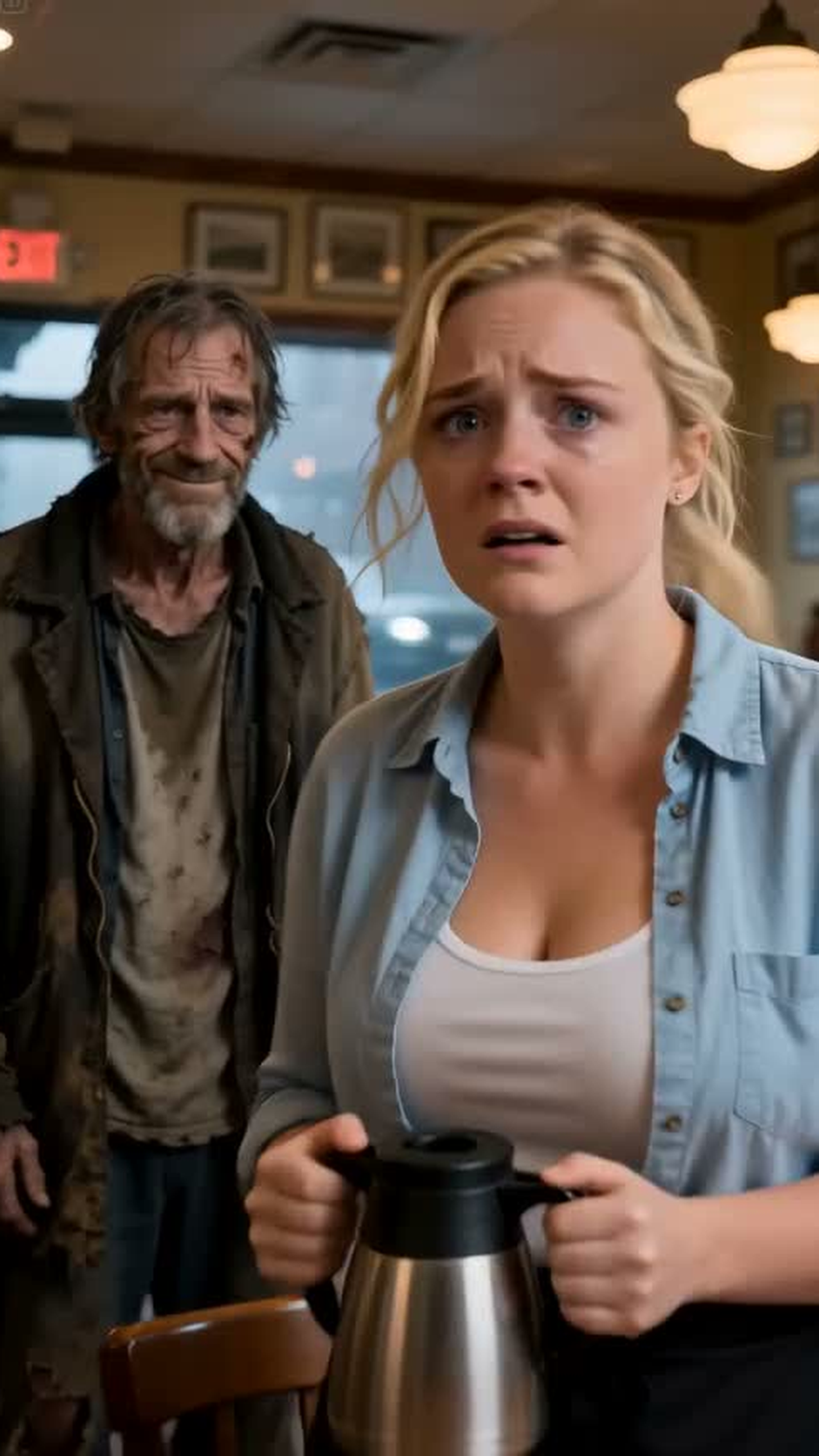
The shoulder, the surgeons said, was a clean wound — in at the front, out at the back, through muscle and luck and nothing that could not be sewn. Adrian Moretti came out of the anesthesia at four in the morning asking, in order, whether Emma was safe, whether his father had eaten, and whether anyone had told the press he had been shot by his own consigliere, because if the city was going to laugh he wanted it to laugh accurately.
Emma, who had not left the hospital, who had charmed two nurses, terrified one administrator, and fed Gus (who arrived at midnight with a thermos and the good pillow from the office, because "hospitals don't feed anybody right, don't argue with me") — Emma stood in the doorway with her arms folded and said, "He's fine. He's exactly fine. He's making a list in there."
"She is the one," Sal said contentedly, from the other chair, where he had spent the night in a hospital blanket like a king in ermine. "I have been saying it for weeks. Nobody listens to the elderly."
Carlo Russo was arrested before the rain stopped, and he did not go alone. The dock log — demanded at last, in raw form, by auditors who arrived with federal accompaniment and Sal's personal blessing — told its story in two hands and eighteen months of consistent lying: trucks signed out full and weighed in light, chicken and grain and money siphoning off the hungry in a thin, steady stream, and at the end of the stream, Marcus Webb's countersignature, and a holding company, and Carlo's warm oil over all of it. Carlo had not even needed the money; that was the ugliest part, the part Sal sat with longest. He had needed the machine to need him. He had been retiring Sal by inches for years — postponing the audits, filtering the son, herding the old man toward the furniture — because a retired Salvatore was a Salvatore whose empire ran through Carlo's hands. The examination had not been a metaphor at all. It had been a raid, conducted by its target, from underneath an awning.
Webb confessed on the second day, comprehensively, in exchange for the hope of a shorter sentence, and named the hired paper trail that had taken Emma — all of it arranged through intermediaries, all of it traceable, all of it ending, as Emma had known in the alley from a single word, with angel.
Beans testified first. Beans testified with his mother in the front row in her cleaning uniform, because she had refused to go home and change, and when he stepped down she held his face in both hands in the corridor in full view of the press and said something to him in a language Emma didn't know and didn't need translated. She had, however, already decided what the Open Table program's first new hire would be, if a certain young man was interested in honest work with a future in logistics. He was. His mother cried on the third stool. Gus pretended the onions were early this year.
The gala, when it finally happened, happened three weeks late and nothing like its plan.
There were no black cars. There was, instead, a line of them — Sal's joke, and he made the foundation's guests walk past the whole gleaming row of them on the way in, "so nobody forgets what power is supposed to look like when it arrives: it should arrive," he said in his speech, from the podium, in a suit like a birthplace, "the way help arrives. Quietly. In the rain. Before it is asked." He announced the forensic audit's findings himself, all of them, including the names, including his own failures of attention, standing straight as a fence post while the head table studied its hands. He announced the Foundation's new charter: raw logs published, auditors unannounced, every kitchen door in the city fitted with a bell and a standing order that no one who came to it hungry would be asked for a referral, a form, or a reason.
And then he did the thing the room had come to see, the thing the cameras had been angled for all night.
"Forty years ago," Salvatore Moretti said, "a waitress on Candler Street fed a broke boy out of her own staff meals for nine mornings, and told him to pay it forward when he was rich. Her name was Rose Lawson. I built all of this trying to keep that promise with machinery — and the machinery rusted, because a promise is not a program. A promise is a person." He turned — the whole ballroom turning with him — toward the side of the stage, where Emma stood in a borrowed dress with Dana's earrings and her grandmother's posture. "Emma Lawson has been offered this Foundation's money and refused it, its gratitude and deflected it, its witness stand and earned it. So I will not insult her with a check. I am giving her the keys. As of tonight, the Open Table program — every kitchen, every truck, every door — answers to a waitress. The only person in my city who passed the examination."
The room rose. Emma would remember the noise more than the words, and one clear thought standing upright in it: Grandma, I hope you're watching this part. She accepted the way she had accepted everything that month — on conditions, out loud, at a microphone, while Adrian Moretti, in the front row with his arm in a sling and his delight entirely undisguised, watched her negotiate with his father in front of four hundred people.
"Conditions," she said, and the room laughed, and Sal bowed his head like a man receiving a sacrament. "I keep one shift a week at the Kettle. I hire from the neighborhoods we feed. And the first budget line, every month, before salaries — before mine — is the doors. Nobody eats outside a window on Candler Street's money. Not in the rain. Not ever again."
"Done," said Sal, "done, and done," and the foundation of the House of Moretti changed hands on the strength of a Lawson's terms.
There were smaller endings, the kind that don't make speeches. Sal bought the Copper Kettle's building from its landlord in a transaction so one-sided that the property manager used the word "evaluated" only once, carefully, on his way out; the lease he handed Gus ran for twenty years and cost a dollar a year, and Gus framed the first dollar bill instead of paying it, and told every customer for a month that rent was "in arrears" and he was "living dangerously." June Lawson got a cardiologist of terrifying competence and a ground-floor apartment with a window that closed, two streets from the diner, and announced that she intended to live to one hundred out of spite and supervision of the RENT envelope, which now lived in a bank like a normal family's money. Emma's credit card — the one that had charged her monthly for her father's last winter — was paid off on a Tuesday, in full, with tips and a waitress's new salary, and she stood at the kitchen table a long time looking at the zero, which was the most beautiful number she had ever been given.
Adrian courted her the way he did everything: without hurry, without shortcuts, and with a complete refusal to use anything he owned as an argument. He came to the Kettle on her shift like any regular. He learned the counter. He learned Dana's children's names and Gus's grievances and Walter's crossword schedule. He tipped exactly twenty percent, in cash, because the card people take a cut — a piece of intelligence he delivered to her deadpan across the counter one slow afternoon, holding her eyes, while Sal, at the third stool, pretended to read a newspaper upside down.
"You're learning," Emma said.
On slow afternoons he asked her to teach him the counter properly — the regulars' orders, the pass, the geography of the pie case — and submitted, with enormous dignity and a sling's worth of excuses, to being trained by Dana, who had waited thirty years to tell a Moretti that he was holding the coffee pot like a man defusing it. He burned one batch of toast. Gus framed the toast. Emma laughed until the bell over the door rang and she had to go and be a professional, and it occurred to her, wiping her eyes behind the pass, that she had not heard herself laugh like that since before her father's last winter — that happiness had crept back into her life not through the grand door of the gala but through the kitchen, carrying toast.
"I had a good teacher." He turned his coffee cup a half-turn on its saucer. "She works here. She's very exact. It's a defect. It's genetic."
Her first official act as director of the Open Table program took eleven minutes and made no sound at all. She arrived at the flagship kitchen at six in the morning with a screwdriver borrowed from Gus, walked to the service door — the door where Salvatore Moretti, nameless and hungry, had once been informed about referrals — and took the laminated sign off its screws. The sign had been very professional. It had listed the requirements in a friendly font. She put it in the recycling, because paper is paper, and wrote the replacement herself, in marker, on the back of a menu board, in her firm waitress hand:
IF YOU ARE HUNGRY, COME IN. THAT IS THE WHOLE FORM.
Petra, down from the Mill District to run the flagship's floor, read it twice and said, "The board's going to have opinions."
"The board," Emma said, "can eat at noon like everybody else and raise them over lunch."
She worked the line herself that first week, in an apron, to the visible confusion of three consultants and the complete lack of confusion of everyone who came through the door — because a kitchen, she kept saying to anyone who would listen, is not a metaphor, and mercy is not a metric, and a chair is a chair and you count them by feeding the people in them. The trucks went out weighed and came back weighed, and the weights were chalked on a public board by the dock where any driver, any cook, any man on any ledge could read them; and Okafor, reinstated to full routes, chalked the first honest numbers up himself with the ceremony of a man raising a flag. Somewhere in the middle of that week Emma gave her witness statement to the fraud unit in a room with bad coffee, and refused, politely, three times, to call what she had done brave. "I made coffee," she said. "And I counted chairs. If that's the bravest thing your case has got, detective, the case was never about me."
On the first Saturday of the new Open Table season — a morning of the kind the city gives out rarely, all gold and washed blue, the avenue steaming dry after a week of rain — Emma came out of the Copper Kettle at half past ten with a plate in both hands, because old Mr. Abernathy's brother, newly arrived in town and prouder than hunger, had been sitting on the ledge under the awning for an hour insisting to the sidewalk that he was waiting for a bus that did not stop there.
He looked up at her the way they all did the first time, wary as a stray. "Why would you help me?" he asked, because the question is always the same, in every doorway, in every year.
"Because you're hungry," Emma said, and crouched, so they were level, and held out the plate.
Through the window behind her — the same window, washed clean — she could see the third stool, and her king in his gray suit turning his coffee cup a half-turn; and beside the door, his son, watching, with his heart in his face and his hands kept respectfully, deliberately still, a man who had learned what it costs to see people. Salvatore Moretti lifted his cup a fraction in her direction, in a toast too small for anyone else to catch, and said to the bright and listening morning, to the avenue, to forty years:
"Let's see who still cares."
"She does, Pop," Adrian said quietly, from the doorway, and went out into the sunlight to hold the door for his waitress, who was coming back inside — where her whole life, enlarged and entire, was waiting at the counter with the coffee already on.
"She always will."
THE END