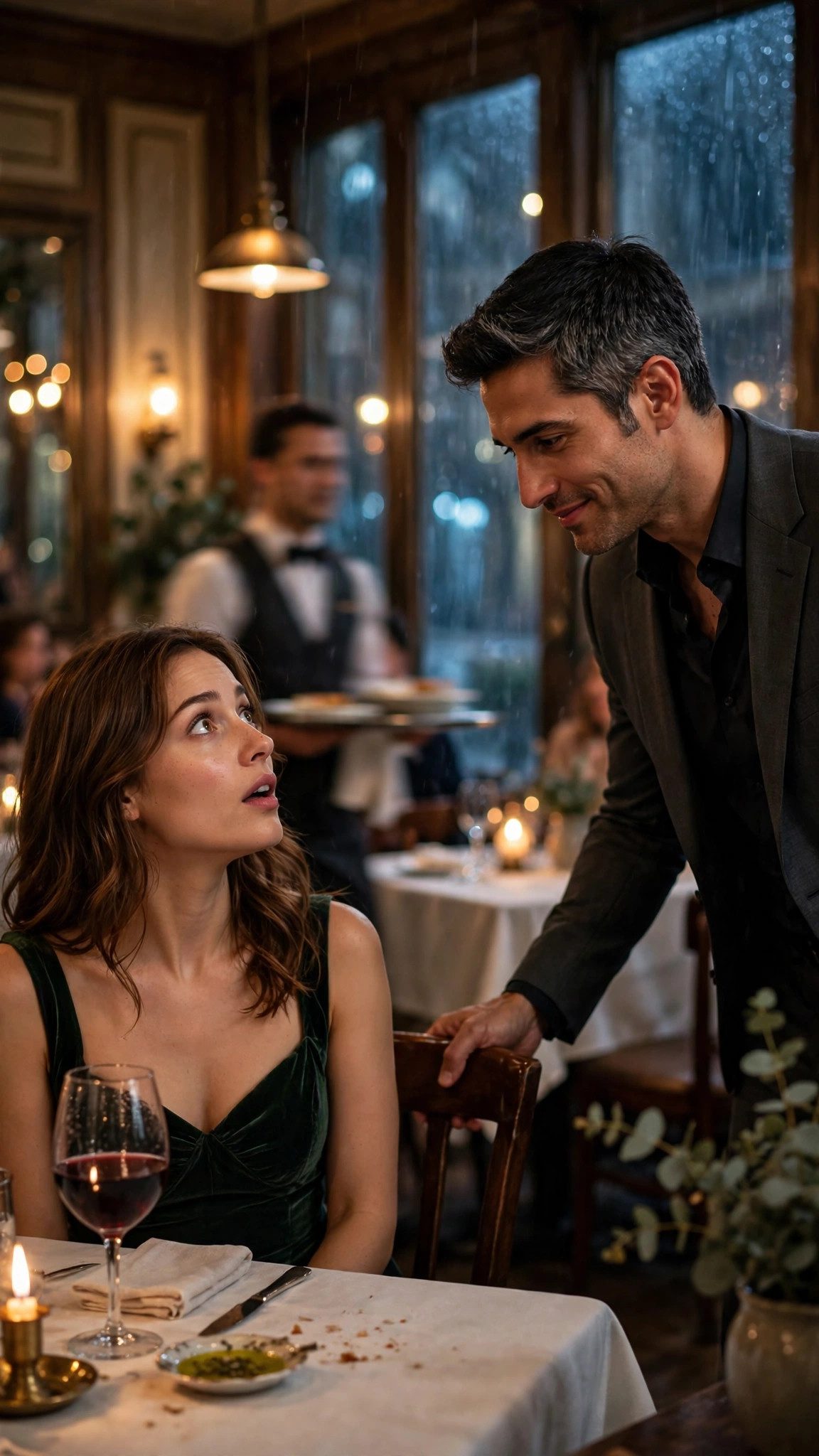
It was the day of the Rochester show. The biggest health benefits show in Rochester, held every spring at the Riverside Convention Center, a huge concrete building on the river with a ballroom the size of a football field. I had been to it twice before, both times in my Meadowbrook badge, handing out brochures about memory care and smiling until my cheeks hurt. I had never once imagined walking into it to meet a mafia boss.
Louise insisted I go. She said she'd cover my shift. She said it the way she said everything, like a woman who had already decided and was simply informing me of the decision.
"You are going, Emma," she said, standing in the doorway of my office with her arms crossed. "I will cover your shift. I will cover it twice over if I have to. You are going to walk into that building and you are going to find out what that man wants, and then you are going to come back here and tell me everything."
"Louise, what if he—"
"What if he what?" she said. "What if he is kind to you? What if he is exactly what he seemed to be on Friday night? Emma, I have known that family by reputation for thirty years, and I will tell you something I have never told anyone. Frank drove for them for thirty years, and in thirty years, he never once came home with a bruise that was not from lifting a crate. Anthony Russo's father once paid for my Frank's mother's funeral when we could not afford it. He did not have to do that. Nobody asked him to. He did it because Frank had driven for him for twenty years and that was what the family did. I am not saying the man is a saint. I am saying he is not a monster. Go."
We were fighting. We had been fighting for months, Louise and I, against the board and the budget and the slow, polite strangling of the program we had built together. That morning, the board had sent down another memo. More cuts. The kitchen staff had already been let go. The activities program was next. The memory-care wing would follow, they said, "pending review," which was their way of saying it was already gone and they were just waiting for the right moment to tell the families.
I walked into that huge concrete building and prepared myself to let him down gently.
That Tuesday morning, I went to work like it was any other day, and it was not any other day at all. The board had sent down another memo overnight. More cuts. The activities program was next, they said. The memory-care wing would follow, "pending review." I read the memo twice in my office with the door closed, and then I put it in my drawer, on top of the other memos, and I went out to the floor, because Mrs. Alvarez needed her tea, and Mr. Kowalski needed his hearing aid, and the people who needed me did not stop needing me just because the board had decided to strangle us slowly.
Louise found me in the hallway at noon. "Go home," she said. "Change your dress. Comb your hair. And go to that show."
"Louise, the memo—"
"The memo will still be there tomorrow," she said. "And so will I. I will cover your shift. I will cover it twice over if I have to. Now go."
I went home and stood in front of my closet for twenty minutes, staring at dresses I had not worn in years, and I finally chose a simple navy dress, the one I had worn to my cousin's wedding, and I did my hair, and I put on the only pair of heels I owned, and I drove to the Riverside Convention Center with my hands tight on the wheel and my heart hammering in my chest, rehearsing my little speech the whole way there. Thank you for the dinner, Mr. Russo. Thank you for the note. But I am not the kind of woman who has dinner with men like you. I had rehearsed it in the car. Thank you for the dinner, Mr. Russo. Thank you for the note. But I am not the kind of woman who has dinner with men like you, and I think it is better if we do not see each other again. I had it all planned out, every word, and I was so busy rehearsing it in my head that I almost walked past the ballroom doors without noticing that something was different.
The room was set for the biggest event of the year. Waiters were pouring wine. The ballroom was filled with people.
There were booths along the walls for every hospital and home-care agency in the county, with banners and brochures and bowls of mints. I saw Dr. Patel from the hospital, and the woman from the insurance company who had once spent an hour on the phone with me arguing about a claim, and a dozen other faces I recognized from years of working in healthcare in this city. There were speeches before Anthony's, of course. A hospital administrator talked about funding. An insurance executive talked about networks. I stood near a pillar at the back, half-hidden, trying to be invisible, and I watched the room, and I waited, and I tried to remember the speech I had rehearsed in the car. Thank you for the dinner. Thank you for the note. But I am not the kind of woman. My hands were shaking. I put them behind my back so no one would see. There were banners for hospitals and insurance companies and home-care agencies, and there was a stage at the far end with a podium, and there were round tables with white cloths and little cards with names on them, and the whole place hummed with the sound of a thousand conversations happening at once.
And then I saw him.
He was smiling. He was standing at the edge of the stage, in a dark suit that made every other man in the room look like he had gotten dressed in the dark, and he was holding his hands together in front of him, and he was looking straight at me. And next to him, in her best navy suit with her silver hair in its knot, was Louise. My supervisor. My Louise. Standing next to Anthony Russo like she had known him all her life.
I hadn't expected him to be there. I hadn't expected him to care. I hadn't expected him to look at me the way he did.
Because when I walked in, the whole week had been a disaster of a setup, and I knew that. The board memo. The layoffs. The program hanging by a thread. I knew all of that. But he was looking at me, and his face had this line on it, this expression I could not quite read, and then I understood it. It was the expression of a man who had already done something and was waiting for you to notice.
"You're welcome," his face said. That was the line. You're welcome.
Louise waved me over. I walked across that ballroom floor feeling like every eye in the room was on me, and maybe they were, because when I reached the stage, Anthony Russo stepped forward and took my hand, and he did not let go, and he turned to the room, and the room went quiet in the way rooms go quiet when someone important is about to speak.
"Ladies and gentlemen," he said, and his voice carried across that ballroom without a microphone, low and calm and certain. "My name is Anthony Russo. The Russo Family Foundation has been a part of this city for three generations. My grandfather came here with nothing. This city gave him everything. And I believe a family that takes from a city owes that city something in return."
He paused. He looked down at me, still holding my hand, and then he looked back at the room.
"Meadowbrook Senior Care has been caring for this city's mothers and fathers for forty years. Their memory-care program is one of the finest in the state. And it is in danger of closing, not because it has failed, but because the people who fund it have forgotten what it is for. So the Russo Family Foundation will fund the Meadowbrook memory-care program, in full, for the next five years. Every nurse. Every hour. Every bed. And we will build them a garden, so that the people who cannot remember yesterday can still sit in the sun today."
The room erupted. People stood up. People clapped. I heard someone near me crying.
A woman from the hospital board came up to me afterward, a woman I had argued with on the phone for months about a claim, and she took both my hands in hers, and she said, "Miss Hart, I had no idea. I had no idea what you and Louise were fighting for. I am sorry." And a man from the county health department shook Anthony's hand for a full minute, and I heard him say, "Five years, Mr. Russo. Five years is a long time. That is a real commitment." And all around us, people were talking, and laughing, and crying, and I realized that in the space of ten minutes, Anthony Russo had done what Louise and I had not been able to do in three months of letters and meetings and charts. He had made the whole city see what the memory-care program was worth. And Louise, my iron-spined, seventy-four-year-old Louise, was standing there with tears running down her face, holding a tissue she had clearly brought for exactly this moment, and she was looking at me, and she mouthed two words: Thank you.
I turned to Anthony. I could not speak. My throat had closed up entirely. He was still holding my hand, and he squeezed it once, gently, and he leaned down so that only I could hear him.
"You're welcome," he whispered. "Happy birthday, Emma."
My birthday. I had forgotten my own birthday, and he had remembered, and he had turned it into this, into a ballroom full of people and a program saved and a garden that did not exist yet but would, because he had said it would, and in his world, when he said a thing would happen, it happened.
And then he did something I did not expect. He held me by the hand, took my cell phone out of my pocket, opened it, and took a picture. It was a picture of me with my hands in his. He held the phone up so I could see it, and there we were, his hand around mine, my face turned up toward his, the chandeliers of the ballroom behind us like a sky full of stars.
The entire town was probably going to wake up to this picture. It was a picture of me with my hands in his. And I did not stop him. I did not pull away.
I stood there, and I thought about my mother, and what she would say when she saw it, and I thought about Priya, and what she would say, and I thought about the nurses on my floor, and the families, and the board, and what they would all think, and then I stopped thinking about any of them, because Anthony was still holding my hand, and his hand was warm, and steady, and it felt like the safest place in the world. I thought about the note in my mailbox. I thought about the umbrella in the rain. I thought about the way he had listened to me for two hours and never once looked at his phone. And I thought about Louise, standing beside him, crying happy tears, and I understood that whatever this was, whatever it became, it was real. It was not a dream. It was a ballroom full of people, and a photograph, and a man who had chosen me, in public, in daylight, in front of everyone. I stood there in the middle of that ballroom with my hand in the hand of the most feared man in Rochester, and I let him take the picture, and I understood, finally, what he had been doing all along.
He was not hiding me. He was not sneaking around. He was telling the whole city, in the most public way he knew how, that Emma Hart was under his protection. That anyone who wanted to come for me would have to come through him. That I was his, not as a possession, but as a person he had chosen to stand beside, in daylight, in front of a thousand witnesses.
Until that moment, I still hadn't understood. I didn't get it. But he was smiling at me. And my head was spinning.
He leaned in close, so close I could feel his breath against my ear, and the ballroom noise fell away, and there was only his voice, low and quiet, and the words he said, the words I would carry with me for the rest of my life.
"You're safe now," he whispered. "I promise you, Emma. You're safe now."
I looked up at him. I looked into those winter-lake eyes, and I saw the man from the café in Canandaigua, and the man from the restaurant on Friday night, and the man who had written me a note in his own handwriting, and they were all the same man, and he was looking at me like I was the most important thing in the world.
His name was Anthony Russo. The mafia boss. And he was walking directly toward me, holding my hand, in front of the whole city, and I was not afraid. I was not afraid at all.
That was the moment everything changed. That was the moment I stopped being a woman who had been stood up on a Friday night, and started being a woman who had been chosen.