Nathaniel Caldwell had been twelve years old the first time he understood what his family really was.
He had been sitting in the back seat of his father's car, a black sedan with leather seats that smelled of polish and cigar smoke, on the way home from a christening in Providence. His father, Thomas Caldwell, had been driving, and his mother, Catherine, had been asleep beside him with her head against the window. The road was dark. The rain was falling in thin, silver lines through the headlights. And his father had said, without turning around, without raising his voice, the words that would shape the rest of Nathaniel's life.
"Son," Thomas Caldwell had said, "there are two kinds of men in this world. There are men who make promises, and there are men who keep them. The first kind is common. The second kind is rare. Our family has survived for four generations because we are the second kind. Do you understand?"
"Yes, Father," Nathaniel had said, because that was what you said to Thomas Caldwell when he spoke in that tone.
"Good," his father had said. "Then remember this. A promise is not a word. A promise is a weight. You carry it every day, or it crushes you. And when the day comes that you wear the ring, you will understand what the weight feels like."
The ring.
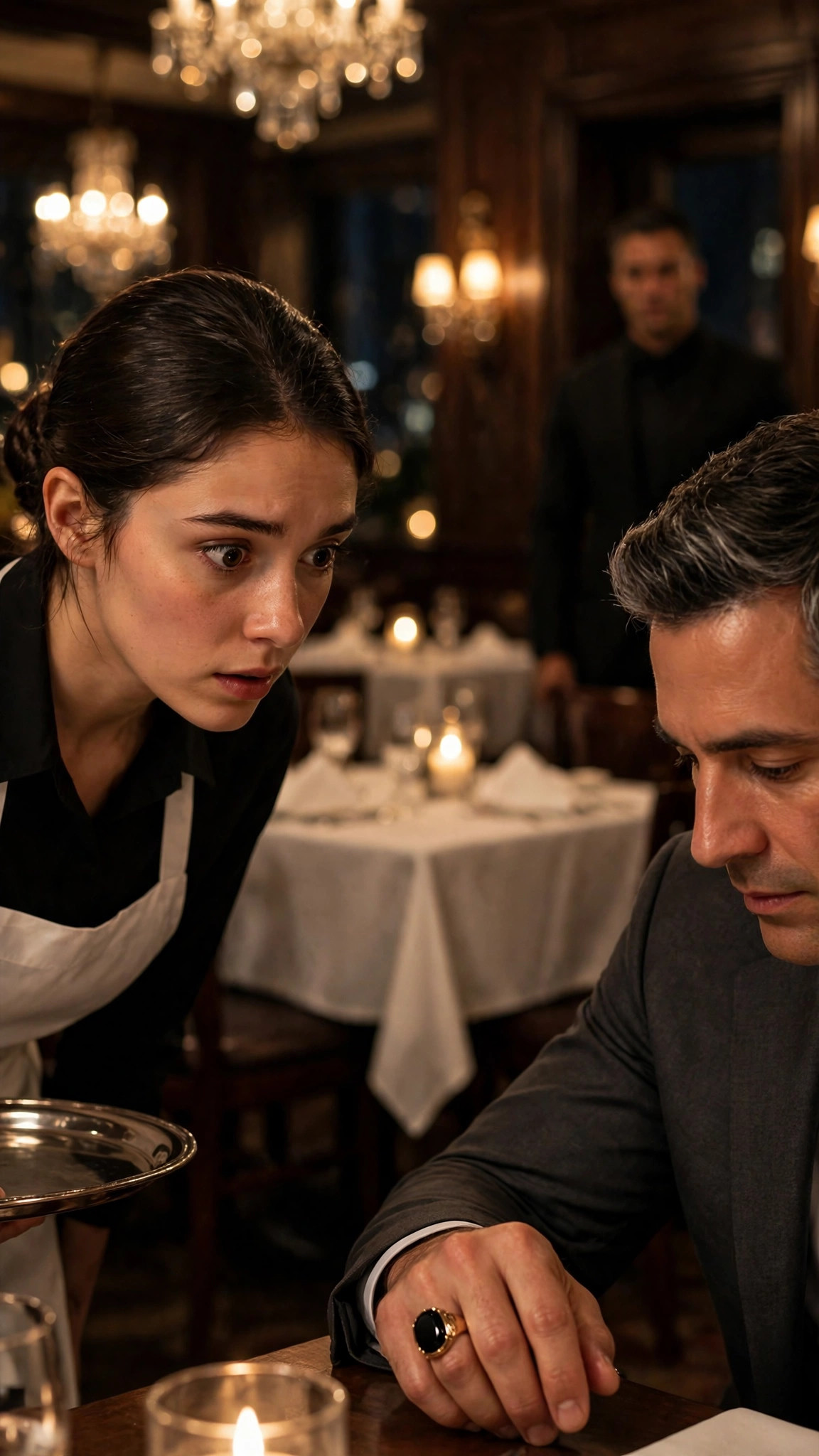
The black onyx ring, set in heavy gold, worn on the fourth finger of the left hand — the finger closest to the heart. In the Caldwell family, the ring was not jewelry. It was a record. Each ring was made once, for one man, when he had earned his place, and it was never taken off, never sold, never given away. It passed from father to son only in death, and only if the son had proven himself worthy of it.
Thomas Caldwell had worn his ring for thirty-one years. He had worn it through the war years, when the family had fought for the Boston docks. He had worn it through the peace years, when the family had built its legitimate businesses — shipping, construction, import and export — into an empire that employed thousands of people who never knew, or never asked, where the money had originally come from. He had worn it on the day he died, at sixty-four, of a stroke in his own office, with his hand resting on a ledger and his ring catching the late afternoon light.
Nathaniel had been twenty-four years old when they buried his father. He had stood at the graveside in the rain, his suit soaked through, and listened to the priest say words that seemed to come from very far away. And when the service was over, his uncle — his father's younger brother, a man named Edward — had taken him aside, opened a small velvet box, and held out the ring.
"It is yours now," Edward had said. "If you want it."
Nathaniel had looked at the ring for a long time. Black onyx, heavy gold, the stone polished so smooth it looked wet. He had thought about the weight his father had described, and about the promises his family had kept for four generations, and about the men who would now look to him — men who had known his father, men who had fought beside his father, men who would test him the way wolves test a new leader.
"I want it," he had said.
He had worn the ring for eighteen years. In that time, he had built the Caldwell family into the most powerful organization in New England — not by being the cruelest man in the room, but by being the calmest. Other bosses shouted. Other bosses threatened. Other bosses made examples of their enemies in ways that filled the newspapers. Nathaniel Caldwell did none of those things. He spoke quietly. He listened more than he talked. And when he made a decision, it stayed made.
That was why the men who worked for him feared him more than they feared any other boss in the country. A shouting man could be predicted. A calm man could not.
And that was why, on the night he walked into Lumière alone, every person in his organization who knew what the black onyx ring meant understood one thing: Nathaniel Caldwell had come to that restaurant because someone had asked him to come, and the person who had asked him was either his most trusted friend or the man who was about to betray him.
The person who had asked him was his consigliere, Charles DeLuca.
Charles DeLuca was fifty-five years old, a thin man with silver hair and hands that shook slightly when he was tired, and he had served the Caldwell family for thirty years — first as Thomas Caldwell's lawyer, then as Nathaniel's closest advisor, the one man in the organization who was allowed to disagree with the boss to his face. Charles had called Nathaniel that afternoon, from his office on State Street, and his voice had been careful in a way that Nathaniel recognized immediately.
"Nathaniel," Charles had said, "I need you to meet me tonight. Eight o'clock. Lumière. There is a man I want you to meet — a new business partner, from New York. He has interests in the shipping lines, and he wants to talk about the docks. I think it is worth an hour of your time."
"Who is he?" Nathaniel had asked.
"His name is Dominic Voss," Charles had said. "He represents certain interests. I have checked him. He is legitimate enough to talk to, and connected enough to matter."
Nathaniel had paused. He trusted Charles DeLuca the way he trusted very few people in the world. But something in the request had felt wrong — not wrong enough to refuse, but wrong enough to notice. A meeting at a restaurant, in public, on a Friday night, with a man he had never met, about business that could have been discussed in an office on a Tuesday morning.
"Why Lumière?" he had asked.
"Because he asked for it," Charles had said. "He said he likes the food. And because it is neutral ground. No one owns Lumière. No one watches Lumière."
No one watches Lumière.
Nathaniel had thought about that sentence for the rest of the afternoon. He had thought about it while he reviewed the week's ledgers in his office, while he signed the papers for the new warehouse in South Boston, while he took the phone call from his sister in Connecticut who wanted him to come for Sunday dinner and meet a woman she was certain he would like.
And he had decided to go.
Not because he trusted the meeting. Because he did not trust it, and the only way to find out what was wrong with it was to walk into it with his eyes open.
He had gone alone. He had left his driver at the curb and his bodyguards at the office, because a man who walks into a trap with an army behind him learns nothing — the trap simply closes on someone else. He had gone alone because he wanted to see the faces of the men who had arranged it, and he wanted them to see his face, and he wanted them to understand that Nathaniel Caldwell did not hide.
What he had not expected was the hostess telling him there was no table.
What he had not expected was the table beside the overflowing trash can.
What he had not expected was the waitress with the sharp eyes who recognized his ring — and the bouncer named Asher, who had been his enforcer for fifteen years and who had been working the door at Lumière for three, waiting, as Nathaniel now understood, for exactly this night.
Asher Kane had not been placed at Lumière by accident. Three years ago, when Nathaniel had first heard rumors that someone was moving against the family from inside, he had asked Asher to take a job at the restaurant — the one place in Boston where every family, every crew, every ambitious man with a grievance eventually came to eat. Asher's job had been simple: watch, listen, and report. For three years, he had watched the comings and goings, the whispered conversations, the men who arrived separately and left together. For three years, he had reported nothing worth acting on.
Until tonight.
And Marcus Hale — Nathaniel's underboss, his second-in-command, the man who had stood beside him for a decade and called him brother — Marcus Hale had been the one who told Dominic Voss that Nathaniel Caldwell would be at Lumière at eight o'clock on a Friday night, alone, unguarded, sitting at whatever table the hostess gave him.
Marcus had sold the dinner for a promise of his own: the throne. Vincent Castellano, the old enemy from New York, had promised Marcus the Caldwell family — the docks, the routes, the whole New England operation — in exchange for one thing.
Nathaniel Caldwell, dead in a restaurant, in front of witnesses, on a Friday night.
It was a good plan. It was a careful plan. It had only one flaw.
It depended on Nathaniel Caldwell being afraid.
And Nathaniel Caldwell, sitting calmly at the worst table in the finest restaurant in Boston, with five armed men standing over him and a black onyx ring gleaming on his finger, was not afraid.
He had been twelve years old when his father told him what a promise was. He had been twenty-four when he took the ring. He had been forty-two when he walked into Lumière alone, knowing it might be a trap, and he had made himself one promise before he crossed the threshold.
Whatever happened tonight, he would not run.
He would sit. He would listen. And he would find out who had betrayed him.
Then he would decide what loyalty was worth — and what it cost.
The morning of the meeting, Nathaniel had woken at five-thirty, as he always did, in the quiet house on Beacon Hill that had been his father's house before it was his. He had made coffee himself — he had never kept live-in staff, preferring the silence — and he had stood at the kitchen window, looking out over the city as it woke up, the streetlights going off one by one, the first delivery trucks rolling down the hill.
His routine never changed. Coffee. The newspaper, read standing up. A run along the river, five miles, in the cold air, no matter the weather. A shower. A suit, chosen the night before. And then the office, where the day's work waited — the ledgers, the contracts, the decisions that could not wait, the men who needed answers.
But that morning, the routine had felt wrong, the way a suit feels wrong when a button is missing. He could not have said why. The coffee tasted the same. The river was the same. The city was the same. And yet, as he ran, his mind kept returning to Charles DeLuca's phone call, and to the words "neutral ground," and to the feeling — the one he had learned to trust over eighteen years of wearing the ring — that something was moving in the dark, just beyond the edge of his vision.
His sister had called him at noon. Catherine Caldwell — Katie, to the family — lived in Connecticut with her husband and two children, and she had long ago decided that her brother's life was her personal business.
"Nathaniel," she had said, without any greeting at all, "Sunday dinner. You are coming. I have already told the children. Do not disappoint them."
"Katie," he had said, "I have a meeting tonight."
"You always have a meeting," she had said. "You had a meeting last Sunday, and the Sunday before that. The children think you are a story I tell them, not a real person. Come on Sunday. And wear something that is not black. You own other colors. I have seen them in your closet."
He had smiled — the small, rare smile he kept for his sister and almost no one else. "I will come on Sunday," he had said. "I promise."
"Good," Katie had said. "And Nathaniel — be careful tonight. I don't know why I am saying that. I just have a feeling."
"A feeling," he had said.
"A sister's feeling," she had said. "Which is worth more than all your bodyguards put together. Be careful."
He had promised her that too, and he had hung up, and he had sat at his desk for a long time, looking at the photograph on the corner — his father, Thomas Caldwell, standing on the docks in 1978, young and straight-backed, his ring catching the sun — and he had thought about the family his father had built, and what it had become.
The Caldwell family was not what it had been in his father's day. The old business — the docks, the trucks, the warehouses — was still there, and it was still profitable, but it was no longer the heart of the empire. The heart, now, was legitimate: the shipping company with two hundred employees, the construction firm that built schools and hospitals, the import business that brought olive oil and wine from Italy and sold it to restaurants all over New England. Thousands of people depended on the Caldwell name for their paychecks, and most of them had no idea that the name had once meant something else entirely, in rooms where the doors were locked and the windows were covered.
Nathaniel had spent eighteen years making the family legitimate — not because he was afraid of the law, but because he believed his father had wanted it. Thomas Caldwell had built an empire with his fists and his wits, but he had dreamed of the day when his son would not have to. "One day," he had said to Nathaniel, when Nathaniel was sixteen and working summers on the docks, "one day this family will not need the dark. One day we will walk in the light, and no one will be able to touch us, because there will be nothing to hide."
Nathaniel had believed him. He had worked toward that day for eighteen years, and he was close — so close he could see it, the way you see the shore from a boat, just before you land.
But there were still men in the family who did not want the light. Men who had grown rich in the dark, and who feared what they would be without it. Men like Marcus Hale, who had stood beside Nathaniel for a decade and called him brother, and who had been counting the days until the throne was his.
Nathaniel had known, for months, that something was wrong with Marcus. The missed meetings. The phone calls taken in another room. The money — small amounts, at first, then larger ones — moving through accounts Nathaniel did not recognize. He had watched, and waited, because a man who accuses his underboss without proof destroys his family faster than any enemy ever could.
But he had not expected the trap to close tonight. He had not expected Lumière. He had not expected to walk into a restaurant alone, and sit at the worst table in the house, and find himself looking at five armed men and a waitress with sharp eyes who recognized his ring.
He had not expected any of it. But he was ready for it. He had been ready for eighteen years, since the day his uncle had held out the velvet box and said, "It is yours now, if you want it."
He had wanted it. And he wanted it still.
Then he would decide what loyalty was worth — and what it cost.