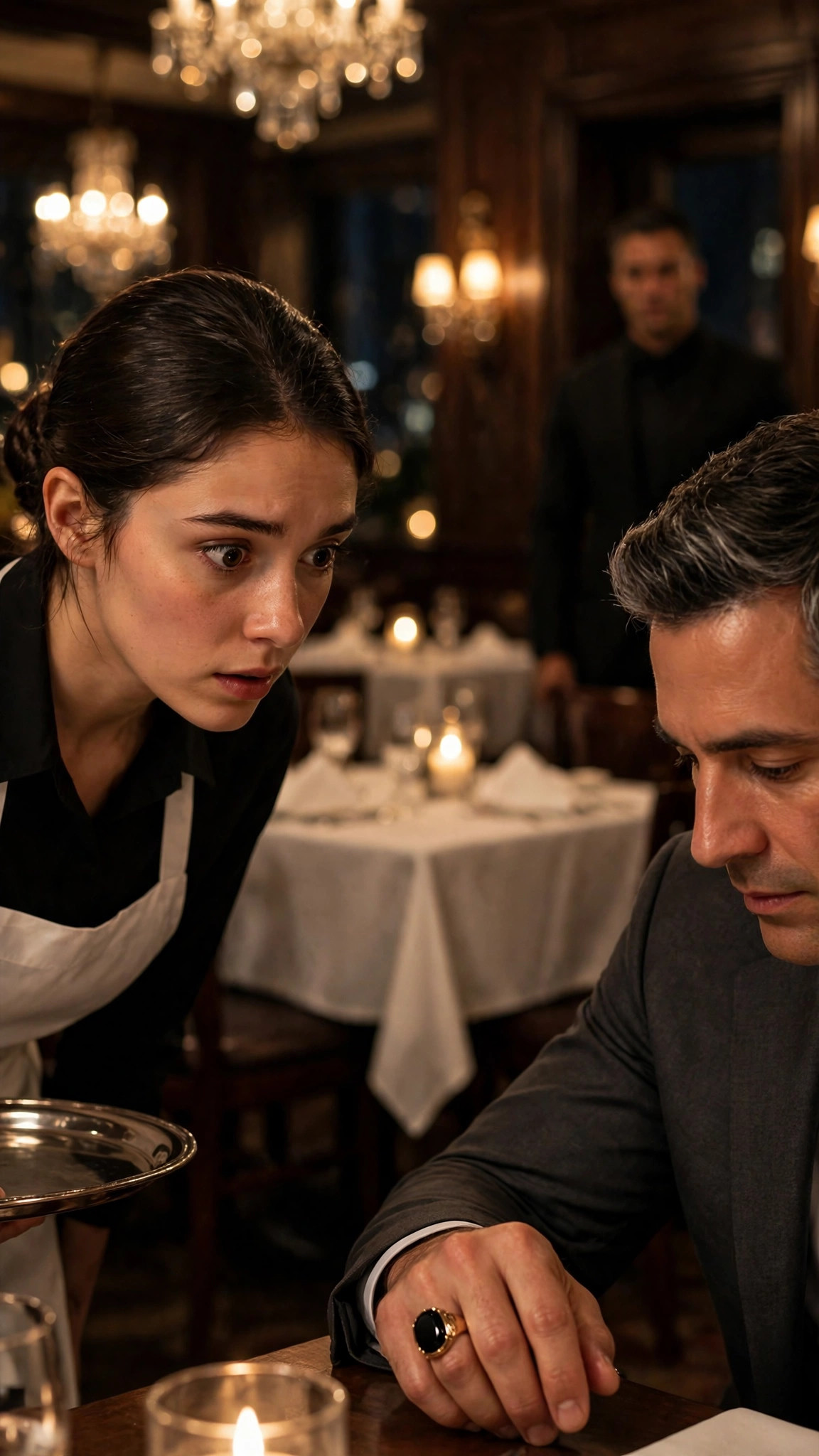
The morning after the night at Lumière, Boston woke up to a story it did not know how to tell.
The newspapers called it a robbery gone wrong. The television stations called it a gang dispute. The police, in their official statement, called it an attempted armed robbery at a restaurant, foiled by quick-thinking staff and a rapid response. None of them mentioned Nathaniel Caldwell by name. None of them mentioned the black onyx ring. None of them mentioned the five men who had been taken away in handcuffs, or the fact that all five had refused to speak to anyone except their lawyers.
But in the rooms where the real Boston did its business — in the back offices on State Street, in the warehouses in South Boston, in the social clubs in the North End where the old men played cards and spoke in low voices — the story was told very differently.
The story was that someone had tried to kill Nathaniel Caldwell in a restaurant full of witnesses, and failed, and that the man who had arranged it was still walking free.
Nathaniel knew who it was before the sun came up.
He knew because Asher had told him, standing in the wreckage of the dining room while the police took photographs and the FBI asked questions, his knuckles wrapped in a bar towel and his voice flat with the kind of anger that does not shout.
"It was Marcus," Asher had said. "Voss told me, while they were putting the cuffs on him. He said Marcus called him yesterday afternoon. He said Marcus told him where you would be, and when, and that you would be alone. He said Marcus promised him fifty thousand dollars, and a place in the new organization, after Castellano took over."
Nathaniel had listened without expression. He had nodded once. And then he had said, "Thank you, Asher. Go home. Get your hand looked at. I will call you tomorrow."
He had not slept that night. He had sat in his office on the top floor of the Caldwell building, looking out over the harbor as the sky went from black to grey to the pale gold of morning, and he had thought about Marcus Hale.
Marcus Hale was forty-five years old, and he had been Nathaniel's underboss for ten years. He had been there on the day Nathaniel took the ring. He had been there on the night Nathaniel's father died. He had stood beside Nathaniel at weddings and funerals, at christenings and sit-downs, and he had called Nathaniel brother a thousand times, in front of a thousand witnesses, and Nathaniel had believed him every single time.
That was the thing about betrayal. It never came from a stranger. It came from the man who knew where you would be on a Friday night, and what time, and that you would be alone.
Nathaniel had given Marcus everything. A territory. A salary that would have made a banker weep. A seat at every table that mattered. And Marcus had sold it all — sold Nathaniel, sold the family, sold ten years of loyalty — for a promise from Vincent Castellano, a man from New York who had been trying to take the Boston docks for twenty years and had never once succeeded, because every time he tried, the Caldwell family had been there, calm and unmovable, like a wall.
Nathaniel understood why Marcus had done it. He understood it the way a man understands a disease — not with sympathy, but with clarity. Marcus was forty-five years old, and he had spent his whole life as the second man in the room. He had watched Nathaniel take the ring at twenty-four, and he had waited, patiently, for his own turn, and his turn had never come. The ring went to the son, not to the friend. The throne went to the blood, not to the loyal. And after twenty years of waiting, Marcus had decided that if the throne would not be given to him, he would take it — and if he could not take it, he would burn it down and build a new one from the ashes.
It was a familiar story. Nathaniel had seen it before, in other families, in other cities. Ambition, left to rot in the dark, always turned to poison.
But understanding it did not make it hurt less.
At nine o'clock on Saturday morning, Nathaniel called a sit-down.
The sit-down was held in the back room of a social club in the North End, a room with wood-paneled walls and a long table and a window that looked out over a narrow street where old women hung laundry from lines strung between the buildings. The men who sat at that table were the heads of the Caldwell family — the capos, the lieutenants, the men who ran the docks and the warehouses and the construction crews. They had been summoned with a single phone call each, and they had come, because when Nathaniel Caldwell called a sit-down, you came.
Marcus Hale came too. He sat at Nathaniel's right hand, as he always did, in a suit that cost more than most men's cars, and he smiled, and he asked about the restaurant, and he said he was glad Nathaniel was alive, and he did not know — or pretended not to know — that every man in the room was watching him.
Nathaniel waited until everyone was seated. He waited until the door was closed and the coffee was poured and the room had gone quiet. Then he stood up, and he took off his jacket, and he laid it over the back of his chair, and he looked around the table, slowly, meeting every man's eyes in turn.
"Last night," he said, "five men walked into Lumière with guns, and tried to kill me in front of a room full of witnesses. They failed. They are in custody. They will be tried, and they will go to prison, and they will stay there for a very long time."
He paused.
"But the five men are not the story. The five men are the end of the story. The beginning of the story is the man who told them where I would be."
The room went very still. A fly buzzed against the window. Someone's coffee cup rattled in its saucer.
"Dominic Voss, the leader of the hit team, has told the FBI everything," Nathaniel said. "He has told them who called him. He has told them what he was promised. And he has given them the phone records to prove it."
He reached into his jacket pocket and took out a single sheet of paper, folded in half. He laid it on the table, in the center, where everyone could see it.
It was a phone record. Forty-seven calls, over three months, between two numbers. One of them belonged to Dominic Voss. The other belonged to Marcus Hale.
"Forty-seven calls," Nathaniel said. "And yesterday afternoon, at four o'clock, a call that lasted eleven minutes. Eleven minutes, Marcus. That is a long time to talk about the weather."
Marcus Hale's face went white, then red, then white again. He opened his mouth. He closed it. He looked around the table, at the men who had been his brothers for a decade, and he saw what Nathaniel had already seen — that there was no one left in the room who would stand for him.
"Nathaniel," Marcus said, and his voice cracked. "Brother. Listen to me. I can explain."
"Can you?" Nathaniel said. "Can you explain why you sold me to Vincent Castellano? Can you explain why you told a hit team that I would be alone in a restaurant on a Friday night? Can you explain the fifty thousand dollars in your account this morning, Marcus — the fifty thousand dollars that came from a shell company in New York, a company that belongs to Castellano?"
Marcus stood up so fast his chair fell backward and hit the floor with a crack like a gunshot.
"I did it for the family!" he shouted. "You have been soft, Nathaniel! You have been soft for years! The docks are dying, the routes are drying up, Castellano is eating us alive, and you sit in your office and talk about promises and loyalty while the whole world moves past us! I did what had to be done!"
The room was silent. The fly buzzed against the window. Nathaniel looked at Marcus Hale for a long moment — at the man who had been his brother, who had stood beside him for ten years, who had just confessed, in front of everyone, to selling him to his enemies.
And then Nathaniel did something no one in the room expected.
He sat down.
"Sit down, Marcus," he said quietly. "Sit down, and listen to me, because I am going to tell you what happens now."
Marcus sat. His hands were shaking.
"What happens now," Nathaniel said, "is that you are going to walk out of this room, and you are going to go to the FBI, and you are going to tell Agent Daniel Reyes everything you know about Vincent Castellano — every payment, every shell company, every man he owns in this city. And then you are going to testify, in open court, against the man who promised you my throne."
Marcus stared at him. "And if I don't?"
"Then I will give you to the men in this room," Nathaniel said, "and they will do what this family has always done to traitors. But I am not going to do that, Marcus. Not because you deserve mercy. Because I do not want your blood on my hands, and I do not want your blood on this family's hands. I want Castellano. And you are going to give him to me."
He stood up. He put his jacket back on. He looked around the table one last time.
"This family survives," he said, "because we keep our promises. Marcus broke his. But I am going to keep mine — the promise I made to my father, that this family would never become what our enemies are. We do not kill our own. We do not settle our debts in the dark. We let the law do what the law was made to do."
He walked to the door. He stopped. He turned back.
"And Marcus," he said, "when you testify, tell them about the restaurant. Tell them about the five men. Tell them about the waitress who pulled the fire alarm and saved lives. Tell them everything. Because the truth is the only weapon Castellano cannot buy."
Marcus Hale sat at the table, alone, long after the other men had gone, staring at the phone record in the center of the wood, at the forty-seven calls that had ended everything he had ever been.
And in a small apartment above a bakery in the North End, Viviana Marchetti stood at her kitchen window, looking out at the street below, and wondered why the most feared mafia boss in New England had sent her flowers — white roses, a dozen of them, with a card that said only three words.
"Thank you. — N.C."
She did not know it yet. But the story of the black onyx promise was only just beginning.
Marcus Hale had not always been a traitor. That was the part Nathaniel found hardest to carry, in the days after the sit-down — harder than the betrayal itself, harder than the phone records, harder than the fifty thousand dollars.
Marcus had joined the family at nineteen, a thin boy from South Boston with quick hands and quicker wits, who had started as a runner for Nathaniel's father and worked his way up the way hungry boys do — by being useful, by being loyal, by being there. Thomas Caldwell had liked him. He had called him "the boy with the bright eyes," and he had given him his first real job, running the docks at night, and Marcus had done it well. So well that when Nathaniel took the ring, Marcus was the first man he promoted — to capo, and then to underboss, and then to the seat at his right hand.
For ten years, Marcus had been the man Nathaniel trusted most. He had carried messages. He had settled disputes. He had stood in rooms where other men were afraid to stand, and he had never once flinched. The other capos respected him. The younger men admired him. And Nathaniel — Nathaniel had believed, truly believed, that Marcus was his brother in every way that mattered except blood.
At the sit-down, after Nathaniel had laid the phone record on the table, the other men had reacted the way men react when the world tilts under their feet. Old Frankie Benedetti, who had known Marcus since he was a boy, had gone pale and crossed himself. Tommy Rizzo, the youngest capo, had stood up so fast his chair had fallen, and it had taken two men to hold him back. And Charles DeLuca — the consigliere, the man who had served the family for thirty years — had simply closed his eyes, and shaken his head, very slowly, the way a man shakes his head at a funeral.
"He was like a son to Thomas," Charles had said, quietly, after Marcus had gone. "Thomas would have wept to see this."
"He would have," Nathaniel had agreed. "And then he would have done what had to be done. That is why I am doing it my way, Charles. Not his way. My way."
Charles had looked at him for a long moment, and then he had nodded, and he had said, "Your father would be proud of you, Nathaniel. I hope you know that."
Nathaniel had not answered. He had walked out of the social club into the narrow street, where the old women were hanging laundry from the lines, and the smell of sauce drifted from an open window, and the city went on being the city, as if nothing had happened — as if a brother had not betrayed a brother, and a family had not nearly been destroyed from the inside.
He had driven home alone, through the dark streets, and he had thought about the weight of the ring on his finger, and about the promise he had made to his father, and about the waitress who had pulled a fire alarm and saved lives, and who had no idea that the flowers on her kitchen table had come from the most feared man in New England.
And he had decided, sitting in his car outside his house on Beacon Hill, that when the danger was past, he would go back to Lumière, and he would find her, and he would thank her properly — not with flowers, and not with money, but with the only thing he had left to give that was truly his.
His time. His honesty. Himself.
She did not know it yet. But the story of the black onyx promise was only just beginning.