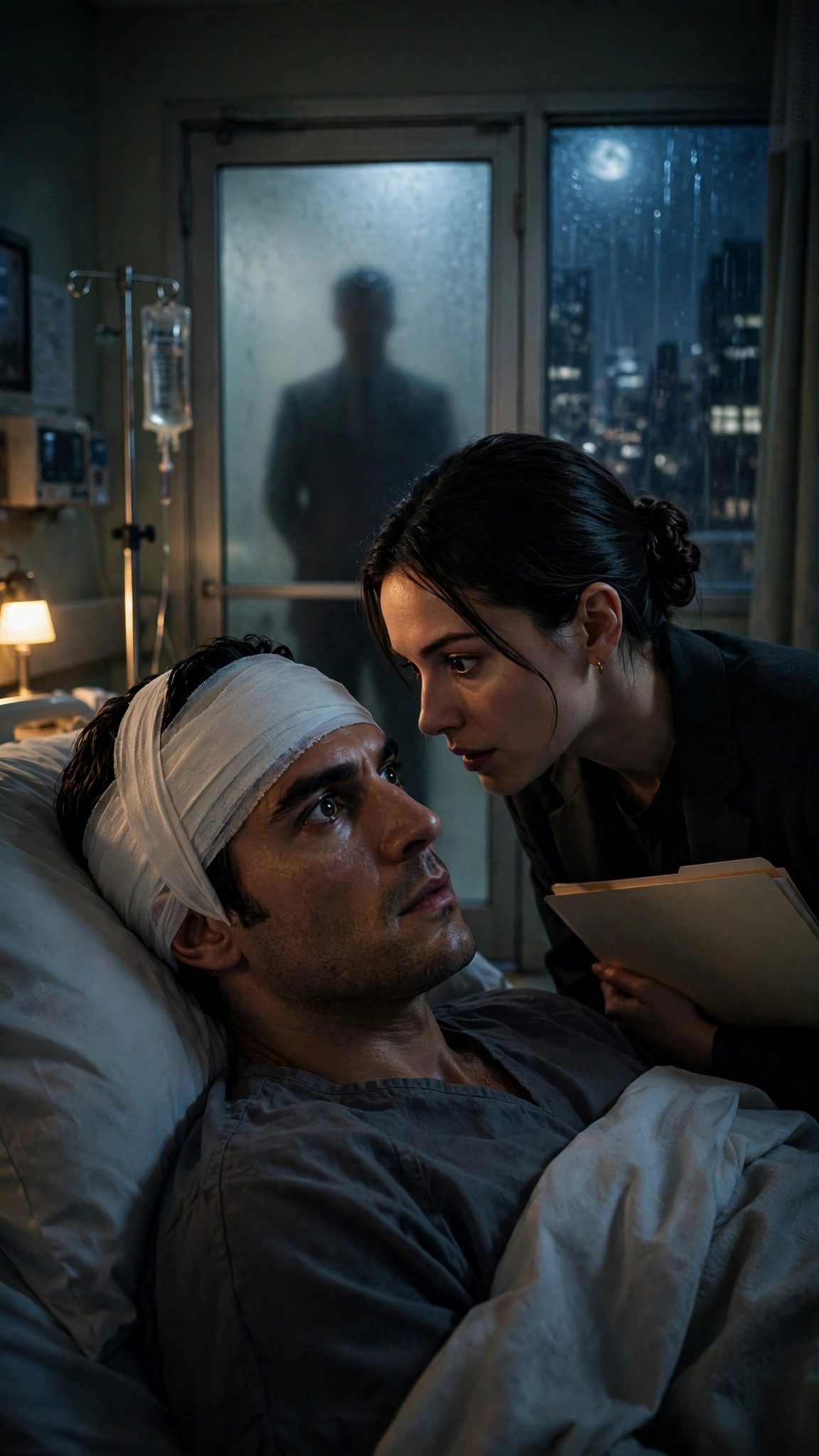
The morning of the meeting, I had woken up in my apartment on the Upper East Side with no reason to believe it would be different from any other Tuesday. That is the thing about betrayal. It never announces itself. It wears an ordinary coat and knocks on an ordinary door, and by the time you recognize its face, it is already inside your house.
My apartment was quiet that morning. The housekeeper had been and gone. Coffee was waiting in the kitchen, black and strong, the way I had drunk it since I was twenty-one years old and my father first sat me down and told me what the family really was, in words so plain they left no room for pretending. My father had been a careful man. He believed in books and ledgers and knowing exactly who owed you what. He died of a heart attack in his office when I was twenty-nine, and I took the family the next day, the way you take a coat off a hook — because it is yours, and because there is no one else to wear it.
I had spent nine years making the family smaller and cleaner than my father had left it. Restaurants, real estate, imports — the legitimate businesses, grown until they were big enough to stand on their own. The old business, the one that paid for the apartment and the cars and the silence, I had been winding down, piece by piece, year by year, the way a man unwinds a rope he no longer wants to be tied to. That was the reason for the meeting that night. The docks. The last of the old business. A dispute between two of my captains over who controlled the shipping schedules, and a decision I had finally made: the docks would go legitimate, or they would go to no one at all.
That decision was going to cost someone a great deal of money. I knew that. I had known it for weeks. What I had not known was that one of the five people I trusted most had already decided to collect on it in advance.
The five names. I had made the list myself, that morning, in my head, the way I always did before a private meeting: who knows, who needs to know, who must never know. The meeting was not on any calendar. Emily had arranged it by phone, from a line that could not be traced, and she had told each of the five in person, in the same quiet voice she used for everything that mattered.
Marco Benedetti, forty-one years old, my right hand for eight years. He had come to me as a driver when he was twenty-six, with hands that knew engines and a temper that knew no fear, and he had risen because he was loyal in the way that mattered most in my world: he was loyal when it cost him something. Three years ago, during the war with the Castellano family, Marco had taken a knife meant for me and carried the scar across his ribs ever since, and he had never once mentioned it, not to me, not to anyone. He was the man I trusted to stand near the door, and that night he had stood near the door of the private room at Santoro's, the way he always did, with his back to the wall and his eyes on the room.
Emily Carter, twenty-nine, my secretary for three years. She had come to me through a temp agency, of all things, a girl from Queens with a degree in business and a mother who cleaned offices at night, and within six months she had reorganized my entire life — my schedules, my contacts, my money — with a precision that frightened my captains and impressed me. She knew my secrets because she filed them. She knew my movements because she scheduled them. She was the one person in the world who knew where I was every hour of every day, and she had never once let that knowledge slip, not even to Marco, not even when Marco asked her directly, the way he sometimes did, with a smile that was meant to be charming and was not.
Sal DeLuca, fifty-four, a capo who had been with the family since before I was born. He had worked for my father, and his father had worked for my grandfather, and the DeLuca name was carved into the history of the family the way a name is carved into a church wall. Sal ran the docks. He had run them for thirty years, and the docks had made him rich, and the decision I was going to announce that night — that the docks would go legitimate — was going to cost him more than anyone else. I had known that, and I had planned to take care of him. A new position. A share of the legitimate business. A way to retire with dignity. I had not yet told him. That was my mistake, perhaps. Or perhaps it was not a mistake at all, and he had already decided he did not want my generosity. He wanted the docks, the way they were, and the money the way it was, and he was willing to pay a gunman to keep them.
Frankie Gallo, thirty-two, my driver. He had driven for me for five years, and he knew the city the way a man knows his own house — every street, every alley, every place a car can disappear. He had driven me to the restaurant that night, and he had waited outside in the car, the way he always did, with the engine running and the radio low, and when the shooting started he had come through the front door with his gun out, before anyone else had moved. He had been the first person to reach me after the bullet, and he had pressed his jacket against my temple and held it there, and he had said, "Stay with me, boss. Stay with me," in a voice that did not shake, and I had believed him.
Leo Santoro, forty-six, the owner of the restaurant. He had grown up with me on the same streets, the son of a baker, and he had built his restaurant with his own hands, table by table, until it was the place where the whole family came to eat and to talk and to settle things the way men settle things over good food and better wine. The private room at the back was mine whenever I needed it. No one else used it. No one else even knew it existed, except the five. Leo had been in the kitchen that night, arguing with his chef about the risotto, and when the lights went out he had come running with a meat cleaver in his hand, and he had stood over me while Frankie held the jacket to my head, and he had cursed in Italian, the way his father used to curse, until the ambulance came.
Five people. Five names I had trusted with my life. One of them had sold the time and the place to Vincent Castellano, the head of the family that had been trying to kill me for nine years, the man who had ordered the war that put a knife in Marco's ribs and a bullet in my temple.
That was the truth I woke up with in the hospital. And that was the truth I hid behind a lie.
The afternoon after I woke up, they let Marco stay with me, and the two of us sat in the white room while the rain fell outside, and he told me what had happened after the shooting, the way a man tells a story to someone who cannot remember it.
"You were in the private room," he said. "Just you and the captains. Sal and the others. The meeting was about the docks. You were about to speak when the lights went out. Not a flicker — all at once, the whole room, like someone threw a switch. Then the shooting started. Three shots, maybe four. Glass breaking. People shouting. Frankie came in through the front, and I came in from the hallway, and the shooter was already gone. Out the kitchen door, into the alley. Leo's chef saw a man in a black coat, but he didn't see his face."
"And me?" I asked, in my confused voice, the voice of a man trying to remember.
"You were on the floor," Marco said. "Bleeding from the head. Frankie had his jacket on you. The ambulance took twelve minutes. The doctors said another inch and you would have died."
He said it the way a man says something he has said to himself a hundred times in the dark, trying to make it true by repetition.
"Who would do this?" I asked, and I let the question sound innocent, the way a man who has lost his memory might ask it.
Marco's jaw tightened. "Castellano," he said. "It has to be Castellano. But Castellano could not have known where you were. Someone told him. Someone in this room, or someone who knew about this room."
He looked at me then, and I saw the fear in his eyes, and I understood what he was afraid of. He was afraid that I would look at him and see the traitor. He was afraid that the five names on my list would shrink to one, and that one would be his.
"Do you think it was me?" he asked, quietly, and the question hung in the white room like smoke.
I stared at him the way a confused man stares at a question he does not understand, and I said, "I don't know, Marco. I don't remember anything. I don't even remember if I trust you."
It was cruel. I knew it was cruel even as I said it. But cruelty was the price of the plan, and the plan was the only thing standing between me and a second bullet.
Marco nodded slowly, and his hands stopped shaking, and something in his face went very still, the way a man's face goes when he has decided to carry a weight without complaining about it.
"Then I will earn it again," he said. "Whatever it takes. I will find who did this, and I will bring him to you, and then you can decide."
After he left, Emily came back. She did not knock. She never knocked. She came in with the folder under her arm and a cup of coffee in her hand, and she set the coffee on the table beside my bed, and she stood there looking at me with those eyes that missed nothing.
"You are not as good an actor as you think you are," she said, quietly, so that no one in the hallway could hear.
I did not answer. I let my face stay confused, the way a man with no memory would.
"The way you looked at Marco," she said. "You watched his hands. You watched his eyes. You were testing him. A man with no memory does not test people. A man with no memory asks questions. You were not asking questions. You were listening for lies."
She sat down in the chair Marco had used, and she opened the folder, and she turned it toward me so I could see what was inside: a schedule, printed in her neat handwriting, with the meeting at Santoro's circled in red ink, and beside it, in the margin, a note in her own small, precise letters.
"Sal DeLuca called the restaurant at 6:42 p.m.," the note read. "He asked to confirm the private room. He has never called the restaurant before. He has never needed to. Leo told me."
She turned the page. Another note. "Sal DeLuca made a call from the pay phone on the corner of 52nd Street at 7:10 p.m. The call lasted ninety seconds. The number he called belongs to a phone that was bought with cash three days ago and has been used twice. Both times, the phone called a number registered to a company owned by Vincent Castellano."
She turned the page again. A photograph, printed on ordinary paper, a little grainy, the way security camera photographs always are. It showed a man in a dark coat standing in the alley behind Santoro's restaurant, looking at his watch. The man's face was turned away from the camera, but his coat was open, and on his hip, in a leather holster, there was a gun.
"Leo's kitchen camera," Emily said. "He gave it to me this morning, before the police asked for it. The time stamp is 8:47 p.m. Thirteen minutes before the shooting. The man is not one of ours. I have checked every face in the family. I do not know him. But the coat is the same coat the chef described, and the gun is the same shape as the one the police found in the alley."
She closed the folder and looked at me, and her face was calm, and her voice was steady, and she said the thing I had been waiting to hear since I woke up.
"I know everything," she said again, and this time there was no one else in the room to hear it. "I know you remember. I know Sal sold the meeting. I know Castellano paid for it. And I know Marco did not."
"How do you know?" I asked, and I let my real voice come back, just for a moment, just for her, because she had earned it.
"Because Marco was with me when the shooting started," she said. "He was in the hallway outside the private room, on the phone with me, asking me to check the delivery schedule for tomorrow. The call is on my phone. Eight minutes long. It started at 8:52 and ended at 9:00. The shooting was at 9:00. He could not have been in two places at once."
She leaned closer, and her voice dropped even lower.
"And because I know you, Vincent. I have worked for you for three years. I know the way you look at a man when you are deciding whether to trust him, and I know the way you look at a man when you already have. You looked at Marco the way you look at a man you have already decided to trust. You were testing him because you had to, not because you believed it. So I am telling you what I know, so you do not have to waste your time testing the wrong man."
I looked at her for a long time. At the dark hair pulled back into its knot. At the hands that had written those notes in such small, precise letters. At the eyes that had seen through my lie in less than a minute, when the doctor had believed it, and Marco had believed it, and the whole hospital had believed it.
"Why are you telling me this?" I asked.
"Because someone has to know the truth besides you," she said. "And because if you die pretending to forget, the truth dies with you. And I am not going to let that happen. Not to you. Not to this family. Not while I am still standing."
She picked up the folder and held it against her chest, the way she had held it when she first walked into the room, and she stood to leave.
"One more thing," she said, at the door. "Sal does not know I have the photograph. He does not know I have the phone records. He thinks the only person who knows is the man he sold you to, and that man thinks you are dead, or as good as dead. That is your advantage. Use it. And when you are ready to stop pretending, tell me first. I will be ready."
Then she was gone, and I was alone in the white room with the rain on the glass and the monitor counting my heartbeats, and I thought about the five names again.
Marco. Emily. Sal. Frankie. Leo.
Five names. One traitor. One woman who knew everything.
And for the first time since the bullet, I felt something I had not felt since I woke up in that hospital bed.
I felt like I might win.