The next appointment was on a Thursday.
Claire chose the date herself after speaking with the treatment coordinator. She had reviewed the information the doctor provided, written down the questions she still wanted answered, and decided she was ready to discuss the adjusted plan. She was not pretending the previous reaction had never happened. She was choosing to continue managing the disease with the medical team, one decision at a time.
Adrian asked whether she wanted him to drive.
"I think I can manage the trip," she said. "But I'd like you with me."
"Then I'll come."
"And I want to speak first when we meet the doctor."
"Of course."
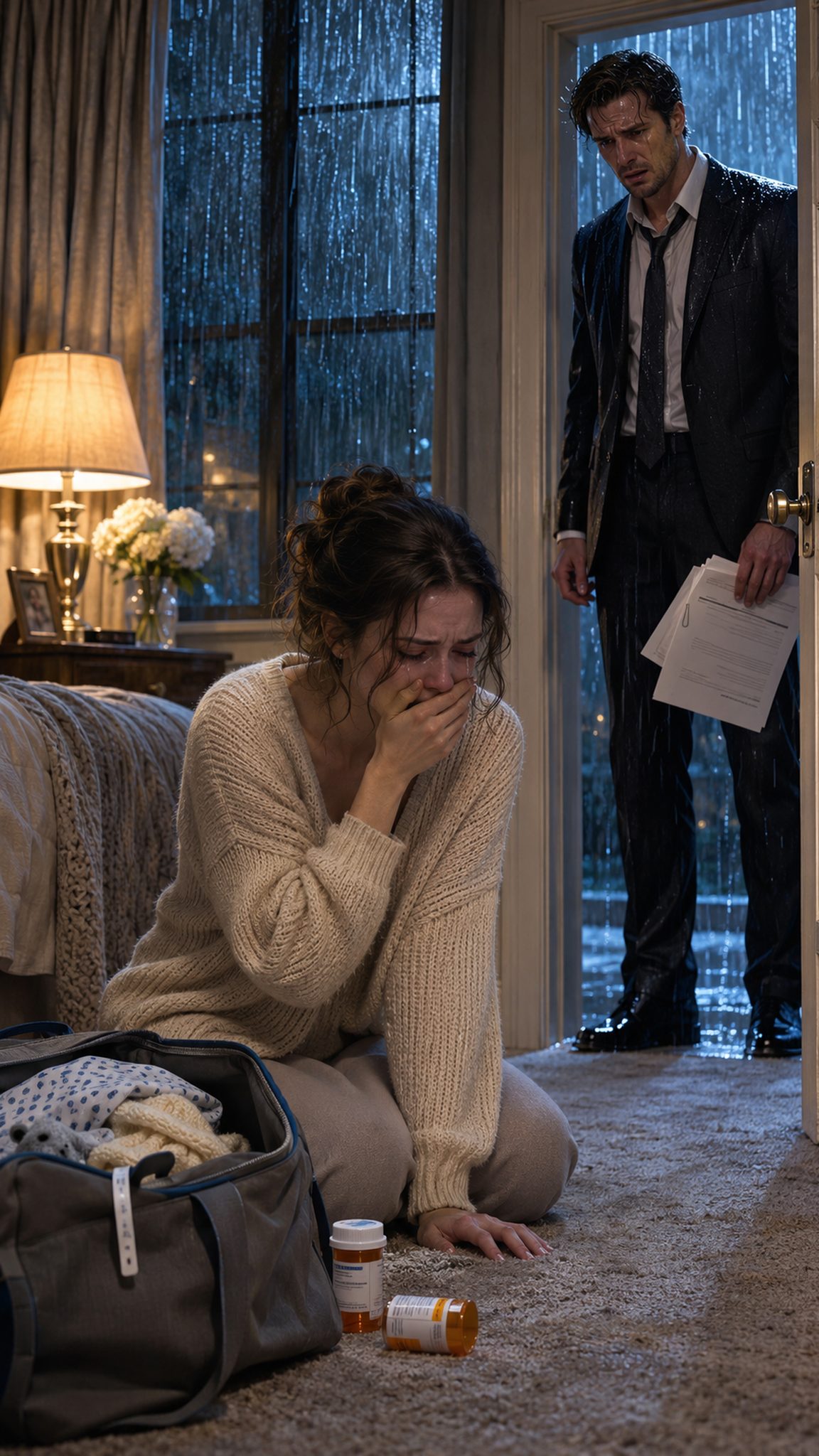
She put her notebook in the canvas bag she had used on the stormy night. The bag had been cleaned and repaired where the zipper had begun to fray. It still carried a faint crease from being packed in a hurry, and Claire had considered replacing it. In the end, she kept it. It was practical, familiar, and still perfectly useful.
Adrian watched her check the contents.
"Do you have everything?"
"Yes. Notebook, medication list, phone, charger."
"Water?"
"There's a bottle in the car."
"Good."
Claire looked up. "You don't have to check every item."
"I know."
"Then why do you?"
He considered the question. "Because I used to notice too little. Sometimes I overcorrect."
She smiled. "You do."
"I'll work on that too."
At the hospital, Claire led the conversation. She described the days following the crisis, the fatigue that remained, and the symptoms that had improved. She asked the doctor to explain the adjusted treatment plan again, including what would be monitored and what would cause the team to pause or reconsider.
The doctor answered each question without promising a simple course. The disease remained active, and the treatment would require continued observation. The previous reaction had to be taken seriously, but it did not mean that Claire had no options. The team had reviewed the available information and believed a carefully adjusted approach could be considered, with additional monitoring and clear instructions.
Claire asked for a moment to think.
Adrian sat quietly.
After a few minutes, she said she wanted to proceed with the plan as discussed. She confirmed the follow-up schedule and repeated the warning signs she had been told to report. The doctor made sure she had the contact details for the treatment team and knew how to reach them outside the ordinary appointment process.
When they left the consultation room, Adrian asked, "How do you feel about the decision?"
"Carefully hopeful."
"Are you comfortable with it?"
"Yes. I asked what I needed to ask. I understand what they are watching for, and I know I can contact them if something changes."
"Then I'm glad."
She looked at him. "You didn't tell me what I should choose."
"It's your treatment."
"Thank you."
He offered his hand. She took it.
The next phase was not effortless. Claire still had days when fatigue interrupted her plans. Some mornings she woke with stiffness and needed extra time before moving around comfortably. There were follow-up calls, blood tests, medication reviews, and appointments that could not be moved simply because the family wanted a quiet week.
But the adjusted plan was manageable. The treatment team monitored her closely, and Claire became more confident about recognizing what was normal for her and what needed attention. Her symptoms did not disappear, but there were encouraging periods when she had more energy and could return to small parts of her ordinary routine.
Adrian learned that hope did not mean asking her to be cheerful.
When she had a difficult day, he did not tell her that tomorrow would be better. He asked what she needed that afternoon. Sometimes she wanted him to sit with her. Sometimes she wanted him to take care of dinner and leave her in peace. Sometimes she wanted to talk about something completely unrelated to medicine.
He learned to follow her answer.
The businesses changed too. The managers began making decisions within their authority instead of forwarding every inconvenience to Adrian. The freight yards continued operating. The construction projects moved forward. The private clubs ran under their general managers. Adrian remained responsible for the larger direction of the companies, but he no longer treated every question as something only he could answer.
He kept protected time for Claire's appointments and made himself reachable through the family emergency channel. The backup system was tested regularly. Messages were logged and confirmed. The office assistant no longer had to guess whether a medical call could interrupt a meeting.
The new procedure became ordinary.
That was what Adrian wanted. He did not want it to be remembered as a special arrangement created after a crisis. He wanted it to be the way the office worked.
Daniel continued as Adrian's attorney, but his responsibilities were different. He handled legal matters and no longer controlled personal communications or family scheduling. His performance review recorded the earlier failures, the corrective measures, and the limits placed on his role. He completed the required review of the communication process and cooperated with the office audit.
The assistant and office manager completed their retraining. Their access was restricted where necessary, and their responsibilities were made clear. They were not dismissed to satisfy Adrian's anger. They were held accountable, given a fair process, and expected to follow the new rules.
A month after the incident, Daniel brought Adrian the final governance report.
"The procedure has been tested on the weekday and weekend shifts," he said. "Both tests were successful. The designated deputy received the message, confirmed it, and escalated it according to the new rules."
"Any problems?"
"One minor delay during the first test. The backup contact was updated, and the second test worked."
"Good. Keep testing it."
Daniel nodded. "The staff have also completed the acknowledgments."
Adrian reviewed the report. "Thank you."
Daniel hesitated. "There is something else. I want to apologize to Claire directly, if she would accept it."
Adrian closed the report.
"That is her decision. You may send a brief note through me, but don't contact her directly unless she says she wants that."
"Understood."
"Your apology should not ask her to reassure you. Don't explain why you thought the messages could wait. Acknowledge what you did and leave the choice to her."
Daniel nodded. "I can do that."
He wrote a short letter that afternoon. It acknowledged that he had deferred Claire's first message, removed the appointment from Adrian's calendar, and failed to follow up on the later hospital communication. He apologized without blaming the office system or Adrian's instruction. He did not ask for forgiveness.
Adrian gave the letter to Claire only after asking whether she wanted to read it.
She read it at the kitchen table.
"Do you want me to respond?" Adrian asked.
"No. Not now."
"All right."
She folded the letter and placed it in the drawer with the other office documents.
"Do you think he understands?" Adrian asked.
"I think he understands what he did. Whether he understands what it felt like is something else."
"That's fair."
Claire looked at him. "I don't need him to understand every part. I need the system to be different."
"It is."
"Then that's enough for now."
The following weekend, Claire asked Adrian to take her to the river.
The weather was mild. The sidewalks were dry, and the water moved slowly beneath the bridges. They walked at Claire's pace, stopping when she wanted to rest. Adrian did not ask how far she could go or suggest that they turn back unless she looked tired.
At a bench near the water, Claire sat and watched a boat pass.
"I used to come here when we first met," she said.
"I remember."
"You were standing in the way of the terrace doors."
"You told me I was blocking the exit."
"You were."
"I moved."
"Eventually."
He smiled.
She looked at him. "I remember thinking you were used to people moving around you."
"I was."
"And then you asked me to marry you."
"I did."
"I believed you would always notice when something was wrong."
Adrian looked at the water. "I should have."
"I know you can't notice everything. I don't expect that. But I need you to ask. I need us to talk before silence becomes the only thing we have."
"I want that too."
"Then we need to make it a habit. Not just when there's a hospital appointment."
He turned toward her. "What would help?"
"An ordinary check-in. At dinner, or before bed. We ask how the day went. Not just whether there is a problem. We talk about the things that went well too."
"I can do that."
"And if one of us is upset, we say so. We don't wait three weeks and pretend it doesn't matter."
"Agreed."
She held his gaze. "And you tell me when work is taking too much of your attention. I would rather hear that you are under pressure than have you disappear into it."
"I'll tell you."
They sat for a while longer. When Claire was ready, Adrian helped her stand. She took his arm, and they walked slowly back toward the car.
The next medical review brought another cautious sign of progress. Claire's doctors noted that some of her symptoms were becoming more manageable under the current plan. They did not describe the disease as gone or promise that treatment could end soon. They recommended continuing the monitoring schedule and maintaining the adjustments that had helped so far.
Claire was relieved.
In the car, she looked at the appointment summary.
"I know this isn't a cure," she said.
"I know."
"But it is good news."
"It is."
"I want to enjoy it without being told to stay realistic every five minutes."
Adrian smiled. "Then we'll enjoy it."
They stopped at the bakery near the river. Claire chose a small cake and asked for two forks. They took it home and ate it at the kitchen table.
Adrian raised his fork. "To good news."
"To careful progress," Claire corrected.
"To careful progress."
They touched their forks together and laughed.
The celebration was small, but it felt important. For months, Claire's life had been measured in tests, appointments, symptoms, and waiting. That afternoon, they allowed a good result to be good without pretending it meant everything was over.
Later, Adrian found Claire in the bedroom looking at the old hospital bag.
She had taken it from the closet and placed it on the bed. The zipper had been repaired, and the canvas was clean. Beside it lay the white plastic bracelet from her previous admission and the emergency contact card she had written on the stormy night.
Adrian stopped in the doorway.
"Do you want me to leave?"
"No. Come in."
He approached the bed.
"I found these when I was looking for the newer treatment papers," she said. "I kept them because I didn't know what to do with them."
She picked up the bracelet.
"I remember wearing this home. I remember putting it in the drawer because I didn't want to look at it."
Adrian looked at the card.
DO NOT CALL ADRIAN.
The words were still clear.
"I don't want to throw it away," Claire said. "It belongs to what happened. But I don't want it to be the last instruction I ever write about you."
Adrian swallowed.
"What would you like to do with it?"
"I want to keep it in the folder, with the old records. Not as a rule for the future. As a reminder of what I had to do when I couldn't reach you."
He nodded.
She placed the card inside the folder and closed it.
"There's something else," she said.
"What?"
"I want to make a new emergency-contact arrangement. Not because I owe you that. Because I want to choose it now."
Adrian did not move.
"Tell me what you want."
Claire explained that she wanted him listed as her primary family contact again, but with a direct backup route that did not depend on his office assistant or a single phone. The hospital should contact him if she authorized it, but treatment and emergency care must never be delayed while anyone tried to reach him. She wanted the medical team to retain her own contact details and follow her instructions about who could receive information. She also wanted a second trusted contact available if Adrian could not be reached.
They discussed the practical details together.
Adrian did not assume that being listed as her husband gave him unrestricted access to her medical information. Claire would decide what could be shared, and the hospital would follow its own privacy procedures. The new arrangement would allow the staff to reach him when she wanted them to, while keeping her medical decisions in her hands.
"Are you sure?" he asked.
"Yes. I want you to be the first person they call when I ask them to. I also want the backup contact and the instruction that care comes first."
"Then that's what we'll write."
Claire took a fresh card from the folder. She wrote her name, checked the contact numbers, and read the wording aloud before signing it.
Adrian watched without touching the pen.
When she finished, she handed him the card.
"Would you like to check the number?"
He checked it carefully. "It's correct."
"Good."
She placed the new card in the front pocket of the folder, where it would be easy to find at the next appointment.
The old card remained behind the earlier admission records.
That evening, they talked about the future.
Not a perfect future. Claire's disease would continue to require treatment and monitoring. There would be appointments and days when fatigue changed the shape of their plans. They would have to keep communicating, even when the truth was inconvenient. Adrian would have to maintain the changes at work, and Claire would have to decide when she wanted help and when she wanted independence.
But they could make plans again.
Claire wanted to return to the charity foundation where she had first met Adrian when her energy allowed. She did not want to take on a full schedule immediately, but she wanted to attend a meeting and see the people she had once worked with. Adrian offered to drive her. She told him she might prefer to arrange her own transport, and he said that was fine.
They also talked about taking a short trip when the doctor agreed it was practical. Nothing elaborate. A quiet place near the water, with room to rest and no pressure to fill every hour.
Adrian asked what date she had in mind.
"Not yet," she said. "I want to see how the next few weeks go."
"Then we'll wait."
She smiled. "You are getting better at waiting."
"I have learned that not every answer arrives on my schedule."
"That's probably good for you."
He laughed.
A week later, Adrian arranged a private dinner at the restaurant where he had proposed. He did not tell Claire it was a surprise celebration or make a public announcement. He asked whether she felt well enough to go, and she agreed.
The restaurant had changed little. The staff greeted them quietly and led them to a table overlooking the river. Adrian had told them not to make a spectacle. He wanted the evening to belong to the two of them.
Claire looked around.
"You remembered."
"I remember everything about that night."
"You were nervous."
"I was not."
"You nearly dropped the ring."
"I did not."
"You moved the water glass three times because you couldn't decide where to put it."
He smiled. "Perhaps I was a little nervous."
She laughed.
They ordered dinner and spoke about the years between that proposal and the stormy Thursday. They did not pretend the difficult months had been erased. Claire told him what she still feared. Adrian told her how often he had confused being needed with being loved, and how his need for control had made him less available to the people closest to him.
"I don't want to be the only person who can solve every problem," he said. "I want to be someone you can talk to before the problem becomes unbearable."
Claire looked at him. "Then keep making room for the conversation."
"I will."
After dinner, Adrian took a small box from his jacket.
Claire raised an eyebrow. "What is that?"
"Not another ring. I know you already have one."
She opened it. Inside was a simple silver key on a narrow chain.
"What is this for?"
"The house. Not a new key. A reminder."
"Of what?"
"That this is your home too. Not a place you have to earn by being easy to live with, healthy, or agreeable. You belong here because you are my wife and because you are yourself."
Claire touched the key.
"I never thought I had to earn my place."
"Maybe you didn't. But I made you feel as if your needs were an inconvenience. I want you to know that they are not."
She looked at him, her eyes bright.
"I don't need a gift to believe that."
"I know. The gift isn't proof. It's a reminder of what I intend to keep proving."
She closed the box and held his hand across the table.
When they returned home, Adrian asked whether she would like to renew their vows privately. Not to erase the first vows or pretend the marriage had never been wounded, but to make a new promise with a clearer understanding of what staying meant.
Claire did not answer immediately.
"I don't want a ceremony that says everything is perfect," she said.
"Neither do I."
"I want something honest."
"Then we'll make it honest."
They chose a date several weeks later, leaving enough time for Claire's treatment schedule and energy to guide the plans. They invited no large crowd. Claire wanted the garden, a few flowers, and the people who had been kind to them without demanding explanations. Adrian agreed.
On the day, the weather was clear.
Claire wore a simple ivory dress. She had chosen it because it was comfortable and because she liked the way it moved when she walked. Adrian wore a dark suit without the formal severity he used for business. The garden had been arranged with white flowers and soft lights. There were a few chairs, a small table, and no grand display.
Before the guests arrived, Adrian met Claire near the steps.
"How are you feeling?" he asked.
"Tired, but good enough. If I need to sit, I will."
"Of course."
"And if I want to leave early, we leave."
"Whenever you want."
She smiled. "Then I'm ready."
The ceremony was brief. Adrian spoke first.
"When I married you, I promised to protect you. I thought protection meant keeping danger away and solving whatever stood between us. I did not understand that it also meant listening, being reachable, and making room for the truth even when it interrupted my plans. I failed you in ways I cannot undo. I cannot promise that I will never make a mistake. I can promise that I will not hide from it, and that I will keep choosing honesty over convenience. I will be present not only when there is a crisis, but in the ordinary days when love is built."
Claire held his hands.
"When I married you, I believed we would face life together. When you became distant, I tried to carry everything alone. I did that because I was afraid of being a burden, and because asking you for help had begun to hurt. I cannot promise that I will never be afraid again. I can promise to tell you when I need help, when I need space, and when I need you to listen. I will keep making my own choices, and I will let you stand beside me when I choose to invite you. I want a marriage where neither of us has to disappear to keep the peace."
Adrian's eyes were wet.
He did not interrupt.
Claire continued. "I choose to stay and rebuild this with you, one honest day at a time."
Adrian squeezed her hands. "I choose you, Claire. Not because I can control what happens next, but because I want to face it with you."
They exchanged simple rings, not as a replacement for the ones they already wore, but as a sign of the commitment they were making now. The guests applauded softly. Claire sat down afterward, and no one treated it as a failure of the celebration. Adrian brought her water and stayed beside her while the others offered their congratulations.
Daniel had not been invited to the ceremony. Claire had not wanted the office story to occupy the day. The staff who had helped implement the new procedures were represented by a small note of congratulations sent through the office. Adrian thanked them later, but he did not make their presence part of the vows.
The celebration continued quietly in the garden. Claire spoke with a few friends, rested when she needed to, and returned to Adrian's side before the evening ended.
When the last guest had left, they remained beneath the lights.
"Are you tired?" Adrian asked.
"Yes."
"Do you want to go inside?"
"In a minute."
He stood beside her, holding her hand.
She looked toward the house. "Do you remember the hospital bag?"
"Yes."
"I used to think that bag meant I was preparing to leave everything behind."
Adrian listened.
"Now it just means I know how to prepare for treatment. I can pack it without thinking I'm alone."
He looked at her. "I wish I had understood sooner."
"So do I."
She rested her head against his shoulder.
The next morning, the hospital bag sat by the bedroom chair again. Claire had packed it for her next appointment, following the list she had made. Her medications were in their proper place. Her notebook and charger were beside the folded sweater. The old bracelet remained in the folder, and the new emergency contact card was in the front pocket.
Adrian stood in the doorway.
"Ready?"
"Almost."
She checked the bag one final time, then looked at him.
"Can you carry it?"
"Of course."
He lifted it.
At the hospital, Claire checked in and handed over the new contact card. The receptionist reviewed it, confirmed the details, and asked whether the instruction was still current.
Claire looked at Adrian.
"Yes," she said. "You can call him if I need you to. But please follow the care instructions first. Don't delay anything while trying to reach him."
The receptionist recorded the arrangement.
Adrian stood beside her, not in front of her.
The nurse called Claire's name. Claire picked up her notebook, then offered Adrian her hand.
"Come with me?"
"Yes."
They walked down the corridor together.
The treatment continued. It would continue for as long as her doctors recommended, with reviews and adjustments as needed. Claire was not cured, and neither of them pretended otherwise. But she was managing the disease with better information, a reliable care plan, and the freedom to make her own decisions. Adrian was present in a way he had not been before, not because every day was easy, but because he had changed the structure of his life to make room for the people who mattered.
The stormy Thursday remained part of their story. The divorce papers had been withdrawn and destroyed. The missing messages had been investigated. The office had changed. The old emergency card remained in the folder as a record of a painful time, while the new card reflected a choice made freely.
As Claire settled into the treatment chair, Adrian took the seat beside her.
She opened her notebook and reviewed the questions for the nurse.
"Do you want to hear them?" she asked.
"Only if you want me to."
"I do."
She began reading. Adrian listened, asked one question when she invited him to, and then let her lead the conversation.
Outside, the sky was bright.
There would still be difficult days. There would be decisions neither of them could predict and moments when old fears returned. But Claire no longer had to measure her worth by whether Adrian answered a call. And Adrian no longer believed that being powerful meant being unreachable.
When the nurse finished the review, Claire closed her notebook and looked at him.
"Thank you for coming."
"Thank you for asking."
She leaned back, comfortable enough to rest.
Adrian remained beside her, his phone available, his attention present, and his promises finally connected to the ordinary choices that made them real.
Their future was not guaranteed to be easy.
It was theirs to choose, together.
THE END