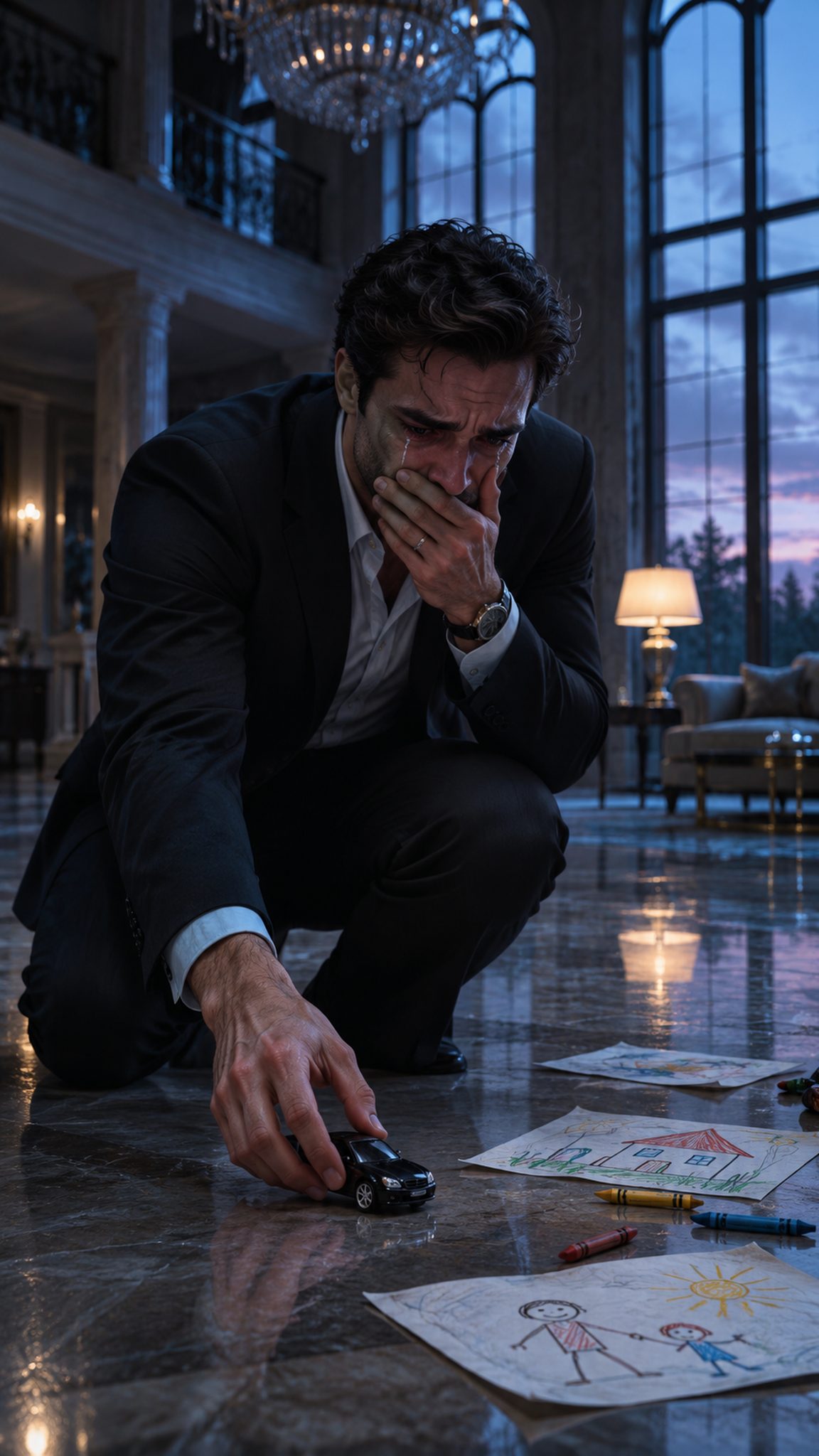
The first morning after Lucas woke, I learned that staying beside a hospital bed was not the same as being able to protect the person lying in it.
He slept in short stretches. When he opened his eyes, he searched for Elena first, then for me. I was careful not to make him turn his head or speak more than he wanted. The nurses checked his monitors, adjusted his medication, and explained each step before they touched him. I learned their names and the schedule of his care. I learned which questions were useful and which ones only came from my fear.
Elena remained on the other side of his bed. She spoke softly to him, helped him understand the unfamiliar sounds, and reminded him that the doctors were watching his heart. I did not interrupt. I was grateful she allowed me to be there at all.
For two days, his recovery seemed to be moving in the right direction. The doctors were cautious, but his readings were encouraging. He managed a little water and later a few spoonfuls of food. He asked for his black toy car. Elena had brought it from their things, and she placed it where he could see it without reaching.
“It's still here,” she told him.
Lucas gave a tired smile. “Dad found it.”
“I did,” I said.
He looked at me. “You read the words?”
“Yes.”
“Did you understand?”
I glanced at Elena, then back at him. “I think I do now.”
He seemed satisfied with that answer and closed his eyes again.
I began to believe that the worst might be behind us. It was a dangerous belief, and the hospital reminded me of that before the week was over.
The change came shortly after dawn. Lucas had been resting when his monitor began to sound differently. A nurse entered, checked the screen, and called for another member of the team. Elena stood immediately. I rose beside her.
“What's happening?” I asked.
“Please give us room,” the nurse said.
I moved back, but I did not leave. Another clinician came in. They checked Lucas, spoke in brief clinical phrases, and adjusted the equipment. His face had gone pale, and his breathing looked more difficult than it had the night before.
“Lucas?” Elena whispered.
A nurse gently guided her away from the bed. “We need space to assess him.”
I took Elena's hand and moved with her toward the wall. She was trembling.
“Is this normal?” she asked me.
I had no answer. I wanted to demand one from the staff, but I saw the concentration on their faces. This was not a moment for my anger. It was a moment for them to work.
A doctor arrived and explained that Lucas was showing signs of a post-operative complication. They needed to investigate immediately and stabilize him. He was being moved for urgent assessment.
“Is his heart failing?” I asked.
“We are concerned about a change in his condition,” the doctor replied. “We are treating it now. I will explain more as soon as we have reliable information.”
They moved Lucas out of the room. Elena followed until a nurse stopped her at the doors. I stood beside her as the bed disappeared down the corridor.
“No,” she whispered. “Not again.”
I put an arm around her shoulders, then loosened it when I felt her stiffen. She did not pull away, but she did not lean into me either.
“He's alive,” I said. “They're treating him. We wait for the doctor.”
She stared at the doors. “I can't lose him.”
“You won't be alone.”
She looked at me then. “Don't promise what you can't control.”
I swallowed. “You're right. I can't control what happens. But I can stay with you while we find out.”
The next hour was worse than the first wait. We were given a small consultation room near the intensive care unit. A nurse brought updates when she could. The doctors were assessing the complication and deciding whether another intervention was necessary. I asked for the facts, wrote them down, and made myself listen rather than argue.
My phone vibrated. Victor's name appeared.
I almost ignored it. Then I remembered the warning I had given him: if something threatened the hospital or my family, he was to tell me without bringing anyone near them.
I stepped into the corridor but remained within sight of Elena.
“Talk,” I said.
“There's been movement in Chicago,” Victor replied. “The men connected to the ambush have been testing our territory. Two businesses have been pressured, and someone sent a message that they know you're away.”
“What kind of message?”
“They asked whether your family was still in Washington. They didn't name the hospital, but they made it clear they know you're not in Chicago.”
My grip tightened around the phone. “Did anyone come here?”
“No. I have no one near the hospital. I checked the public security reports. There's been no approach that we can confirm.”
“Keep it that way. Nobody comes inside. Nobody carries a weapon into this building. Nobody contacts the hospital.”
“Understood.”
“What do they want?”
“They want you back in Chicago. They think your absence gives them room to take what you control. They're also asking for a meeting.”
I looked through the glass panel at Elena. She sat with her hands clasped, staring at the floor.
“Tell them there will be no meeting.”
“They may interpret that as weakness.”
“Let them.”
“Adrian, if they take more ground—”
“I said let them.”
I ended the call and returned to the room. Elena looked up.
“Something happened?”
“The men responsible for the ambush are trying to use my absence. They know I'm away.”
Her face tightened. “Do they know where we are?”
“Not that I can confirm. Victor says they haven't approached the hospital.”
“Could they?”
The question was quiet. I understood why she asked. She had spent months making sure Lucas was beyond the reach of my world. Now the world I had brought into our marriage was reaching toward the place where our son was being treated.
“I won't let anyone from my organisation come near you,” I said. “The hospital's security team will handle the building. I'll arrange protection outside through a licensed local service, with no weapons and no contact with Lucas. You and the doctors decide what you need.”
“I don't want armed men outside his room.”
“They won't be.”
“I don't want a convoy. I don't want people watching the nurses or asking questions about him.”
“Neither do I.”
“And I don't want Lucas hearing that someone is coming to hurt his father.”
“I'll make sure he doesn't.”
She studied me, searching for the part of the answer that might be a performance. I did not blame her.
I called the hospital's security office and spoke to its director. I explained that there might be an external threat connected to my former business activities. I did not give him names or ask for special treatment. I asked what measures the hospital could lawfully take to protect patients and staff. He arranged a review of access procedures and advised that any immediate threat should be reported to local law enforcement.
I agreed. I did not ask him to make exceptions for me.
Then I called Victor again.
“Do not send anyone here,” I said. “Give the Chicago authorities whatever information they need about the threats. If those men are making threats against my family, document them and turn them over. No retaliation.”
Victor was silent for a moment. “You want us to go to the authorities?”
“Yes.”
“That could expose parts of the organisation.”
“Then let them be exposed.”
“Adrian, you built this.”
“I know exactly what I built.”
He lowered his voice. “The captains won't accept surrender easily.”
“Then they can decide whether they want to keep fighting without me.”
I returned to Elena. She had heard enough to understand that something had changed.
“What did you tell him?” she asked.
“That there will be no retaliation. Any threat will be documented and reported. No one from Chicago is coming here.”
“And if they don't listen?”
“Then I will make the decision final.”
She looked toward the consultation-room door. “Lucas cannot be caught in another war.”
“He won't be.”
“You can't know that.”
“No,” I said. “But I can stop feeding it.”
The doctor returned before I could say more. He explained that Lucas had suffered a serious post-operative setback. The team had identified the problem and was treating it. They were monitoring him closely, and they might need to perform another procedure if his condition did not respond. The doctor did not promise an easy recovery.
Elena asked whether Lucas was conscious.
“He is receiving care and is being monitored,” the doctor said. “We are keeping him as comfortable as possible. We will update you when we know whether the current treatment is enough.”
“Can we see him?” I asked.
“Briefly, once the team has finished the immediate assessment. We need you both to follow the nurse's instructions.”
We waited again, but this time the fear had a shape. There was a complication. There was a treatment plan. There were people working to help him. I held on to those facts.
When we were allowed in, Lucas looked smaller than before. He was awake but tired, and his eyes moved between the nurses and his mother. Elena went to him first.
“I'm here, sweetheart.”
“Mom, what happened?”
“Your heart needs a little more help. The doctors are taking care of you.”
He looked at the equipment. “Did I do something wrong?”
“No,” Elena said immediately. “Nothing you did caused this.”
I moved to the other side of the bed. “You haven't done anything wrong, buddy.”
Lucas looked at me. “Are you still here?”
“I'm still here.”
“Even when the doctors do more things?”
“Especially then.”
His fingers shifted against the blanket. I held his hand gently, careful of the lines.
“Can you tell me about the car?” he asked.
“The black one?”
He nodded.
“I found it downstairs. I brought it with us.”
“Is it safe?”
“It's right here. Nobody will take it.”
He closed his eyes. The nurse told us he needed rest, and we stepped away. I wanted to remain, but I understood that being present did not mean occupying every inch of the room. I could wait outside and return when they allowed it.
The setback changed the rhythm of the next day. Lucas remained under close observation. The doctors adjusted his treatment and repeated tests. There were moments when his readings improved and moments when the team became concerned again. We were never told that he was out of danger. We were told what they knew, what they were watching, and what they would do if he needed further intervention.
I learned to live inside those qualifications.
The threat from Chicago did not disappear. Victor reported that the rivals were spreading rumors that I had abandoned my position. They were pressuring associates and trying to persuade people who had depended on my protection to change sides. They wanted a response. They wanted me to return, gather my men, and make the kind of move that would restart the conflict.
I asked Victor to arrange a call with the senior captains. He warned me that they would demand a plan.
“They'll get one,” I said.
We held the call from a quiet room at the hospital, with Elena's permission and while Lucas was resting. I kept the conversation brief. The captains appeared on the screen from the Chicago office. Their expressions ranged from confusion to anger.
One of them spoke first. “The rivals are taking advantage of this. We need you back.”
“I'm not coming back.”
Another leaned toward the camera. “Then tell us who is running things.”
“Victor will coordinate the transition. You will preserve records, protect employees, and stop any action that could escalate the conflict.”
A third man shook his head. “You can't hand over Chicago because of a hospital stay.”
“This isn't a hospital stay. It's my decision.”
“They ambushed you. You want to let them win?”
“I want the war to end.”
“They'll take everything.”
“Then they can take the parts of my life that I no longer intend to defend.”
The room on the screen went quiet.
I told them I was relinquishing day-to-day command and my controlling interest in the organisation's remaining operations. The assets would be transferred or sold through legal channels. The businesses that could operate legitimately would be separated from the criminal network. The people who wanted to leave would be given a safe route to do so. The records would be preserved, and the threats and violence would be reported to the authorities.
I was not offering a secret truce that would allow the same men to continue under another name. I was ending my control.
One captain stared at me. “You're giving them your power.”
“I'm giving up the power I used to convince myself I couldn't leave.”
“You'll have nothing.”
I thought of Lucas's hand resting in mine.
“I'll have my son.”
Another man said, “And the people who attacked you?”
“They will answer for what they did through the authorities. There will be no private retaliation in my name.”
“You expect us to accept that?”
“No. I expect you to decide whether you want to continue without me. My decision is final.”
I ended the call.
For several minutes I sat without moving. It was not a clean victory. I knew there would be disputes over assets, pressure from men who resented losing influence, and legal consequences I could not predict. Some would call me weak. Others would say I had betrayed them. I had spent years building a structure that would not disappear simply because I walked away.
But I had made the choice.
Victor called afterward. He confirmed that he would begin the transition and that the captains had not agreed unanimously. I told him not to force agreement through threats. Anyone who wanted to leave could leave. Anyone who chose violence would be acting without my authority.
“Are you certain?” he asked.
I looked through the window toward Lucas's room.
“Yes.”
When I returned, Elena was standing near the glass. She had heard the last part of the call.
“You gave it up,” she said.
“I gave up control.”
“Your organisation. Your businesses. The power you spent your life building.”
“Yes.”
“Because of Lucas?”
“Because of Lucas. Because of you. Because I finally understand that I cannot keep asking my family to live around the consequences of my choices.”
She looked at me carefully. “What happens when the men who worked for you refuse to accept it?”
“I will not send them after anyone. I will not use you or Lucas as a reason to restart the war. I'll cooperate with the authorities and handle the consequences.”
“And if they come after you?”
“Then I will deal with it without bringing it to this hospital.”
She was quiet for a long time.
“I used to think you would never give it up,” she said. “I thought the organisation would always come first.”
“So did I.”
“I left because I couldn't let Lucas grow up believing that was normal.”
“I understand.”
“No, Adrian. You understand the words. I need to know you understand what it was like.”
I sat down. “Tell me.”
She looked toward the ICU doors. “There were nights when Lucas asked me whether you were coming home. I would say I didn't know. He started pretending he hadn't been waiting. He stopped bringing his drawings to the study because you never looked at them for more than a moment. When the doctors explained his condition, I was terrified. I had to remember every instruction, every appointment, every warning. I needed someone to help me decide what to ask and what to do next.”
She took a breath.
“I called you because you were his father. I wanted you to know. I wanted him to have both of us. But every time you didn't answer, I had to explain your absence to a six-year-old who thought he wasn't good enough.”
I lowered my head.
“When you brought Serena into the house, I understood that you weren't just neglecting me,” she continued. “You were showing Lucas that his feelings did not matter. I couldn't keep asking him to accept that.”
“I should never have brought her there.”
“No.”
“I should never have spoken to you that way in front of him.”
“No.”
“I should have answered every call about his health.”
“Yes.”
“I cannot change any of that.”
“No,” she said. “You can't.”
I looked at her. “I am not asking you to erase it. I am asking for the chance to make the rest of his life different.”
She folded her arms, not defensively, but as if she needed to hold herself together.
“I don't know if I can trust you as my husband again.”
“I understand.”
“I don't know if I want to.”
“I understand that too.”
“But I can see that you are here. I can see that you told your people to stop. I can see that you chose not to leave when they called you back.”
“I will keep choosing it.”
“Don't make this about winning me back.”
“It isn't.”
“Lucas needs a father who stays. He doesn't need a father who makes promises because he's afraid of losing his wife.”
I nodded. “Then I'll be his father. Whatever happens between us.”
For the first time, her expression softened—not into forgiveness, but into something less guarded.
“I wanted you to be that man years ago,” she said.
“I know.”
“I loved you before all of this.”
“I remember.”
“Sometimes I think you loved being loved more than you loved us.”
The sentence hurt because I could not honestly deny it. I had enjoyed Elena's devotion without considering what it cost her to keep giving it. I had mistaken her loyalty for permission.
“I think you may be right,” I said. “I wanted the comfort of knowing you would always be there. I didn't understand that you were choosing to stay every day, and that I was giving you reasons to stop.”
She looked down.
“I am sorry,” I continued. “Not because Lucas got sick. Not because you left. I'm sorry because I made you carry our family alone while I told myself I was providing for it.”
Her eyes filled, but she did not look away.
“I don't know what happens next,” she said.
“Neither do I.”
“We need to focus on Lucas.”
“Yes.”
“And when he's better, we will decide what is right for him. Not what is easiest for you.”
“Agreed.”
She reached for my hand. It was a brief touch, uncertain and careful. I did not close my fingers around hers until she did. For a few seconds, we stood together without pretending that the past had disappeared.
Then a nurse came to update us.
Lucas's condition had begun to stabilize. The treatment was helping, though he still needed close monitoring. The doctor wanted to continue watching his readings before making any change to his level of care. It was not a declaration that everything was over. It was a small step in the right direction.
Elena closed her eyes in relief.
I asked when we could see him. The nurse said we could return after the next assessment.
We went back to the ICU together.
Lucas was sleeping when we entered. His breathing was easier than it had been during the setback. The monitor continued its steady rhythm. Elena stood beside him and brushed his hair gently away from his forehead.
I remained on the other side.
A nurse checked the lines and explained what the team was monitoring. I listened without interrupting. When she finished, I thanked her.
Lucas stirred.
“Mom?”
“I'm here.”
His eyes opened slightly. Then he looked toward me.
“Dad?”
“I'm here, buddy.”
“Did you go away?”
“No. I was outside talking to the doctors.”
He considered that, then gave a small nod.
“Are you staying tonight?”
“Yes.”
“Both of you?”
Elena looked at me. I looked back at her.
“If that's what you want,” she said.
Lucas's eyes moved between us. “I want both.”
Elena pulled her chair closer. I moved mine beside it.
“Then both of us will stay as long as the doctors say we can,” I told him.
He reached for the black toy car. Elena placed it near his hand, and he touched its roof with one finger.
“It's still mine,” he whispered.
“Of course,” I said.
He looked at me. “You can look at it too.”
I smiled, though my eyes burned. “I'd like that.”
His eyelids grew heavy. Soon he was asleep again, the car resting beside him.
Elena remained seated. I sat beside her, our chairs close enough that our hands nearly touched.
I knew the road ahead would not be simple. Lucas had survived the surgery and the frightening setback, but his recovery was still unfolding. The rivals in Chicago had not vanished, and giving up control would bring consequences. Elena had not promised to return to me. She had only allowed me to stand beside her while our son recovered.
For once, I did not need more than that.
I watched Lucas breathe, and I understood the price of staying. It was not a dramatic gesture, a public declaration, or a sacrifice that earned instant forgiveness. It was the decision to remain when the phone rang, when the world demanded attention, when fear made me want to control everything, and when nobody promised that staying would give me what I wanted.
I had once believed the price of power was the cost of keeping it.
Now I knew the price of being a father was showing up, again and again, without asking a child to earn it.
I stayed beside Lucas until morning.