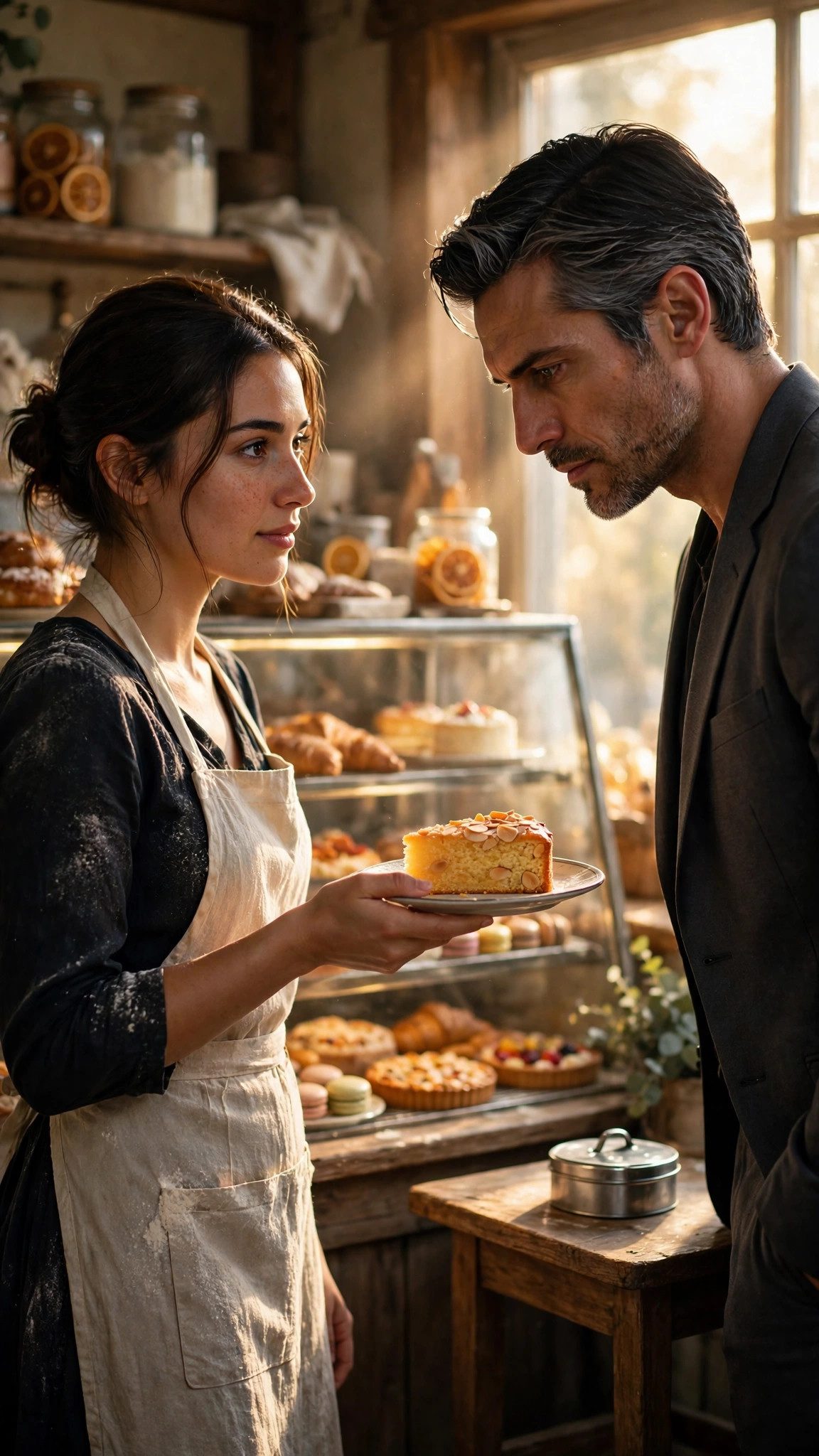
My grandmother Rosa Benedetti was born in a stone house in Palermo, in a street so narrow that the neighbors could pass a plate of food from one window to another without going downstairs. She was the youngest of six children, and she learned to cook standing on a wooden crate so she could reach the stove, and by the time she was fourteen she could make a meal out of almost nothing: a handful of almonds, a little flour, an orange from the tree in the courtyard, and the patience to wait for the oven to be exactly right.
When she was nineteen, she went to work as a cook in a great house on the hill. The house belonged to the Moretti family.
She never talked about those years very much. When I was little and I asked her what it was like to cook for rich people, she would laugh and say, "Rich people eat the same as poor people, Lucia, they only complain more beautifully." But sometimes, late at night, when the bakery was closed and we were sitting at the kitchen table with two cups of tea going cold between us, she would tell me small pieces of it. The kitchen in that house was bigger than our whole apartment. The ovens were so hot you could feel them in your bones. And the lady of the house, Caterina Moretti, used to come down to the kitchen in the afternoons and sit on a stool and watch Rosa work, and the two of them would talk while the bread rose, the way women talk when they are friends and the world is not watching.
Caterina Moretti was the wife of the old don, and the mother of Vittorio Moretti, and the grandmother of a little boy named Adrien who used to steal almonds from the pantry and hide under the kitchen table. Rosa told me that Caterina had the best laugh she had ever heard, loud and sudden, like a door opening in a quiet house. And she told me that Caterina loved the orange almond cake more than anything in the world, because it was the cake her own mother had made, and her mother's mother before her, and that she asked Rosa to teach her how to make it, the way one friend teaches another, with their hands in the same bowl.
So Rosa taught her. She taught Caterina Moretti how to zest an orange without taking the bitter white part. She taught her how to toast the almonds until they smelled like autumn. She taught her how long to beat the eggs and when to stop, because a cake that is beaten too long will rise and fall like a promise that was never meant. And Caterina learned it all, and she made the cake for her family on Sundays, and for a little while, the two women and the cake were the warm center of a very cold house.
Then the old don died, and Vittorio Moretti became the head of the family, and everything changed. Vittorio was not like his mother. He did not laugh in kitchens. He counted things. He counted money, and he counted men, and he counted favors, and one day he counted the recipe, and he decided that the recipe was worth money, and that it should belong to the Moretti family and to no one else.
He came to Rosa in the kitchen one morning, and he put an envelope on the table, and inside the envelope was more money than Rosa had ever seen in her life. Twenty-five thousand dollars, in clean new bills, and a piece of paper for her to sign. The paper said that the recipe for the orange almond cake now belonged to the Moretti family, and that Rosa would never bake it for anyone else, and never teach it to anyone else, and never speak of it again.
Rosa told me she stood there for a long time looking at that envelope, with flour on her hands and the smell of oranges in the air, and she thought about her daughter, my mother, who was sick even then, though none of us knew how sick yet. She thought about the doctors in Palermo who wanted money before they would even look at a patient. She thought about the little house in the narrow street, and the roof that leaked, and the winter that was coming. And she took the envelope, and she signed the paper, and she gave Vittorio the recipe card, written in her own hand, in blue ink, on a card that was already yellowed at the edges.
But Rosa Benedetti was a clever woman, and she was a stubborn woman, and she had learned from her own mother that a recipe is not a piece of paper. A recipe is a thing you carry in your hands and in your nose and in your memory, and no piece of paper can hold all of it. She gave Vittorio the card, but she kept the recipe. She kept the way the zest should feel under your thumb. She kept the exact moment when the almonds are ready, the smell that tells you before the color does. She kept the little secret at the end, the spoonful of orange blossom water that she never wrote down anywhere, not even on the card. She gave him the map, but she kept the road.
A year later, she left Palermo. She took my mother, who was only a little girl then, and she came to America, to Chicago, to a city where nobody knew her name and nobody cared who she had cooked for. She worked in other people's kitchens for thirty years, saving a dollar at a time, and when she finally had enough, she bought the little shop on Taylor Street, and she opened Benedetti Bakery, and she baked her orange almond cake every morning, and she called it "the only real one," because it was.
She never told Vittorio Moretti. She never told Caterina, either, though I think Caterina knew. I think Caterina knew the day Rosa left, and I think she understood, because Caterina had once been a young woman who had to choose between her family and her own heart, too. Rosa told me that Caterina sent her a letter once, years later, with no return address, and inside the letter there was only one sentence: "I am glad the cake still lives somewhere in the world."
My mother died when I was nine. The sickness that had started in Palermo finished its work in Chicago, quietly, the way a candle goes out when there is no more wax. After she was gone, Rosa raised me, and she taught me everything she knew, the way her mother had taught her. She taught me to knead, and to wait, and to listen to the oven. She taught me that the orange must be zested by hand, never by machine, because a machine cannot feel when it has gone too deep. She taught me to toast the almonds until the kitchen smelled like autumn. And when I was sixteen, she finally taught me the secret, the spoonful of orange blossom water, and she made me swear on my mother's memory that I would never write it down, and never tell anyone, and never sell it, not for any amount of money in the world.
"They will come for it one day, Lucia," she said to me, and her voice was quiet and certain, the way it always was when she was telling me something true. "Men like the Morettis always come back for what they think they own. And when they come, you must remember: the recipe is not a piece of paper. It is us. It is our family. And nobody can buy a family."
She died two years ago, in her sleep, in the bed she had slept in for forty years. I buried her in the rain, and I came back to the bakery, and I opened the tin box, and I looked at the recipe cards, and I saw the name at the bottom of the orange almond cake card for the first time, because I had never really read it before. Caterina Moretti. My grandmother's recipe card had the name of Adrien Moretti's grandmother written on it, in my grandmother's handwriting, in blue ink.
I did not understand what it meant then. I understand now. The cake had never belonged only to my family. It had belonged to two families, two grandmothers, two women who had stood in the same kitchen with their hands in the same bowl, a long time ago, in a stone house in Palermo. And Adrien Moretti, who had been coming to my bakery every morning for one slice of cake, was not a stranger at all. He was the grandson of my grandmother's best friend. He was the boy who used to steal almonds from the pantry and hide under the kitchen table. And he had been eating my grandmother's cake since he was small, and he had never been able to replicate it himself, because the one thing Vittorio Moretti's money could never buy was the spoonful of orange blossom water that Rosa had never written down.
I was sixteen the first time Rosa let me bake the orange almond cake alone. She stood in the doorway of the kitchen with her arms folded, and she did not say a word, and I could feel her watching every move I made. I zested the oranges too fast, and the white pith came off with the zest, and I could see her mouth tighten, but she did not stop me. I beat the eggs too long, and the batter went flat, and I wanted to throw it away and start over, but she shook her head. "No," she said. "You finish what you start, Lucia. A cake you throw away teaches you nothing. A cake you finish teaches you everything." So I finished it. I put it in the oven, and I sat on the floor in front of the oven door, and I watched it rise through the little glass window, and when it came out, it was lopsided and a little bit burned on one side, and Rosa cut two slices, and she took a bite, and she closed her eyes, and she said, "It is not perfect. But it is yours. And tomorrow, you will make it again, and it will be better."
And I did. I made it again the next day, and the day after that, and every day after that, for years, until my hands knew the recipe the way Rosa's hands had known it, until I could tell by the smell when the almonds were ready, and by the feel when the zest was right, and by the sound when the batter was beaten enough. Rosa watched me, and she corrected me, and she praised me, and as she got older, her hands began to shake, and she could not zest the oranges anymore, and she could not lift the heavy bowls, and so she sat on a stool in the corner and told me what to do, and I did it, and that was how it went, until the morning she could not get out of bed at all.
She was ninety-one years old when she died. She had lived long enough to see me open the bakery in her name, and to see the regulars come, and to see the little shop on Taylor Street become something real. On her last night, she called me to her bedside, and she took my hand, and her hand was so light it felt like a bird, and she said, "Lucia, the tin box is yours now. The cards are yours. The cake is yours. And remember what I told you. They will come for it one day. Men like the Morettis always come back for what they think they own. And when they come, you must remember: the recipe is not a piece of paper. It is us. It is our family. And nobody can buy a family."
I promised her. I promised her with tears running down my face, and she smiled, and she closed her eyes, and she went to sleep, and she never woke up.
I never told anyone about the name on the card. I never told anyone about Palermo, or about Vittorio Moretti, or about the envelope full of money. I kept it all inside, the way Rosa had kept it, because some things are too heavy to carry out loud. I only baked the cake, every morning, before dawn, the way she had taught me, and I told myself that was enough.
But it was not enough. It was never enough. Because the past does not stay in the past, not when it is baked into a cake, and not when the grandson of the woman your grandmother loved best walks through your door every morning, hungry for the one thing in the world that can bring his grandmother back to him, even for a moment. Rosa used to say that a cake is a kind of memory, and that every time you bake it, you bring back everyone who ever made it before you. I did not understand her until the morning Adrien Moretti sat down at my window table. Now I understand. Every morning, when I bake that cake, I bring back Rosa. And every morning, when Adrien eats it, he brings back Caterina. And the two of them are together again, in a kitchen in Palermo, laughing, with flour on their cheeks, and the cake is the only real one, and it always will be. Rosa used to say that the secret ingredient was never in the recipe at all. It was in the hands that made it, and in the love that went into it, and no amount of money could ever buy either one.