Hazel did not answer at first.
She lay in the hospital bed, and she looked at the man kneeling beside her, and she looked at the boy asleep in the chair, and she looked at the morning sun coming through the window, and she thought about the five years she had spent loving him in silence, and about the night she had left without saying goodbye, and about the cancer, and about the treatment, and about everything that had happened, and she thought that it was too much, all at once, and that she did not know how to hold it.
"Gabriel," she said, very softly. "I am sick. The doctors say the cancer has spread. I do not know if the treatment will work. I do not know if I will live to see the summer. How can I marry you, when I do not know if I will be here?"
"Because I am not asking you to promise me forever," Gabriel said, and his voice was steady, and his eyes were clear. "I am asking you to promise me today. And tomorrow. And the day after that. One day at a time, Hazel. That is all any of us can promise anyone. I will be beside you for every treatment. I will be beside you for every surgery. I will be beside you on the good days and on the bad days. And if the treatment works, then we will have years, and if it does not, then we will have whatever days we are given, and I will not waste a single one of them. Will you marry me, Hazel? Will you let me love you, out loud, for as long as we have?"
Hazel looked at him. She looked at Sebastian, asleep in the chair, his dark hair sticking up on one side. She looked at the sun coming through the window. And she thought about the rose garden, and about the man who had once held her bleeding hand, and about the five years of warm food and quiet mornings, and she thought about how she had spent her whole life being invisible, and how this man was asking her to be seen, finally, and forever.
"Yes," she whispered. "Yes, Gabriel. I will marry you."
Gabriel stood up, and he took her hand, and he kissed it, very gently, and Sebastian woke up in the chair, and he rubbed his eyes, and he said, "Did she say yes, Dad? Did Hazel say yes?"
"She said yes," Gabriel said, and he picked his son up, and he held him, and the boy threw his arms around Hazel, very carefully, so as not to hurt her, and he said, "You are going to be my mother now. A real mother. Not just Hazel. My mother."
And Hazel held him, and she cried, and she said, "I have always been your mother, Sebastian. In my heart, I have always been your mother."
The treatment began the next day.
It was not easy. The doctor had told them it would not be easy, and the doctor had been right. There were days when Hazel was so tired she could not lift her head from the pillow. There were days when the medicine made her sick, and Gabriel sat beside her bed all night, holding a basin, wiping her forehead, reading to her in a low voice until she fell asleep. There were days when she cried, and days when she was angry, and days when she said she wanted to give up, and on those days Gabriel held her hand, and he said, "One more day, Hazel. Just one more day. That is all I am asking."
And there were good days, too. Days when the sun came through the window, and Sebastian brought her drawings from school, and Rosa brought her soup from the kitchen, and the nurses told her that the numbers were moving in the right direction, and the doctor at Northwestern said that the surgery had gone well, and that the immunotherapy was working, and that there was reason to hope.
Slowly, week by week, month by month, Hazel got stronger. Her hair grew back. Her color came back. Her hands stopped shaking. And one morning, six months after the night she had left without saying goodbye, the doctor came into the room with a folder, and she sat down beside the bed, and she smiled, and she said, "Hazel, the scans are clear. The cancer is gone. You are in remission. You are going to live."
Hazel did not believe her at first. She asked the doctor to say it again. The doctor said it again. Hazel asked her to say it a third time. The doctor laughed, and she said it a third time, and Hazel began to cry, and Gabriel held her, and Sebastian jumped up and down on the bed, and Rosa cried, and the nurses cried, and the whole fourth floor of the hospital sounded like a celebration.
They were married in the rose garden.
It was a small wedding, because that was what Hazel wanted. No cathedral. No ballroom. No four hundred guests. Just the rose garden behind the Rossi house, on a warm afternoon in late spring, with the roses in full bloom, and the sun shining through the trees, and twenty people who loved them standing in a circle on the grass.
Hazel wore a simple white dress, and she carried a bouquet of red roses, and her hair was down, for the first time in five years, dark and shining around her shoulders, and she walked down the path between the rose bushes on Gabriel's arm, and Sebastian walked ahead of them, carrying the rings on a small velvet cushion, very solemnly, very carefully, as if the whole world depended on him not dropping them.
Gabriel wore a black suit, and he stood at the end of the path, under the old oak tree, and he watched her come toward him, and his eyes were wet, and he thought about the first time he had seen her in this garden, kneeling in the dirt with her sleeves rolled up, a thorn in her finger, and he thought about how strange it was that a man could hold a woman's hand once, for three seconds, and change the entire shape of his life.
The minister was an old man with a kind face, and he spoke simply, and when he asked Gabriel if he took Hazel to be his wife, Gabriel said, "I do," and his voice was steady, and when he asked Hazel if she took Gabriel to be her husband, Hazel said, "I do," and her voice was steady too, and then Gabriel put the ring on her finger, a simple gold band, and Hazel put the ring on his finger, a matching band, and the minister said, "You may kiss the bride," and Gabriel kissed her, gently, in the rose garden, in front of everyone, and Sebastian cheered, and Rosa cried, and the roses smelled sweet in the warm air.
After the ceremony, they had dinner in the garden, at a long table under the oak tree, with candles and white tablecloths and the lemon cake that Angela had once taught Hazel to make, and Gabriel stood up, and he raised his glass, and he said, "Five years ago, a shy maid came into my house, and she kept my food warm, and she kept my house clean, and she kept my son safe, and she never asked for anything. And I was too blind to see what she was. She was not my maid. She was my heart. And I am the luckiest man in Chicago, because she stayed, and because she forgave me, and because she said yes."
Hazel stood up, and she raised her glass, and she said, "I left without saying goodbye, once, because I thought that was the kindest thing I could do. I was wrong. The kindest thing I could do was to stay, and to tell the truth, and to let this man love me. So thank you, Gabriel, for running through the rain to find me. Thank you for begging me to marry you. And thank you for teaching me that a woman who has spent her whole life being invisible can still be seen."
And then they danced, in the rose garden, under the oak tree, while the sun went down and the candles burned low, and Sebastian fell asleep on a blanket under the table, and Rosa hummed an old song, and the roses smelled sweet, and the house behind them, the big house with the old wooden stairs, stood quiet and warm in the evening light.
The weeks that followed were the happiest of Hazel's life, and also the strangest, because she had to learn how to live in a house where she was no longer the maid.
The first morning after the wedding, she woke up in Gabriel's bedroom, in the big bed with the white sheets, and she lay there for a long time, listening to the house waking up around her, and she thought about getting up to make the coffee, the way she had done for five years, and then she laughed at herself, very quietly, because there was a new housekeeper now, a kind young woman named Maria, and it was Maria's job to make the coffee, and Hazel's job, her only job, was to be Gabriel's wife.
It was harder than she had expected. She kept reaching for the tray. She kept folding the napkins. She kept checking that Sebastian's lunchbox was on the second shelf. And every time, Maria would smile, very gently, and say, "Mrs. Rossi, I have it. You go and sit in the garden. The roses need you more than the kitchen does."
Mrs. Rossi. It took her weeks to answer to the name. The first time the postman called her Mrs. Rossi, she looked around for someone else. The first time Sebastian introduced her at school as "my mom," she cried, right there in the schoolyard, in front of all the other mothers, and Sebastian hugged her, very proudly, and said, "That is my mom. She used to be our maid, and now she is my mom, and she is the bravest woman in the whole world."
Rosa, the old housekeeper, who had known Hazel since she was a girl, took her aside one afternoon in the kitchen, and she held her hands, and she said, "Your mother would be so proud of you, Hazel. She told me once, when you were a little girl, that you would marry a prince. I told her there were no princes in Chicago. She said, 'Then she will marry a man who acts like one.' And look at you now. You married a man who ran through the rain to find you. That is a prince, Hazel. That is the only kind of prince that matters."
Hazel hugged her, and she cried, and Rosa cried, and the kitchen smelled of soup and fresh bread, and the house felt like a home in a way it had never felt before, not even in Angela's time, because this time, the woman who kept the house was not invisible. This time, everyone saw her.
A year passed. Then another. Hazel went for her checkups every three months, and every three months the doctor smiled, and said the same words: "The scans are clear. You are still in remission." And every time, Gabriel held her hand, and Sebastian cheered, and they went home, and they had cake, because that was their tradition now, cake after every good scan, lemon cake, the cake Angela had taught Hazel to make, and they ate it in the rose garden, and they talked about the future.
The docks went legitimate. Gabriel kept his promise to the family, and to himself. The shipping company became a real shipping company, with real contracts and real accountants, and the men who had once carried guns now carried clipboards, and the money was clean, and the family was clean, and old Don Enrico said, at the second anniversary dinner, "Your father would be proud of you, Gabriel. He wanted this, in the end. He wanted the family to be something a child could be proud of."
And Sebastian grew. He grew taller, and braver, and kinder, and he learned to play the piano, and he learned to ride a bicycle, and he learned to read whole books by himself, and every night, Hazel sat beside his bed, the way she had done for years, and she told him stories, and he fell asleep, and she kissed the top of his head, and she thought about how lucky she was, to have a son who had chosen her, and a husband who had run through the rain to find her, and a house full of roses.
On the second anniversary of their wedding, Gabriel took her back to the rose garden, to the exact spot where they had first met, where she had been kneeling in the dirt with a thorn in her finger, and he took her hand, and he looked at the small white scar on her finger, the scar the thorn had left, and he said, "Do you remember what I said to you that day?"
"You said, 'Be careful. The roses here have thorns,'" Hazel said, and she smiled.
"I was wrong," Gabriel said. "The roses here do not have thorns. They have roots. Deep roots. And so do we, Hazel. You and me. And Sebastian. And this house. We have roots now. And nothing will ever pull us up again."
He kissed her hand, very gently, the way he had kissed it five years ago, and Hazel looked up at the stars coming out over Chicago, and she thought about her mother, and about Angela, and about the five years she had spent loving a man in silence, and she thought about how her heart's happiness had come a little late, but it was finally there, and it was real, and it was hers, and it was going to last.
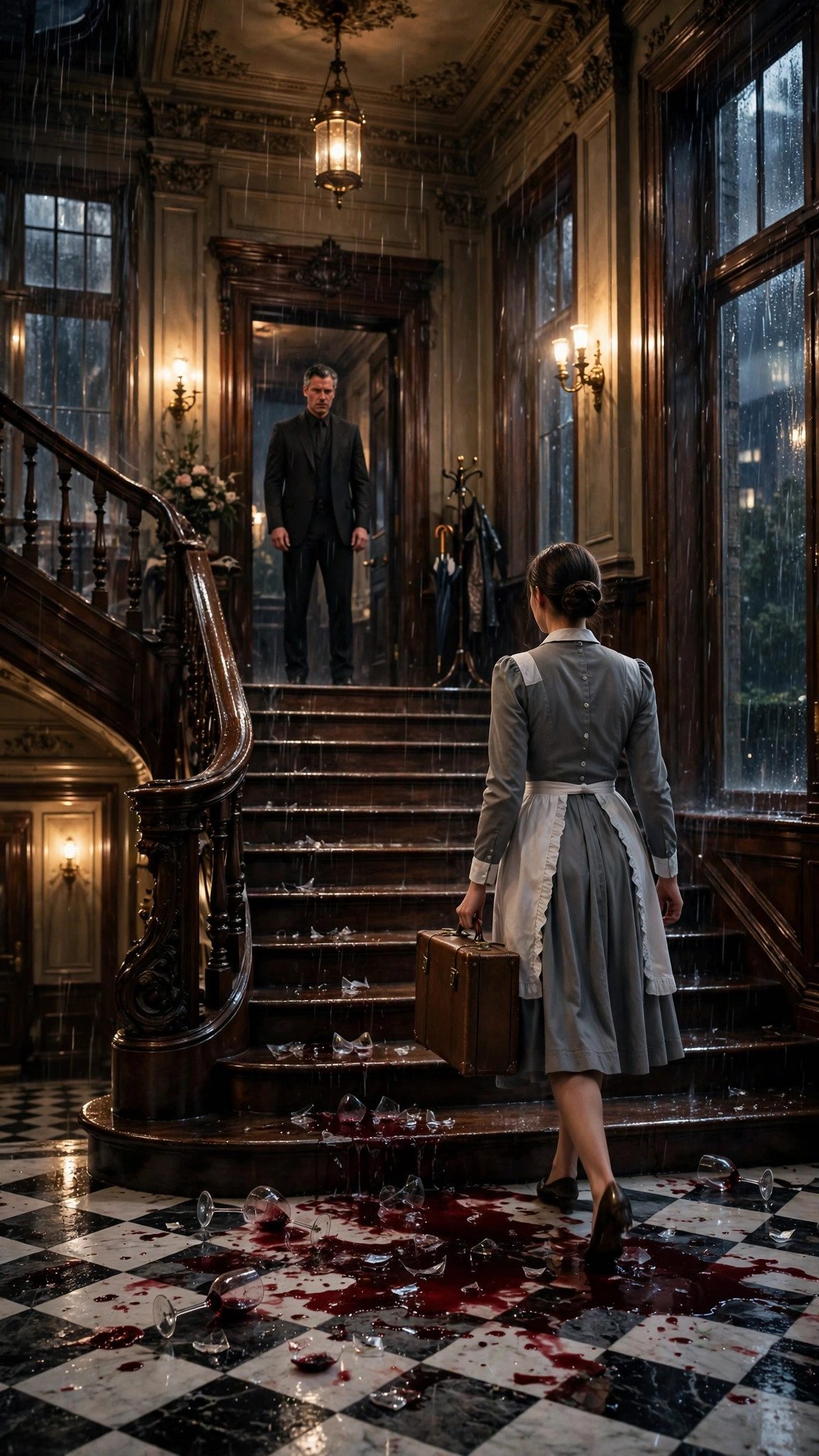
The stairs were new now. Gabriel had torn out the old ones, every last board, and burned them, and built new stairs, stairs that had never known a murder, stairs that Sebastian could run down in the morning without the house remembering. And in the hall, where the wine glass had shattered on the night Hazel left, there was a new rug, a soft red rug, and on the wall beside the front door, there was a small brass plaque, and on the plaque were the words Hazel had written in her note, the words that had started everything.
"Thank you for five years."
And below them, in Gabriel's handwriting, were the words he had added, the morning after the wedding.
"And thank you for fifty more."
Hazel stood in the rose garden, in her white dress, with her husband's arms around her, and she looked up at the stars coming out over Chicago, and she thought about her mother, and about Angela, and about the five years she had spent loving a man in silence, and she thought about how her heart's happiness had come a little late, but it was finally there, and it was real, and it was hers, and it was going to last.
She was home. She was loved. She was seen.
And she would never leave without saying goodbye again.
The End.
THE END