One year later, on a warm Saturday in June, my daughter turned one year old in the garden behind the house on the Upper East Side, under the lemon tree, surrounded by people who loved her.
There were pink balloons tied to the chairs. There was a cake shaped like a rabbit in a waistcoat, which Lily had ordered from a bakery in Queens and which looked almost too beautiful to eat, until Grace smashed her fist into it and everyone laughed. There were paper stars hanging from the branches of the lemon tree, the same paper stars I had made for her mobile when she was still in my belly. And there was a small table near the back of the garden with copies of a children's book on it, a book about a rabbit who lives in a garden and is brave when it matters, with illustrations by Emma Reed, published by the Thomas Reed Foundation, free for every child in every hospital in the city.
Lily was there, of course, in a yellow dress, holding Grace while I lit the single candle on the cake, and Rocco was there, in a suit without a jacket, holding a plate of food like he didn't know what to do with it, and Priya was there, and Dr. Whitfield was there, and Nurse Doyle was there, and even Mr. Adler, Luca's lawyer, was there, looking deeply uncomfortable in the sunshine and pretending he wasn't enjoying himself.
Derek was there too. He stood near the back, by the garden wall, holding a small wrapped present, a stuffed fox in a waistcoat, to match the rabbit Grace already had. He had finished the parenting course. He had shown up every month for a year, one Saturday afternoon a month, at the court-appointed facility, and he had never missed one. He fed Grace her bottle. He read her stories. He learned the words to the songs she liked. He was not the father Grace deserved, not yet, but he was trying, and a year of trying had changed him in ways I could see: he was quieter now, and kinder, and when he looked at Grace, he didn't look at her like a piece of evidence anymore. He looked at her like a miracle he didn't deserve and was grateful for anyway.
He gave her the fox, and he knelt down so he was at her level, and he said, "Happy birthday, Grace," and Grace grabbed his finger with her whole hand, the way babies do, and Derek's eyes filled with tears, and he stood up quickly and wiped them away, and he said to me, "Thank you for letting me come."
"You're her father," I said. "You showed up. That's the deal. You keep showing up, and you keep being welcome."
He nodded, and he went back to his place by the wall, and I watched him for a moment, and I felt something I hadn't expected to feel: not anger, not forgiveness, exactly, but peace. The past was the past. Derek had made his choices, and he was living with them, and Grace would grow up knowing the truth about him, all of it, when she was old enough. And the truth would include this: that he came to her first birthday party, and he brought a fox in a waistcoat, and he cried when she grabbed his finger.
But the best part of the day came later, after the cake, after the presents, after Grace had fallen asleep in Lily's arms with frosting on her cheek. Luca came out into the garden with a small box in his hand, and he walked to where I was standing under the lemon tree, and he knelt down, on one knee, in the grass, in his black suit, and he opened the box, and inside was a ring.
It wasn't a big ring. It wasn't flashy. It was a simple gold band with a single small sapphire, the color of the dress I had worn the night I met Derek, the color of the evening sky over the garden, and it was the most beautiful thing I had ever seen.
"Emma Reed," he said, and his voice was low and quiet, the way it had been in the hospital that first day, the kind of voice that doesn't need to be loud because everyone in the room is already listening. "A year ago, I walked into a hospital room and I wrote my name beside yours on a piece of paper, because your father asked me to protect you. I did that because I owed him a debt. But I stayed because I fell in love with you. Not the first day. Not the first week. Slowly, the way a garden grows, a little bit every day, until one morning I woke up and realized that the best part of my day was sitting at a kitchen table across from you, drinking coffee, while our daughter slept upstairs."
He took a breath. "I know what I am. I know what my name means in this city. I know the life I come from, and I know it is not the life you would have chosen for yourself. So I am not going to ask you to marry a mafia king. I am going to ask you to marry a man who reads bedtime stories badly and practices until he gets the voices right. A man who brings bread to new mothers because his mother told him that's what you do. A man who has kept one promise for seven years, and who wants to spend the rest of his life keeping a new one. Emma Reed, will you marry me?"
I looked down at him, kneeling in the grass under the lemon tree, holding a ring with a sapphire the color of the evening sky, and I thought about my father, and about my mother, and about the letter my father had written me two weeks before he died, and about the scholarship, and the watch, and the notebook, and the flowers on his grave every March fourteenth, and about Grace asleep in Lily's arms with frosting on her cheek, and about the year that had just passed, the hardest and best year of my life.
And I said, "Yes."
He stood up, and he put the ring on my finger, and it fit perfectly, and everyone in the garden cheered, and Lily cried, and Rocco clapped him on the shoulder so hard he nearly fell over, and Grace woke up and started crying too, because everyone else was making noise, and I picked her up, and I held her, and Luca put his arm around both of us, and for a moment, under the lemon tree, with the paper stars hanging over our heads, we were a family.
We were married three months later, in the garden, in September, when the light was gold and the air smelled like late summer. It was a small wedding. Lily was my maid of honor. Rocco was Luca's best man. Priya read a poem. Grace, who was fifteen months old by then, wore a white dress with a sash, and she spent the entire ceremony trying to eat the flowers. Derek sent a card. It said, "Congratulations. Take good care of them. I mean that." I put it on the mantelpiece, next to my father's watch.
Luca and I wrote our own vows. Mine were simple. I said, "I promise to tell you the truth, even when it's hard. I promise to let you protect us, and to protect you back. I promise to sit at the kitchen table with you every morning, drinking coffee, while our daughter sleeps upstairs. And I promise that Grace will always know who her grandfather was, and what he did, and why we are all here."
Luca's vows were even simpler. He said, "I promise to keep my promises. All of them. For as long as I live."
After the wedding, we went back to living our lives, which were, by then, wonderfully ordinary. I illustrated children's books. The rabbit book sold well enough that the foundation printed a second run, and then a third, and I started work on a second book, about a fox in a waistcoat who learns to share his garden. Luca ran his businesses, and he went to fewer meetings at night, and he came home for dinner, and he read to Grace every night, with the right voices now, the rabbit brave and the fox sly, and Grace laughed every time, and so did I.
Derek kept showing up. One Saturday afternoon a month, at the facility, and then, after a year of perfect attendance, at our house, for Sunday lunch, supervised, with Lily always there, and Grace began to call him "Dada Derek," which made him cry the first time he heard it, and which made me realize that children are far more generous than adults, and that Grace would decide for herself who her father was, in her own time, in her own way.
Brittany Hale married a developer from Boston and moved away. Her father sold Hale Development to a group of investors, paid his debts, and retired to Florida. I never saw either of them again, and I never thought about them, except once, when I saw a blonde woman in a cream coat on the street, and my heart jumped, and then I realized it wasn't her, and I kept walking.
Vincent Castellano was arrested two years later, on charges that had nothing to do with me, and his organization fell apart, and the newspapers wrote about it for a week, and then they moved on to something else. Luca never mentioned his name again.
In the spring after our wedding, the foundation delivered its first books. A thousand copies of the rabbit book, printed and boxed, loaded into a van, driven to St. Catherine's Hospital, to the children's ward where Lily worked, where Grace had been born, where my whole story had begun.
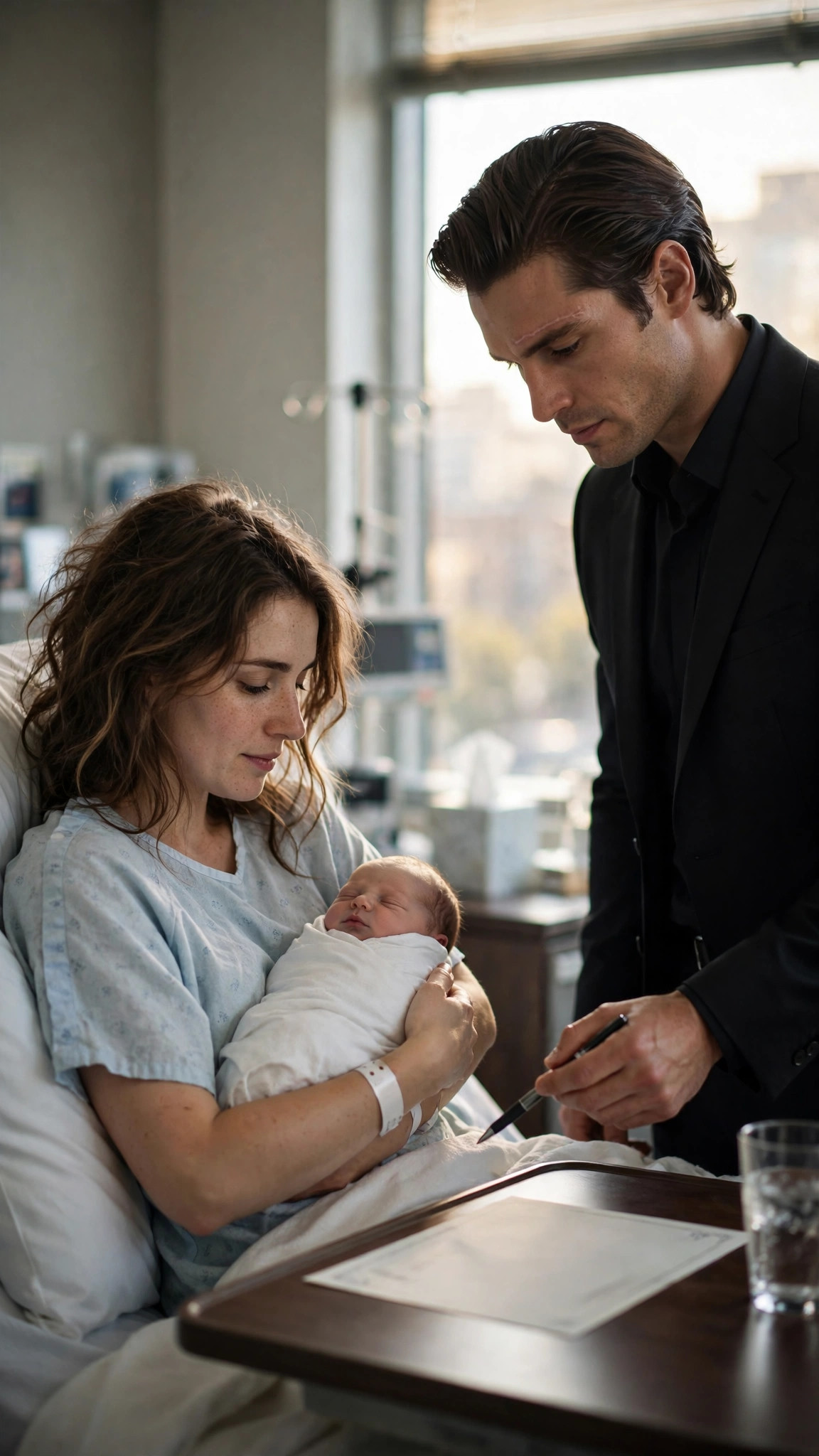
Luca drove. I sat beside him with Grace on my lap, and Lily met us at the entrance in her scrubs, and the three of us carried the boxes up to the ward together, past the nurses' station, past the rooms where I had once been a patient, past the room where Derek had tried to erase me, which was empty that day, sunlight coming through the window, a different story waiting to happen in it.
The children were waiting in the playroom, a dozen of them, in pajamas and hospital gowns, some in wheelchairs, some with IV poles beside their chairs like dance partners, all of them looking at the boxes with the particular hope that only sick children have, the hope that someone has brought them something new.
I sat on the floor with them, in my good dress, not caring about the floor, and I opened the first book, and I read it to them, the story about the rabbit who lives in a garden and is brave when it matters, and I did the voices, the rabbit brave and the fox sly, the way Luca had practiced them, and the children laughed, and Grace sat in my lap and clapped her hands, and Lily stood in the doorway with tears in her eyes, and Luca stood behind me with his hand on my shoulder, and I thought about my mother, reading to me every night, and about my father, putting my drawing on the refrigerator with a ladybug magnet, and about the night I had sat in this same hospital holding a three-day-old baby and wondering how I was ever going to survive.
A little girl in the front row, no more than six years old, bald from her treatments, wearing a pink headscarf, raised her hand when I finished, and she asked, "Is the rabbit real?"
"She's as real as you want her to be," I said, and I handed her the book. "This one is yours. You can keep it. And whenever you're scared, you can open it, and the rabbit will be brave for you, until you can be brave for yourself."
She held the book against her chest with both arms, the way Grace held her stuffed rabbit, and she said, "Thank you," and I had to look away for a moment, because my eyes were full, and Luca's hand on my shoulder tightened, just a little, and I knew he understood.
We left a hundred books in the ward that day, and a hundred more in the nursery downstairs, and a hundred more in the waiting room, and on the drive home, Grace fell asleep in her car seat, and Luca reached across and took my hand, and he said, "Your father would have been proud of you today."
"He would have been proud of both of us," I said.
That was the spring. The summer was quiet and golden, full of long evenings in the garden, and Grace learning new words every day, and the second book taking shape on my drawing table, a fox in a waistcoat who learns to share his garden, and Luca coming home for dinner every night, and Lily dropping by with soup on Sundays, and Derek showing up once a month, on time, with a new stuffed animal.
On Grace's second birthday, we took her to the cemetery, to my father's grave, and I put her down on the grass, and she toddled over to the headstone and put her small hand on it, the way I had done a year before, and Luca stood behind us, and Lily stood beside us, and I said, "Hi, Dad. We're here. All of us. Grace is two now. She walks. She talks. She says 'rabbit' and 'garden' and 'Dada,' and she loves the lemon tree. And I'm married, Dad. To the man you died for. And he's a good man, Dad. He's a good father. And I want you to know that your promise worked. We're safe. We're happy. We're a family."
And then Grace looked up at me, with my mother's eyes, and she said, very clearly, "Mama, home."
"Yes, baby," I said. "Let's go home."
We went home, to the house with the garden and the lemon tree and the yellow nursery, and Luca carried Grace inside, and Lily made soup, and I sat at the kitchen table with my sketchbook, drawing a rabbit in a garden, and the evening light came through the windows, gold and warm, and I thought about the girl I had been three years ago, standing in a hospital room, watching a man try to erase her name from her own daughter's birth certificate, and I thought about how far I had come since then.
My father had promised to keep us safe, no matter what it cost him. It had cost him his life. But his promise had worked. It had brought me a daughter, and a best friend who never left, and a husband who kept his promises, and a home with a garden, and a lemon tree, and a little girl named Grace who would grow up knowing exactly who she was, and where she came from, and how loved she was.
My name is Emma Reed Moretti. My daughter's name is Grace Reed Moretti. And this is our story.
The End.
THE END