Weeks later, a clear morning came to Boston with a thin fall of snow and a light so pale it seemed to come from inside the sky rather than above it. Maeve woke in the harbour-side apartment and lay for a moment listening to the quiet, testing herself in the small, private way she had learned to do since St. Brendan's. She turned her head slowly on the pillow. No dizziness. She flexed the fingers of her left hand. The splint was gone now, removed at her final follow-up, and though the wrist was still tender and still tired easily, it moved freely, and it was hers again. The concussion had loosened its hold day by day, like a fog lifting off the harbour water: first the headaches went, then the tiredness that had sat behind her eyes, and then, at last, the feeling that her thoughts were arriving a half-second late. She was herself again, and the knowledge of it felt less like triumph than like coming home to a house she had been locked out of.
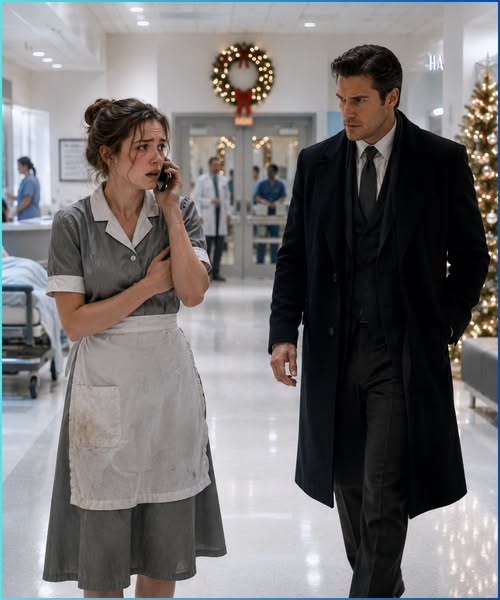
She got up, dressed carefully, and stood for a while by the window, watching the snow settle on the quay. Christmas had nearly passed her by this year. On Christmas Eve she had been in a hospital bed, calling for help, afraid and hurting, and worrying, absurdly and stubbornly, about a Christmas breakfast she would not be there to make. The days since had been full of statements and doctors and police folders, of truths laid out plainly and a case moving toward prosecution. They had been necessary days, and she did not regret a single one of them. But they had not been Christmas. Today, she decided, would be different. Not grand, not perfect, but hers.
Callum knocked softly on her door, as he had taken to doing, rather than simply expecting her to be already up and already working. It was a small change, and Maeve noticed small changes now, because small changes were how a life actually altered, not in declarations but in habits.
"Happy Christmas, Maeve," he said, when she opened the door. He was holding two cups of coffee, and he offered her one as if it were the most natural thing in the world for him to have made it, rather than to have had it made for him. "There is snow. I thought we might take our time this morning. No lists. No appointments. Unless you want otherwise."
"I want otherwise in one particular," Maeve said, smiling, "and that is Mrs. Kelleher. I promised myself I would see her today, properly, not in a rush between other people's errands. She is in the North End, and she will have been worrying, and worrying people deserve a visit more than anyone."
"Then we will go to Mrs. Kelleher," Callum said at once. "I will drive. Or, if you would rather go alone, I will wait and keep the breakfast warm. It is your visit, Maeve. You decide how it happens."
Maeve considered this. There had been a time, not long ago, when such a choice would not have been offered to her at all, when her day would have been arranged around the house and the household, and Mrs. Kelleher would have fitted in where she could, if she fitted in at all. She liked the feeling of being asked, and she liked even more that she trusted the asking to be real.
"Come with me," she said. "She would like to meet you properly, I think, not as the name on a house I work in, but as a person. And I would like her to see that I am well. She worries less when she can see a thing with her own eyes."
The drive to the North End was slow through the snow, and peaceful in a way Maeve had not expected. The streets were quiet, shopfronts dark, the snow untrodden in places where on any other morning there would have been footprints and delivery vans. Mrs. Kelleher's building was warm and a little crowded, smelling of baking and old wood, and Mrs. Kelleher herself opened the door before they had finished knocking, as if she had been listening for them.
"Maeve, child," she said, and took Maeve's face in both hands, and looked at her properly, the way only someone who has known you a long time can look, past the smile to the person underneath. "You are well? Your wrist? Your head? Tell me truly, now, not politely."
"Truly," Maeve said, and held up her left hand, turning it this way and that, "the splint is off, the wrist is tender but healing, and my head is clear. The doctor at St. Brendan's said so, and I believe him, because I can feel it myself. I am well, Mrs. Kelleher. Tired still, some days, but well."
Mrs. Kelleher nodded, satisfied, and then turned to Callum with the frank appraisal of a woman who had never been impressed by a grand address. "And you are Mr. Vale. You have kept her safe, I hope, since that dreadful night. That is the only measure I care about."
"I have tried," Callum said, and there was no defensiveness in it, no grand claim, only honesty. "And I will go on trying. But Maeve keeps herself safe too, Mrs. Kelleher. She has done more in the last week than most people do in a year, and I am not going to take the credit for it, or pretend otherwise in your house or anywhere else."
Mrs. Kelleher looked from one of them to the other, and nodded again, more slowly this time, as if something she had been waiting to see had finally been shown to her. "Good," she said. "Then come in, both of you, and have tea, and tell me everything you can tell me, and leave out whatever the police say must wait. I have made enough for an army, as usual, and it will not eat itself."
They sat in Mrs. Kelleher's small, warm kitchen, and Maeve told her the story in the plain version, leaving out nothing important and dressing up nothing either: the envelope, the letter, the shorthand, the test that had caught Marcus, the reopening of the Pier Nine case, and the truth about Gabriel, spoken gently, because Mrs. Kelleher deserved the truth and did not deserve a shock wrapped in fine words. Mrs. Kelleher listened, her hands around her teacup, and when Maeve had finished, she was quiet for a moment, and then she said, "That boy. Gabriel. He deserved better than five years of silence. And you, Maeve, you deserved better than to be the girl who dusted his room and never got to ask why."
"It is changing now," Maeve said. "That is what today is about, I think. Not forgetting him, and not sealing him away either. Finding the right way to remember him."
On the way back through the snow, Callum was quiet, and Maeve let him be quiet, because some silences are companionable and do not need to be filled. When they reached the apartment, he made breakfast, slowly and with great concentration, as a man does when he is doing something he has not done often and wants to do well. Eggs, toast, good coffee, jam from a jar Mrs. Kelleher had pressed into Maeve's hands at the door. It was not a grand Christmas breakfast, not the sort of breakfast Maeve had worried about on Christmas Eve, laid out perfectly for other people while she stood in the background. It was a small breakfast, shared at a small table, with the snow falling outside and the harbour grey and beautiful beyond the window. Maeve ate with her left hand a little clumsily, and did not mind, and Callum did not hurry her, and did not offer to cut her food for her, which she appreciated more than she could have explained.
After breakfast, Callum set his cup down, folded his hands, and looked at her with a seriousness that made her sit up a little straighter, not in alarm, but in attention.
"Maeve," he said, "I have something to ask you, and I want to ask it properly, not as your employer giving an instruction, and not as a man assuming an answer. What do you want next? Not what the house needs. Not what I need. What do you want?"
The question hung in the air between them, and Maeve felt its weight, because nobody had ever asked her quite like that before. She had been asked what she could do, and when she could do it, and whether she minded staying late, and whether she could manage one more thing. She had never been asked what she wanted, as if the answer mattered for its own sake, and as if she were free to give an answer that might surprise him.
She took her time. She looked out at the snow, and thought about the mansion on Beacon Hill, and the west hallway, and Gabriel's room, and the kitchen where she had spent so many mornings before anyone else was awake. She thought about Mrs. Kelleher, and about the North End, and about the feeling of being invisible in a house full of beautiful things that were never hers to enjoy. And she thought about the last week, and the statement she had signed in her own name, and the notebook she had kept, and the way it had felt to be listened to, truly listened to, by a detective, by a doctor, and, at last, by Callum himself.
"I want to stay," she said, at last, clearly. "But not as I was. I will not go back to being the invisible housemaid, Maeve, if that is all right to say plainly. I have done that work well, and I am not ashamed of it, but I am done being unseen in it. If I stay, I stay on new terms, chosen by me, not handed to me."
Callum nodded, and did not interrupt, and she went on, gathering steadiness as she spoke.
"I would like a proper role, properly paid, running the household. Not just cleaning rooms, but deciding how the house is run, who comes in, what is kept and what is changed, with a wage that matches the work and hours that are mine to keep, not the house's to take. And I would like time protected for Mrs. Kelleher, written down, not borrowed in secret. She is my family in the way that matters, and I will not pretend otherwise any more."
"And Gabriel," she continued, "I would like to help with a small foundation in his name. Nothing grand, nothing that pretends to undo what happened. Something practical, something that helps people the way he tried to help people, with honest records and honest help. A few scholarships, perhaps, or support for families who have lost someone and cannot afford the questions, let alone the answers. I do not know the shape of it yet, but I know I want a hand in shaping it, not just a name on a letter I did not write."
She stopped, and waited, and felt her heart beating a little faster, because she had said the whole of it, and there was no taking it back, and she did not want to take it back.
Callum was quiet for a moment, and then he smiled, not the guarded smile she had seen in the early days, but an open, relieved one, as if he had been hoping she would say exactly this and had not dared to say it for her.
"Yes," he said. "To all of it. A proper role, properly paid, running the household, with your hours your own. Time for Mrs. Kelleher, protected, not borrowed. And a foundation in Gabriel's name, with your hand in it from the beginning, not added on afterwards. I will have it written down properly, Maeve, so it is not a promise made over breakfast and forgotten by spring. And if you change your mind about any of it, you tell me, and we change it. That is what choosing means."
Maeve felt something loosen in her chest, something she had not known was tight until it eased. It was not triumph, exactly. It was steadiness, the feeling of standing on ground she had chosen herself.
"There is one more thing," she said. "Gabriel's room. I do not want it sealed in silence any more. I do not mean thrown open, or turned into something it is not. I mean honoured. A room that can be entered, and spoken of, and kept with care, because a person lived there, and died trying to do right. If we are going to have a foundation in his name, we cannot keep his room as a secret at the end of a hallway. The two things do not sit together."
"We will honour it," Callum said. "We will go there together, when you are ready, and we will decide, properly, what stays and what changes. Not in a hurry. Not in the dark. And not alone."
Later that afternoon, they did go back to the mansion, not to work, but to be there, together, in daylight, with the snow falling outside the tall windows. The house was quiet, and the west hallway was as Maeve remembered it, carpeted, calm, a little cold at the far end where Gabriel's room waited. Callum opened the door himself, and they stood in the doorway for a moment, looking in. The writing desk was there, its bottom drawer no longer stuck, the place behind it empty now, because the envelope had done its work and was safe in police hands. The room was not a shrine, and it was not a secret. It was a room, kept clean, with light coming in, and a person's life in it, and Maeve felt, standing there, that Gabriel was not a silence any more. He was a name that could be spoken, a story that could be told truthfully, and a foundation that would carry his wish for honest records into the world, in a small, practical way, for people who needed it.
Callum turned to her, and said her name, simply, as one person speaks to another, and Maeve answered with his, in the same way, first name to first name, without ceremony and without distance. There was warmth between them, and respect, and a quiet understanding that had been earned rather than declared. It was not a grand romance, and it did not need to be. It was two adults, standing in a doorway, who had been through something hard together, and who had chosen, each for themselves, to go on together, on honest terms.
That evening, back at the apartment, Maeve made tea, and Callum set out the cups, and they sat by the window as the Christmas lights came on across the harbour, one by one, and the snow kept falling, soft and steady, over Boston. Her wrist ached a little, pleasantly tired, the way a healing thing aches. Her head was clear. Her future was not a list handed to her by someone else. It was a choice she had made, and spoken aloud, and had honoured in return.
She was safe. She was no longer invisible. And Christmas, which had nearly passed her by, had arrived at last, not in the breakfast she had worried about on Christmas Eve, but in the breakfast she had shared this morning, at a table where she belonged, as herself, and not as a shadow in someone else's house.