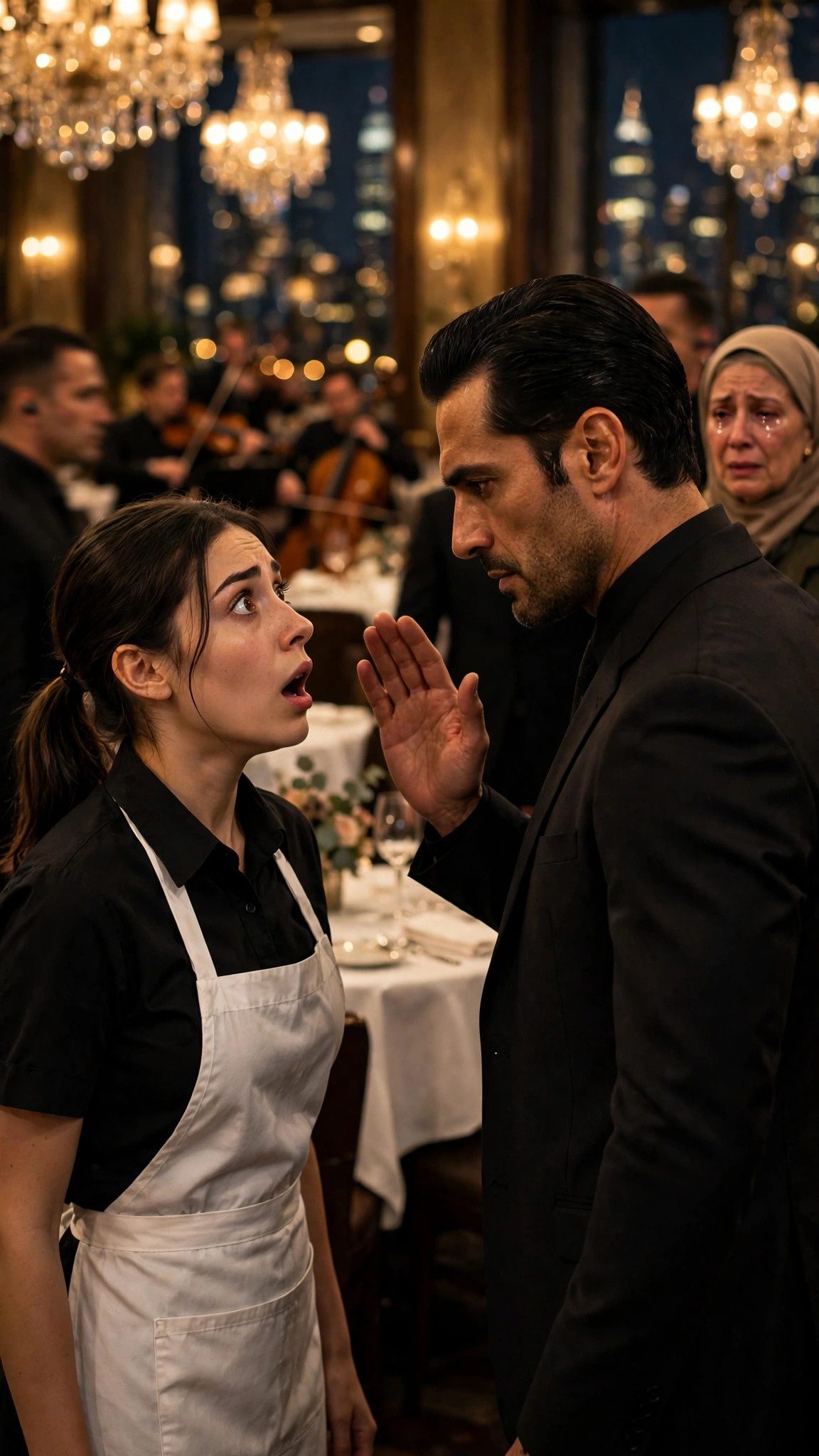
Kareem Rahal had not planned to go to the Bellweather Room that night.
He had planned to go to the docks. He had planned to sit in the back of his limousine with Nabil beside him, and to drive down to Pier 84 in the dark, and to meet his cousin Tariq in a warehouse that smelled of salt and diesel, and to give an order he had been carrying in his chest for three weeks like a stone. He had planned to say six words, and then to drive home, and to pour himself a glass of something strong, and to sit alone in his study until morning, and to tell himself that he had done what a head of the family must do.
He had not planned any of it. His mother had planned it.
Amina Rahal was seventy-one years old, and she had buried a husband and a daughter, and she had watched her son become the most feared man in New York, and she had decided, three weeks earlier, that she was done watching. She had come into his office on a Tuesday afternoon, moving slowly with her cane, her head-cover neat and white, and she had set a photograph down on his desk, face down, and she had said, "Turn it over."
He had turned it over. It was a photograph of a young woman with dark hair and a laugh like a bell, standing on a beach in Lebanon with the sea behind her, holding a saxophone case in one hand and a young American man's hand in the other. Kareem had stared at it for a long time, and then he had said, in a voice that did not sound like his own, "Layla."
"Her daughter works at the Bellweather Room," Amina had said. "On Fifth Avenue. She has worked there for two years. She is twenty-eight years old. Her name is Nia Brooks. I have been watching her for three weeks, and I am certain. She is your sister's child. She is my granddaughter. And tonight, you are going to dinner at the Bellweather Room, and you are going to look at her, and you are going to see what I have seen."
Kareem had wanted to refuse. He had wanted to say that Layla was dead, that she had chosen an American musician over her family, that their father had cast her out and that the door had closed behind her nineteen years ago and had never opened again. He had wanted to say that he had a family to run, and a war to fight, and a traitor to deal with, and that he did not have time for ghosts.
But his mother had looked at him with the same eyes she had looked at him with when he was six years old and had broken his father's favorite vase, and she had said, "Your father cast her out, Kareem. Not you. You were seventeen years old, and you stood in the doorway and watched her go, and you never said a word. You have carried that silence for twenty-five years. Tonight, you will break it, or you will carry it to your grave."
That morning, before the dinner, Kareem had stood at the window of his office, looking out over the river, and Nabil had come in with the morning reports, and one of the reports had said that a shipment from Beirut had been delayed at the docks, and that the customs officer who had delayed it was a man Castellano owned, and Kareem had understood, with a cold clarity, that the war for the docks was entering a new phase, and that Tariq's betrayal was only the beginning. He had told Nabil to double the guards on the piers, and to move the next shipment to a different berth, and to say nothing to Tariq, not yet, not until the council had met. And then his mother had come into his office, and had set the photograph down on his desk, face down, and had said, "Turn it over," and everything else had stopped mattering for a while.
So he had gone to the Bellweather Room. He had sat at the table next to the main window, and he had ordered vanilla-scented tea, the way his sister used to drink it, and he had waited, and then the waitress had come across the dining room with a tray balanced on her hand, dark hair and a black uniform and a soft nervous voice, and he had looked up at her face, and his heart had stopped.
She looked like Layla. Not exactly, not the way a photograph looks like a person, but the way a song sounds like another song, the same notes in a different key. The same dark hair. The same shape of the eyes. The same way of holding her mouth when she was nervous, as if she were keeping a secret behind her teeth. And when she said, "Welcome to the Bellweather Room, sir," her voice had the same soft edge to it, the same music underneath the words, and Kareem had felt something crack open inside his chest, something he had sealed shut the night his sister walked out of their house with a saxophone case in her hand.
For one hour, he sat there, dead silent, and he watched her. He watched her carry trays across the dining room. He watched her smile at the guests. He watched her write numbers down in a little notebook she kept in her apron pocket, and he watched the manager, a greasy little man named Marcus Hale, take the envelope from her at the end of the night, and he watched her face when she opened it, the small tight flinch she tried to hide, and he understood, in that moment, that somebody was stealing from his sister's daughter, in his city, under his nose, and that the world was a smaller and crueler place than he had thought.
He had come to the restaurant to look at a ghost. He had stayed to look at a living girl who counted her tips in a notebook and smiled when a dollar was pressed into her palm, and who did not know that she was the blood of one of the oldest families in Lebanon, and who did not know that her grandmother had been watching her for three weeks, waiting for the right night.
And the right night was tonight, because tonight was the night Kareem had planned to go to the docks.
Tariq Rahal was his cousin, his father's brother's son, a man he had grown up with, a man who had played soccer with him in the streets of Beirut when they were boys, a man who had stood beside him at his father's funeral and wept into his shoulder. Three weeks ago, Nabil had come to him with a folder, and in the folder were bank records, and shipping manifests, and photographs, and they all said the same thing: Tariq had been selling the Rahal family's shipping routes to Vincent Castellano, the Italian who had been trying to push the Rahals out of the New York docks for five years. Tariq had taken Castellano's money, fifty thousand dollars at a time, and in return he had told Castellano which ships carried what, and when, and where the guards would be thin.
Kareem had read the folder twice. He had sat in his study until three in the morning, turning the pages over and over, hoping the numbers would change, hoping he had misread them, hoping his cousin had not done this. But the numbers did not change. Tariq had betrayed the family. And in Kareem's world, there was only one answer to betrayal.
He had planned to go to the docks that night and give the order. He had planned to say the six words that would end Tariq Rahal's life, and then to drive home, and to sit alone in his study, and to tell himself that he had done what a head of the family must do.
But his mother had other plans. His mother had arranged the dinner at the Bellweather Room, and she had arranged for the old woman in the head-cover to walk across the dining room at the exact moment Kareem was leaving, and to hug the waitress, and to whisper the question that would unlock everything.
"Who is the mother of the child?"
And the waitress, his sister's daughter, a girl who did not know a word of Arabic except for the words her mother had whispered to her when she was small and afraid, had opened her mouth, and out had come the sentence. The sentence that had been in their family for three generations. The sentence his mother had said to his father, the night his father had been about to kill a man. The sentence Layla had said to Kareem, when he was twenty years old and full of rage and about to do something he could never undo.
"Ya habibi, la tuqatiluh. Ya habibi, ruuh ahlaykum."
My love, don't kill him. My love, go home to your family.
Kareem had been closing his jacket. He had been turning toward the door. He had been on his way to the docks, to say six words that would end a man's life. And then he had heard his sister's voice coming out of a waitress's mouth, in a restaurant on Fifth Avenue, and he had stopped, and his driver had turned the limousine around, and he had walked back through his parting bodyguards, and he had stood in front of the girl, and he had whispered, "Who told you to say that?"
And she had whispered back, "No one did."
No one did. The words had been waiting inside her for nineteen years, put there by a mother who had loved her more than anything in the world, and they had come out at the exact moment they were needed most, like a key turning in a lock, like a door opening in a house that had been closed for a quarter of a century.
Kareem looked at Nabil, standing beside him with his hand on the girl's shoulder, and he looked at his mother, crying quietly into her hands, and he looked at the girl, Nia, his sister's daughter, standing in her black waitress uniform with a tray still balanced on her hand, and he understood, with a clarity that felt like cold water on his face, that he had a choice.
He could go to the docks. He could say the six words. He could be the man his father had been, the man the city feared, the man who answered betrayal with death.
Or he could turn the car around. He could sit down with his mother and his niece, and listen to the story of how his sister had lived and died, and learn the name of the girl who counted her tips in a little notebook, and do the thing his sister had begged him to do, twenty-five years ago, with those same words.
"Ya habibi, la tuqatiluh."
My love, don't kill him.
Kareem Rahal, the most feared Arab mafia boss in New York, stood in the middle of the Bellweather Room, with the string quartet silent and the whole restaurant watching, and he made his choice.
"Come with us," he said to Nia. "Not as a prisoner. Not as a guest. As family."
And when she put down her tray, and untied her apron, and followed him out into the October night, he felt the stone in his chest, the stone he had been carrying for three weeks, begin, very slowly, to crack.
He had not expected the crack to hurt. But it did. It hurt the way a frozen limb hurts when the feeling comes back into it, sharp and aching and alive, and as he walked behind her toward the limousine, with his mother holding the girl's hand and Nabil falling into step beside him, Kareem thought about the night his sister had left, twenty-five years ago, and about the doorway he had stood in, seventeen years old, saying nothing, and about the silence he had carried ever since, and he thought about the folder in his study, with its bank records and its shipping manifests and its photographs of his cousin taking Castellano's money, and he thought about the six words he had planned to say at the docks that night, and he understood, for the first time, that the words had never been a decision. They had been a surrender. A surrender to becoming the man his father had been, a man who answered betrayal with death, and who died without ever seeing his daughter again.
Nabil leaned close as they reached the car, and said, very quietly, "The council meets tomorrow night, Kareem. Tariq will be there. Whatever you decide, decide it before then. And whatever you decide, I will stand beside you."
Kareem nodded. He looked at the girl, Nia, climbing into the limousine with his mother, her dark hair catching the light from the restaurant windows, her black uniform still on, her tray left behind on a table inside, and he thought about Layla, and about the saxophone case, and about the words, and he said to Nabil, "I have already decided. I decided the moment she spoke. Tell the council to prepare for a judgment of exile, not death. And tell them why. Tell them the words."
Nabil stared at him for a moment, and then he smiled, a slow, surprised smile, and he said, "Your sister would be proud of you, Kareem. She always said you had a better heart than our father. I never believed her. Tonight, I do."
Kareem climbed into the limousine, and the driver closed the door, and the car pulled away from the curb, and the Bellweather Room fell behind them, golden and shining, and Kareem sat in the back seat with his mother and his niece, and he felt the stone in his chest crack a little wider, and for the first time in twenty-five years, he did not feel alone in the silence.